
AI has already become an everyday tool. People ask AI to polish emails, summarize long documents, and write code. The act of typing keywords into a search box is increasingly being replaced by asking questions in a chat window.
But recent moves by AI companies suggest that the next battleground is shifting somewhere else: healthcare and life sciences.
This field is different from ordinary writing tasks or image generation. Health, disease, genetics, clinical trials, and drug discovery cannot be handled with merely “plausible answers.” A wrong answer may not remain a simple error. It can affect a person’s health, a researcher’s judgment, or a medical decision. That is why healthcare and life sciences are among the most attractive areas for AI, but also among the most difficult.
Recent moves by OpenAI, Google DeepMind, Microsoft, Anthropic, and NVIDIA clearly show this shift. AI is expanding from health consultations to genomic data interpretation, clinical decision support inside hospitals, clinical trials and regulatory documents, and even drug discovery and laboratory automation. This expansion follows a clear direction.
The flow resembles a ladder. At the lowest level, there is AI that answers users’ health questions. One step above, there is AI that evaluates and supports life-science research. Above that, there is AI that interprets genomic data. Higher still, there is AI that supports clinical judgment and workflows inside hospitals, as well as AI that processes clinical trial and regulatory documents. At the top, there is AI infrastructure connected to drug discovery and laboratory automation.
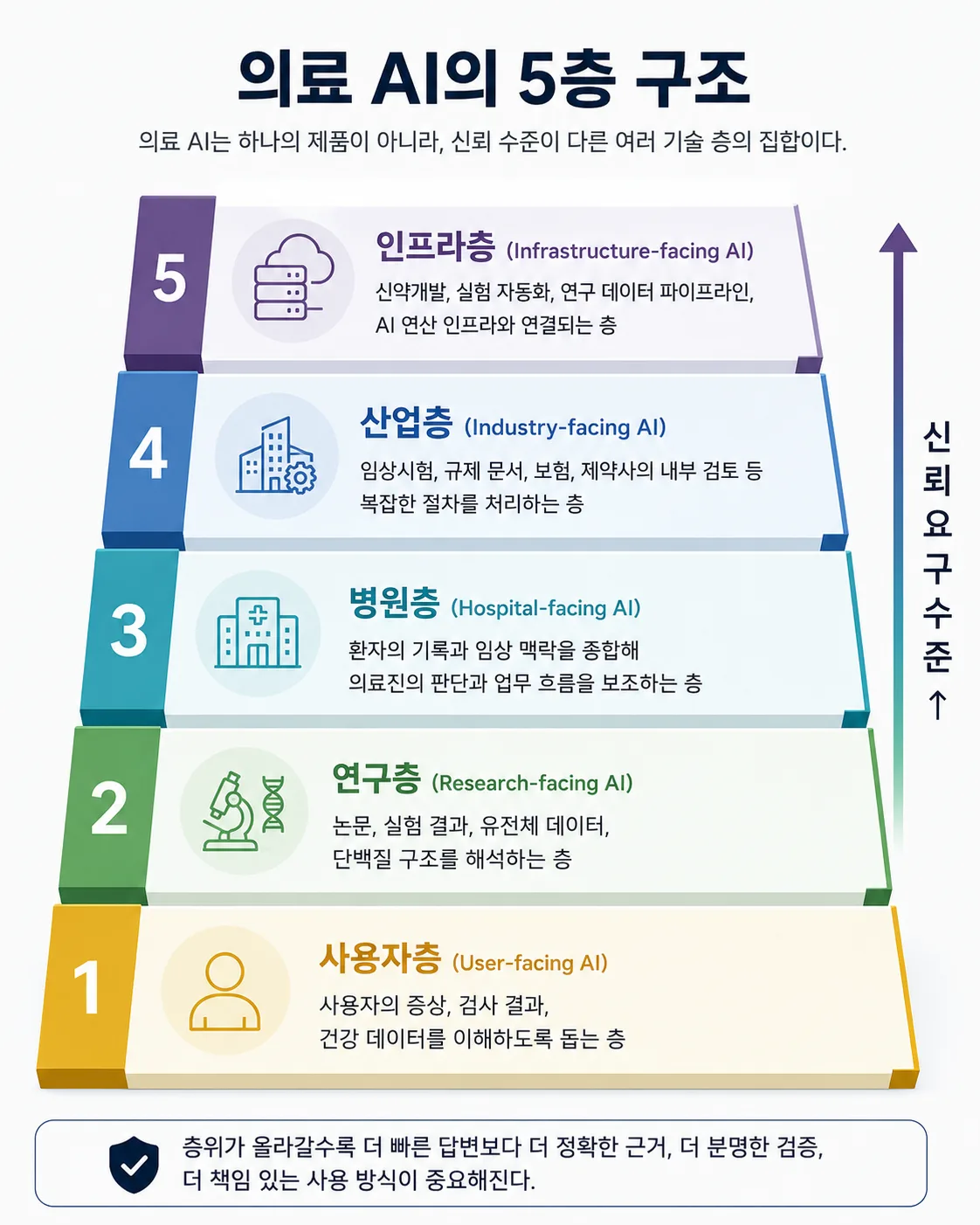
This ladder is not simply an order of increasing functionality. It is an order of increasing trust requirements. The higher AI moves, the heavier its responsibility becomes, and the higher the threshold for verification.
That is why the central question around medical AI is not, “Can AI replace doctors?” The more important question is: how deeply can AI enter healthcare and life sciences, and how can it earn trust along the way? This is what it means to say that AI’s next battleground is no longer the search box, but hospitals and laboratories.
OpenAI: From Health Consultation to Verification Systems
The most familiar starting point for medical AI is the user. When people feel unwell, do not understand test results, or find a doctor’s explanation difficult to follow, they increasingly turn to AI. Questions such as “What does this number mean?”, “Why might this symptom occur?”, or “What should I ask when I go to the hospital?” no longer feel unusual.
OpenAI’s ChatGPT Health begins from this point. Its direction is to connect users’ health information with AI responses, helping individuals better understand their own health. Medical records, wellness apps, test results, exercise data, and sleep data are all scattered across different places, and ChatGPT Health attempts to connect these sources with AI.
Of course, the important premise is clear. This kind of AI is not a tool that replaces diagnosis or treatment. It is closer to a support tool that helps users understand their condition and prepare better for conversations with medical professionals. For medical AI to earn trust, it must be clear about what it can do and where it must stop, rather than making exaggerated claims about replacing doctors.
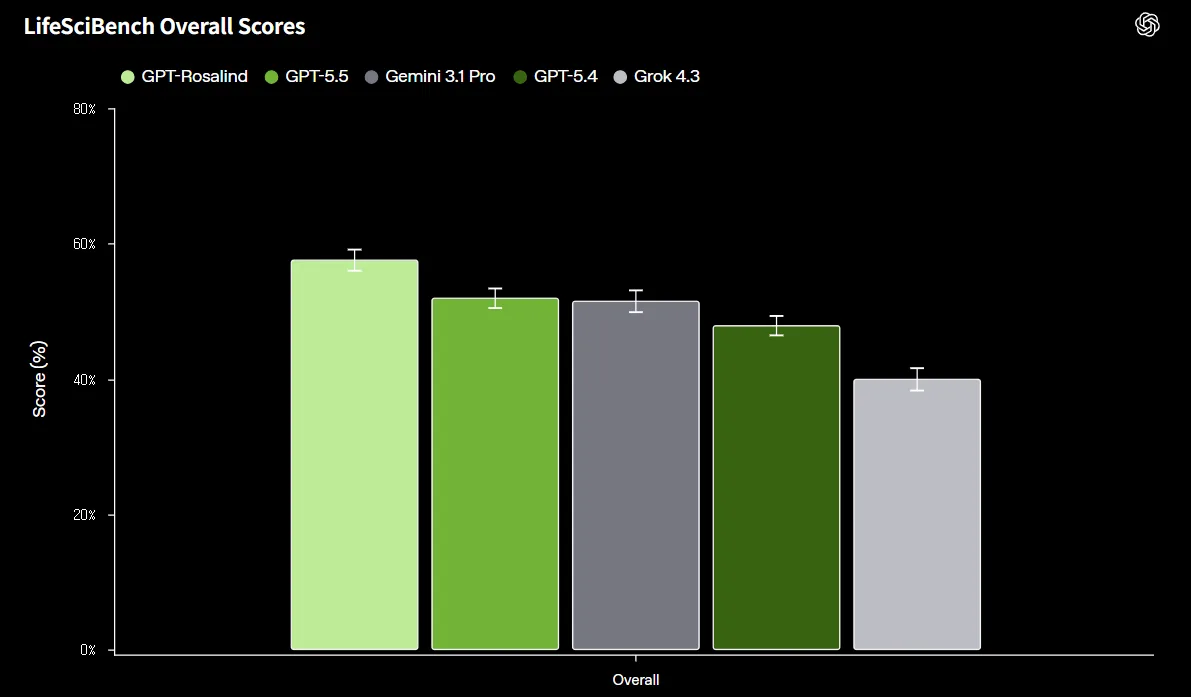
But an even more important recent OpenAI case is LifeSciBench. LifeSciBench is a benchmark designed to evaluate how well AI can perform real research tasks in the life sciences. What matters here is not simple biological knowledge. In actual research, scientists read papers, interpret experimental results, compare conflicting evidence, and design the next experiment. LifeSciBench aims to evaluate these more realistic research processes.
In this sense, LifeSciBench raises the discussion around medical AI to another level. Many AI evaluations have focused on whether a model can solve questions with clear answers. But in life-science research, the final answer is not the only thing that matters. It is also necessary to examine what evidence was used, what limitations were recognized, and whether the judgment can actually support research decisions.
OpenAI’s results show both the potential and the limitations. A life-science-specialized model performed better than a general-purpose model, but its overall pass rate remained limited. This does not mean AI is useless. Rather, it shows why healthcare and life-science AI cannot be completed easily.
For AI to be useful in life-science research, generating plausible explanations is not enough. It must read the materials researchers actually work with, reflect complex conditions, express uncertainty, and sometimes say, “This cannot yet be judged.” In healthcare and life sciences, trust does not come from confident answers. It comes from the ability to present evidence and limitations together.
OpenAI’s case therefore shows the first layer of medical AI. On one side is AI that answers users’ health questions. On the other is AI that evaluates research capability in the life sciences. These may seem like different areas, but they point in the same direction. Medical AI may begin with smarter answers, but its destination is a more reliable system of verification.
Google DeepMind and Sanger Institute: Genomic Data as the Foundation of Medical AI
If OpenAI’s case shows health consultation and life-science research evaluation, the AI genomics consortium involving Google DeepMind and the Wellcome Sanger Institute shows a deeper foundation. For medical AI to function properly, a good model alone is not enough. The model also needs data it can read and interpret.
In healthcare and life sciences, data is not just a collection of numbers. Genes, RNA, proteins, cells, tissues, diseases, and drug responses are all intricately connected. Understanding which genetic variants are linked to disease, what changes occur in specific cells, and what protein-level changes mean requires vast amounts of data and deep domain knowledge.
That is why genomic data becomes a core foundation for medical AI. To understand human disease, predict drug responses, and identify new therapeutic possibilities, AI must be able to read life itself as data. The problem is that existing life-science data is not always immediately suitable for AI. Data may be insufficient, inconsistent in format, biased toward certain areas, or not structured well enough for model training and evaluation.
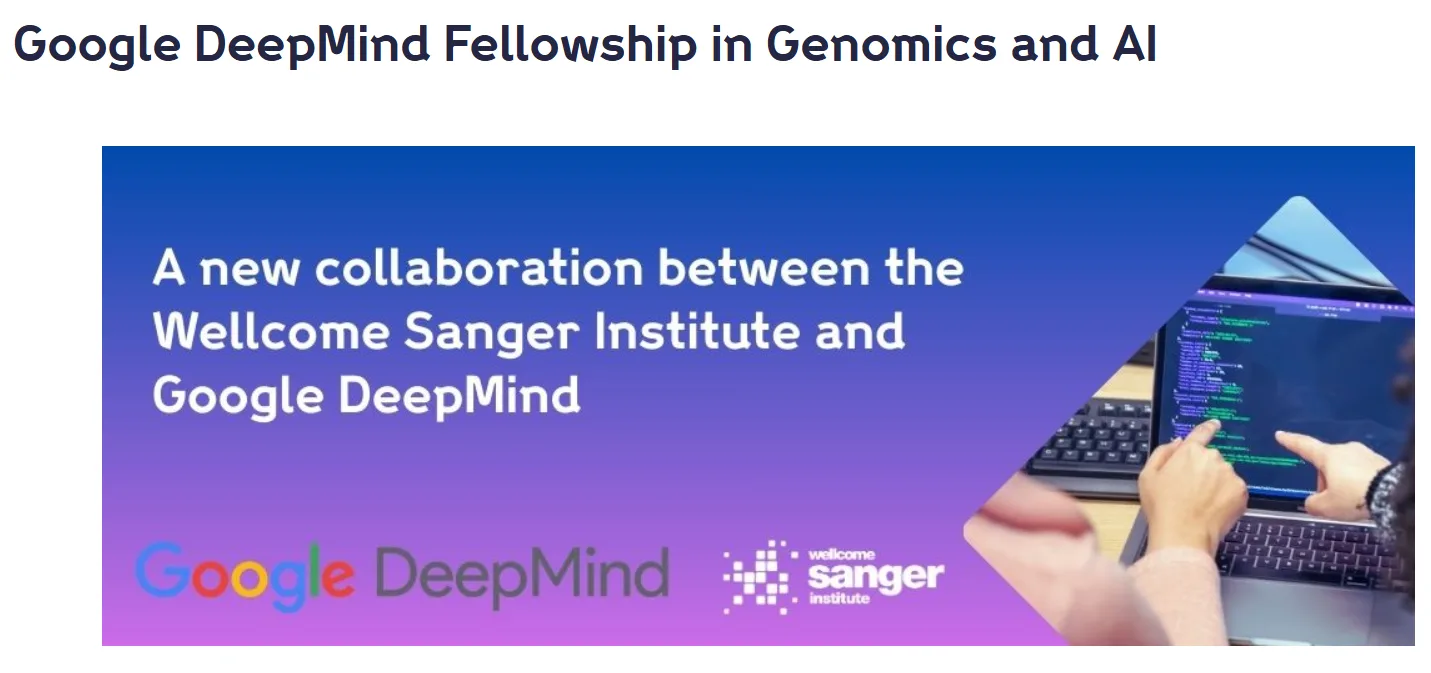
The AI genomics consortium led by Google DeepMind, Google.org, and the Wellcome Sanger Institute addresses precisely this problem. Its goal is to create large-scale genomic data and build high-quality AI-ready datasets that AI models can use. The important phrase here is “AI-ready.” The point is not simply to collect more data, but to create data in a form suitable for AI to learn, evaluate, and predict.
This case shifts the focus of medical AI competition from models to data. Many people think of AI competition as model competition: who built the bigger model, who achieved the higher score, who speaks more naturally. But in healthcare and life sciences, models alone are not enough. For a model to understand actual biological phenomena, it needs a data foundation suited to that task.
If OpenAI’s LifeSciBench asks, “How well can AI perform life-science research tasks?”, the Google DeepMind–Sanger genomics consortium asks, “What kind of data foundation does AI need in order to understand life?” One is a system for evaluating capability. The other is the soil in which that capability can grow.
Microsoft and Mayo Clinic: AI Moves Inside the Hospital
The next step is the hospital.
If user-facing medical AI is a tool that answers an individual’s health questions, hospital-facing medical AI is closer to a system that supports clinical judgment and workflows inside medical institutions. Here, AI’s role changes from “an advisor that explains symptoms” to “a support system that interprets clinical information and helps medical professionals make decisions.”
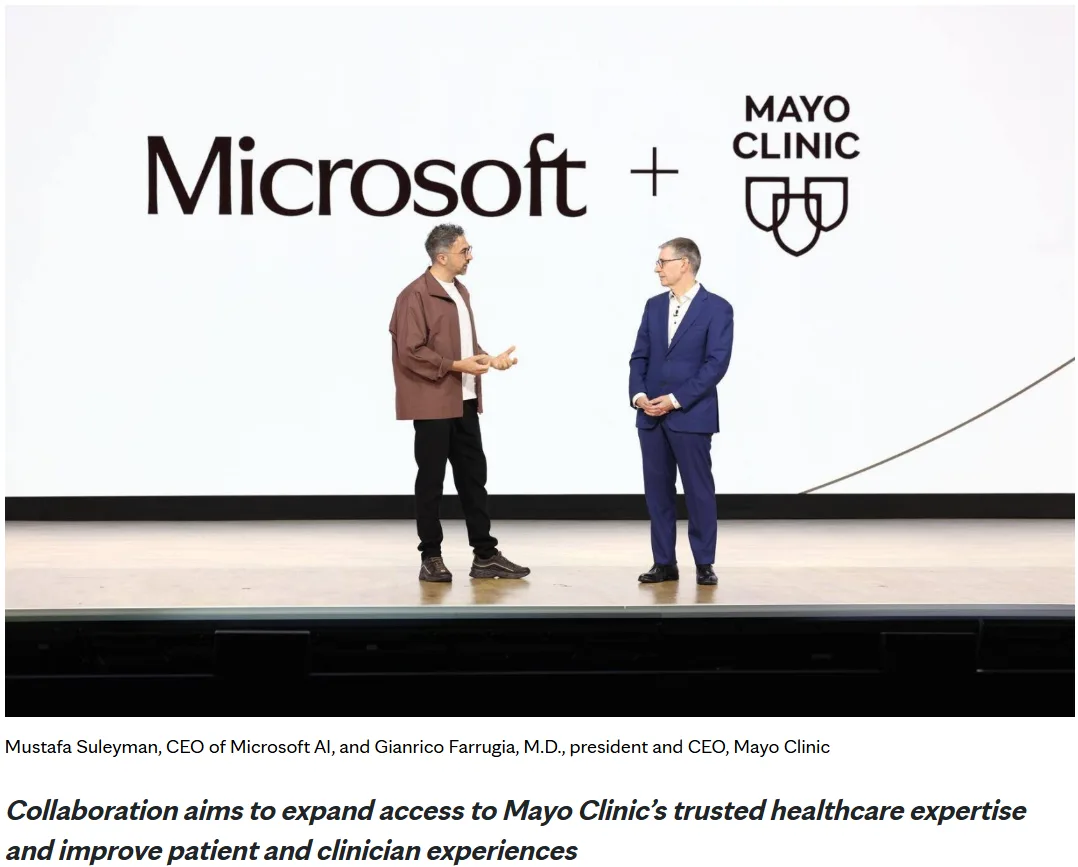
The collaboration between Microsoft and Mayo Clinic shows this shift. The two organizations announced that they would develop a frontier AI model specialized for healthcare. The goal is to combine Mayo Clinic’s clinical expertise and de-identified medical data with Microsoft’s AI and cloud capabilities to support clinical reasoning and a range of healthcare use cases.
The important point in this case is that AI is no longer being used only by general users outside the hospital. It is entering the complex context inside the hospital. A hospital is not simply a place where disease information is searched. A patient’s past records, test results, imaging data, medications, family history, and treatment progress are all intertwined. Medical professionals must synthesize this information, and the process requires significant time and concentration.
When medical AI enters the hospital, it does not mean that AI replaces this complex judgment. Rather, it means AI can help medical professionals organize information faster, identify clues that might be missed, and compare multiple possibilities. In this context, AI is not the agent that reaches the conclusion. It is a tool that organizes the materials of judgment and supports clinical thinking.
At this layer, the standard of trust becomes even higher. When AI answers a user’s health question, cautious guidance and information organization are important. Inside the hospital, however, clinical context and responsibility structures become crucial. What data did the AI base its judgment on? How can medical professionals review that judgment? Who is responsible if an error occurs? These questions all become central.
The Microsoft–Mayo Clinic case shows that medical AI is moving beyond personal health consultation tools and into internal hospital systems. Medical AI is expanding from “AI that talks about health” to “AI that supports medical professionals’ judgment and workflows.”
Anthropic and NVIDIA: Medical AI Expands into Industry and Infrastructure
The market for medical AI is not limited to the examination room. Outside the hospital lies a massive industrial structure that includes clinical trials, insurance, regulatory documents, pharmaceutical research, drug discovery, and laboratory automation. For medical AI to expand into actual industry, it must enter these complex procedures and infrastructures.
Anthropic’s Claude for Healthcare and expanded life-sciences capabilities are closer to the industrial workflow layer. Healthcare institutions, insurers, health-tech companies, and life-science companies all deal with vast amounts of documents and procedures. Designing clinical trial protocols, preparing regulatory documents, reviewing research data, and organizing internal reports are essential tasks that keep the healthcare industry running.
In this area, the value of AI is not limited to making diagnoses. It lies more in reducing repetitive and complex knowledge work and connecting documents and data more efficiently. This is also where Claude’s healthcare and life-science direction is focused. Medical AI is not only a tool that answers patients. It is also a productivity tool that handles the documents and procedures that keep the medical industry operating.
If Anthropic targets the documents and procedures of the healthcare industry, NVIDIA targets a more physical layer of research infrastructure. NVIDIA approaches medical AI not as a chatbot service, but as infrastructure for drug discovery and laboratory automation. Its AI co-innovation lab with Eli Lilly and autonomous laboratory infrastructure collaboration with Thermo Fisher point to a direction in which AI connects to drug candidate exploration, experiment design, and research automation.
Here, AI does not simply generate answers on a screen. It enters the process through which researchers design experiments, review candidate compounds, and connect laboratory equipment with data flows. The flow that began with text-generating AI moves through biological data analysis and toward infrastructure that can help operate actual laboratories and drug-discovery pipelines.
Together, Anthropic and NVIDIA make the direction of medical AI’s expansion clearer. On one side, AI handles the documents and procedures of the healthcare and pharmaceutical industries. On the other, it moves drug discovery and laboratory infrastructure. Medical AI no longer refers only to diagnostic support inside hospitals. It is expanding into a new technological layer across healthcare and life sciences.
Medical AI Is Not a Single Market
When we connect the cases discussed so far, it becomes difficult to describe medical AI as a single product or market. At first glance, they all appear to be “medical AI.” In practice, however, they operate at different layers.
OpenAI is close to user health questions and life-science research evaluation. The Google DeepMind–Sanger Institute genomics consortium builds the biological data foundation AI needs to read. The Microsoft–Mayo Clinic collaboration enters clinical judgment and workflows inside hospitals. Anthropic targets industrial procedures such as clinical trials, regulatory documents, insurance, and pharmaceutical work. NVIDIA builds infrastructure for drug discovery and laboratory automation.
This flow can be organized into five layers of medical AI. The first is user-facing AI, which helps users understand their symptoms, test results, and health data. The second is research-facing AI, which interprets materials researchers work with, such as papers, experimental results, genomic data, and protein structures. The third is hospital-facing AI, which combines patient records and clinical context to support medical professionals’ judgment and workflows. The fourth is industry-facing AI, which handles complex procedures such as clinical trials, regulatory documents, insurance, and internal pharmaceutical reviews. The final layer is infrastructure-facing AI, which connects to drug discovery, laboratory automation, research data pipelines, and AI computing infrastructure.
Seen this way, medical AI is not a single app or service. It may begin as a tool that answers users’ questions, but it extends into multiple layers: reading research data, entering hospital systems, handling industrial procedures, and connecting to actual laboratories and drug-discovery infrastructure.
To understand medical AI, we should ask not “Which AI is the smartest?” but “Which layer of healthcare and life sciences is this AI trying to enter?” AI that explains information to users, AI that supports clinical judgment inside hospitals, and AI connected to laboratories and drug-discovery infrastructure must all be evaluated by different standards.
Ultimately, medical AI is not one market. It is a collection of technological layers with different levels of required trust. And as AI moves up these layers, what matters is not faster answers, but more accurate evidence, clearer verification, and more responsible use.
The Barriers Medical AI Must Overcome
This flow, however, does not automatically mean that medical AI will succeed. Healthcare and life sciences are areas where AI must proceed with particular caution. The greater the potential, the greater the risk if it fails.
The first barrier is accuracy. In ordinary writing or image generation, errors can often remain correctable mistakes. In healthcare, however, incorrect information can affect a patient’s judgment, a researcher’s experiment, or a medical professional’s decision. This is why medical AI cannot rely on merely “plausible answers.”
The results of LifeSciBench also show this point. According to OpenAI, GPT-Rosalind, a life-science-specialized model, improved the overall exact pass rate from 25.7% for GPT-5.5 to 36.1%, but the absolute pass rate remained limited. In particular, performance dropped from 45.1% to 28.1% on tasks that included files or URLs, while numeric tasks reached only 14.8% and sequence or structure output tasks reached 24.0%. This does not mean AI is useless for research. Rather, it means that using AI in research requires task-specific validation and careful identification of limitations, not just better performance.
The second barrier is data. Medical AI deals with sensitive data such as personal health information, genomic data, and hospital records. Once such data is leaked or misused, the damage is difficult to reverse. This is why medical AI cannot be separated from issues such as security, anonymization, access control, and data sovereignty.
The third barrier is responsibility. If a medical professional refers to a judgment suggested by AI and that judgment turns out to be wrong, who is responsible? The company that built the model? The hospital? The medical professional? Or the individual who used the AI? As medical AI moves deeper into hospitals and industrial settings, this question becomes more complex.
The fourth barrier is real-world outcomes. Performance in papers or product announcements is different from success in actual clinical trials or drug discovery. Medical AI is moving from the stage of presenting possibilities to the stage of proving results.
In the end, the core competitiveness of medical AI is not performance itself. What matters is how that performance was verified, what data the model was trained on, who is responsible, and what outcomes it produces in real-world settings. In a field that deals with life, AI cannot earn trust simply by claiming that it “can do it.”
Expansion, Not Replacement
A common question about medical AI is whether AI can replace doctors. But looking at recent trends in healthcare and life sciences, that question is too narrow. The real change is not happening only in the form of AI replacing a single doctor.
The essence of medical AI is closer to expansion than replacement. Users can better understand their health information. Researchers can explore more complex biological data. Medical professionals can compare vast amounts of clinical information more quickly. Pharmaceutical companies and research institutions can redesign complex processes such as clinical trials, regulatory documentation, drug discovery, and laboratory automation with AI.
Of course, for this potential to become reality, AI must do more than become smarter. It must become more verifiable, be used more responsibly, and be designed in ways that human experts can review and control.
AI’s next battleground is not the ability to speak like a person, but the ability to earn trust in domains that deal with life.