Korea Press Foundation Media Issue Report 2025 Issue 3
European Major Country Influencer Regulation Trends and Policy Implications
Korea Press Foundation Senior Research Fellow Jin Min-jeong
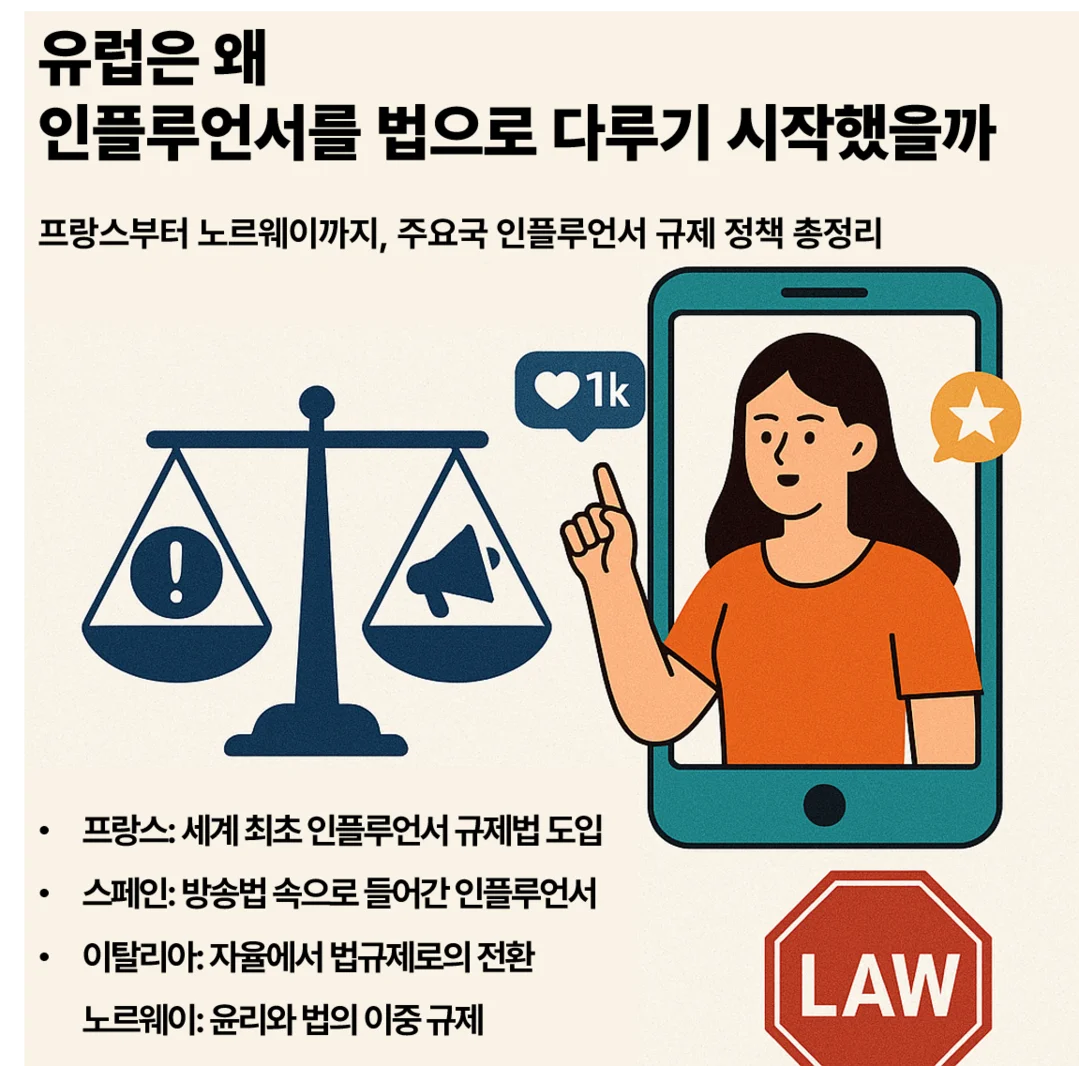
Influence is both power and responsibility. Until just a few years ago, influencers were considered simply individuals who actively use social media. But now influencers with hundreds of thousands or millions of followers on YouTube, TikTok, and Instagram have become key agents in the advertising industry and "unofficial media" forming public opinion. Their existence is going beyond the category of simple creators. Accordingly, European major countries are incorporating influencers as regulatory subjects -- treating them as "advertisers and media" exercising commercial influence. At the core of these regulatory movements are consumer protection, youth safety, and advertising transparency. France (2023 Influencer Law): the first country globally to pass dedicated influencer regulation legislation; requires disclosure of commercial relationships in all promotional content; prohibits promotion of certain product categories (surgical procedures, financial investments) without professional qualifications; requires disclosure of AI image manipulation. Norway: extended existing marketing law to explicitly cover influencers; National Consumer Authority can fine influencers for undisclosed advertising; particular focus on diet and fitness content promoting unrealistic body standards to youth. EU DSA (Digital Services Act): platform obligations to enable users to identify commercial content clearly; requires platforms to maintain databases of all ads including influencer-delivered ads. UK ASA (Advertising Standards Authority): enforcement actions against influencers who fail to clearly label paid partnerships; "ad" or "paid partnership" disclosure must be prominent, not buried in hashtags. Korea implications: Korea has among the highest social media usage rates globally and influencer marketing is massive; but influencer-specific legislation lags European frameworks; the Korea Communications Commission advertising guidelines are non-binding; the gap between European approach (specific obligations, meaningful sanctions) and Korean approach (guidelines, voluntary compliance) may need to close as cross-platform influencer marketing increasingly crosses jurisdictions.