“Create a game where a robot runs across a low-gravity planet while avoiding obstacles.”
Until a few years ago, a sentence like this would have been little more than a game idea. Turning it into something playable still required designing the rules, placing objects, implementing character movement and collisions, and connecting the necessary scripts and data. But with Playground, unveiled by Google on October 7, that sentence itself can become the starting point of development.
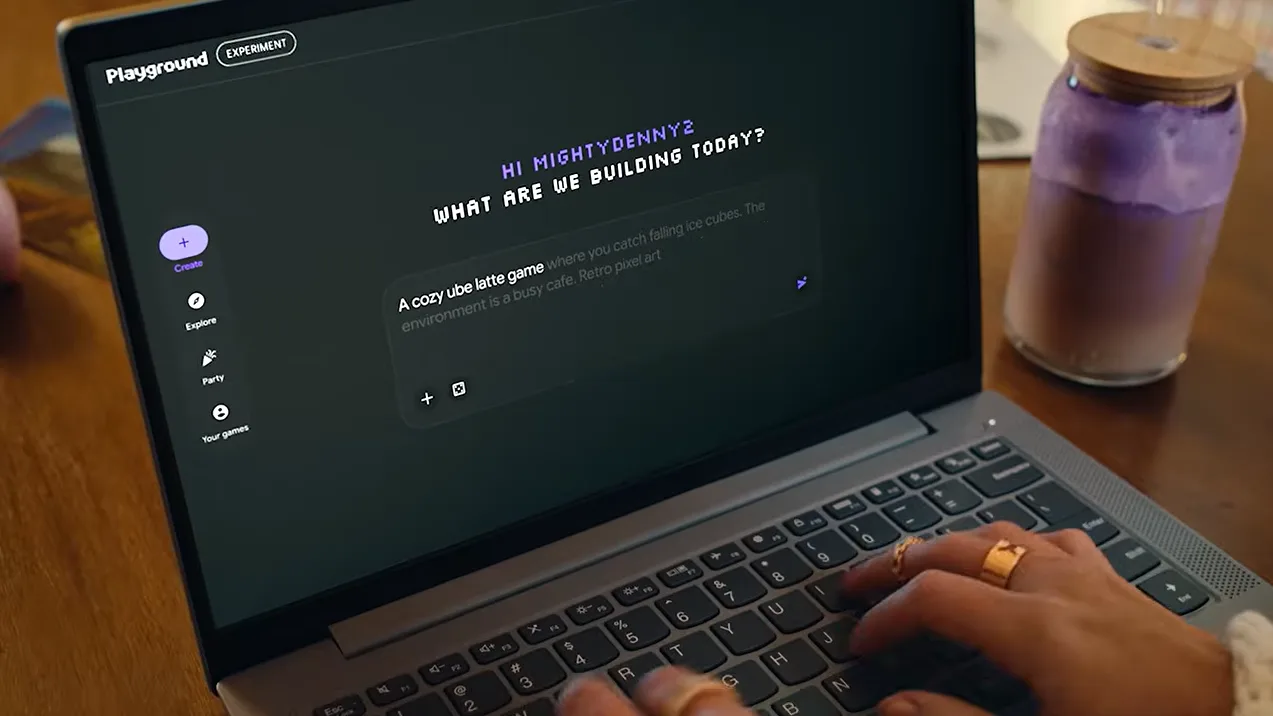
Users can describe the game they want in natural language, and Playground generates a version that can be played directly in the browser. They can then continue the conversation to modify its physics, rules, characters, and environment. According to Google, users can create and play games without coding experience, then share them through links or publish them to a community gallery. The experimental platform is currently available to users aged 18 and over in the United States.
Google has gone a step further by partnering with Unity. Announced on the same day, Unity Spark is a browser-based game creation platform designed to let users build and modify games with natural language and AI, and it is currently preparing for closed beta testing. The direction presented by the two companies is relatively clear. Ideas that begin as simple prompts in Playground can be expanded in Spark into more complex game mechanics, higher-quality 3D experiences, and projects powered by the Unity Runtime. Unity has also previewed a simplified browser-based editor, built-in AI assistance, and support for artist-created assets from the Unity Asset Store.

Of course, it is still too early to call this an era in which commercial games can be built entirely through prompts. Playground remains an early experiment, and Spark has not even officially launched yet.
Even so, there is an interesting shift underway. Until now, turning a game idea into something executable meant translating it into code or into the functions of a game engine. Now, a new layer is beginning to appear before that step: describing the desired behavior in natural language, playing the generated result, and then giving further instructions based on what happens.
How Might the Roles of Game Developers and Designers Change?
The rise of prompt-based creation does not mean implementation inside the game disappears. The game still has to detect when a player enters a specific area, spawn enemies, lock a door, count how many enemies remain, and reopen the door once they are defeated. What changes is how people interact with that implementation.
In the past, building this kind of feature required a developer to write code or construct a visual script directly. A designer might define a rule such as, “When the player enters the room, five enemies appear, and the exit remains locked until all of them are defeated,” while the developer translated that rule into working logic. In other words, there was a translation step between design and implementation.
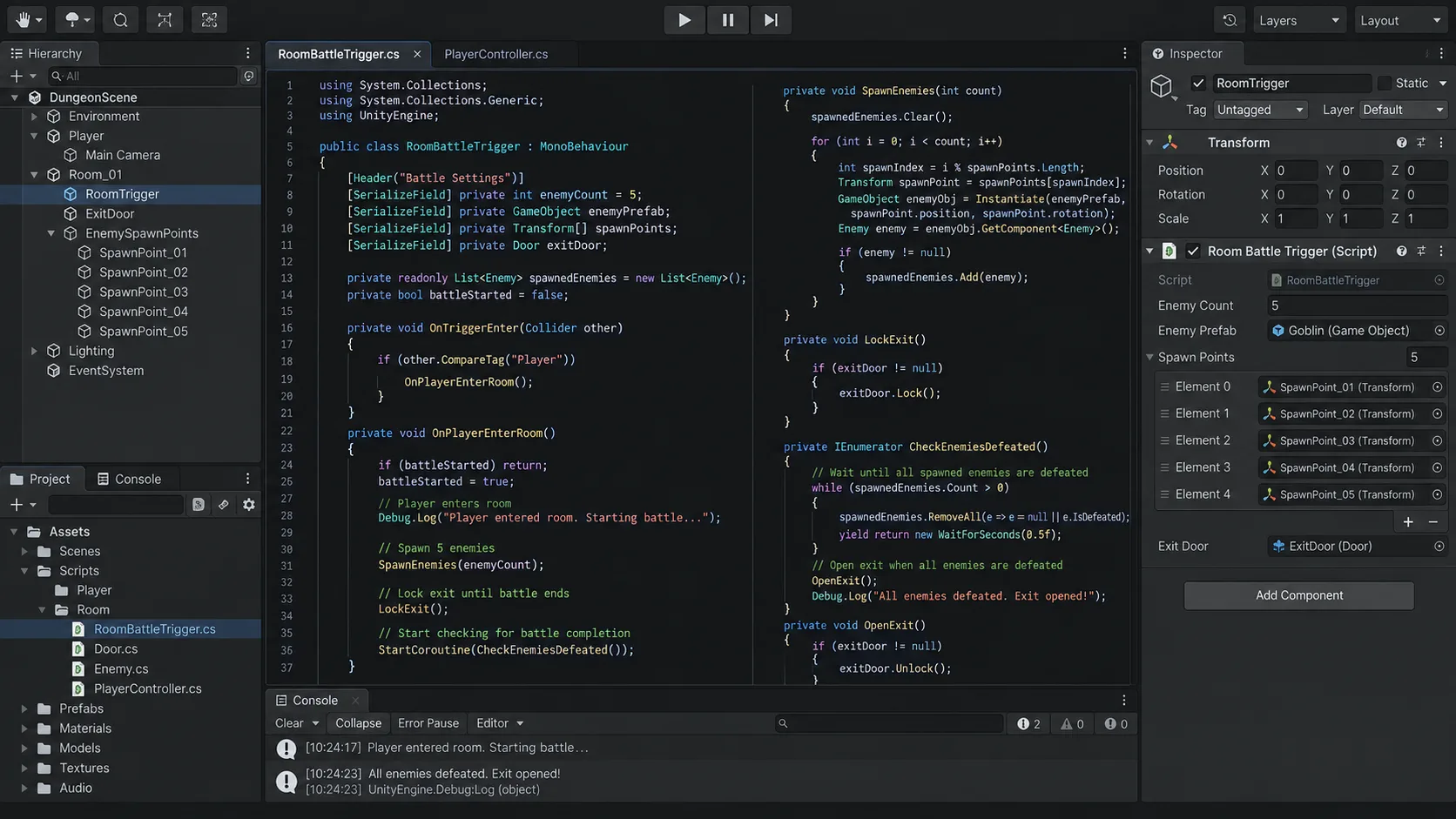
With prompt-based creation, AI can take over part of that middle step. A designer can describe the rule in natural language, and the AI can use that description to generate an initial version of the game logic. That does not eliminate the developer’s role. Someone still has to check whether the generated logic behaves as intended, whether edge cases exist, whether performance issues arise, whether it conflicts with other systems, and whether deeper manual changes are needed.
So the developer’s role may not simply become one of “writing less code.” Instead, the job may broaden to include more understanding, validating, and controlling AI-generated structures. As projects grow more complex, the ability to understand why generated systems behave the way they do—and to fix them directly when something goes wrong—may become even more important.
The designer’s role may shift in a similar way. Being able to build games through natural language does not mean that simply writing fluent sentences will produce good results. A vague request such as “make the combat fun” is very different from clearly defining a rule in which risk and reward increase as the player moves closer to an enemy, while enemy pursuit gradually weakens when the player retreats.
What matters here is not eloquence, but how clearly the game’s rules can be designed. Distance, risk, reward, and state changes must already have defined relationships before AI can turn them into meaningful gameplay. The conditions, states, exceptions, numerical balance, and play flows that game designers have always worked with remain just as important in a prompt-based environment.
If anything, the rules created by designers may move closer to implementation. Previously, a design document still had to be translated into code by a developer. In the future, rules defined by a designer may be turned by AI into a first playable version almost immediately. That could allow designers to test and revise their ideas faster, while developers spend less time building every small feature from scratch and more time deeply validating the generated results.
Put simply, the traditional structure has usually been the designer defines the rules, and the developer implements them. In a prompt-based environment, we may increasingly see a structure in which the designer enters the rules more directly, AI creates the first implementation, and the developer verifies and refines the result.
The barrier to implementation may therefore become lower. But that could make the ability to decide what should be implemented, and to determine whether the resulting system actually works as intended, even more important.
Will Game Development Shift from ‘Writing’ to ‘Iteration’?
The more significant change Playground suggests may not be the use of prompts itself, but a shift in how ideas are tested. Traditional game development has always involved repeated cycles of designing an idea, implementing a feature, creating a build, playing it, and revising it. But before developers could judge whether an idea was actually fun, they first had to make it work to some degree. Character movement, enemy triggers, interactions, and other systems had to be implemented through code, visual scripting, or engine settings before they could be tested in play.
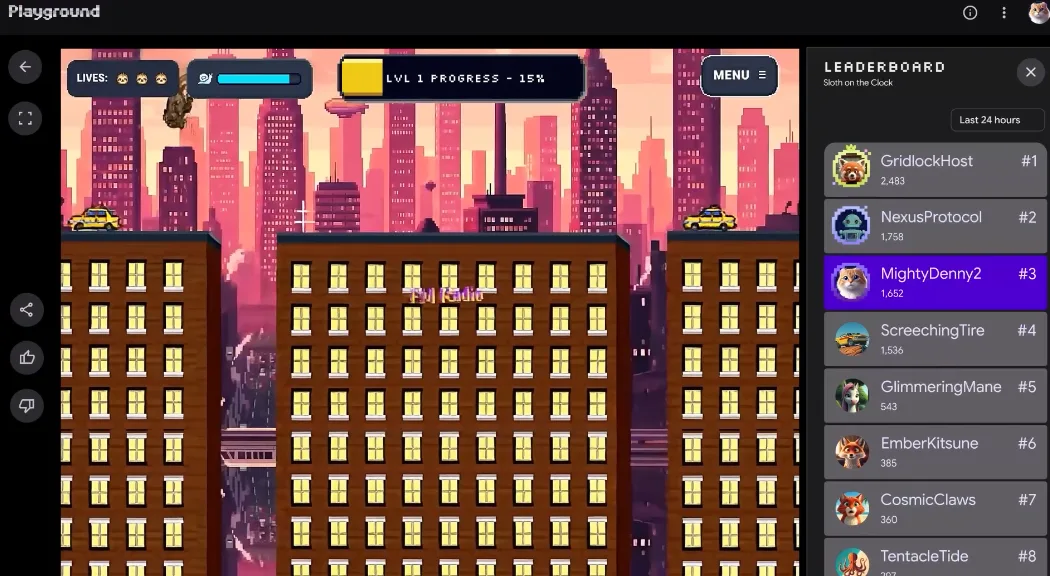
Playground can shift part of that work to AI. A user describes the desired rules and behavior in natural language, generates a playable version, tests it directly, and then issues another set of instructions. Google says users can keep changing physics, rules, characters, and environments through additional prompts. In WIRED’s hands-on test, the reporter repeatedly added bosses and new enemy types to generated games and used natural-language instructions to fix issues such as characters getting stuck in certain areas. Of course, new problems sometimes appeared during those revisions, and the results still had clear limitations in polish and customization.
Unity describes Spark in a similar way. Unity CEO Matt Bromberg has said Spark is not intended as a “one-shotting” tool that produces a finished game from a single prompt. Instead, the emphasis is on creating something, checking the result, refining it, and repeating that process. In that sense, AI may not reduce the entire game-development process so much as reduce some of the implementation work that previously stood between an idea and its first playable version.
That difference matters. If the time required to produce the first version becomes shorter, developers can also judge an idea sooner. In the past, it might have taken days of implementation before reaching the conclusion that “this is not as fun as we expected.” In the future, the same judgment could be made much earlier by playing a quickly generated version.
That also makes it easier to discard ideas. Instead of spending a long time implementing and refining a single concept, teams could quickly create several variations of movement systems, combat structures, or game rules, compare them, and then choose which direction is worth developing further. Rather than simply saying development becomes faster, it may be more accurate to say that the distance between trying something and judging it becomes shorter.
That could also shift what matters in the creator’s role. The faster AI produces a first result, the more often people will have to decide whether the experience matches the original intention, what is not working, what should be abandoned, and what deserves further development.
Ultimately, what may increase in prompt-based creation is not simply the number of things being “generated,” but the number of times creators try, play, judge, and revise. The faster AI can produce results, the more important the human criteria used to decide which of those results are worth keeping may become.
The Starting Point of Game Development Is Changing
AI is already changing the way games are made. Generative AI is being used to produce concept art and temporary assets, assist with code writing and debugging, and reduce repetitive work inside game engines. Unity itself provides AI tools that can generate code, help solve problems, and create different kinds of assets within the Editor. These developments have largely followed one pattern: adding AI to an existing development process to make it faster.
What makes Unity Spark interesting is that it goes one step further. Spark is not simply an AI feature added to the existing Unity Editor. It is a separate creation environment designed from the beginning around the browser and AI. Unity is putting a simplified editor and AI assistance front and center so that even people without prior game-development experience can begin creating, while Google presents a flow in which an idea started in Playground can be expanded into more sophisticated game development through Spark.
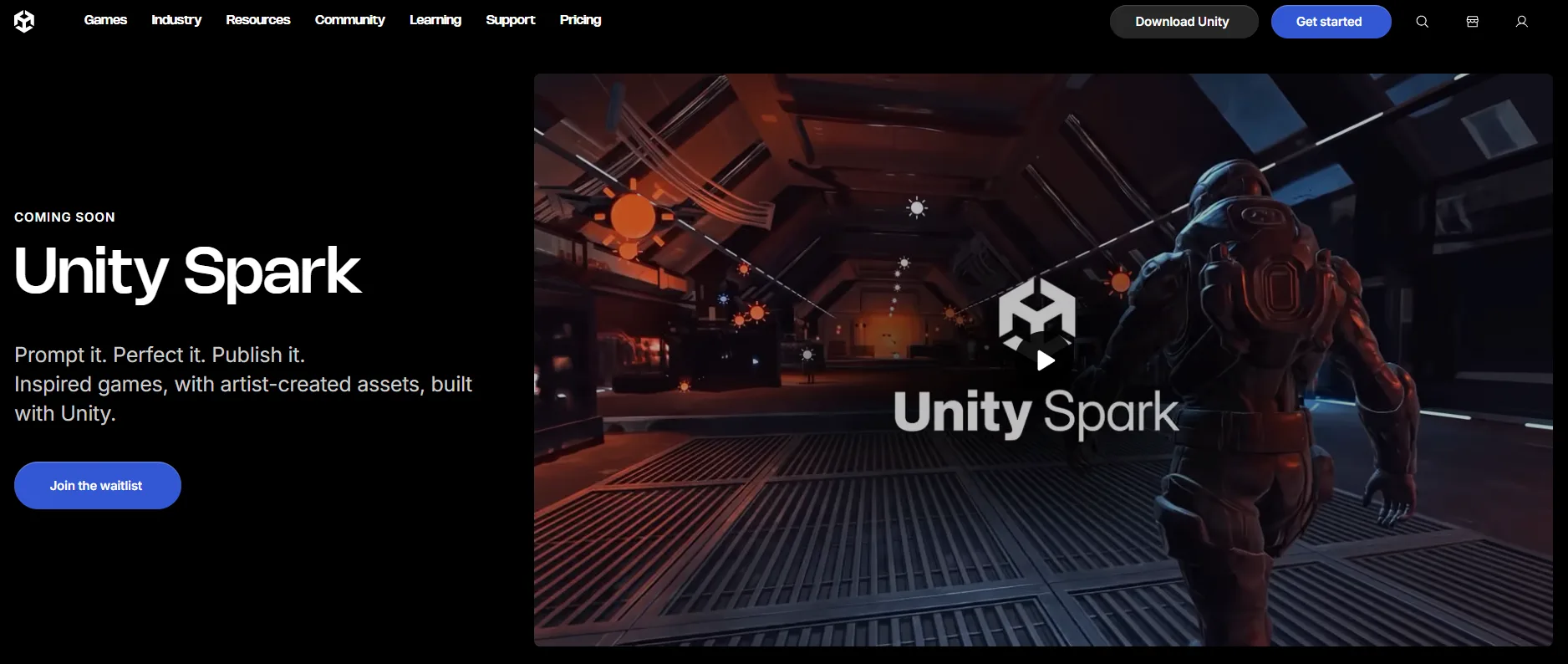
That difference means more than added convenience. Until now, the typical approach was to open an engine such as Unity first and then use AI inside it. Spark points toward a different flow: starting to make the game through natural language first, then moving into deeper engine functionality when necessary.
Ultimately, AI that once sat inside the game engine as a development aid is now beginning to move toward the starting point of game creation itself.