Commercializing ''Level 4'' Autonomous Driving Based on LiDAR and AI
Persuading Policy Through Real Road Driving Data... Repeating Google''s Strategy
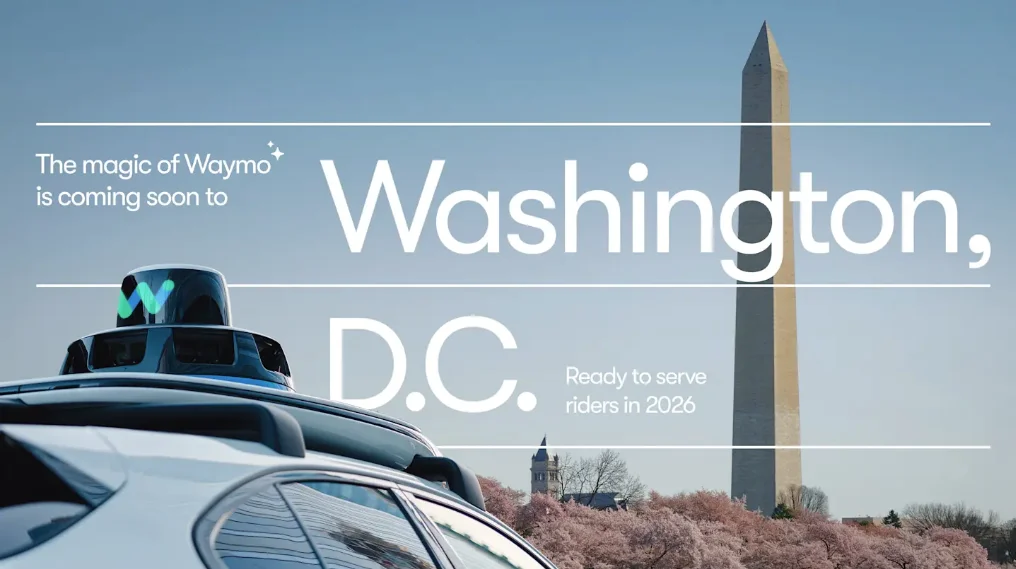
Waymo (Google's autonomous taxi service) entered Washington D.C. — not a simple city expansion but a signal that Google is targeting federal regulatory deregulation and building the institutional foundation for autonomous vehicle commercialization. Waymo currently operates 200,000+ paid robotaxi rides weekly across San Francisco, Phoenix, Los Angeles, and Austin. D.C.'s Department of Transportation (DDOT) doesn't yet permit driverless autonomous vehicle operations, but Waymo presented a specific timeline for commercialization by 2026 through close collaboration with policymakers. Waymo's technology stack: LiDAR (3D spatial scanning detecting object distance and shape); Radar (stable distance/speed data in adverse weather and night conditions); high-resolution cameras (road signs, traffic lights, pedestrians). These three sensor types are integrated in real-time, with AI computing a 360-degree perception and self-determining driving paths. Millions of kilometers of real urban driving data continuously train the algorithms — the goal is not to "act like humans" but to "respond more safely than humans," particularly in exceptional situations and complex intersections. Federal regulatory context: the Trump administration's AI Action Plan includes streamlining autonomous vehicle regulations; Waymo's D.C. presence positions it to directly influence the regulatory framework being developed; real-world safety data from D.C. streets will serve as the empirical basis for regulatory arguments. Competitive implications: Waymo's first-mover advantage in regulatory relationships may prove as valuable as its technical lead — the company that writes the regulatory language often shapes the market structure for years.