Quantum technology still feels distant. We often hear terms such as quantum computers, quantum communication, and quantum sensors, but it is still difficult to grasp how they touch our industries and everyday lives. AI quickly appeared before the public in forms that anyone could directly use, such as chatbots and image generation. Quantum technology, by contrast, usually operates in places that are not easily visible, such as research equipment, communication networks, security infrastructure, and precision sensors.
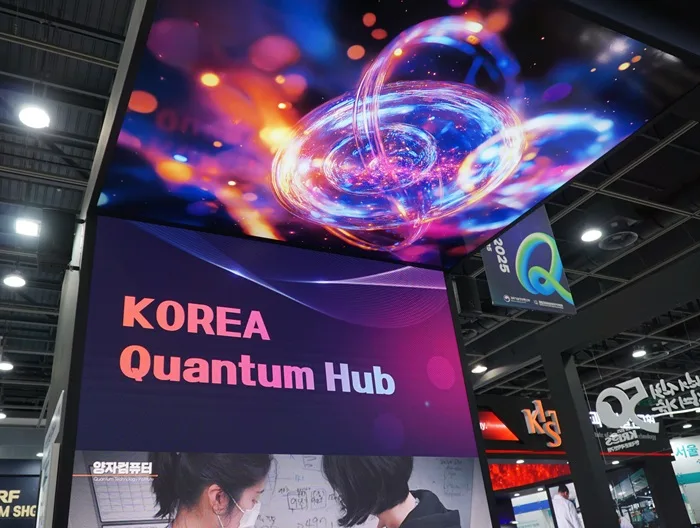
Amid this sense of distance, Quantum Korea 2026, held from July 2 to 4 at DDP in Seoul, seeks to bring quantum technology into the language of “industry.” The official theme of the event is “Quantum in Action, Grand Challenges for Innovation,” or in Korean, “Quantum Becomes Reality, Bold Challenges for Innovation.” This phrase is less a declaration that quantum technology has already fully entered our daily lives, and more a statement of direction: moving the possibilities of the laboratory into real-world problems and industrial arenas. In other words, it expresses the intention not to leave quantum technology as a distant technology of the future.

For that reason, this event is not so much a stage proving that the quantum industry has already been completed. Rather, it is closer to a scene in which Korea begins to call quantum technology an industry. The fact that the event brings together an opening ceremony, international research and industry exhibitions, an international conference, and public lectures suggests an attempt to move quantum technology from the language of researchers into the language of companies, policy, investment, and the public. But beginning to call a technology an industry is not the same as seeing it firmly established as one. This is the key point in reading Quantum Korea 2026. The event is less the destination of the quantum industry than a stage that helps us see where its starting line may be.
The Event Already Speaks the Language of Industry
If Quantum Korea 2026 is viewed simply as an academic conference, its structure is difficult to fully explain. If academic exchange among researchers were the main goal, an international conference alone would have been enough to serve much of that purpose. Yet this event brings together an opening ceremony, international research and industry exhibitions, an international conference, and public lectures. Its structure attempts to place quantum technology not only in the language of papers and research presentations, but also in the language of companies, policy, investment, and the public.
Each program also speaks to a different audience. The international conference still serves as the academic foundation. It is a venue where researchers share developments across major areas such as quantum computing, quantum communication, and quantum sensors, and where domestic and international researchers assess the current state of the technology. Without this axis, the technical foundation would be unstable even before quantum technology could be discussed as an industry.
Alongside that, however, the event places a research and industry exhibition. This exhibition does not merely present quantum technology as research output. It functions more like a device that shows the technology through equipment, companies, possible applications, and services. Public lectures take on another role. They lower the technical language that usually circulates only among experts into a language that society can understand. The opening ceremony and policy-oriented messages place quantum technology within the context of national strategic technology.
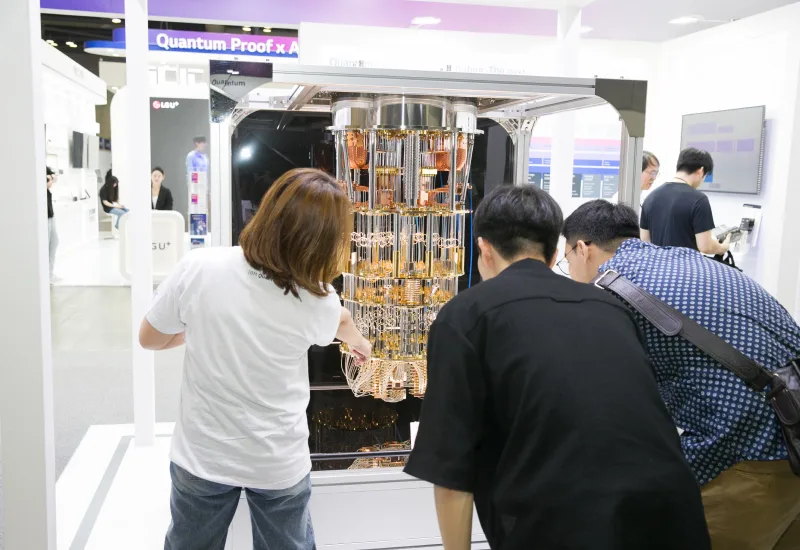
This structure shows that Quantum Korea 2026 does not intend to leave quantum technology inside the laboratory. Still, it is necessary to take one step back. Bringing multiple audiences into the same space is not the same as producing actual contracts, investment, hiring, or sales there. The structure of the event shows a direction: “We will make quantum technology into an industry.” But it does not prove that “the quantum industry has already been completed.” Rather, this event is closer to a starting point that shows what kind of stage quantum technology needs in order to acquire the grammar of industry.
Not Just an Academic Conference, But a Stage That Calls an Ecosystem Into Being
One point worth noting in Quantum Korea 2026 is that the exhibition sits at the center of the event. Quantum technology is, by nature, difficult to see. It is hard for the general public to touch a quantum computer directly or experience the operation of a quantum communication network in daily life. If AI spread in a way that reached the user’s fingertips through chatbots and image generation, quantum technology moves at a much deeper layer of infrastructure. For that reason, the exhibition is not merely a side program. It becomes a device that brings invisible technology into a form society can understand.
The role of the exhibition does not end with showing technology. Research institutions explain what kinds of problems their achievements may connect to, while companies translate those possibilities into equipment, solutions, and services. Government and public institutions reveal policy directions and support measures, while visitors, investors, and industry stakeholders gauge whether the technology can meet real-world problems. In this process, the exhibition functions not simply as a promotional space, but as a place where the language of research and the language of industry begin to mesh with one another.
In this sense, the exhibition does not confine quantum technology to one grand name. The public often associates quantum technology first with quantum computers, but the paths toward industrialization are broader than that. Quantum computing may connect to drug discovery, materials, optimization, and high-performance computing infrastructure. Quantum communication meets issues of security, cryptography, and national backbone networks. Quantum sensors are discussed in fields that require extreme precision, such as medicine, defense, precision measurement, and semiconductor processes. The exhibition space becomes a place where these different branches can be measured against the industrial problems they may address.
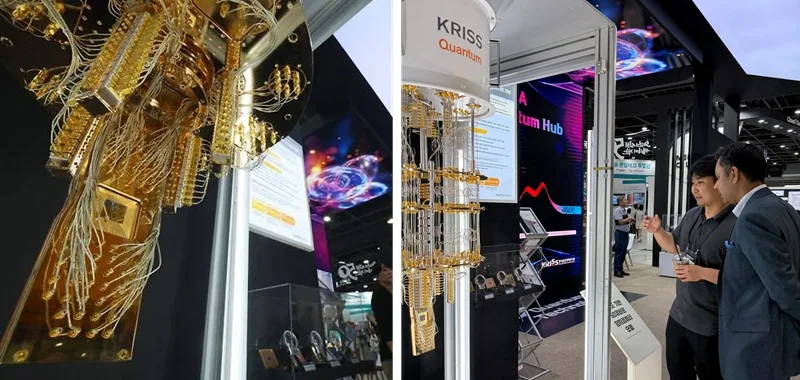
Still, an exhibition does not immediately mean industrial maturity. An exhibition shows what can be shown. But being showable and repeatedly functioning in the market are different matters. A technology displayed at a booth does not automatically become revenue, and a demonstration is not the same as commercialization. An exhibition can move quantum technology one step from “research of the distant future” to “an industrial candidate worth examining.” But for that candidate to cross into the actual market, more verification, more time, real demand, and institutional support are needed.
So when we say this event is not merely an academic conference, it does not mean that the academic dimension is unimportant. Rather, it means that research has begun to meet the languages of industry, policy, capital, and the public. The exhibition hall of Quantum Korea 2026 is not a space showing a completed quantum industry. It is better read as a place where the various actors surrounding quantum technology examine one another’s possibilities and begin to outline a still-loose ecosystem.
Outside the Event, There Is a Master Plan
Quantum Korea 2026 does not look like a one-off event because it is connected to a broader policy flow outside the event itself. On January 29, 2026, the Ministry of Science and ICT announced the First Comprehensive Plan for Fostering Quantum Science and Technology and the Quantum Industry. As the first comprehensive plan in the quantum field established under the Quantum Act, this plan becomes an important background for interpreting Quantum Korea 2026.
What stands out in this plan is a shift in emphasis. It does not leave quantum technology only as a future technology centered on research and development. Instead, it seeks to expand it into manufacturing, application, and market creation. The government also set goals of cultivating 10,000 quantum professionals and securing 2,000 quantum companies by 2035. This means treating quantum technology not simply as a collection of individual research projects, but as an ecosystem that must include talent, companies, standards, and markets.
With this background in mind, the structure of Quantum Korea 2026 can be read somewhat differently. The scene in which research institutions, companies, government, and the public are placed in one space is not just a matter of event management. It is closer to a stage that compresses the industry-academia-research-government ecosystem described by the government into a three-day event. If the international conference confirms the current state of research, the exhibition tests how that research can be translated into industrial language. Public lectures, meanwhile, move that flow beyond the circle of experts and into a social agenda that the public can understand.
Of course, the master plan is also closer to a future goal than to a present achievement. The numbers of 10,000 professionals and 2,000 companies by 2035 are not indicators already reached, but directions that still need to be built. The fact that companies and institutions are named in cooperative structures is also closer to agreement and preparation for building an industry than to the completion of that industry. A plan can present direction, but for that direction to harden into a real industry, there must follow technologies that work in the field, people who can handle them, demand willing to pay for them, and a sustainable market structure.
In that sense, the master plan gives weight to Quantum Korea 2026 while also clarifying the nature of the event. This is a place to confirm direction rather than results. The will to make quantum technology into an industry has clearly appeared on stage, but whether that will can lead to actual talent, companies, applications, standards, and revenue remains to be seen. What Quantum Korea 2026 shows is not the arrival of the quantum industry, but the kinds of language and structures that are becoming necessary in order to build it.
Why Are Public Lectures Necessary?
Public lectures may at first seem like a side program. But from the perspective of industrializing quantum technology, they occupy a more important place than they might appear to. For quantum technology to become an industry, researchers and companies alone are not enough. People who understand the technology must enter the field, investors and policymakers must be able to read both its possibilities and limitations, and society must also be able to understand why this technology needs to be prepared for.
Quantum technology is difficult not only because its concepts are complex. It is also difficult because it is hard to feel where it is used, why it is necessary, and how it differs from existing technologies. For that reason, public lectures go beyond the level of simply introducing difficult technology in an easy way. They are closer to a process of translating the language exchanged within expert communities into a language society can understand, and of moving quantum technology from a topic inside the laboratory into a social agenda.
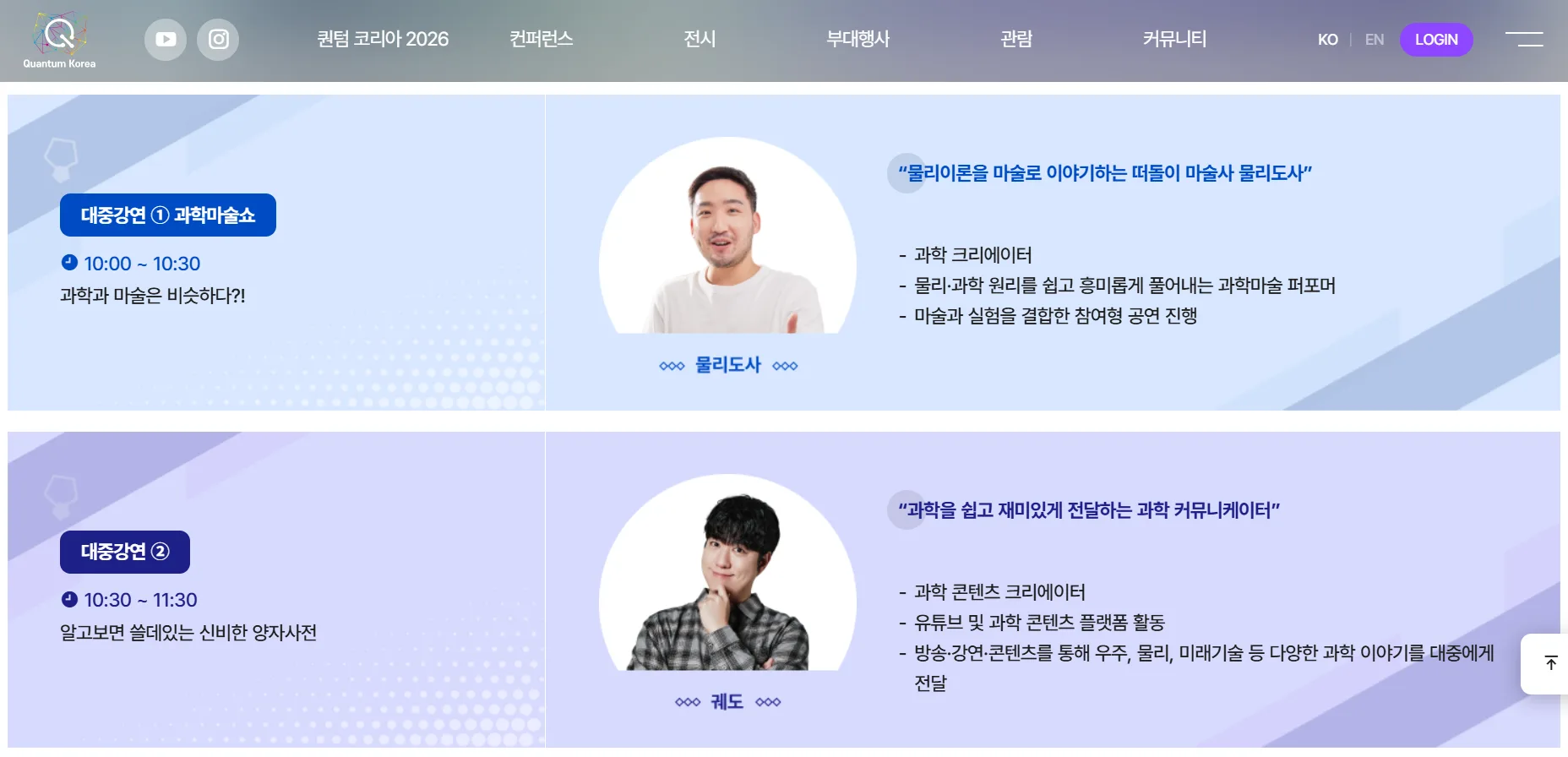
The inclusion of science YouTubers and public lecture formats in this event can be understood in that context. Explaining why quantum technology matters, what industrial problems it may connect to, and why preparation needs to begin now is not peripheral to industrialization. It is closer to one of the conditions that make industrialization possible. Only when more people understand the technology can education continue; only when education continues can talent emerge; and only when talent emerges can companies and markets gradually begin to move.
Of course, the presence of public lectures does not mean that quantum technology will immediately become popularized. A single lecture cannot close the distance between the public and the technology all at once. Still, the fact that such programs are included in the structure of the event is meaningful. Quantum Korea 2026 attempts not to leave quantum technology as something only for experts, but to bring it out as a technology that society must understand together. This, too, is not so much the result of industrialization as one of the foundations needed to prepare for it.
Between the Declaration of Industrialization and Its Realization
The significance of Quantum Korea 2026 does not lie in showing that quantum technology has already been completed as an industry. Rather, it lies in bringing a still difficult and uncertain technology out of the laboratory and translating it into the languages of industry, policy, companies, and the public. The official theme, the research and industry exhibitions, the public lectures, and the government master plan all point in a similar direction. Korea has begun to call quantum technology an industry, and this event is close to the moment when that call appears on stage.
But calling something an industry and becoming one are different matters. What matters in quantum technology is not a slogan, but use cases verified in actual fields. Even within quantum computing, the level of maturity differs by area, and not every industrial problem can be solved by quantum technology alone. For the time being, it may be more realistic to build step-by-step results by combining quantum technology with high-performance computing, AI, and existing semiconductor, communication, and sensor technologies. Quantum technology is less a magical tool that changes the world on its own than a foundational technology that gains strength when it connects with existing technological systems.
For that reason, the criteria for evaluating this event also need to change. The success of Quantum Korea 2026 cannot be judged only by the number of booths or the ambition of its slogan. The more important questions remain after the event ends. Among the technologies, institutions, and companies that appear in this year’s exhibition hall, how many will lead to actual contracts, revenue, standards discussions, and application cases by this time next year? Can the connections formed among research, exhibitions, policy, and public lectures move beyond one-time encounters and become sustained collaboration?
Quantum technology is still distant. Quantum Korea 2026 is a place that begins to call that distant technology in the language of industry. But beginning to call a technology an industry and seeing it firmly establish itself as one are not the same. Between the two lie a longer period of time than the energy of an exhibition hall, more layers of verification, and evidence that the technology is actually being used in the field.