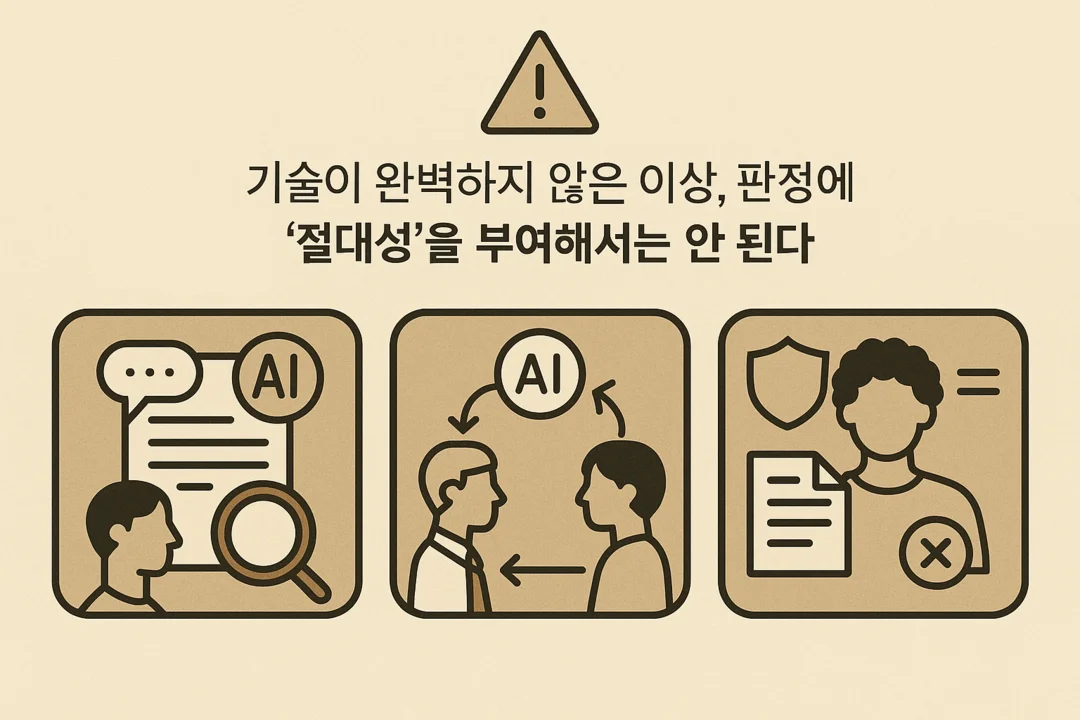
As AI detectors have been introduced to educational settings worldwide, countless students are being wrongly labeled as "cheaters." The limitations of AI text detection technology and resulting unjust judgment cases send serious warnings about AI ethics and educational fairness. In 2024, autistic student Moira Olmstead at a US university had her assignment score invalidated based solely on a detector''s "AI-written" determination — a pattern of unfair application visible in non-native speakers, special education students, and other "vulnerable groups."
AI detectors use statistical characteristics (sentence style, vocabulary frequency, consistency, grammar patterns) to score "AI-generated text" probability. Two fatal limitations: (1) False positive rate — human-written text can be judged as "AI-suspected." Large-scale tests show 1-2% to over 10% false positive rates; non-English students, neurodivergent (autism, ADHD) students, and students with limited academic writing experience are particularly vulnerable. Stanford research team confirmed "GPT detectors have a clear tendency to incorrectly identify non-native writers'' text as AI-written"; (2) Easy "circumvention" and reliability collapse — paraphrasers, AI humanizers, and prompt engineering techniques easily make AI-written text appear human. Only tech-savvy students can circumvent detection, deepening structural contradiction. Bloomberg experiments found even representative services like Copyleaks showed below 40% accuracy for latest GPT-4 text.
Victims are accumulating across the US, UK, Canada, and Australia. Students argue "disciplining based solely on AI detector results violates the presumption of innocence." Turnitin and other major AI writing detection services officially maintain their role as "reference material only — final decisions must be accompanied by teacher (or evaluator) professional judgment." Multi-dimensional evaluation: use AI results only as reference materials, reviewing Q&A, verbal presentations, and process documentation together. Policy guidelines: establish policies for sufficient teacher-student communication rather than immediately initiating disciplinary procedures upon any single AI determination. Inclusion and equity: mandatory additional protections (appeals, secondary review) to prevent vulnerable students from suffering false positive harm. Blanket reliance on AI "as absolute truth" is not only a technical limitation but a serious ethical issue — institutional reform strengthening human communication and fair procedures is what''s truly needed. The key question: "Is using AI a crime? Is any truly reliable AI judgment possible?"