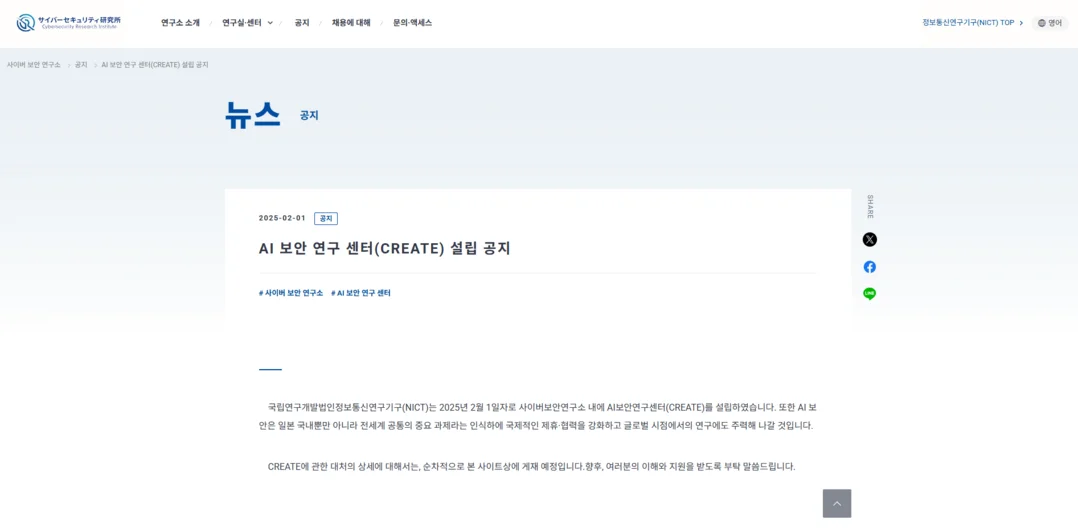
Japan''s Ministry of Internal Affairs and Communications is making a major transformation to its cyber attack threat response framework. The plan is to combine AI that consolidates expert experience with a vast database to complete a national-level cyber threat early detection and analysis system by 2026. The ministry is launching an "AI-based cyber threat information database" project led by the National Institute of Information and Communications Technology (NICT), with collaboration from key government institutions including the National Cyber Integration Office officially launched on July 1, 2025.
A key feature is comprehensively collecting and analyzing information from covert cyber spaces like the "dark web" that are generally difficult to detect. While conventional cybersecurity relied on expert "experiential intuition" and limited data analysis, AI learning vast threat data and expert analysis patterns enables automated judgment and prediction for swift, accurate responses. Threat information is collected and analyzed in real time from underground markets, illegal forums, and hacker communities inaccessible to general security systems. Benefits include minimizing economic losses through early threat recognition (with cyber attack damage reaching hundreds of billions of yen annually), AI partially compensating for Japan''s cybersecurity expert shortage, and system-wide cyber safety net through real-time threat detection/analysis and alerts.
Remaining challenges: AI imperfections may cause incorrect threat judgments leading to social confusion (requiring surveillance and supplementary systems); dark web data collection could raise concerns about indiscriminate personal information access or privacy violations (requiring clear standards and transparency). Japan''s government is actively pursuing strengthened information sharing and joint response frameworks with the US, Europe, and other major nations. Within 5-10 years, AI-based threat detection and database systems are expected to become essential infrastructure for national critical infrastructure in finance, power, and healthcare. A "hybrid crisis management framework" combining human expert intuition with AI''s rapid analysis capability is essential, alongside introduction of "Explainable AI" and strengthened ethical/legal measures for privacy protection to address AI misjudgment and data misuse risks.