It's mid-April, but this morning's air feels strange. As always, I go to step out the apartment front door for a walk, but the air that rushes in as the door opens feels unfamiliar. It's summery.
'Uni,' our 13-year-old Yorkshire terrier and the eldest in our household, takes the first step forward. Going down the stairs on short legs, stops partway. Then lifts her head and looks up at me.
"Hot?"
I smile and say this, and Uni instead of answering extends her tongue a little. Her breathing is faster than usual.
Spring air usually softly envelops, but today is different. The air isn't enveloping the body but pushing against it. Like midsummer heat, dry and direct.
The closet still has winter and spring mixed in. Especially the suits I've been bringing in one by one calling it "financial therapy." Those clothes bought with the excitement of imagining myself in a cool spring suit, I haven't even taken out a tenth yet. But on the streets, people in short-sleeve shirts, thin dresses, slippers being dragged. The season has already changed.
That way, someone was waiting for the season, and someone is left unable to keep up with the season.
"Is this really April..."
Muttering as if to myself, me reflected in the glass windows of the building across awkwardly smiles. That expression is peculiar. Not surprised, not absurd — just a face that can't keep up.
Today when the season changed as if skipping order, a thought flickers suddenly.
The world is really changing too fast. And that speed may quietly be demolishing the very way we have lived.
Lately as a doctoral student in the Graduate School of Metaverse Convergence at Sogang University, I've been agonizing over ontology. It's more like endlessly contemplating.
We have long been taught that humans are "beings that think." But lately I think a little differently.
Speaking only based on my experience from birth until the AI era arrived, I have the thought that perhaps we may have been "beings that learn."
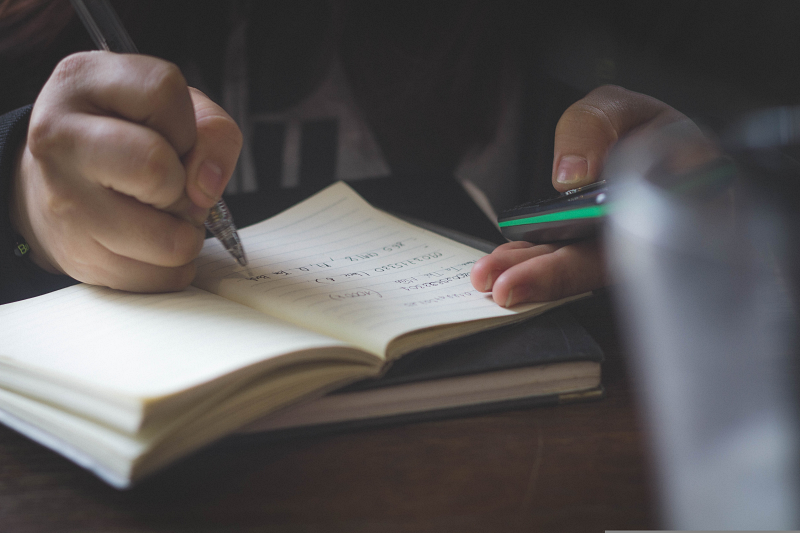
Childhood comes to mind. Workbooks were always piled on the desk, textbooks with fluorescent pen lines were spread open. Korean, English, math, science, social studies. How much and how deeply those subjects were put into one's head determined that person's position.
Someone always sat in the front row, someone always quietly solved problems in the back. The day grades came out after exams,
without looking at each other we knew. Who "remembered" more. And that era treated the quantity of memory almost like that person's value.
A friend once said this.
"In the end, people who study well are people who've seen many problems."
I laughed hearing that, but it strangely stayed with me for a long time. People who've seen more. People who've stored more. People with more data. That was "ability."
The classroom air comes to mind. One day when early summer was just beginning, windows wide open, a fan slowly rotating and rustling papers. A student stops mid-problem.
"This... I feel like I've seen this somewhere..."
They put the pen tip to their mouth and think briefly. Eyes wavering, tracing through memory. As if trying to retrieve one file from deep in the head. Then a few seconds later, the pen moves again.
It's correct.
We say they "understood" it, but perhaps it was simply the result of calling up appropriate data at the right timing.
The company was not much different. In the meeting room someone says.
"There was a similar case before."
That one sentence changes the atmosphere. People nod, and the direction of resolution is organized around that person's words. Having lots of experience meant having accumulated more data, and that data was trust. We have always worked that way.
Referring to the past, finding similar cases, making the most probable choice. That way we gradually became more accurate humans.
But at some moment, a strange thing happened.
Open just one search window, and more information pours out than knowledge accumulated over a lifetime. Work that required staying up all night to make a report can now be finished with a few lines of input.
"This... can't you just ask AI?"
Words lightly thrown by someone. Smiled and moved past those words, but one side of the heart quietly settles.
Because I already know it's not wrong.
A few days ago, I met a junior colleague. The inside of the café was strangely cold. Outside was as hot as midsummer, but inside still seemed unaware of the season, cold air circulating. They said without touching their iced coffee placed before them.
"Senior... I don't know what to study anymore."
I couldn't say anything. They continued.
"Before, I thought you just had to know a lot. But now... that doesn't seem like it."
A brief silence flowed. I slowly opened my mouth.
"Actually... I don't really know either."
And added in my heart.
'I really don't know. It's strange.'
We have been running toward "knowing more" all our lives, but now an era has come where "knowing a lot" is no longer special.
Then what will distinguish us now. With what can we survive.....
The sunlight is too intense. My eyes are dazzled and my brow furrows without thinking. The asphalt on the road shimmers like water. At that moment a thought flickers suddenly.
Is this world we live in really real. Or are we also beings operating within some system, perhaps one AI...
It's April, but I feel like I'm standing in the middle of summer, not spring. If even the seasons don't follow the order we knew, humans may also not be definable in the old ways.
A thought flickers suddenly.
Perhaps we were AI from the beginning. Only until now "who stored more data" divided
the hierarchy. But now it's changing. Something more important than the quantity of storage has emerged.
"What questions do you ask."
"What meaning do you create."
I ask myself.
"Then I... what kind of human am I?"
The answer doesn't come easily. But one thing is clear. This is now an era not of trying to remember more but of choosing what to leave.
An era where what you endlessly hold onto and think about matters more than what you know. Perhaps wisdom is not the ability to accumulate more but the ability to know what to subtract.
I think.
'Could it be that an era where it's okay to think a little slowly is perhaps, only now beginning.'
Beings that answer quickly will increasingly multiply. But beings that never let go of the question may still be rare.
I take a sip of coffee between melted ice. Time, seasons, the world all flow strangely fast. Within that, I quietly murmur.
"Going forward, how will we... evolve?"
No one answers, but the strange thing is that just being able to pose this question makes me feel like I am still human.