Launched in 2005, YouTube created an environment where anyone could upload and share videos online. People could reach audiences without relying on the distribution networks of traditional broadcasters or production companies. YouTube subsequently grew into one of the world's largest video platforms, significantly influencing how videos are produced and consumed.
YouTube was co-founded in 2005 by Chad Hurley, Steve Chen, and Jawed Karim, who had previously worked together at PayPal. Google acquired the company the following year, in 2006. Hurley, who studied design, served as YouTube's first CEO and played a leading role in shaping its early user experience and business operations.
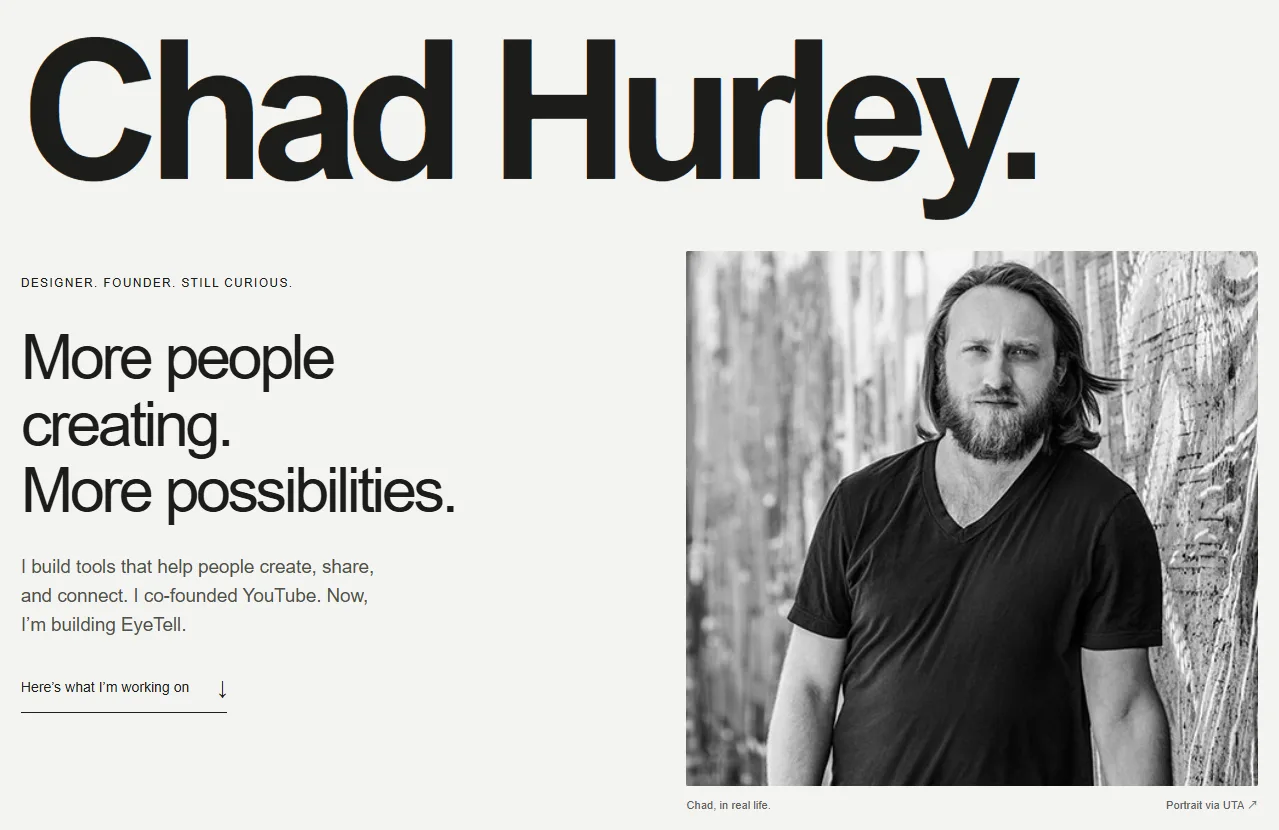
Hurley is now pursuing a new venture through EyeTell, an AI-powered video production startup. In September 2026, he introduced an AI-based video platform called EyeTell TV. The service's production process and key features received renewed attention through interviews and media coverage in October.
EyeTell brings together multiple AI video production technologies in a single environment, helping users turn their ideas into videos. Through EyeTell TV, the company has also introduced a feature that allows viewers to suggest situations or scenes that can be incorporated into the video. While YouTube made it easier to publish and share videos, EyeTell aims to make video production more accessible through AI. By exploring ways for viewers to influence what appears on screen, it also offers an early example of how AI could change not only the production of videos but also the experience of watching them.
Making Videos Without a Traditional Production Company
A screenplay alone is not enough to produce a film or television drama. Producers must find suitable locations, cast actors, and arrange the equipment and crew needed for filming. Period dramas require even more preparation, including the recreation of historical settings and costumes. After filming, the footage must still go through editing, sound production, visual effects, and other processes before becoming a finished work. This is why turning a good idea into an actual production can require considerable time and money.
EyeTell is designed to handle some of these production tasks through AI by bringing multiple generative video technologies into a single working environment. Instead of arranging physical locations and hiring actors for every scene, users can generate backgrounds, characters, and scenes with AI. By combining image, video, and audio generation technologies, the platform allows users to assemble and revise video sequences without conventional filming. Its main distinguishing feature is the potential to reduce the physical preparations involved in production and move much of the process onto a computer.
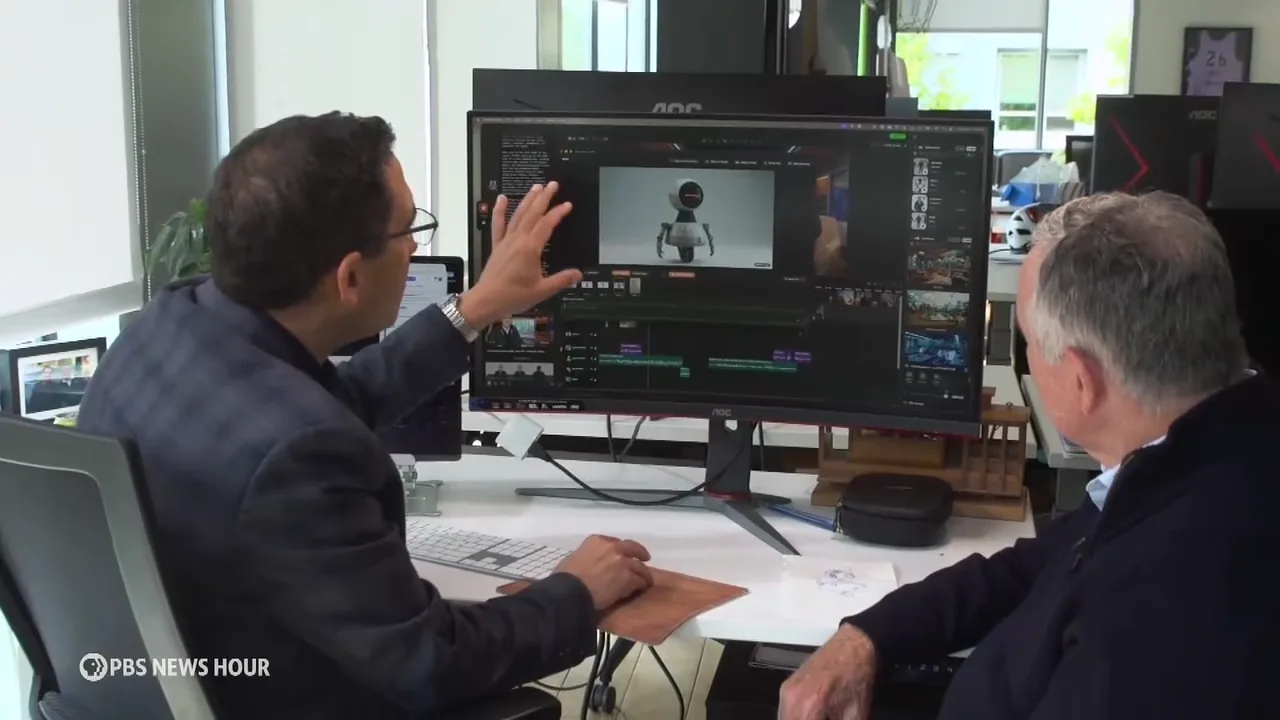
One example was introduced in media coverage in October 2026. Gillian, a screenwriter with filmmaking experience, used EyeTell to produce an episode of a period drama titled Ashcombe House in approximately one week. The episode features historical characters, settings, and horses, yet no actual actors, filming locations, sets, or animals were used. Gillian produced the video on a computer in a shared office space.
Scenes that would ordinarily have required locations, props, and actors were instead generated with AI. The significance of this example lies in how much of the preparation and filming process could be transferred to computer-based production. However, Gillian already had experience in screenwriting and filmmaking. This case alone does not demonstrate that someone without production experience could achieve the same results, nor does it establish exactly how much time or money the technology saves.
This is also where EyeTell seeks to distinguish itself from standalone AI video generators. Rather than simply generating individual clips, the platform aims to connect different generative technologies to support the process of turning a story into a complete video. Its development team includes not only engineers but also professionals with experience in traditional animation and filmmaking. Andrew Gordon, who previously worked as an animator at Pixar and Warner Bros., now serves as EyeTell's Chief Storyteller. He has explained that although AI can assist with video production, human judgment and revision remain necessary to make the results look natural and convincing.
When Viewers Can Change the Story
EyeTell is interested not only in the people who produce videos but also in the role of those who watch them. A demonstration featured in October showed a video set inside a store, with suggested scenarios such as a mail carrier delivering a pizza, a panda eating food, and a duck flying into the shop. Rather than selecting from a collection of prerecorded scenes, viewers could propose situations that AI would then generate and incorporate into the video. According to the developers, these changes could be produced in near real time.
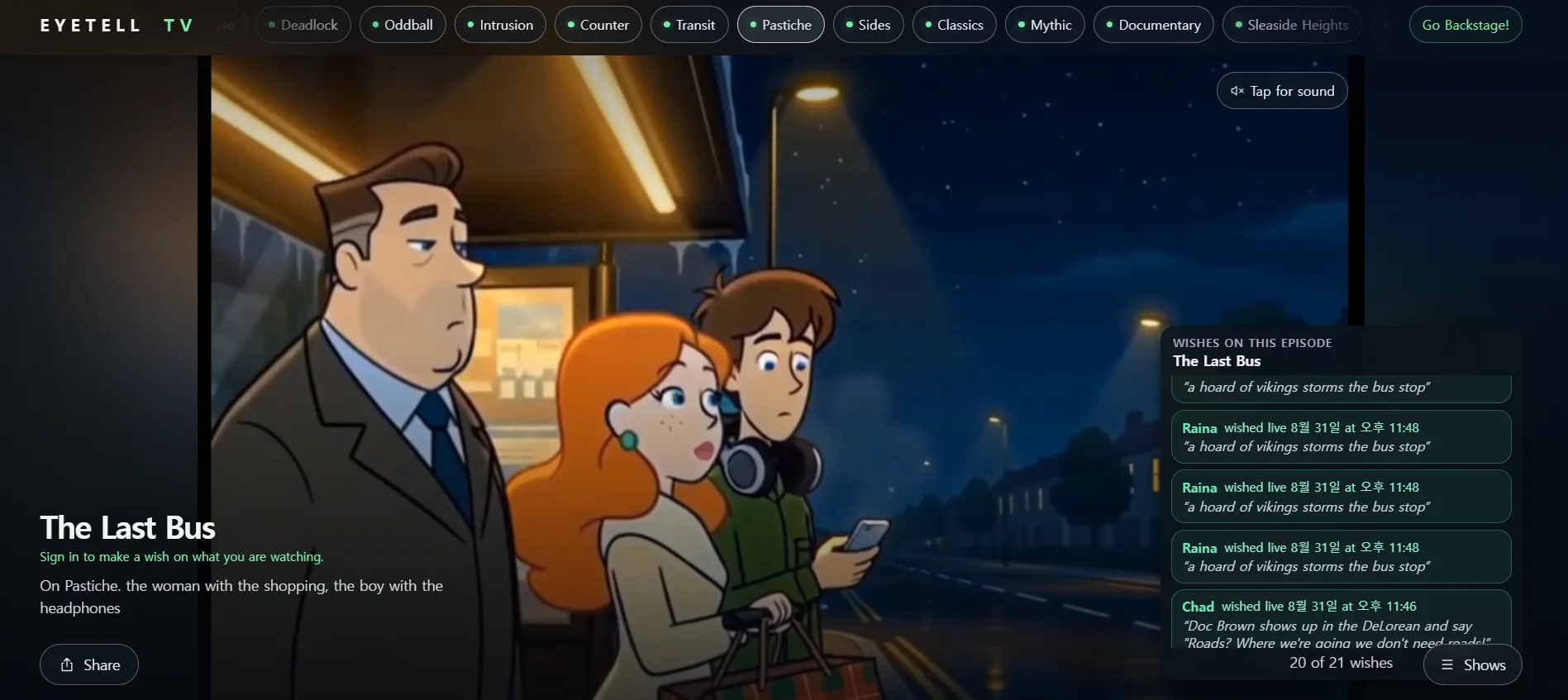
As this approach develops, viewers' requests could influence not only individual scenes but also characters' actions and the progression of events. Even when starting with the same story, different requests could introduce new situations and produce different sequences. Whereas traditional interactive content typically relies on choices designed in advance, generative AI may provide a way to expand the range of possible outcomes.
For now, however, the demonstrated functionality is largely limited to relatively simple scene modifications. It has not yet been established whether the platform can freely alter a feature-length narrative while maintaining consistent characters and storylines. Nor can every viewer request necessarily be accepted. The platform therefore needs rules for determining which changes are permitted and which should be restricted.
In other words, EyeTell TV's ambition goes beyond allowing viewers to add new elements to a video. Traditionally, creators complete a story and audiences watch it. EyeTell introduces the possibility that viewers' requests could influence how a story unfolds. Although the technology remains limited to relatively simple scene changes, it is noteworthy for suggesting a shift from watching a finished story toward participating in the process through which that story takes shape.
From Predefined Choices to AI-Generated Scenes
Content that changes according to audience choices is not entirely new. Video games and interactive films are familiar examples. Traditionally, however, creators have had to design the actions available to users and prepare the scenes or outcomes that follow.
A well-known example is Netflix's interactive film Black Mirror: Bandersnatch. Viewers make decisions about the protagonist's actions at certain points, leading to different sequences and endings. However, every available choice and resulting filmed scene falls within a structure prepared in advance by the creators. Games can generate a variety of outcomes through rules and systems, but the actions players can take and the ways the game responds are still fundamentally governed by a designed framework.
What makes EyeTell TV interesting is its use of generative AI in this process. Instead of choosing from predefined options, viewers can describe the situations they want to see, and AI generates scenes in response. Creators may therefore be able to produce new situations without preparing every possible scene beforehand. This does not necessarily mean that video is becoming a game. Rather, it suggests a way to reduce the amount of content that must be produced in advance for an interactive experience.
However, the ability to generate new scenes does not automatically result in a coherent story. If a viewer requests a change in the protagonist's behavior or introduces a new character, should that change persist in subsequent scenes? If a new event contradicts an established part of the story, which should take priority? And how should the system handle conflicting requests from different viewers?
These issues concern not only video generation technology but also the management of narrative structure. The personalities and relationships of characters, causal connections between events, and boundaries of permissible changes all need to be considered. Games have long used rules and systems to manage player actions and their consequences. AI-generated video experiences may similarly require structures that preserve narrative consistency.
What Might the Next Generation of Video Platforms Look Like?
For EyeTell's approach to become an established service, several challenges remain. Beyond video generation itself, the platform must determine whether people will continue producing and watching content over time, and how the costs of operating such a service can be sustained.
Traditional video platforms distribute completed videos to multiple viewers. EyeTell TV, by contrast, uses AI computing resources whenever a viewer's request leads to the generation of a new scene. As participation increases, operating costs may rise accordingly. The platform therefore needs to explore a sustainable revenue model, including whether ordinary viewing and content generation should be treated differently, and whether fees should depend on the number or length of generated videos. EyeTell's specific revenue structure and business performance, however, have not yet been sufficiently disclosed.
Content rights and permissible uses also need to be considered. Copyright and rights relating to a person's likeness may become relevant when existing works or real individuals are incorporated into generated content. The platform must also establish standards for restricting inappropriate requests. Because viewers can directly influence video content, it will be necessary to define which requests are allowed and how extensively existing material can be modified.
Another important question is whether these features will actually make viewing more enjoyable. Not everyone wants to intervene in a story, and the freedom to modify scenes does not necessarily improve the quality or entertainment value of the content. The viewing experience may ultimately depend on which kinds of content benefit from participation and how much control viewers are given.
EyeTell is still experimenting with new approaches to video creation and viewing, and it is too early to assess its audience size or commercial success. Nevertheless, the fact that a YouTube co-founder is once again developing a video platform is noteworthy. Where YouTube helped people share their own videos, EyeTell is exploring the possibility of making video creation more accessible and allowing audiences to participate in shaping what they watch.
Ultimately, what matters is not simply how many videos AI can generate, but what kinds of stories people will create with the technology and how they will experience them.