Where Is the Future of Data Privacy Heading?
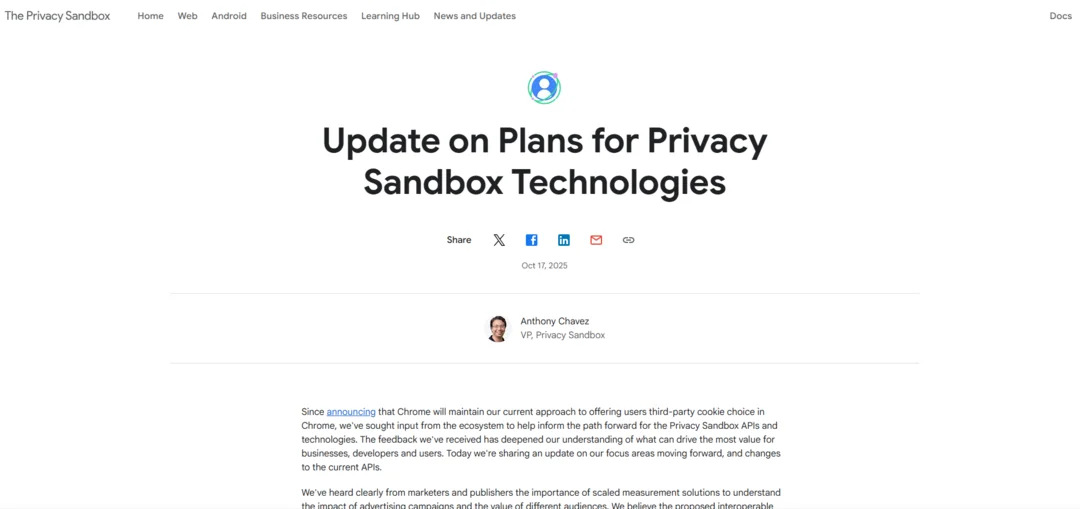
Google made an announcement that could change the direction of the web ecosystem: "Phasing out the key technologies of the Privacy Sandbox project." This is not simple technical adjustment -- it is the official formalization of a direction change for the "cookie-free advertising ecosystem" experiment Google has pursued for 5 years. What was Privacy Sandbox: Google project since 2019 with a simple goal: "eliminate third-party cookies while enabling the advertising industry to function." The technical alternative: enabling "interest-based advertising" and "performance measurement" without directly tracking user web activity. APIs developed: Topics API (classifying user interests at browser level); Attribution Reporting API (measuring ad effectiveness without individual identification); Protected Audience (performing retargeting ads within the browser); Private Aggregation API (aggregating data without individual identification). Why Privacy Sandbox is being wound down: UK Competition and Markets Authority (CMA) investigation found Privacy Sandbox could advantage Google advertising systems over competitors; advertisers and publishers raised concerns that the proposed alternatives performed worse than third-party cookies; the 5+ year timeline caused market uncertainty without delivering a working replacement. What comes after Privacy Sandbox: Google announced it will maintain third-party cookie support in Chrome while continuing to develop privacy-preserving alternatives; the advertising industry is now left to develop its own solutions including contextual advertising (no tracking), first-party data strategies, and data clean rooms. The privacy paradox revealed: the failure of Privacy Sandbox demonstrates that creating a privacy-preserving alternative to third-party cookies that also maintains advertising effectiveness is genuinely difficult; the cookie problem has not been solved, it has been deferred.