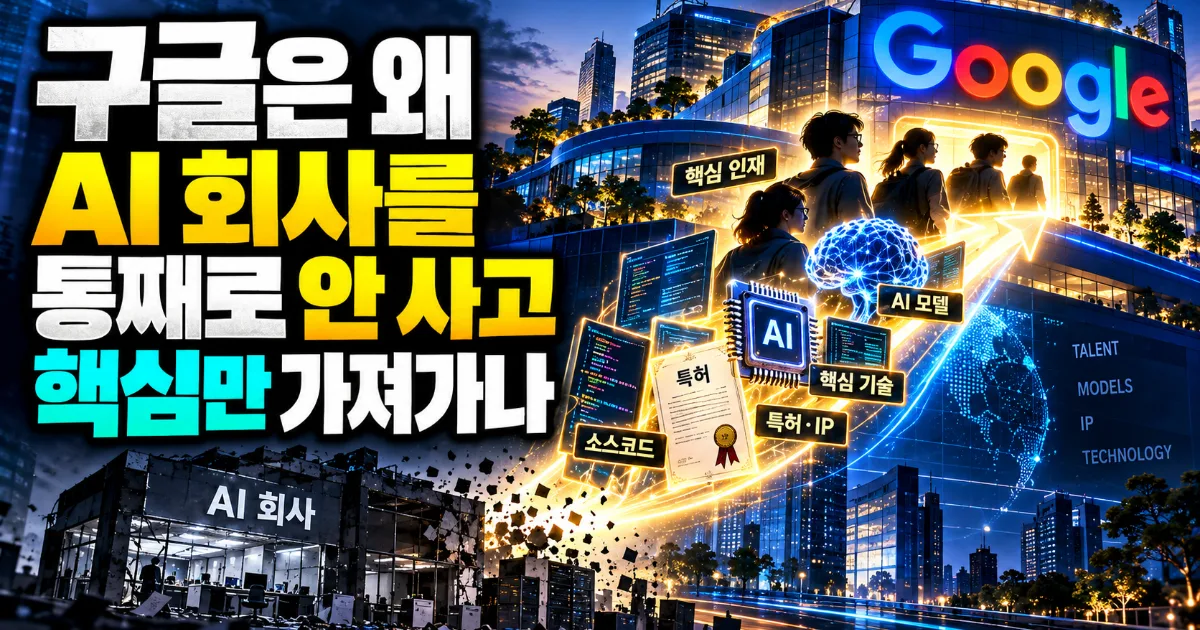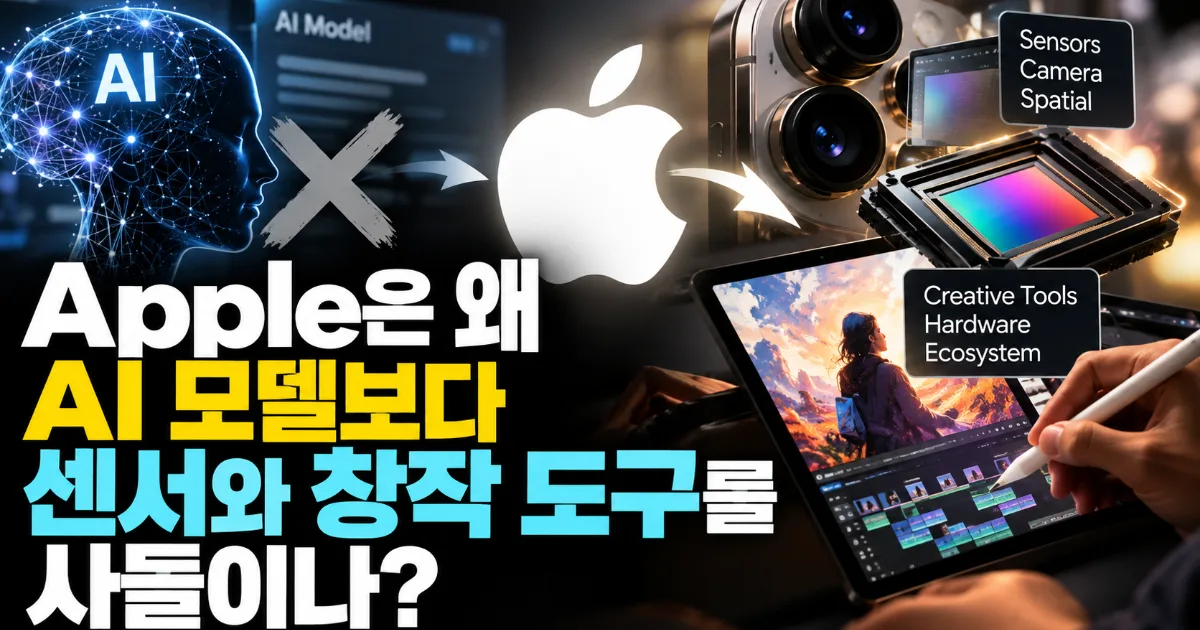
Among this year’s EU Digital Markets Act gatekeeper acquisition disclosures, Apple’s movement looks different from Google’s.
Google is putting AI agents, cloud security, and 3D generative AI at the center. Apple, by contrast, is collecting smaller and more tightly connected pieces: personalized audio, sensors, video-production tools, data observability, SwiftUI code generation, voice, biometric and audio interfaces, virtual avatars, color grading, and home vision AI.
On the surface, this looks like a collection of small technology acquisitions and talent arrangements.
But when viewed through Apple’s product philosophy, the direction becomes clear.
Apple does not appear to see AI only as a giant chatbot service. It sees AI as an experience that seeps into the iPhone, Mac, iPad, Apple Watch, AirPods, Vision Pro, developer tools, and creative applications. The Apple transactions that appear in the 2026 DMA list show precisely that direction.
The first major flow in Apple’s list this year is audio.
In June 2026, Apple notified a transaction involving Huxe AI. The deal included the right to make employment offers to certain employees and a non-exclusive license to Huxe’s intellectual property. Huxe is described as a company that provides a mobile application for creating personalized audio content.
This entry may look small, but it matters.
Apple already owns major audio touchpoints: AirPods, Apple Music, Podcasts, Siri, iPhone, Apple Watch, and CarPlay. Personalized audio content connects naturally to that ecosystem. The ability to generate or summarize audio information based on a user’s schedule, interests, location, health status, or work context could become an important part of Apple’s AI experience.
If Apple AI becomes not only a chatbot on a screen but also a personal assistant heard through the ear, technology like Huxe’s personalized audio becomes strategically meaningful.
The second flow is sensors and interfaces.
In May 2026, Apple notified a transaction involving Sonera, including the acquisition of certain assets and the hiring of certain employees. Sonera is described as a company developing chip-based magnetic sensors. In January 2026, Apple notified a transaction involving Q.ai, described as a company developing sensor-based technologies for voice, biometric, and audio interfaces.
These two transactions show that Apple is connecting AI to sensory interfaces.
For AI to help users, text input alone is not enough. Devices need to understand voice, movement, biometric signals, surrounding environments, gaze, gestures, and spatial context. Apple has long treated this layer as central. Touch ID, Face ID, health sensors in Apple Watch, spatial audio in AirPods, and eye and hand tracking in Vision Pro are all products of a philosophy that combines sensors and interfaces.
Q.ai and Sonera extend that logic.
The interface of the AI era is not only the keyboard and the screen. It is shifting toward speaking, listening, looking, moving, and wearing. Apple’s interest in sensor-based voice, biometric, and audio interfaces, along with chip-based sensor technologies, can be read as preparation for embedding AI more deeply into devices.
The third flow is creative tools.
In March 2026, Apple notified the acquisition of the full share capital of MotionVFX, along with the hiring of employees and contractors. MotionVFX develops and provides plug-ins and visual-effects software used in third-party video-editing programs. In January 2026, Apple notified a transaction involving Patchflyer, the company behind Color.io, including the acquisition of certain assets and the hiring of its sole employee. Color.io is described as a web-based application for color management and grading in digital imaging.
This connects directly to one of Apple’s long-standing strengths.
Apple is also a company of creative tools. Mac, Final Cut Pro, Logic Pro, iPad, Apple Pencil, and Vision Pro are all connected to creative workflows. In an era when AI generates images and videos, Apple is likely to focus less on simply offering a generation model and more on embedding AI inside the tools creators already use.
MotionVFX and Color.io matter from that perspective.
As AI video generation spreads, the value of post-production, color correction, visual effects, templates, plug-ins, and editing workflows also increases. Even if generative AI creates the initial output, creators still need to refine the final result and align it with the tone of a brand or work. Apple’s absorption of such tools can be read as a move to control the production pipeline of the AI creative era.
The fourth flow is developer experience.
In February 2026, Apple notified a transaction involving Rabbit 3 Times, known as Play, including the acquisition of certain assets and rights to hire employees. Play is described as providing iOS and macOS tools that support design, prototyping, and real-time SwiftUI code generation.
This entry touches the core of Apple’s ecosystem.
The strength of Apple’s platform does not come only from hardware. It also comes from the app ecosystem. If developers can build iOS, macOS, and visionOS apps more quickly, and connect design and code more naturally, the productivity of Apple’s platform increases. SwiftUI is Apple’s declarative UI framework. If real-time code generation and prototyping are combined with SwiftUI, this can lead to an AI-based app-development experience.
If Google absorbs AI coding IDEs, Apple is moving toward strengthening the UI and app-building flow inside its own platform.
This is an Apple-like approach. Rather than trying to control the entire general-purpose developer-tool market, Apple is bringing in technology that makes the experience of building apps inside the Apple ecosystem smoother. The value of AI for developers is not only code completion. It is also the shortening of the production flow from design to code.
The fifth flow is observability and system trust.
In March 2026, Apple notified a transaction involving SigScalr, including the acquisition of certain assets and the hiring of certain employees. SigScalr develops data log management and observability tools.
Observability is becoming increasingly important infrastructure in the AI era.
As AI functions enter devices and apps, companies need to trace what data was processed, what errors occurred, what performance issues emerged, and where user experience broke down. For a company such as Apple, which emphasizes privacy protection and on-device processing, observability is not merely a developer convenience. It is a foundation for trust and quality management.
The SigScalr entry shows that Apple is also interested in the operational tools needed to place AI features inside products.
The sixth flow is virtual avatars and home vision AI.
In January 2026, Apple notified a transaction involving Animato, including the right to hire certain employees, a non-exclusive IP license, and the acquisition of patent applications. Animato develops and distributes software for virtual avatars used in video chat and tutoring. In the same month, Apple notified a transaction involving PromptAI, through which it received a non-exclusive license to PromptAI’s intellectual property and the right to hire certain employees. PromptAI is described as a company developing visual intelligence for the home.
These two entries evoke Vision Pro, FaceTime, education, and home AI experiences.
Virtual avatars could become important interfaces for video conferencing, remote education, tutoring, and spatial computing. PromptAI’s home vision AI could connect to home cameras, devices, smart homes, security, and daily assistance. Apple already has HomeKit, Apple TV, iCloud, iPhone cameras, and Vision Pro. If home vision AI is added to this ecosystem, Apple could expand into functions that understand and assist the user’s living space.
But Apple is not handling all of this through large AI-platform acquisitions.
Apple’s 2026 list includes “certain assets,” “certain employees,” “non-exclusive licenses,” “patent applications,” and full share acquisitions. In some cases, Apple buys the company. In others, it secures employees and IP access. This means Apple is selectively absorbing the functional pieces it needs according to its product ecosystem.
In this sense, Apple’s AI strategy differs from Google’s or Microsoft’s.
Google puts enterprise AI agents, cloud security, and 3D generative AI at the forefront. Microsoft’s movement is closer to enterprise-work automation and governance, including finance, legal, data engineering, and AI application-quality evaluation. Apple, by contrast, focuses on the device experiences users touch directly, sensory interfaces, creative workflows, developer tools, and home and avatar experiences.
Apple is trying to make AI less a “talking model” and more a “felt function.”
The place where users encounter Apple AI may not be a search box or a chatbot window. It may be personalized audio heard through AirPods. It may be biometric or environmental signals understood by Apple Watch or iPhone sensors. It may be an avatar operating in Vision Pro. It may be an AI correction function inside Final Cut or an image-editing tool. It may be real-time code generation in SwiftUI development tools. It may be visual intelligence connected to a home camera.
From this perspective, Apple’s transactions this year are small but consistent.
Huxe is about audio experience.
Sonera and Q.ai are about sensors and interfaces.
MotionVFX and Patchflyer are about video and image-creation tools.
Play is about app design and SwiftUI code generation.
SigScalr is about logs and observability.
Animato and PromptAI are about avatars and home vision AI.
Apple is not placing a model name at the center of its AI strategy. It is moving closer to letting AI quietly change the product experience.
This is both Apple’s strength and its limitation.
The strength is integration. Apple can design hardware, operating systems, apps, chips, sensors, services, and developer tools together. Even small technology pieces can become large user experiences once they enter the Apple ecosystem. For example, sensor-based audio interfaces or personalized audio technologies gain greater meaning when combined with AirPods, iPhone, Apple Watch, and Siri.
The limitation is speed and openness. Apple tends to prioritize its own integrated experience over external ecosystems. In an AI market moving quickly, where developers and enterprise customers demand open models and cloud-based agents, Apple’s careful absorption strategy may appear slow.
But looking only at the DMA list, Apple’s direction is clear.
Apple is not entering the AI market by buying a large AI model company. Instead, it is strengthening the touchpoints users actually experience. Sound, sensors, video, images, code, avatars, the home, and logs. When these small touchpoints accumulate, they become an Apple-style AI experience.
AI competition is not determined only by the size of large models.
What matters is where the model enters the user’s life.
Apple is buying precisely that “where”: the ear, the wrist, the screen in front of the eyes, the developer’s canvas, the video-editing timeline, the camera inside the home, and the app-building tool.
That is why Apple’s DMA list this year is quiet but important.
Apple may not be the loudest company in the AI war. But it is one of the companies with the most user touchpoints. It is quietly absorbing the sensors, creative tools, and interface technologies needed for those touchpoints.
Ultimately, Apple’s question is not, “What is the strongest AI model?”
Its question is more product-oriented.
How will AI work naturally inside the user’s hands, ears, eyes, home, creative tools, and development environment?
The Apple transactions revealed in this year’s DMA list are small answers to that question.
Apple is trying to make AI not a separate service that users open, but a function that melts into device and software experience. To do that, it does not need one giant model alone. It needs many small technologies that read the senses, support creation, smooth interfaces, and observe systems.
Apple is collecting those pieces.