Collision over Subscription Fees, Platform Control, and Content Dominance
Streaming Market Entering Second Cable War
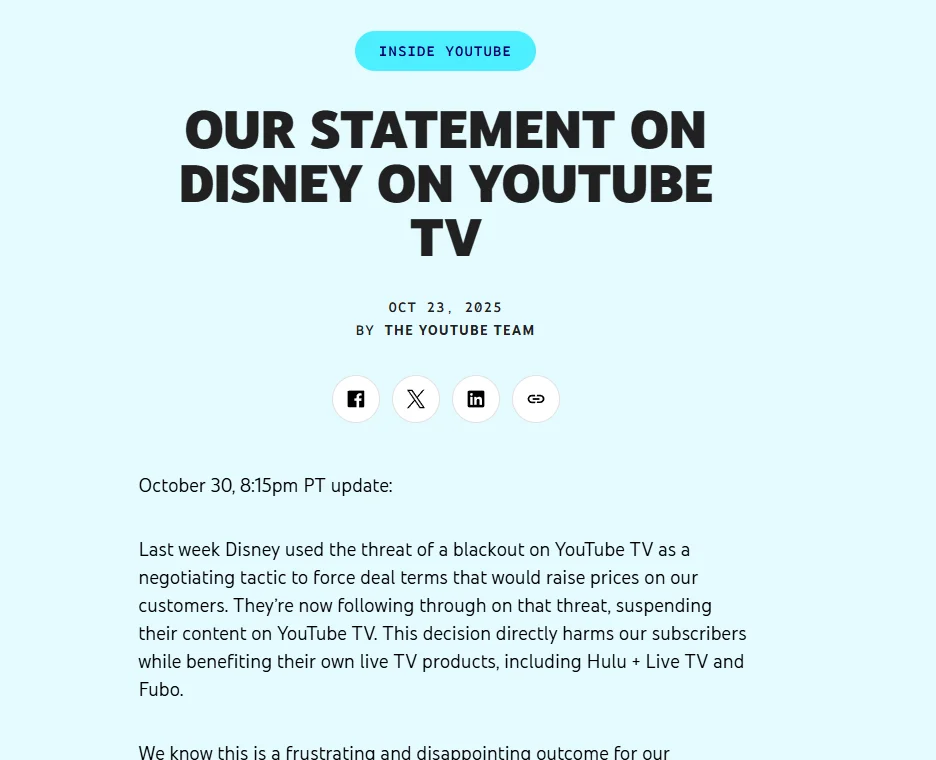
October 30, 2025: an unusual statement appeared on the YouTube TV official blog: "Disney threatened blackout as a negotiation tactic, then actually withdrew their content from YouTube TV." Disney decision led to disappearance from YouTube TV of major channels including ESPN, ABC, FX, and National Geographic. Google stated in its statement: "Disney is forcing YouTube TV price increases to advantage their own platform (Hulu + Live TV, and the soon-to-launch Fubo Live)" -- using the negotiation table as a weapon to raise a competitor price. The second cable war dynamics: streaming industry once emerged as the "alternative to cable," but in 2025 its structure is increasingly resembling the old cable model. Content-holding conglomerates (Disney, Warner Bros., NBCUniversal) are each operating their own streaming services and pursuing direct-to-consumer relationships rather than going through distribution partners (platforms). Power structure: content companies control whether platforms can survive (by withholding content); platforms control consumer relationships and pricing (by determining what users pay and see). The negotiating leverage: Disney content (ESPN especially for sports; ABC for news; FX for prestige drama) is difficult for YouTube TV to replace -- the blackout threat has real leverage because sports in particular drives vMVPD subscriptions. The resolution implications: if Disney succeeds in forcing price increases on YouTube TV, it establishes a precedent that content companies can leverage their catalog to extract value from platform aggregators -- the opposite of the leverage dynamics that made Netflix powerful by having unique content unavailable elsewhere.