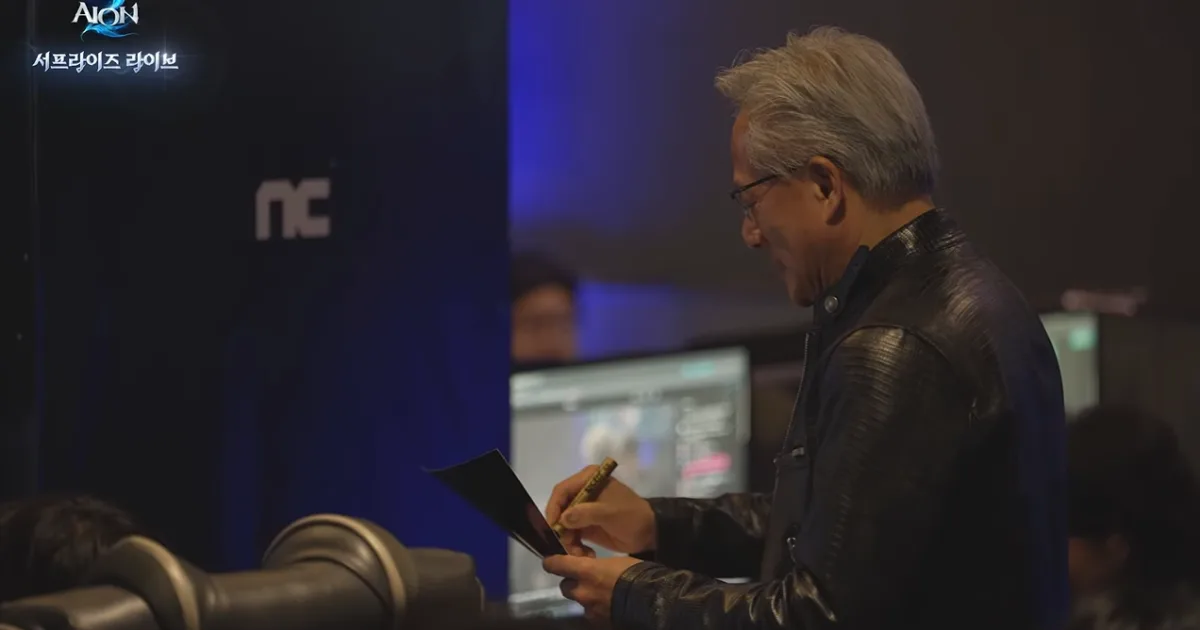
In June 2026, NVIDIA CEO Jensen Huang visited Korea and held successive meetings with NCSoft CEO Kim Taek-jin and Krafton Chairman Chang Byung-gyu. On the third day of his visit, June 7, Huang met with leaders of the Korean game industry to discuss ways to expand cooperation in games and artificial intelligence. The meeting took place not in a conference room, but at a PC bang near Sinnonhyeon Station in Gangnam, Seoul.
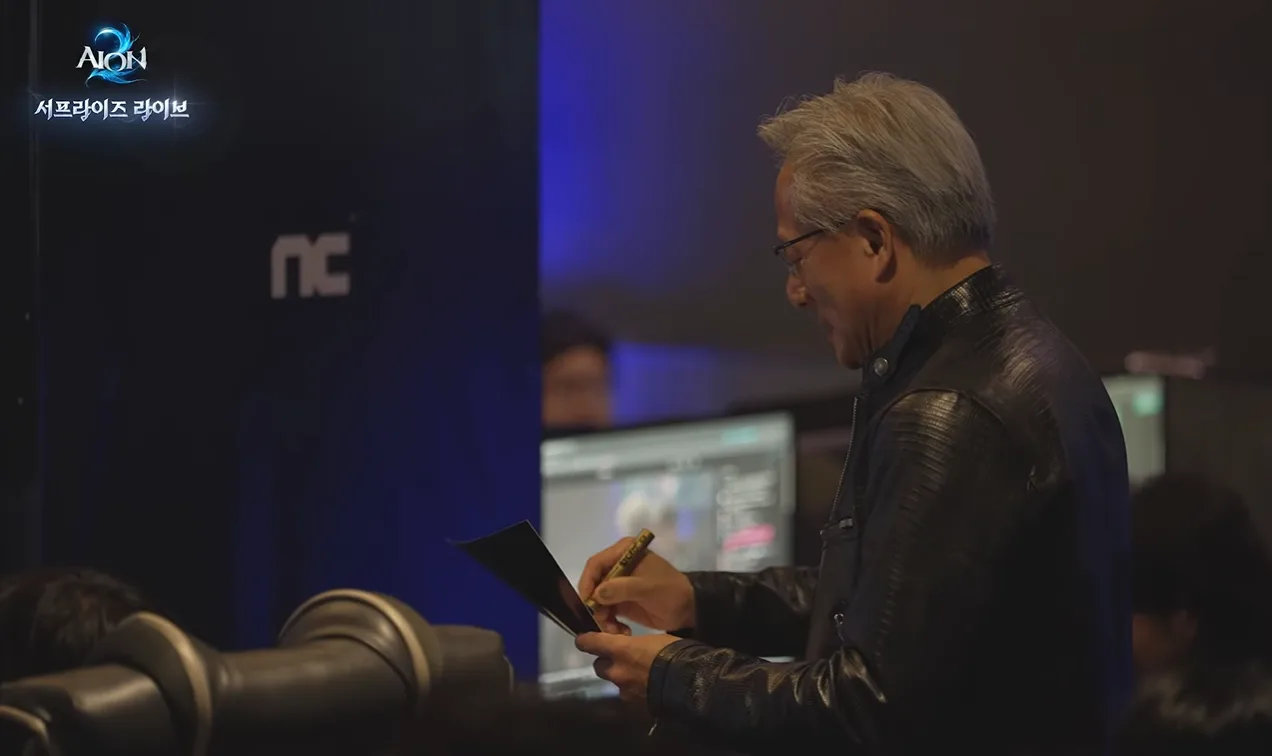
The fact that the head of a company that all but dominates the global AI semiconductor market chose a PC bang, where gamers gather, is symbolic in itself. But the meeting place was not the only interesting part. The agenda also went beyond simple game cooperation. Within the industry, this meeting has led to expectations that robotics cooperation based on “physical AI,” which builds the brain of robots, may begin in earnest. The very image of a graphics card company CEO and game company leaders discussing robots shows that something is shifting in this industry.
Jensen Huang’s Interest Is Not in “Games,” but in “Virtual Worlds”
NVIDIA has always been closely connected to games. Graphics cards, real-time rendering, ray tracing, and GPU performance competition have all been deeply tied to games, and NVIDIA’s early growth itself owed much to the demand for game graphics. Huang himself has repeatedly emphasized these roots. At Krafton’s event, he greeted the audience by saying, “Thanks to Korea, esports exists around the world,” and “NVIDIA grew together with you.” In that sense, the relationship between NVIDIA and games is nothing new.
But the center of gravity in this meeting is different from the past. What Huang focused on was not game content itself, in other words, not best-selling games or popular IPs, but the ability of game companies to create virtual spaces. Game companies have long been building realistic-looking 3D spaces, the movement of characters and objects, physical collisions, NPC behavior patterns, and environments in which countless variables operate at the same time. Making a world on screen “run” convincingly is a much more advanced technology than it may seem. And this does not stop at entertainment technology. It can expand into foundational technology that allows AI and robots to learn about the real world. In other words, what Jensen Huang saw was not the game screen itself, but the simulation environment-building capability that game companies have developed.
Physical AI Must Learn in Virtual Worlds Before Entering Reality
The direction NVIDIA has recently been emphasizing most strongly is physical AI. This does not refer to AI that merely speaks like a chatbot on a screen, but to AI that sees physical objects, moves, judges, and acts in the real world. Robots, autonomous vehicles, humanoids, and smart factories all belong to this flow. It means that AI, which had previously dealt mainly with text and images, is now beginning to acquire a physical “body.” In fact, during his visit to Korea, Huang pointed to robotics as one of Korea’s promising areas for investment.
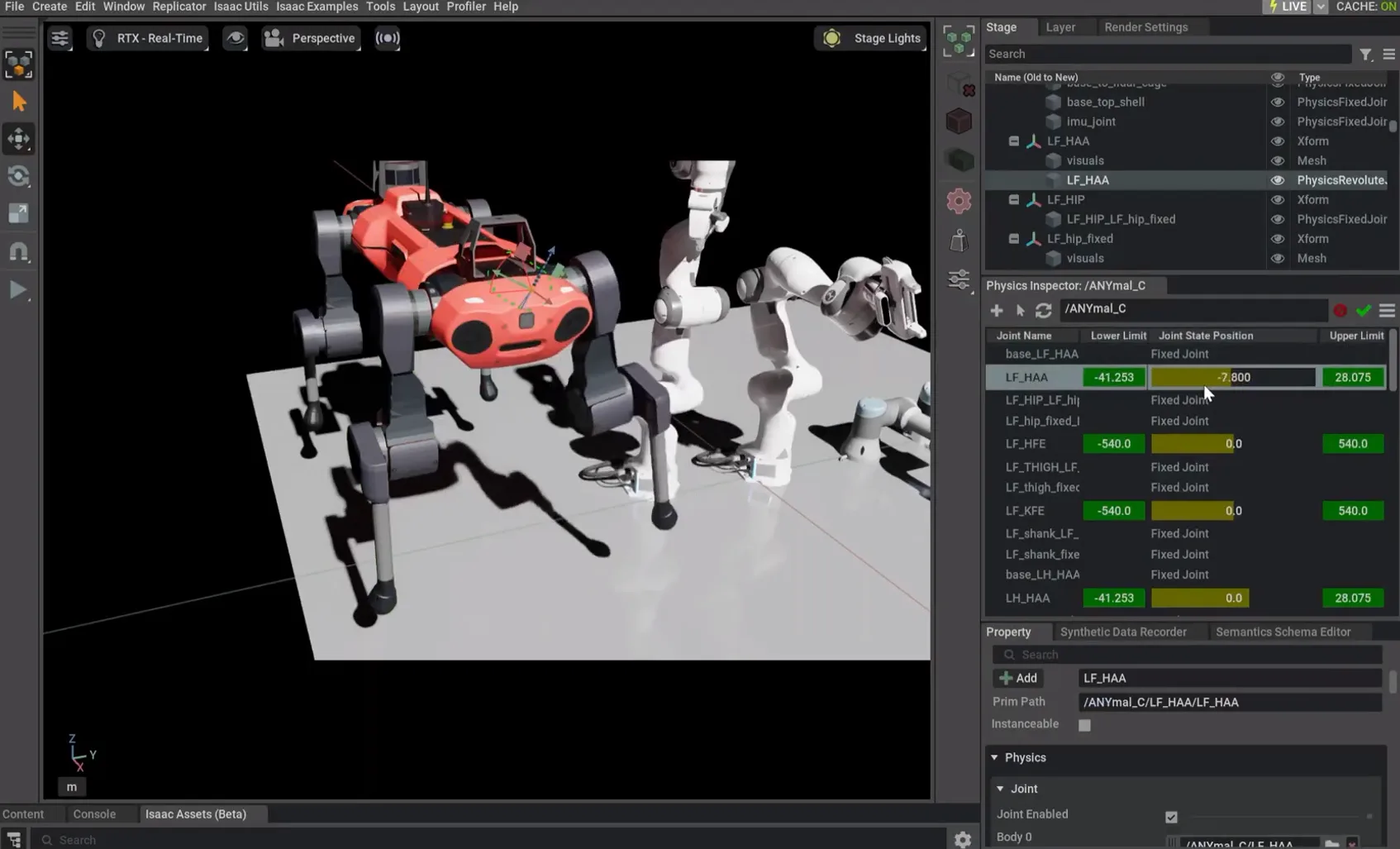
The problem is that it is extremely difficult to train this kind of AI directly in the real world. Real-world learning is costly, dangerous, and slow to repeat. Robots cannot repeatedly fall over, drop objects, or collide with people in real-world experiments every time. A single failure can lead to expensive equipment damage or a safety accident. That is why simulation is needed. The idea is to repeat thousands or tens of thousands of trials and errors quickly inside a virtual world, experience a wide range of situations that are hard to encounter in reality, and then transfer only the refined results into the real world. Ultimately, for robots to move in reality, they must first fail in a virtual world.
AI NPCs Become the First Experiment Inside Games
The essence of a game is not a finished video, but an operable world. In film or animation, viewers passively watch predetermined scenes from beginning to end. What happens on screen has already been decided, and there is nothing the viewer can change. Games are different. They create structures in which users move, collide, choose, fail, return to the beginning, and try again. The world unfolds differently each time according to the user’s actions. This is precisely where games meet AI. What AI learning requires is not static images or video, but an environment that responds to action. A door must actually move when opened. An object must fall when pushed. A wrong turn must lead to a collision with a wall. Only when AI can try something and receive the result can “learning” truly take place. Game companies have been designing and operating these interactive worlds for decades. It may not have been intentional, but as a result, they have already built the kind of worlds that AI now needs.
The first place where this change will likely be felt within the game industry is AI NPCs. Existing NPCs repeated fixed lines and moved only according to predetermined patterns. The same question always produced the same answer, and users quickly recognized their limitations. But when generative AI and reasoning models are introduced, NPCs can respond far more flexibly to users’ words and actions.
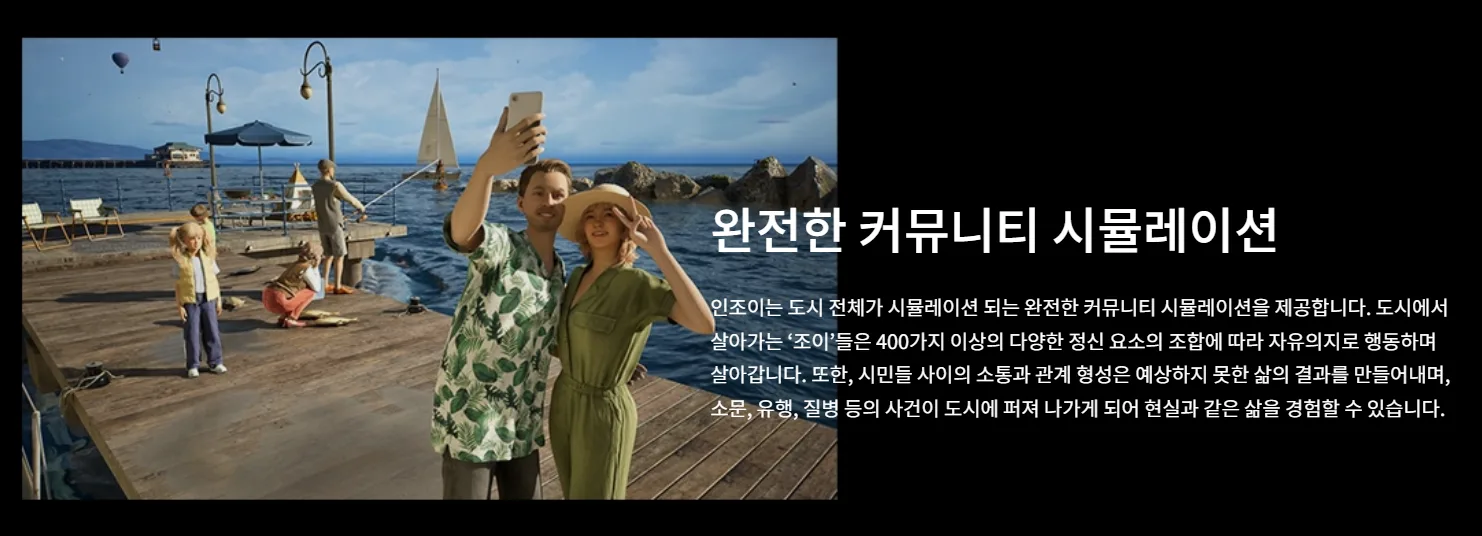
Experiments have already begun. Krafton introduced “PUBG Ally,” which allows players to enjoy PUBG together with AI, and added the “Smart Zoi” feature to the life simulation game inZOI, enabling characters to think and act like real people. This change is not merely about making dialogue sound more natural. If characters inside a game can share memories with users, judge situations on their own, and maintain relationships as encounters accumulate, the structure of the game experience itself changes. Games move from content that follows a fixed scenario to living worlds that unfold differently each time. Seen this way, AI NPCs are not just an additional feature inside games. They may become the first popular experimental space where humans and AI form relationships.
Why Korean Game Companies Matter, and How the Relationship Is Changing
Korean game companies are not merely companies that make games with impressive graphics. They have long built strengths in online games, MMORPGs, live services, item economies, guilds and communities, and real-time operations. The core is not simply “making,” but “operating.” Many companies can release one well-made game, but few have experience running a world where countless users connect at the same time and live together continuously for years. When NCSoft CEO Kim Taek-jin said that his company has been cooperating with NVIDIA for more than 20 years since the early 2000s, it also means that deep expertise has accumulated in this field.
This experience remains meaningful in the age of physical AI and AI agents. If AI moves beyond handling single commands and advances toward forming relationships with multiple actors, remembering situations, and making its own judgments within an environment, then the ability to operate complex worlds over long periods becomes an asset. MMORPGs in particular are highly complex environments where countless users, NPCs, monsters, economic systems, spatial structures, and social relationships all interact at once. The experience of stably sustaining a world in which many actors move simultaneously can be applied almost directly when designing environments where multiple AI agents coexist.
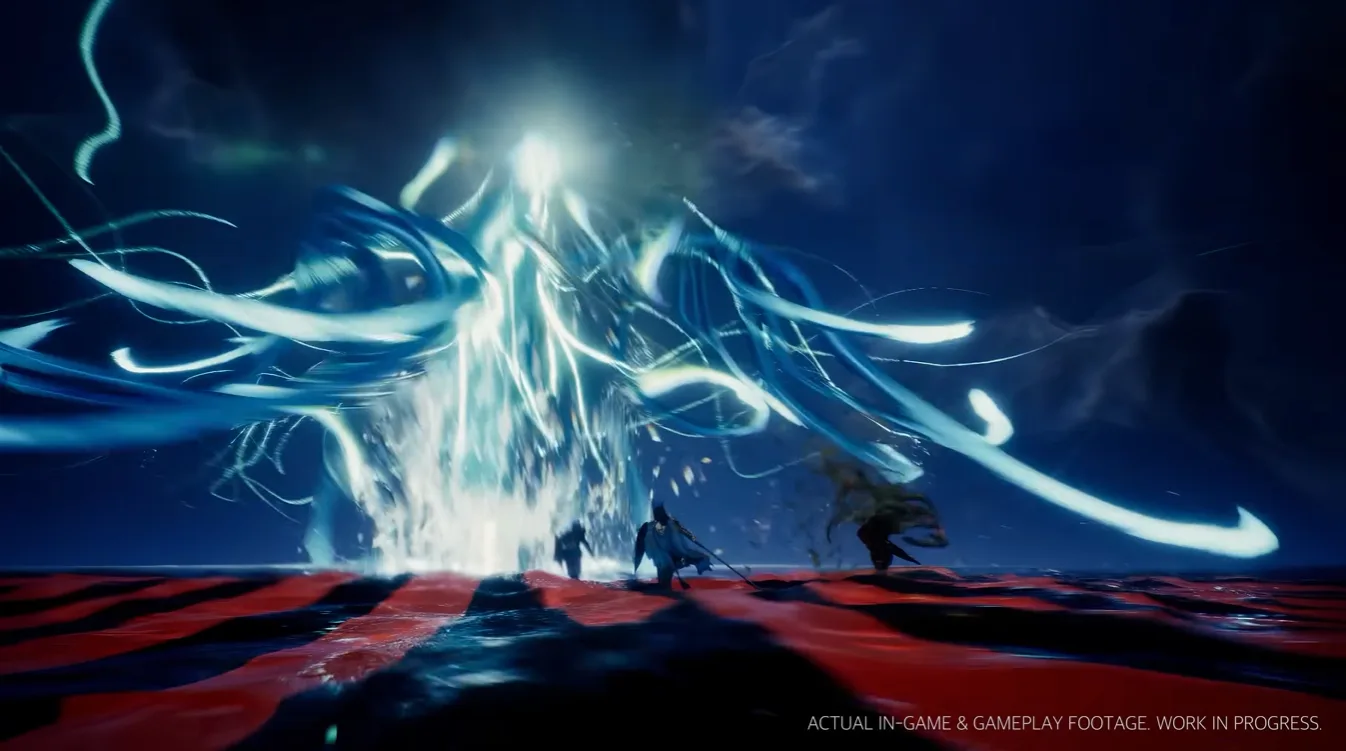
This is exactly where the relationship between NVIDIA and game companies also changes. In the past, game companies were clearly “customers” for NVIDIA. They bought high-performance GPUs to create more spectacular graphics, and technologies such as ray tracing and DLSS were ultimately tools to improve the quality of games. The relationship was simple. NVIDIA sold chips, and game companies used them. But as we enter the AI era, that relationship is beginning to shift. Game companies remain consumers of GPUs, but at the same time, they can become partners who apply NVIDIA’s AI technologies in real-world contexts. The scope of cooperation expands: adding AI NPCs to games, creating generative content, running simulations based on game worlds, building virtual environments for robot training, operating live services on cloud GPUs, and combining digital twins with game engines.
This change is already appearing not merely in words, but in organizational form. Earlier this year, Krafton established Ludo Robotics, a company specializing in physical AI, appointing Krafton CEO Kim Chang-han as CEO of the U.S. headquarters and CAIO Lee Kang-wook as head of the Korean branch. NCSoft’s AI subsidiary, NC AI, is also expected to attend a private meeting hosted by NVIDIA for domestic robotics and AI startups. Game companies are moving from the seat of merely buying chips to a seat where they help build the AI ecosystem.
The Gap Between Game Companies and AI Infrastructure Companies
However, the fact that game companies possess simulation capabilities does not mean they immediately become robot training infrastructure companies. Virtual worlds inside games and simulations for robot learning may look similar, but they are different in nature. In games, what matters most is fun and immersion. In simulations for robot learning, what matters is physical accuracy, sensor data, real-world fidelity, safety, and verifiability. A world that looks convincing is not the same as a world that precisely models reality.
For game companies to truly join this flow, they need new capabilities that go beyond their existing content production strengths. They must improve the accuracy of physics-based simulation, design AI training data, understand industrial digital twins, work with robotics companies, and connect game engines to manufacturing, logistics, and automotive environments. The industry’s view is still cautious. One industry official explained that, from the perspective of game companies, meeting a global leader in AI semiconductors could become a turning point for new business expansion, but whether concrete contracts or investments will actually be made depends on the results of further discussions. Ultimately, what game companies hold is a favorable starting point, not a completed answer.
Can Games Become “The World Where AI Stays Before Entering Reality”?
Even so, this meeting is interesting because it shows that the status of the game industry is changing. Until now, games have mainly been described as part of the entertainment industry: an industry that gives users fun, grows popular IPs, and generates revenue through content. This explanation is not wrong, but it is not the whole story. In the AI era, the game industry is beginning to be read in a different language. Games are an industry that designs interaction, operates virtual worlds, and connects human behavior with systems. From this perspective, game companies no longer remain only in the category of content producers. They can expand into an industry that creates spaces where AI can learn behavior, form relationships with humans, and test itself before entering reality. The next value of the game industry lies not only in “fun content,” but in the ability to create “worlds where action is possible.”
Seen this way, Jensen Huang’s meeting with Korean game companies cannot be viewed simply as industry networking. The scene condenses how NVIDIA is now looking at the game industry. Game companies are no longer just customers who buy graphics cards. They are being reinterpreted as an industry that experiments with AI NPCs, creates virtual worlds, and designs environments where robots and physical AI can learn and fail before stepping into reality. Of course, this change does not immediately become an opportunity for every game company. There is a clear gap between games and industrial simulation, and closing that gap will never be simple. But the direction is clear. As AI moves beyond text and images and gains a body in the real world, it will inevitably need worlds where it can first learn and fail. And one of the industries that has built such worlds for the longest time and in the greatest depth is the game industry.
Now that AI is finally beginning to acquire a body, games are becoming important again. But the role games play this time is not the same as before.
They are no longer merely worlds where we stay to enjoy ourselves. They are worlds where AI must first learn, fall, and practice before stepping into reality.