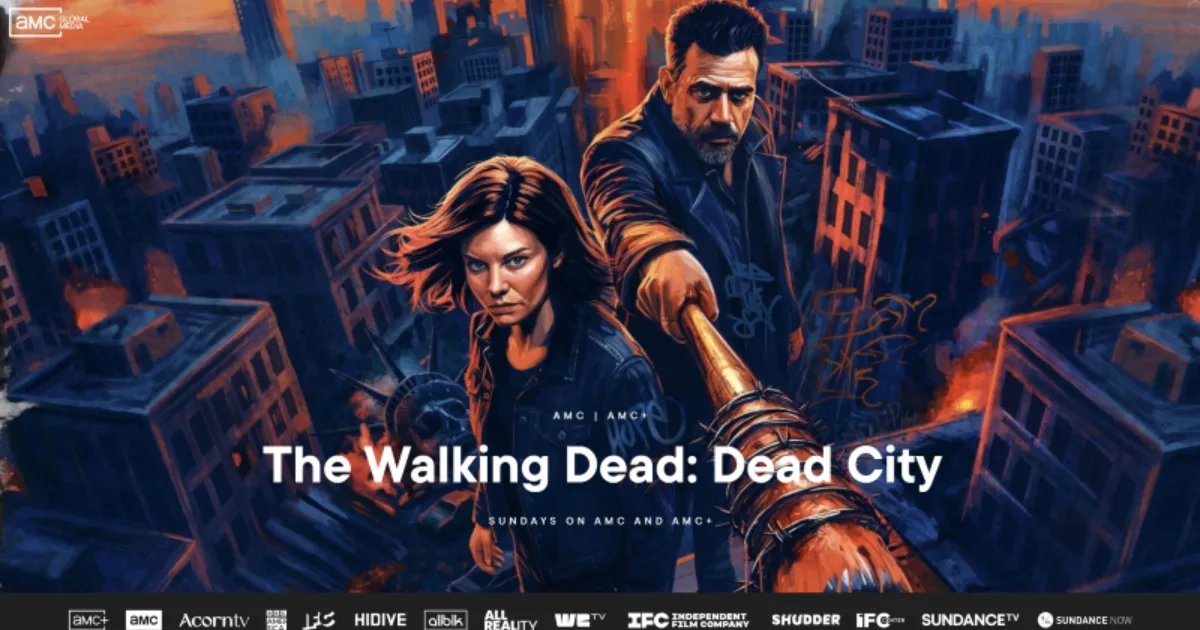
Netflix and AMC Global Media have signed a global streaming licensing agreement covering the broader Walking Dead universe.
The companies announced a multi-year global licensing deal on July 30, 2026. Under the agreement, Netflix and AMC will share co-exclusive streaming rights to the original The Walking Dead series and six spinoff series.
The scope is large.
The deal includes the original The Walking Dead, Fear the Walking Dead, The Walking Dead: Daryl Dixon, The Walking Dead: Dead City, The Walking Dead: The Ones Who Live, The Walking Dead: World Beyond and Tales of The Walking Dead. Across all seasons and series, the package contains 371 episodes.
Netflix has served as the exclusive streaming home for The Walking Dead in the United States since 2011. This new agreement expands that relationship beyond the U.S. Viewers in new markets, including the United Kingdom, Italy, Australia and New Zealand, will be able to watch the original series on Netflix. Starting in 2027, the six spinoffs will also roll out across Netflix’s global service and AMC+.
On the surface, this looks like a licensing deal for a popular television franchise.
But the meaning is larger.
The streaming market is changing.
For years, the streaming war was defined by exclusive original content. Platforms competed by producing their own shows and locking them inside their own services. But the value of proven IP, long-running fictional universes and library content with established fandoms is rising again.
That is why Netflix is expanding the Walking Dead universe globally.
One new hit matters.
But an old fandom that keeps returning may matter even more.
The Walking Dead Is Not Just a Zombie Show
The Walking Dead first aired on AMC on October 31, 2010.
The story is set in a zombie apocalypse, but the real subject was never only the undead. The series was about people: how they survive, form communities, betray one another, love one another and fight for power after civilization collapses.
It moved beyond the limits of genre television.
The original series ran for 11 seasons and 177 episodes. It became one of AMC and AMC Studios’ defining franchises and grew into one of the most successful and influential television brands of its era.
The Walking Dead showed that a cable drama could become a mass cultural phenomenon.
The key was fandom.
The series was not merely watched. It was debated. Fans argued over characters, survival ethics, leadership, violence, death and community. Each character’s fate could become a weekly cultural event. That fan energy created the foundation for spinoffs and continuing series.
That is why AMC can describe the franchise as a global destination for this universe.
The Walking Dead is no longer just one show.
It is a world.
And for streaming platforms, a world that lasts is a valuable asset.
Netflix Wants 371 Episodes of Viewing Time
For Netflix, the strategic value of this deal is clear.
First, it secures a huge volume of viewing time.
A 371-episode package is not just a bundle of content. It is a vast library that can keep subscribers inside the platform for long periods. In streaming, time spent matters. If a viewer watches one episode, continues into the next, moves across seasons and then follows spinoffs, the platform’s value increases.
Second, Netflix gains fandom-based content.
The Walking Dead is already a globally recognized brand. It can be more efficient to reposition a proven franchise than to launch a new series from zero and build a fandom from scratch.
Third, the franchise fits global distribution.
Netflix is a global service. Expanding content that was previously limited by region can attract both existing fans and new viewers. A genre like zombie apocalypse and survival drama travels well across languages and markets.
Netflix is no longer a platform that must make everything itself.
Original production remains important. But it is expensive and uncertain. Proven library IP offers predictability. It already has brand awareness, fan memory and long-tail viewing potential.
Netflix’s advantage is not only production.
It is programming power.
What to license, where to place it and who to recommend it to are now core strategic questions.
For AMC, Netflix Is Both Competitor and Expansion Channel
For AMC, the deal is more complex.
AMC operates its own streaming service, AMC+. At first glance, licensing a core IP such as The Walking Dead to Netflix may seem to weaken AMC’s own platform.
But the reality is more nuanced.
AMC+ cannot easily match Netflix’s global reach. Building a direct-to-consumer global streaming platform requires enormous marketing spending, technology investment, regional operations and a steady content pipeline. Not every media company can build a worldwide platform at the scale of Netflix or Disney.
In that context, Netflix is both a competitor and a distribution partner.
Through Netflix, the Walking Dead universe can reach more countries and more viewers. New fans may enter the franchise. Older fans may rewatch the series. The IP’s lifespan can be extended.
At the same time, the co-exclusive structure allows AMC to strengthen AMC+ as well. The original The Walking Dead series will become available on AMC+ for the first time, giving AMC’s own service a stronger franchise foundation.
That is why the deal can be described as positive for fans, the company and the long-term value of the IP.
AMC is using Netflix to expand the global value of the franchise while repositioning AMC+ as the home base of the universe.
The Streaming War Is Changing
The first phase of the streaming war was an exclusive-originals war.
Netflix, Disney+, HBO Max, Amazon Prime Video, Apple TV+, Peacock and Paramount+ all promoted exclusive shows and films. Major series and movies were locked inside individual platforms. Consumers needed multiple subscriptions to follow different franchises.
Over time, the limits became clear.
Original production costs rose.
Subscriber growth slowed.
Consumers felt subscription fatigue.
Mid-sized media companies struggled with the cost of operating global platforms.
Keeping every piece of content inside one’s own service was no longer always the best strategy.
Licensing became important again.
Media companies can earn revenue by placing proven content on larger platforms, increase IP awareness and still operate their own services in parallel. This does not mean exclusivity is over. It means the old assumption that every valuable title must be locked inside one platform has weakened.
The Netflix-AMC deal reflects this shift.
The Walking Dead is AMC’s flagship IP. Yet AMC is expanding it globally through a co-exclusive arrangement with Netflix. This is a strategy that balances direct platform ownership with external distribution.
Streaming is moving away from the simple rule of “our content stays only with us.”
The more important question is now which distribution structure maximizes the long-term value of the IP.
Co-Exclusivity Is a Compromise
The key phrase in this deal is “co-exclusive streaming rights.”
Netflix and AMC share exclusive rights. This sits between full exclusivity and full non-exclusivity.
Full exclusivity gives one platform total control. Fans must subscribe to that service to watch the content. This can be powerful for subscriber acquisition, but it can also limit reach.
Full non-exclusivity makes content broadly available across many platforms. That increases access, but reduces scarcity and weakens platform differentiation.
Co-exclusivity tries to combine the strengths of both.
Netflix provides global reach, recommendation technology and a massive subscriber base. AMC+ remains the franchise owner’s own platform and can serve as a fandom hub. Fans gain easier access. AMC maintains a degree of IP control. Netflix gets a proven franchise.
This kind of arrangement may become more common.
Content owners may not be able to rely only on their own streaming services. But they also may not want to give up all control. Co-exclusive deals, regional licensing, windowed releases and franchise-bundle agreements may become more frequent.
Streaming is moving from simple exclusivity to more complex rights design.
Why the Spinoffs Matter
The deal matters because it includes not only the original series, but also six spinoffs.
That means Netflix and AMC are treating The Walking Dead not as one drama, but as a universe.
A viewer can start with the original series, move into Fear the Walking Dead, then continue through Daryl Dixon, Dead City, The Ones Who Live, World Beyond and Tales of The Walking Dead.
The value of universe-based content comes from connection.
Even when one series ends, characters, settings, timelines, locations and events can be extended. Fans consume new stories inside a world they already understand. For platforms, this makes recommendation and binge paths easier to design.
The Walking Dead is especially strong because of character-based fandom.
Daryl, Maggie, Negan, Rick and Michonne can each support new viewing paths. Fans do not necessarily need to watch everything in the universe. They can follow specific characters.
For Netflix, the value is not only the original show’s past popularity.
It is how long users can remain inside the universe.
A 371-episode franchise is not a simple content package.
It is a long-term fandom route.
Sometimes Old IP Is Safer Than New Content
Streaming platforms need new shows.
But new shows are risky. They are expensive to make, difficult to predict and costly to market. If the audience response is weak after launch, a new series can disappear quickly. If it succeeds, renewing it requires more spending.
Proven IP is different.
It already has awareness.
It has search demand.
It has an existing fan base.
It can attract a new generation.
It can support rewatching and spinoffs.
Recommendation algorithms can reintroduce it to viewers with matching tastes.
The Walking Dead fits this model.
Although the original series began in 2010, the appeal of zombie apocalypse and survival drama remains strong. New viewers can start from the beginning. Existing fans can revisit specific seasons or explore spinoffs.
Netflix does not only need new cultural events.
It needs long-consumption content that can be watched at any time.
As profitability pressure grows across streaming, this kind of content becomes more valuable. Not every subscriber watches only the newest release. Many viewers rewatch familiar shows, binge missed seasons or discover fandom content years later.
The library is the foundation of streaming endurance.
AMC Global Media’s Survival Strategy
AMC Global Media occupies a different position from the largest global streaming companies.
It has strong IP, cable networks and specialized streaming services. Its portfolio includes AMC+, Acorn TV, Shudder, Sundance Now, ALLBLK, HIDIVE and All Reality, as well as cable networks such as AMC, BBC AMERICA, IFC, SundanceTV and We TV. Through AMC Studios, it also develops and distributes franchises such as The Walking Dead universe and the Anne Rice Immortal Universe.
But global streaming competition is a battle of scale.
AMC cannot compete in the same way as Netflix, Disney, Amazon or Apple. Its strategy must be different.
Rather than keeping everything inside its own walls, AMC can distribute strong IP through the right partners while strengthening its own platforms around fandoms and specialized genres.
The Walking Dead deal fits that strategy.
The franchise reaches global viewers through Netflix. AMC+ gains value as a destination for the original series and the broader universe. AMC benefits from licensing revenue, brand expansion and platform reinforcement.
For a mid-sized media company, IP is not just content.
It is bargaining power.
Netflix’s Licensing Strategy Matters Again
Netflix is often associated with original content.
But licensed content was central to Netflix’s early growth. Viewers used Netflix because they could easily watch popular older shows and films. Its broad library created viewing habits. Later, as media companies built their own streaming services and pulled content back, Netflix invested heavily in originals.
Now the market is finding a new balance.
As it becomes clear that not every media company can make direct streaming profitable at scale, Netflix has renewed opportunities to secure strong licensed content. Its global reach remains attractive to content owners.
The Walking Dead deal is part of that shift.
Netflix is not competing only through originals. It is strengthening its catalog with proven external IP. Franchises with strong genre identity and fandoms fit especially well with Netflix’s recommendation system. Once a viewer starts, the platform can guide them through seasons and spinoffs.
Netflix does not need to own every piece of content.
It can still become the center of consumption.
That is the power of the platform.
For Fans, the Benefit Is Simple
Behind the complex strategy, the benefit for fans is straightforward.
It becomes easier to watch.
Access to the Walking Dead universe has varied by series, region and platform. Some regions had existing licensing deals. Some spinoffs were harder to find. Viewers could be unsure where to watch the next part of the story.
The new deal does not make every title available everywhere at the same time immediately, but it moves the franchise toward broader long-term accessibility through Netflix and AMC+.
Accessibility matters for fandom content.
The more complex a universe becomes, the harder it is for new fans to enter. They need to know where to start, where each series is available and what order to watch.
Putting more of the universe inside familiar platforms lowers that barrier.
New viewers can begin with the original.
Existing fans can continue through spinoffs.
Global access improves.
The platform can recommend the viewing path.
A franchise survives by keeping the door open for fans to return.
This deal widens that door.
The Lesson for the Korean Content Market
The deal also offers lessons for Korean content companies.
Korean studios and platforms are increasingly trying to expand dramas, webtoons, web novels, variety formats, animation and games into broader IP universes. But the key is not only creating IP. It is deciding where, when, in which regions and under what rights structure that IP should circulate.
Building a proprietary platform and licensing to global platforms are not always opposites.
Strong IP can use multiple windows. Domestic fandom can be managed through local platforms or broadcasters, while global expansion can happen through partners such as Netflix. A title may begin as exclusive, then later move into co-exclusive or non-exclusive licensing. Spinoffs, documentaries, animation, games and fan events can extend the universe.
The core issue is long-term IP life.
A single hit can create attention.
A universe that continues across multiple works and platforms creates durable value.
The Walking Dead is a clear example. A series that began in 2010 remains central to a global streaming strategy beyond 2027.
Korean content companies should not focus only on new-release success.
They should also design long-term library value and global accessibility.
IP earns money not only when it is produced.
It earns money through distribution design.
Streaming Is Rediscovering the Power of Libraries
The Netflix-AMC Global Media deal for The Walking Dead is not just a content-supply agreement.
It reflects a strategic shift in streaming.
Netflix gains a global franchise covering the original series and six spinoffs, totaling 371 episodes. AMC uses Netflix’s global reach to expand access to the IP while also bringing the original series to AMC+ for the first time.
The deal shows three things.
First, proven IP remains powerful.
Second, streaming exclusivity is becoming more flexible.
Third, content owners and platforms can be both competitors and partners.
The Walking Dead is an old series.
But age is not only a weakness. Long-surviving IP has fandom, recognition, binge value and spinoff potential. In a streaming market crowded with new releases, a proven universe can provide stable viewing time and subscriber satisfaction.
That is why Netflix is choosing The Walking Dead again.
The next phase of the streaming war will not be decided only by new originals.
It will also be shaped by who can distribute proven IP more widely, keep it watched longer and bring fandoms back into the platform.
The strongest asset in content is not always a one-time hit.
It is a universe viewers can keep returning to.