In September 2026, Hancom partnered with the Daegu Public Facilities Corporation to launch a proof-of-concept project for AI in public administration. The project aims to enable AI to read and use internal documents such as reports and work manuals, while testing response accuracy and practical usefulness in real administrative tasks. Hancom had already been expanding its public- and enterprise-sector AI business by supplying solutions for document search, authoring, and data conversion to organizations including the National Assembly Secretariat, the National Assembly Library, and Korea Western Power.
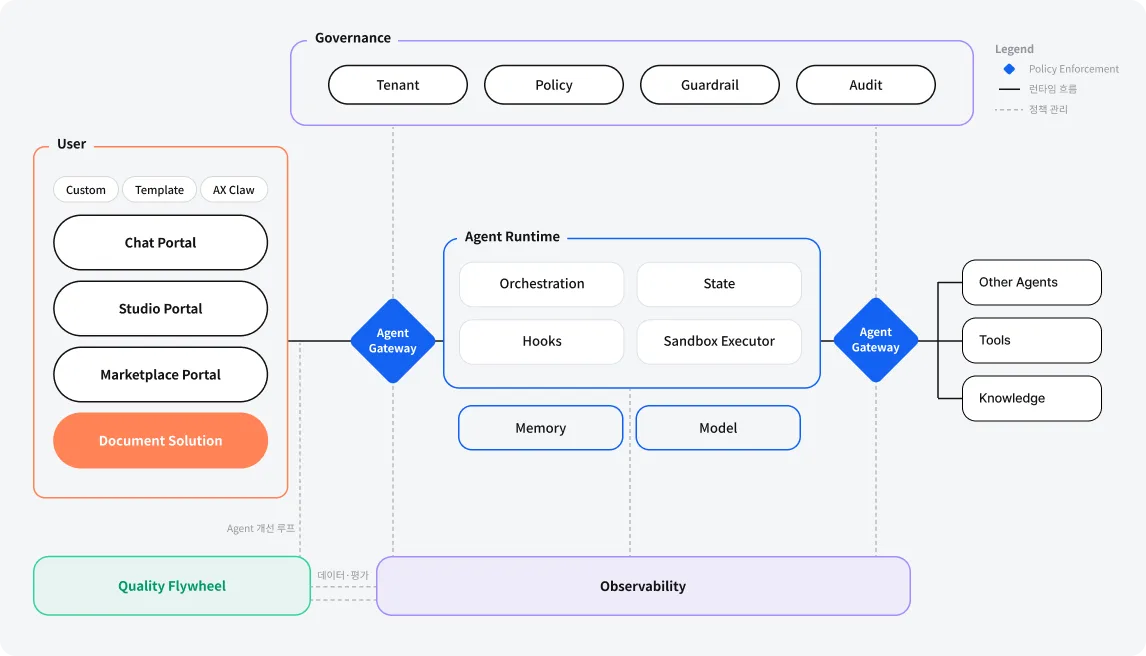
Hancom’s recent focus goes beyond simple AI chatbots. The company is working to convert existing documents in formats such as HWP, HWPX, PDF, and OOXML into data that AI can use, then connect that data to search, question answering, report writing, and work support. It is also expanding into an “Agentic OS” that links multiple AI agents with existing enterprise systems.
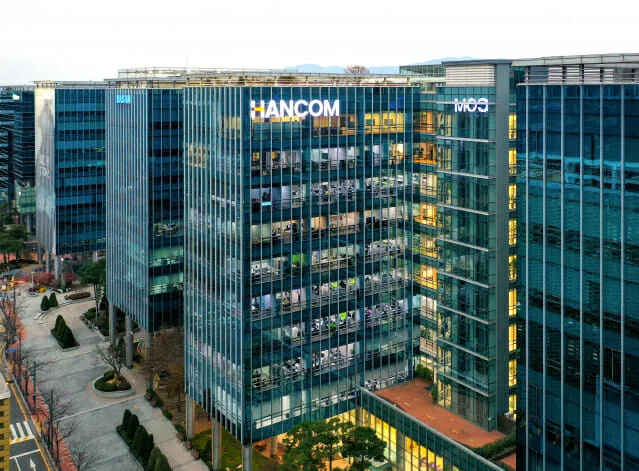
What is worth noting is that the starting point of this new AI business is ultimately the same thing Hancom has worked with for decades: documents. The company may be moving toward new technologies, but the foundation still lies in decades of accumulated HWP documents and document-processing technologies. That makes Hancom’s recent shift a reason to look at HWP from a slightly different angle. As Microsoft Office and Google Workspace became the dominant tools for document creation, the use of HWP narrowed considerably. In the private sector, Word and cloud-based document tools are now routine, while HWP remains deeply embedded mainly in parts of the public and administrative sectors and in legacy work systems. Because public-sector document templates and workflows were built around HWP for many years, moving to other formats was not always simple. This also led to recurring criticism over compatibility and dependence on specific software. The question of whether Korea really needed to maintain a separate HWP document ecosystem emerged from this background.
In that sense, HWP survived not simply through market competition, but by remaining closely tied to Korea’s administrative system. Yet this is precisely where the changes brought by the AI era become interesting. HWP, once criticized as a symbol of dependence on a specific document format, is now showing new possibilities through its connection with AI.
So can HWP really be described, even technically, as a “document format of the past”?
Is HWP Really an Outdated Document Format?
HWP is often associated with the image of an old document format used almost exclusively in Korea. Earlier versions of HWP were indeed proprietary binary formats, and opening or editing them in other software often came with significant limitations. But today’s HWP ecosystem cannot be explained solely through that past. Hancom disclosed the HWP file format in 2010, and in the following year, 2011, the XML-based open document specification OWPML was adopted as the Korean national standard KS X 6101. The HWPX format used today is based on OWPML.
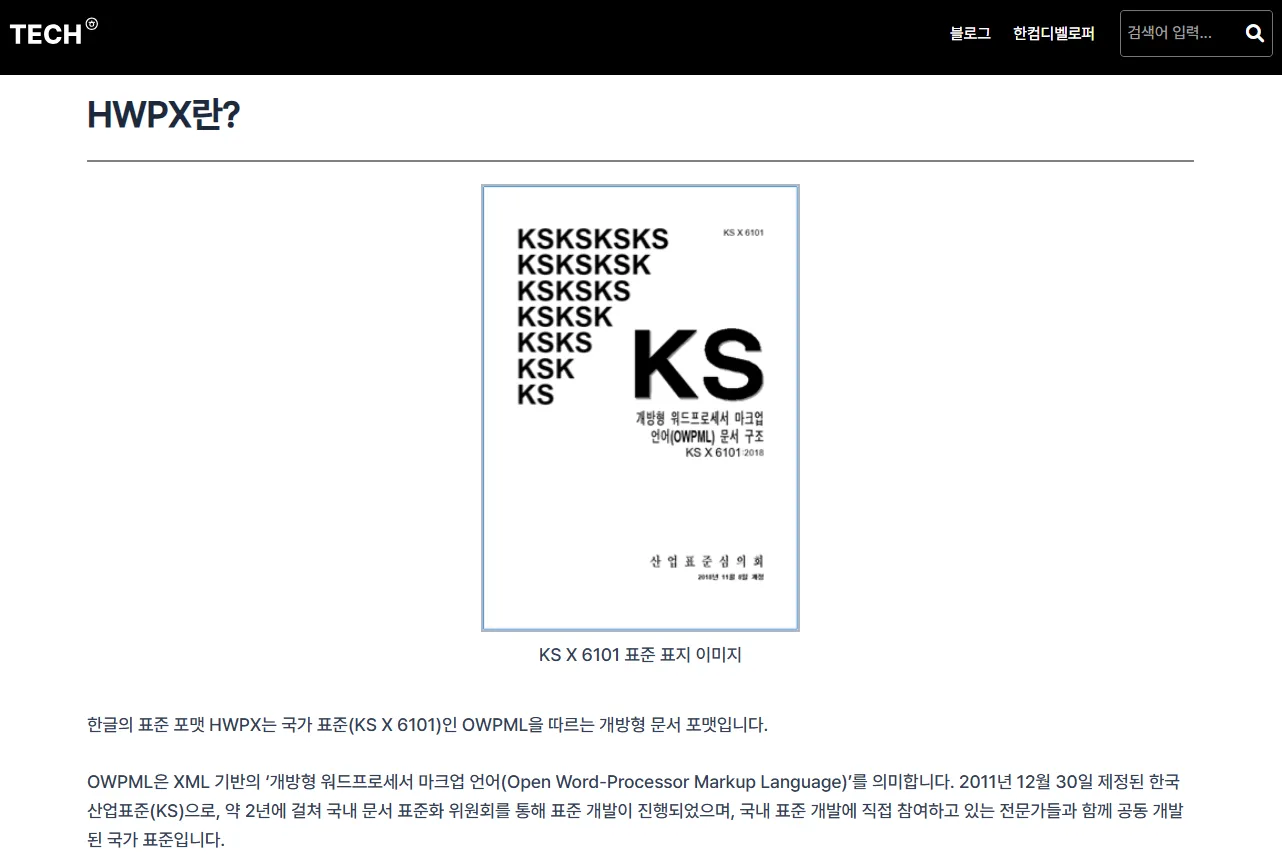
HWPX can structurally represent not only text, but also elements such as paragraphs, tables, styles, and images. In its basic approach, it is not very different from Microsoft DOCX, as both store XML files and other resources inside a compressed package. Although the formats look different on the surface, both are designed so that machines can read and process the content and structure of a document. The inconvenience associated with HWP, then, is less about the format itself being old and more about the fact that it became part of a relatively small document ecosystem as Microsoft Office and Google Workspace became dominant. When users work across different programs and document formats, friction in conversion and compatibility is inevitable, and HWP has been no exception.
But when the structure of HWPX itself is considered, the picture changes somewhat. Representing document content and structure in XML is not far removed from the approach used by other major document formats today. It is not merely a file for people to read and edit; it is also designed so that other systems can read and use the document’s structure and content.
In other words, the inconvenience associated with HWP and the question of whether the format itself is technically outdated should be treated separately. HWP may have become less convenient as its use narrowed, but it would be difficult to argue that today’s HWPX is technically stuck in the past.
Korea Is Not the Only Country With Its Own Document Ecosystem
So is Korea the only country to have maintained a separate document ecosystem tailored to its own language and working environment, as HWP has? Not quite.
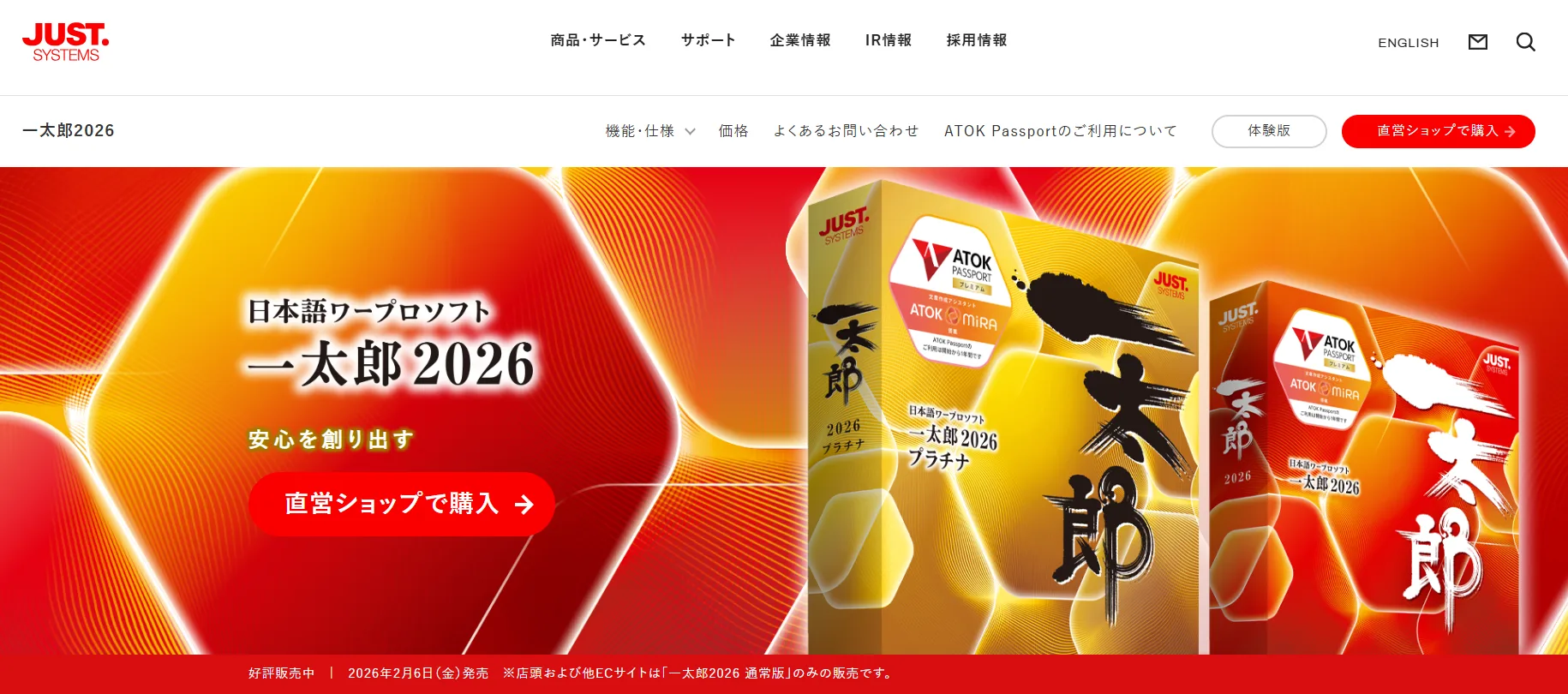
Japan has JustSystems’ Ichitaro (一太郎). First released in 1985, it is a Japanese-language word processor that was widely used for many years, including in government agencies and educational institutions. Microsoft Word is now far more influential, but Ichitaro itself has not disappeared. JustSystems still releases a new version every year, and in February 2026 it launched Ichitaro 2026 with features such as personal-information checks, voice input, and transcription of audio and video. A word processor more than 40 years old is still being updated for current computing environments.
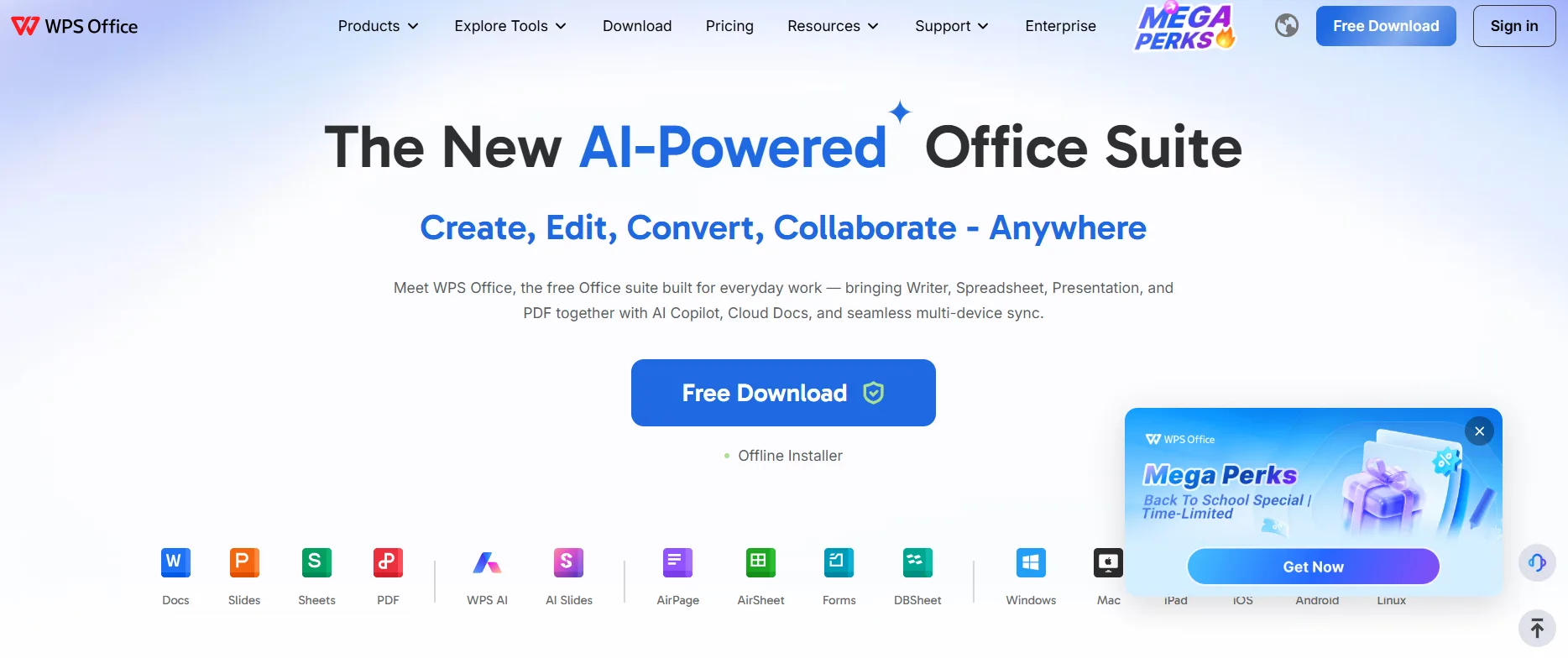
China has Kingsoft’s WPS Office. WPS also has a long history. Kingsoft introduced its first WPS word processor for the Chinese DOS environment in 1988, then expanded into Windows products and a broader office suite. In 2001, it evolved into WPS Office, combining word processing, spreadsheets, and presentations, and from 2014 onward the company began using the WPS Office name in global markets as well. Today, it has evolved into an integrated office platform that includes PDF tools, cloud functions, and WPS AI. China has gone further by establishing national standards for domestic office document formats and electronic official documents, making it a clearer example of an effort to maintain not just a single software product, but an entire domestic software and document ecosystem.
By contrast, many European countries have leaned toward open international standards such as ODF, or OpenDocument Format, rather than preserving document formats tied to specific domestic companies. Instead of insisting on one company’s format, the goal has been to allow multiple software applications to read and write the same documents.
The methods differ, but the underlying concern is similar: how documents are created, who controls their formats, and whether they can still be read and used by other systems over time. Korea, however, occupies a somewhat different position. The use of HWP has declined compared with the past, but a substantial volume of documents remains tied to public and administrative systems, while domestic technologies capable of processing those documents have also survived. The fact that both the documents accumulated over decades and the technologies needed to process them still exist begins to take on a different meaning now that generative AI is treating documents as a new form of data.
In the AI Era, Old Documents Become Data Assets
As generative AI spreads, the role of documents is changing as well. In the past, documents were mainly treated as files for people to read and edit. Today, they are also data that AI can search, summarize, and use in new forms of work. What matters here is not simply how many documents have accumulated. For AI to use them properly, it must also be able to read the structures inside them, including the relationships among titles, body text, tables, footnotes, and paragraphs. This kind of structured document format is not unique to HWPX. Major office formats, including DOCX, also store document content and structure in machine-readable forms.
Hancom’s difference lies less in the uniqueness of the format itself than in its long experience handling HWP documents accumulated across Korea’s public and administrative sectors. Decades of official documents, reports, regulations, and work materials remain in HWP-based formats, and Hancom has accumulated technologies for creating, reading, and converting those documents. This also includes a kind of experience that cannot be measured simply by document volume. Public and administrative documents can differ by country or institution in their templates, document structures, approval systems, and the ways tables and attachments are handled. Word may have a vastly larger document ecosystem worldwide, but Hancom has spent decades working within the specific domain of Korean administrative documents.
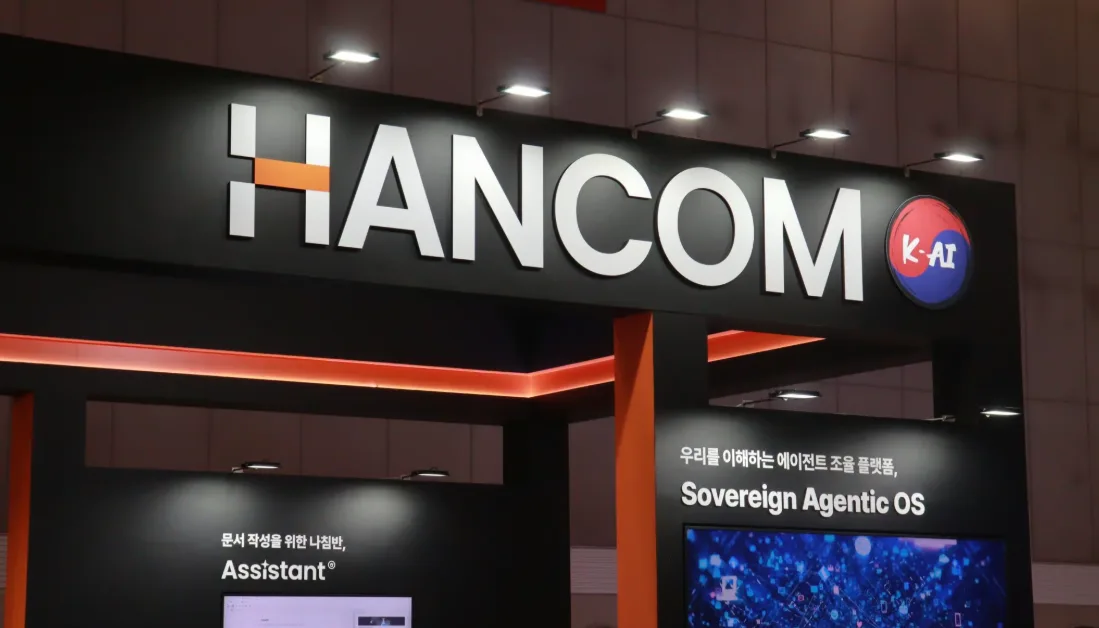
This is where Hancom’s recent AI business connects. The company is promoting products such as Hancom Data Loader, which converts documents including HWP, HWPX, PDF, and OOXML into forms that AI can use; Hancom Pedia, which supports internal document search and question answering; and Hancom Assistant, which supports document creation and work tasks. The public-administration AI proof of concept with the Daegu Public Facilities Corporation follows the same direction. The goal is to connect existing reports and work manuals to AI and test whether they can be used for search, answers, and document writing in real administrative work.
In the past, the accumulation of large volumes of HWP documents in public institutions was often seen as a consequence of dependence on a specific document format. In the AI era, however, the same accumulation can be reinterpreted as an organizational knowledge asset. What matters is not the HWP extension itself, but how accurately the documents and operational knowledge stored within them can be structured, searched, and connected to new systems.
Ultimately, Hancom’s asset is not a single document format. It is the long experience of handling documents accumulated throughout Korea’s public and administrative sectors, together with the technology used to connect those documents to real work systems.
Protecting Choice, Not HWP Itself
This does not mean that Korea should continue using HWP indefinitely. If users find it inconvenient, it should become easier to use. If compatibility with other document programs is insufficient, that should be improved. A system in which documents cannot be properly used without a specific program is not desirable either. What matters is not protecting the HWP file format itself. It is maintaining an environment in which Korea can decide for itself how its documents and the knowledge accumulated within them are stored, read, searched, and connected to other systems.
If document creation environments become consolidated around a handful of global platforms, they may become much more convenient to use. But the situation changes when not only document creation and storage, but also search, analysis, and the ways AI reads and uses those documents for work all become embedded in a single platform. At that point, an organization’s documents are no longer just files; they become data managed by the platform, and the ways that data can be searched, connected, and used may also be determined by that company’s technologies and policies. In the end, an organization is no longer simply choosing a document tool. The way its knowledge is stored, searched, and used by AI may itself be chosen for it by the platform.
In that sense, the continued existence of domestic document technologies and an ecosystem capable of processing them means that another option remains available. Organizations can connect to global services when needed, while building their own systems in environments where security or data management matters more. When new AI technologies emerge, they also retain the possibility of reusing existing documents in different ways.
Hancom’s significance can also be reconsidered from this perspective. While the global office market was reorganized around a small number of major companies, Hancom continued to maintain Korean-language document technologies and a document ecosystem connected to the public and administrative sectors. In the past, this structure was sometimes criticized for creating dependence on a specific format. In the AI era, however, the documents and experience accumulated within that structure may become a foundation for connecting existing knowledge to new technologies. Of course, that potential does not automatically become a competitive advantage. If Hancom remains dependent on existing users and the public sector, the value of maintaining an independent document ecosystem may gradually diminish. The format must continue to become more open, integration with other systems must become easier, and users should be able to access and use their own documents and data without being locked into a specific program.
Ultimately, what needs to be protected is not the HWP extension itself. It is the freedom to move, connect, and use documents and knowledge created in Korea without becoming completely dependent on a single company or a single overseas platform.
HWP can be criticized whenever it is inconvenient. But that inconvenience should be distinguished from the value of having domestic document technologies and a document ecosystem of one’s own. In the AI era, what Hancom needs to preserve is not the name “Hangul document,” but the ability for Korea to decide for itself how its documents and knowledge move into the next generation of technology.