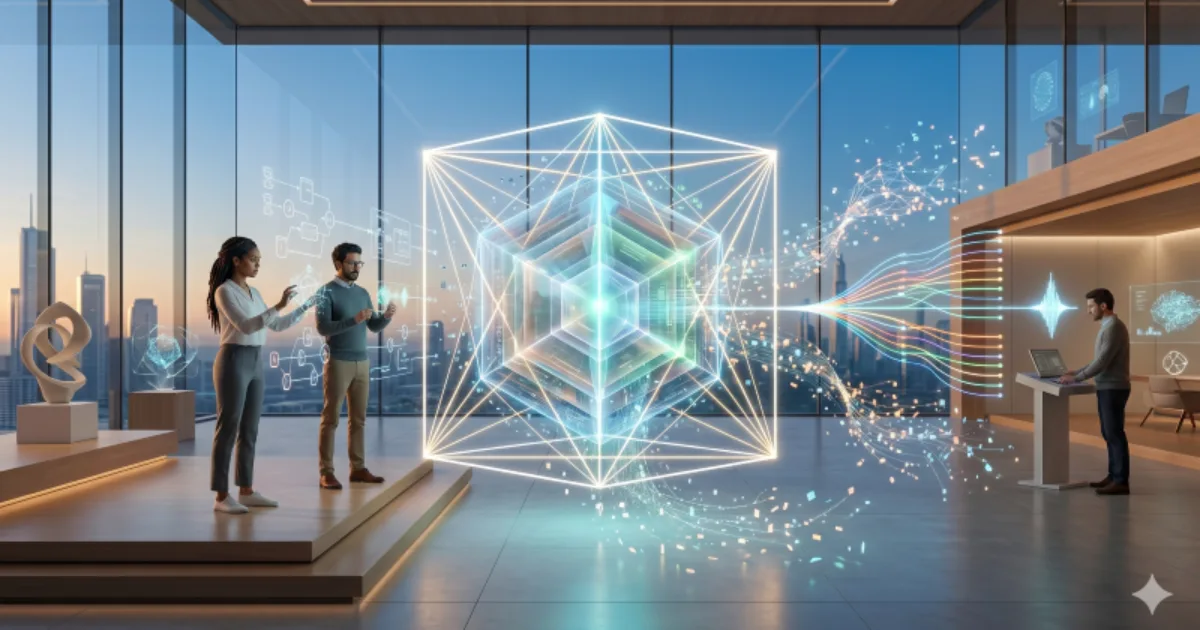
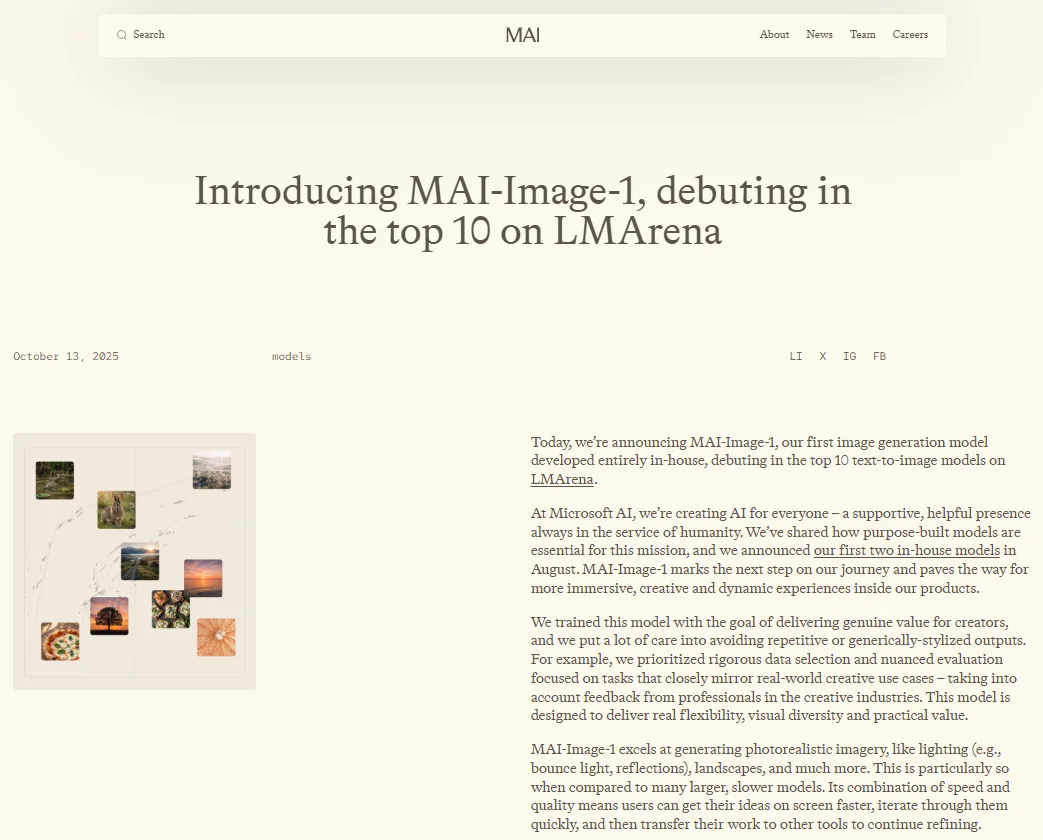
In October 2025, Microsoft officially announced "MAI-Image-1," its first proprietary AI image generation model, through its AI division blog (microsoft.ai). This marks the first case of Microsoft asserting itself as a model developer rather than primarily an OpenAI integration platform. MAI-Image-1 debuted in the top 10 on LMArena performance evaluation platform; Microsoft describes it as "a high-efficiency generation engine optimized for Azure and Copilot environments" with improved speed and energy efficiency compared to DALL-E series. Strategic context: Microsoft has integrated OpenAI's GPT and DALL-E models across Bing Image Creator, Microsoft Designer, and Copilot. However, since 2024, as OpenAI built its independent ecosystem (ChatGPT Enterprise, GPT Store, Custom GPTs), the Microsoft-OpenAI relationship evolved into "co-evolution" — cooperation and competition simultaneously. MAI-Image-1 represents Microsoft's strategic response: transitioning from "AI platform operator" to "AI model-owning company." Technical characteristics: lightweight diffusion architecture designed for cloud-native deployment; optimized for Azure's compute infrastructure for efficiency; proprietary training data and fine-tuning reflecting Microsoft's enterprise use case requirements. Industry significance: (1) Vertical integration — by owning both the model layer and the cloud infrastructure, Microsoft creates stronger competitive moats; (2) Dependency reduction — Microsoft reduces strategic risk of over-dependence on OpenAI's roadmap decisions; (3) Enterprise positioning — a proprietary model allows Microsoft to customize capabilities and pricing for enterprise customers without OpenAI licensing constraints; (4) AI stack competition — the race to own all layers of the AI stack (infrastructure → foundation model → applications) is intensifying among major tech platforms.
Microsoft Unveils Its Own AI Image Generation Model 'MAI-Image-1'
'Beyond the partner era, into independent model competition.' In October 2025, Microsoft unveiled MAI-Image-1 through its AI blog.
Source: META-X metax.kr
"Beyond the Partner Era, to Proprietary Model Competition"
ⓒ META-X metax.kr
All rights reserved.
Free to share with attribution.
All rights reserved.
Free to share with attribution.