Midjourney, the company best known for turning text prompts into AI-generated images, is making an unexpected move into medical imaging.
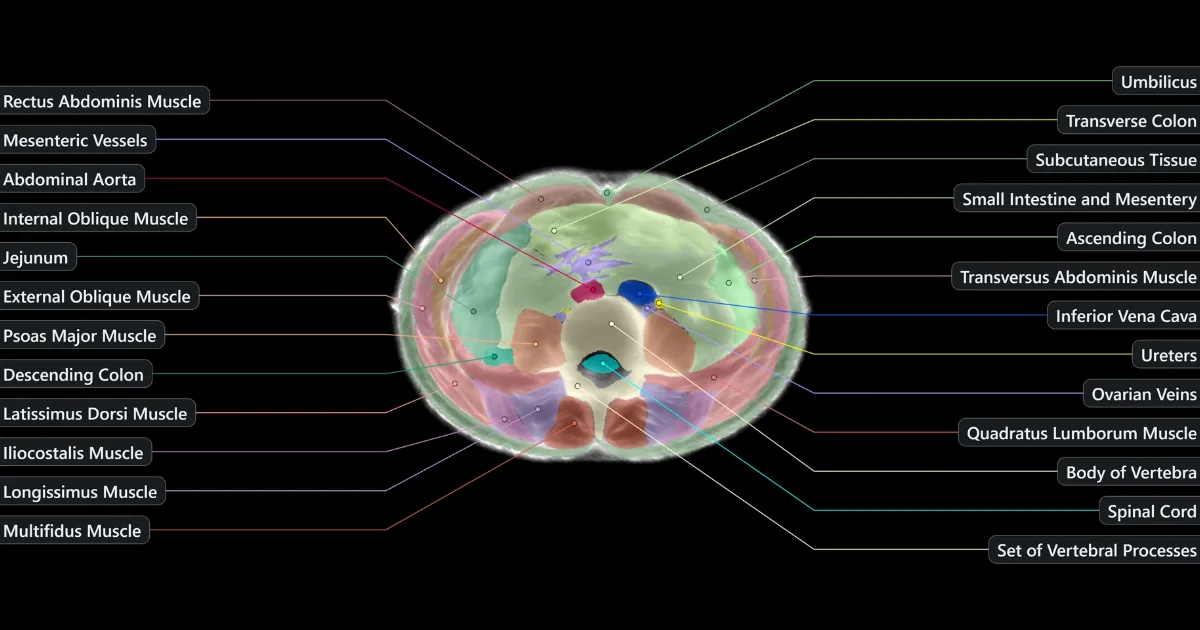
The company has announced Midjourney Medical, a new division developing what it calls the Midjourney Scanner: an ultrasound-based full-body imaging system designed to reconstruct three-dimensional views of the inside of the human body in about 60 seconds.
The concept is unusual even by health-tech standards. Rather than lying inside an MRI machine or visiting a conventional imaging center, users would step onto an elevator-like platform in shallow water. The platform would then lower them through a submerged ring of sensors. Those sensors would send ultrasound waves through the body from multiple angles, collect the returning waveforms and use large-scale computation to reconstruct internal structures.
Midjourney’s ambition is not simply to create another diagnostic machine. The company wants to make body imaging feel less like a hospital procedure and more like a routine wellness experience.
Its proposed destination is not the radiology department. It is the spa.
The company plans to open a first Midjourney Spa in San Francisco in 2027, combining hot tubs, saunas, cold plunges and body-scanning rooms. The larger vision is to make internal imaging a repeated, everyday activity: something people do while tracking exercise, diet, sleep, aging and rehabilitation over time.
But the announcement should be viewed carefully. Midjourney has presented a technology-development roadmap and a long-term health-data vision, not a fully validated medical diagnostic system. The company has said it will begin with body-composition mapping and expand medical capabilities gradually through regulatory processes.
The central question is no longer whether AI companies will enter healthcare. It is whether a company built around image generation can create a safe, clinically useful and trustworthy system for turning the human body into a continuously updated data record.
A Full-Body Scan in Water
The Midjourney Scanner is designed to work differently from conventional imaging equipment.
A user would enter a shallow pool and stand on a platform connected to rails. The platform would slowly descend into the water as the body passes through a circular sensor structure. Midjourney says the ring is composed of roughly 500,000 tiny square elements, each designed to act as both a miniature speaker and microphone.
The concept relies on ultrasound.
Each sensor sends sound waves into the body, then measures the way those waves change as they travel through water, skin, fat, muscle, bone and tissue surrounding internal organs. Because each material has different density and stiffness, the waves return with different speeds, shapes and directions.
Midjourney’s plan is to collect those changes from many angles at once, then use computing systems to reconstruct a three-dimensional image of the body’s interior.
The company says the scanning process could generate data at terabyte-per-second scale. It describes the amount of information produced during a one-second scan as comparable to hundreds of hours of high-definition video.
The core idea is simple: combine an enormous volume of ultrasound data with large-scale computation to create a detailed internal map of the body.
Midjourney has suggested that the technology could eventually offer internal imaging comparable to MRI in some settings, while taking only about a minute and avoiding radiation or powerful magnetic fields.
But that comparison remains aspirational. Whether the scanner can visualize different organs, tissues and abnormalities with sufficient accuracy for clinical use will depend on future technical studies, independent validation and regulatory review.
From Hospital Procedure to Spa Routine
Midjourney’s most unusual decision is not the ultrasound hardware. It is the setting.
The company has introduced the concept of the Midjourney Spa, a wellness space where body scanning would sit alongside hot tubs, saunas, cold plunges and relaxation areas.
The goal is to remove the friction and anxiety normally associated with medical imaging. Instead of visiting a hospital only when illness is suspected, users could undergo repeated scans as part of a regular wellness routine.
If that model works, body imaging could shift from a one-time diagnostic event to a long-term record of physical change.
People could potentially track how exercise, nutrition, sleep, injury recovery, aging or weight changes affect muscle, fat, tissue distribution and other internal characteristics. Over time, the result could become a personal archive of bodily change.
Midjourney’s vision is that users would compare their scans with general population data, discuss results with physicians, nutritionists, trainers or AI tools, and make more frequent decisions about health and lifestyle.
The company is not simply trying to sell a machine. It is trying to build a new kind of body-data infrastructure.
The value, in this model, does not come from a single scan. It comes from repeated scans collected over months and years.
Starting With Body Composition, Not Diagnosis
Midjourney has outlined a relatively cautious initial regulatory path.
The company says it plans to begin by providing detailed body-composition maps rather than immediately positioning the scanner as a broad medical diagnostic device. Diagnostic tools that detect disease or support treatment decisions typically require regulatory authorization, and Midjourney has said it intends to expand medical capabilities gradually through that process.
This is an important business and regulatory choice.
Rather than entering the healthcare market immediately as a diagnostic imaging company, Midjourney appears to be starting in the wellness and personal body-data space. That approach could allow the company to test how often people want to be scanned, what types of information they value, how users interpret results and whether the operating model can work at scale.
It may also give the company time to improve hardware, reconstruction methods, data systems and clinical evidence before making stronger medical claims.
The scanner, therefore, should not yet be understood as a finished diagnostic product. It is better viewed as a platform under development: one that begins with body information and may expand into clinical applications only after further testing and approval.
Why an AI Image Company Wants to Scan the Human Body
Midjourney’s move into medical imaging is striking because of the company’s original identity.
The company became widely known for generative AI image tools. Users type descriptions, and the system creates visual scenes. Its success has been built around image synthesis, computational creativity and large-scale data processing.
Medical imaging is a very different industry. But it shares some underlying ingredients: sensors, images, reconstruction algorithms, large datasets and interpretation.
Midjourney appears to be extending its expertise in visual computing from images on screens to images inside the human body.
The company’s public argument is centered on information. If people can gather more data about their bodies more quickly and at lower cost, they may understand their health better and make earlier lifestyle changes.
From this perspective, Midjourney Medical is both a medical-device project and a personal-data platform.
The company has also announced aggressive long-term ambitions, including expansion to more cities, development of later-generation scanners and deployment of tens of thousands of units globally. It has described a goal of creating capacity for up to one billion scans per month.
Those figures are not current operating results. They are strategic targets.
But they reveal the scale of Midjourney’s ambition. If realized, the company would not merely become an imaging-equipment supplier. It could become a platform that records how millions of people’s bodies change over time.
More Images Do Not Automatically Mean Better Health
The attraction of the Midjourney concept is easy to understand. If internal changes in the body can be observed more frequently and more easily, people may detect risks earlier and adjust behavior sooner.
Midjourney has argued that broader access to early imaging could significantly reduce mortality and healthcare costs.
But those outcomes should not be assumed.
In medicine, more testing does not automatically lead to better health. More scans can also reveal small, uncertain or incidental findings that may never cause harm. Such findings can lead to anxiety, follow-up tests, unnecessary procedures and additional costs.
The central challenge is interpretation.
A scanner may be able to produce large volumes of images. But users still need to understand what those images mean. Which changes reflect normal variation? Which are related to lifestyle? Which require medical attention? Which findings are uncertain and should not trigger alarm?
The success of the Midjourney Scanner will therefore depend on more than imaging speed or visual quality.
It will depend on whether the company can build reliable systems for interpretation, explanation, clinical referral and user safety.
As health technologies become more advanced, the question shifts from “How much can we see?” to “What should we do with what we see?”
The Data Question Begins at the Spa
Midjourney’s decision to place scanning inside a spa environment may improve accessibility. Hospitals involve appointments, waiting periods, complex procedures and an atmosphere centered on illness. A spa, by contrast, is built around relaxation, wellness and routine visits.
But internal body data is more sensitive than most wellness information.
A whole-body scan could reveal changes in body composition, muscle and fat distribution, tissue structures, previous surgical traces and potential health-related patterns. Such information may be more intimate than step counts, heart-rate records or fitness photos.
This raises important questions about data governance.
Who owns the raw scan data? Can users download it? How long will it be retained? Will it be used to improve algorithms? Can it be shared with researchers, insurers, employers or third parties? Can users request deletion? What happens if the company changes ownership or business strategy?
These questions matter because the spa environment may make scanning feel casual. But the resulting data may be medically sensitive.
The more routine the experience becomes, the more carefully consent, privacy controls and data transparency will need to be designed.
A relaxing user experience should not lower the standard for protecting highly personal health information.
Midjourney Is Building a Timeline of the Body
Midjourney Medical remains at an early stage.
The company says it plans to spend the coming year improving algorithms and hardware, conducting research studies and building its first research spa. If the San Francisco facility opens in 2027 and begins collecting real-world user data, the project will move from vision into operational testing.
How far it can expand into diagnosis will depend on clinical validation, regulatory decisions and public trust.
Still, the announcement matters because it points toward a new frontier in personal technology.
Wearables already track steps, heart rate, sleep, activity and stress. Midjourney’s proposal goes further. It suggests that internal body images could become part of everyday personal data.
What Midjourney is ultimately trying to build is not just a scanner.
It is a visual timeline of the body: a system that records how a person changes over time.
Whether that becomes a foundation for preventive healthcare, a premium wellness service or a source of health anxiety and privacy controversy remains uncertain.
But one direction is becoming clearer.
The next expansion of AI companies may not be limited to text, images and screens. It may extend into the human body — and into the highly sensitive health data that body produces.