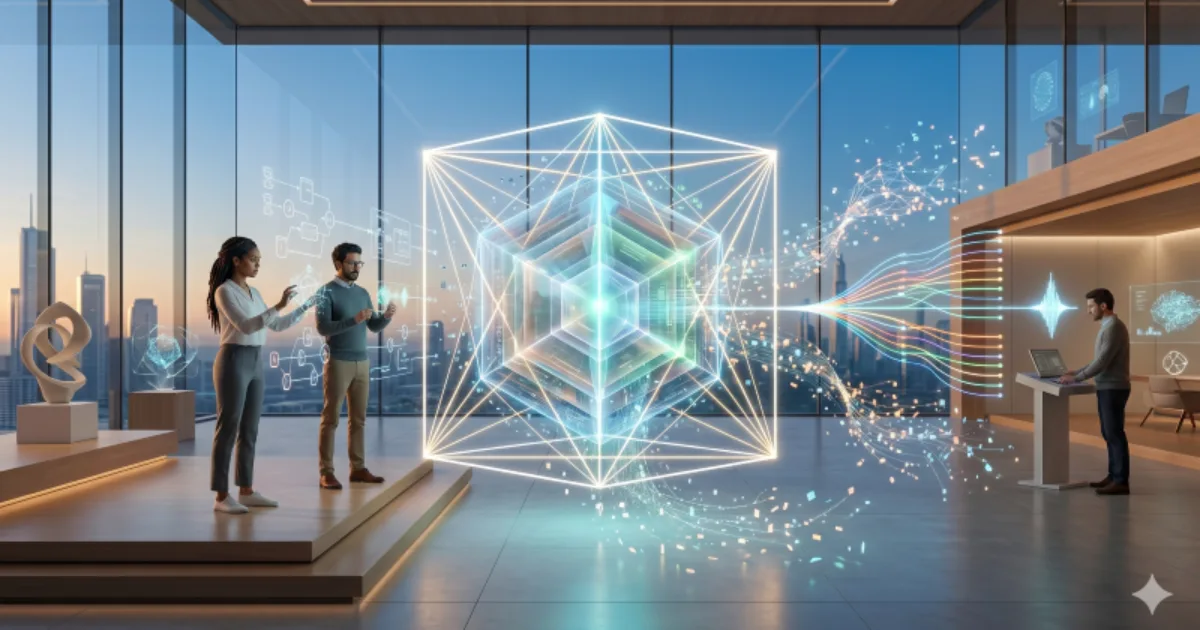
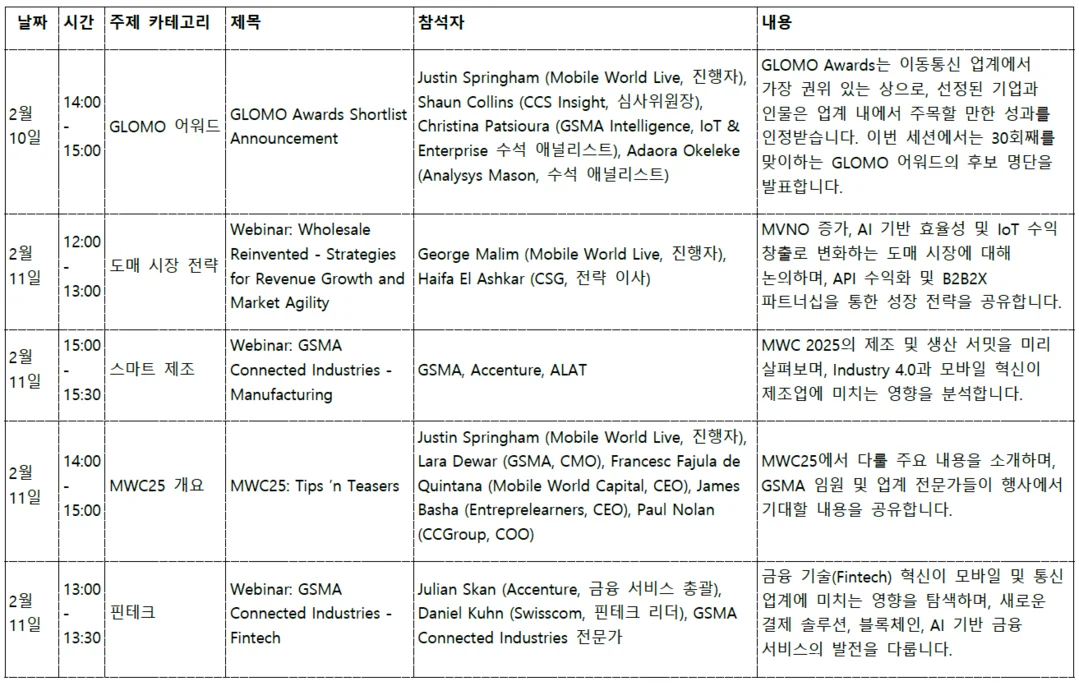
MWC 2025 (2,700+ participating companies, Barcelona) marks a watershed: AI moving from experimentation to tangible value creation across the telecom industry. Three core themes: (1) AI as operational infrastructure — network optimization (30-40% energy reduction); customer service automation (60%+ query deflection); predictive maintenance (90%+ failure prediction accuracy); fraud detection with real-time blocking capabilities; (2) Network APIs enabling new business models — GSMA Open Gateway standardizing APIs globally; enabling developers to access network capabilities (location, QoS, SIM swap detection) without carrier-specific integration; creating network-aware applications; (3) AI Factory and Sovereign AI — nations establishing domestic AI compute infrastructure as strategic independence; carriers'' physical networks potentially becoming AI deployment platforms with data locality advantages. Industrial innovation cases: manufacturing (5G connected robotic assembly with sub-millisecond latency); healthcare (remote surgery pilot using 5G haptic feedback); smart cities (real-time traffic optimization using 5G sensor networks and edge AI); energy (smart grid demand response using AI and 5G telemetry). Future preparation challenges: talent gap in combined AI+network engineering; security architecture for AI-enabled network automation (AI-driven attacks against AI-managed networks); spectrum management as 6G research accelerates; carbon footprint of AI compute embedded in network infrastructure. The key insight: MWC 2025 signals telecom''s role shifting from connectivity provider to AI infrastructure enabler — carriers'' physical assets and trusted relationships may become more valuable in an AI-defined world than they were in the OTT-disrupted era, reversing a decade of value migration away from carriers toward application platforms.
MWC 2025: Vision of the Telecom Industry Advancing With AI and Advanced Technology
[Korean article] MWC 2025: AI와 첨단 기술로 도약하는 통신 산업의 비전
Source: META-X metax.kr
[Shin Dong-hyung''s ICT Future Reading Blog: https://blog.naver.com/jack0604]
ⓒ META-X metax.kr
All rights reserved.
Free to share with attribution.
All rights reserved.
Free to share with attribution.