Nature Paper Published: Chemical Reaction Patterns Similar to Earth Microbial Activity, But Additional Verification Needed
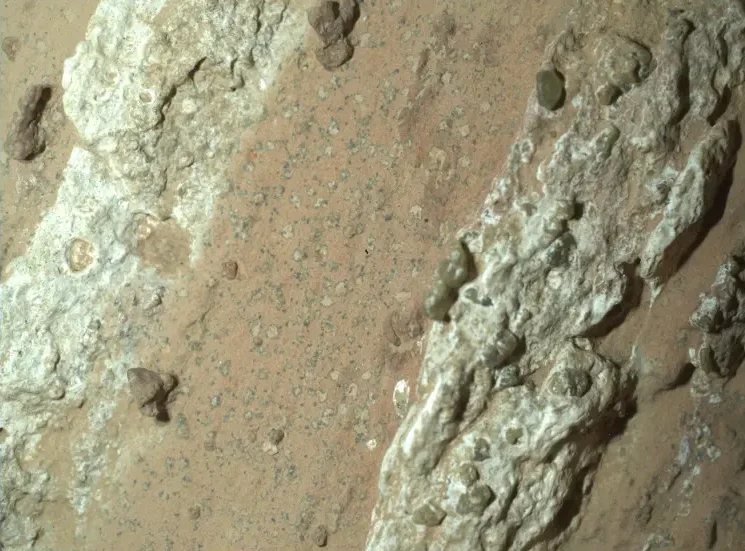
NASA Mars exploration rover Perseverance found potential life indicators (biosignatures) in rock samples collected last year. While this signifies one step forward in research on the possibility of life on Mars, NASA emphasized "additional data and verification is still needed." Perseverance, in July 2024, investigated a rock called "Cheyava Falls" in the ancient river valley Neretva Vallis at Jezero Crater -- part of the "Bright Angel" layer where traces of past water flow remain. The rover collected samples named "Sapphire Canyon" from this rock, and subsequent analysis found chemical traces suggesting microbial origin. Science instruments PIXL (X-ray analysis) and SHERLOC (organic material detection laser analyzer) captured colorful spots -- "leopard spots" -- on the rock surface. Analysis revealed these spots contain non-biological carbon compounds and iron-sulfur mineralization potentially indicating microbial metabolic processes. The key finding: the spatial distribution pattern of chemical compounds mirrors what is seen in Earth rocks where ancient microbial activity occurred -- this pattern is difficult to explain through purely geological processes. However, Mars has unique geological history including radiation exposure and chemical processes that could potentially create similar patterns abiotically. The definitive answer requires Earth-based laboratory analysis of the actual samples, which will require a future Mars Sample Return mission not currently funded.