
YouTube’s digital literacy campaign “Hit Pause,” which encourages people to stop and think before sharing something online, has added a new theme this year. While the campaign has previously focused on how people speak and behave online, it now also addresses how users should understand and evaluate information in the age of generative AI.

On November 2, 2026, YouTube unveiled “Hit Pause 2026,” announcing that the campaign would expand to include critical thinking and information evaluation skills needed in the AI era. First introduced in Korea in September 2023 with a focus on preventing cyberbullying, the campaign has addressed online communication culture each year. In 2026, however, it clearly positioned the ability to understand and evaluate AI-related information as a distinct educational priority.
Making Something Look Convincing Has Become Easier
Generative AI has fundamentally changed the way content is created. With just a few lines of text, users can generate images, create videos that look as though they were filmed in the real world, or easily alter the voices and scenes in existing footage. Tasks that once required professional equipment and editing skills can now be carried out by individuals. As the time and technical barriers to production have fallen, the range of content that anyone can create has expanded accordingly.
The problem is that the quality of a finished piece does not necessarily indicate the reliability of the information it contains. Video and audio can look and sound completely natural even when the content is false, and scenes that never existed can be rendered convincingly. Visual quality and natural-looking production, which many users have traditionally relied on as clues when judging information, are no longer dependable indicators. At the same time, content created with AI is not necessarily false.
Ultimately, “Was this made by AI?” and “Can this information be trusted?” are two separate questions. Digital literacy in the age of generative AI begins with understanding that distinction.
Recognizing AI Content Is Not the Same as Judging Whether It Is True
As AI-generated content becomes more common, one of the first responses is to try to distinguish content created by AI. Watermarks, AI-use labels, and automated platform detection are among the most common approaches.
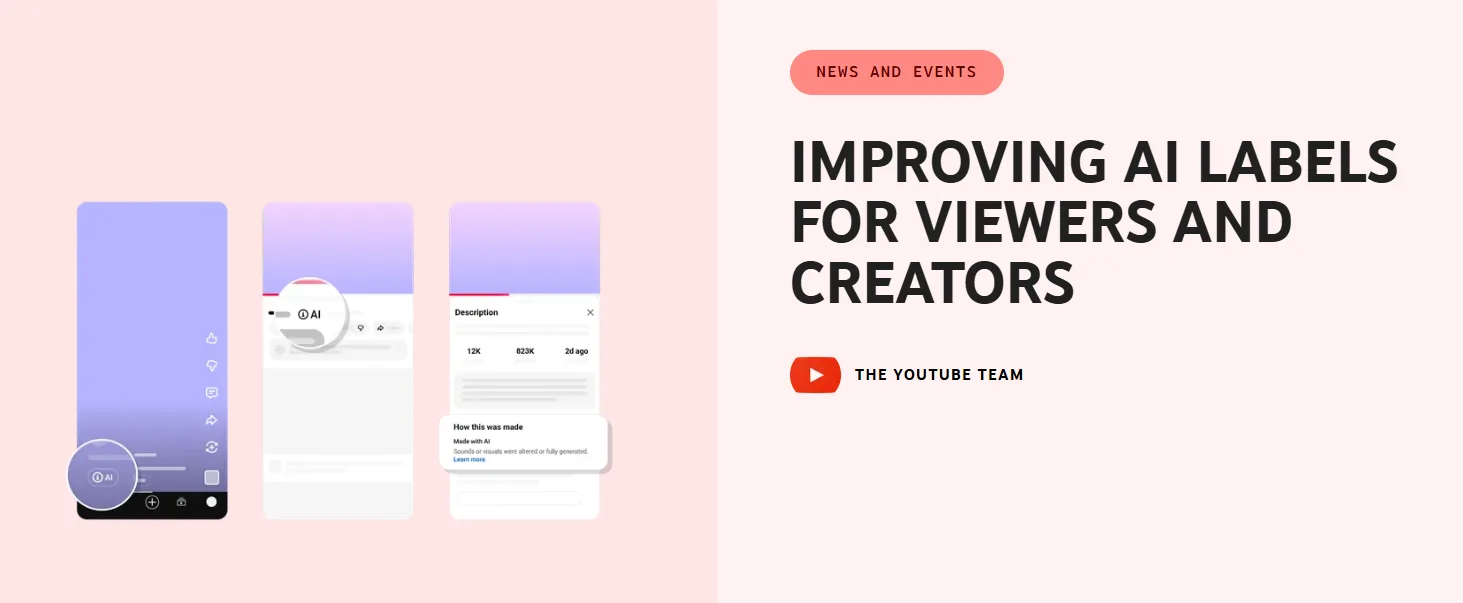
YouTube also requires creators to disclose when realistic content has been generated or significantly altered using AI. Since May 2026, these labels have been moved from within the description area to directly below the video player, or over the video in Shorts, making them easier to notice. Content created using YouTube’s own AI tools, content containing C2PA metadata, and content detected by YouTube’s internal systems may also receive an automatic label even if the creator does not disclose AI use.
These measures are important. Users have a right to know how the content they are viewing was made. But these labels only provide information about how the content was created. YouTube has also stated that the presence of an AI label does not, by itself, affect whether a video is recommended or eligible for monetization. A label saying that content was made with AI is not a verdict on whether the information in that content is true or false.
Even footage recorded by a real person can take on a completely different meaning if certain scenes are selectively edited or the original context is removed. A claim does not become true simply because a real person says it. Conversely, graphics or videos created using AI can still contain accurate facts and reliable data.
Judging whether information is trustworthy therefore requires a different set of questions. Who created the information? What evidence and sources are provided? In what context did the original event or statement occur? Can the same facts be confirmed through other independent sources?
Digital literacy in the age of generative AI is becoming less about automatically distrusting AI content and more about evaluating the evidence behind information without relying on its form or apparent polish.
The Meaning of “Hit Pause” Is Changing Too
One notable point is that YouTube has not changed the name of the campaign. The central message remains the same: “Hit pause before you press the button.” The name and format remain unchanged, but the question users are asked to consider in that moment of pause has shifted.
When the campaign launched in Korea in September 2023, it encouraged people to reflect on whether the content they viewed or created contained language that could hurt others. In October 2024, it expanded to include recognizing cyberbullying, reporting it, and preventing its spread. In 2025, the campaign promoted more positive comment culture under the message “Choose Kind Comments, Not Hurtful Ones.” The specific themes changed slightly from year to year, but for the first three years, the underlying question was essentially the same: “How might what I say affect someone else?”
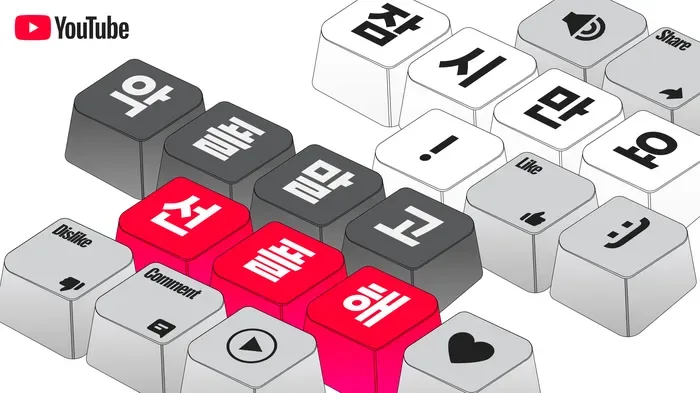
In 2026, “Hit Pause” adds another question: before sharing something, have you checked whether the information is trustworthy? It may seem like a small change, but its implications are significant. Information does not spread online only because of the person who first creates it. It also spreads through the countless users who see it and pass it on without much thought. The moment someone presses the share button, they shift from being a recipient of information to becoming one of its distributors.
The act of pausing has therefore expanded from reflecting on one’s own words and behavior to examining the information one accepts and passes along. The scope of the literacy addressed by the campaign is also moving beyond online etiquette toward the ability to evaluate information itself.
Can This Be Solved by User Judgment Alone?
That does not mean the responsibility for determining whether information is true should fall entirely on users.
Platforms have a role in telling users how content was created. This includes labeling AI-generated or altered content, providing information about sources and production methods, and responding to false or manipulated content through policy and technology. If users are expected to make informed judgments, they first need access to sufficient information on which to base those judgments.
At the same time, platforms cannot determine the truth of every piece of information on behalf of users. Facts and opinions may be mixed within a single video, and information about developing events may change over time. Platform policies and technical safeguards cannot replace user judgment, nor can user judgment replace platform responsibility. The two are better understood as complementary.
YouTube’s decision to strengthen AI content labels while also expanding its literacy campaign can be viewed in this context. What stands out this year is that the campaign also extends beyond the platform itself. YouTube is working with Korea’s Ministry of Culture, Sports and Tourism and the Korea Press Foundation to distribute campaign videos and promote MECA, the foundation’s media education platform, in order to encourage youth participation in media education. Google.org, Google’s philanthropic arm, is also providing $1 million to civil society organizations in Korea to expand AI safety and digital citizenship education for children and teenagers.
A similar trend can be seen in the public sector. In June this year, the Korea Press Foundation held a pilot “AI Literacy Classroom” at Seocho High School, covering not only the use of generative AI but also information bias and critical evaluation. The ability to judge information is increasingly being treated not as an individual responsibility alone, but as a skill that platforms, public institutions, and schools all have a role in developing.
What Should We Trust?
Digital literacy has never meant simply knowing how to use devices. It has also included the ability to find, understand, and evaluate information, as well as to behave responsibly online. In that sense, generative AI has not created an entirely new form of literacy. What has changed is the environment in which that literacy must operate.
Images and videos that look as if they were created by real people, along with naturally written text, are no longer enough to judge the source or reliability of information. The more common convincing content becomes, the more important it is to develop the habit of looking beyond appearances.
Over the past several years, “Hit Pause” has encouraged users to reflect on their own behavior before saying or sharing something online. In 2026, the campaign adds another question to that moment of pause.
Where did this information come from, and what am I relying on when I decide to believe it?
Digital literacy in the age of generative AI does not end with the ability to identify AI-generated content. More important is developing the ability to judge whether information can be trusted, regardless of who created it or how convincing it appears.