
Human history has been a continuum of technological innovation and the resulting social change. The Industrial Revolution dramatically improved human productivity through mechanization and automation, and the Information Revolution maximized the distribution of information and accessibility of knowledge based on digitalization and network technology. Following these, the Machine Revolution is developing around artificial intelligence and robotics, replacing human labor and advancing toward the formation of a new paradigm in which humans and machines coexist. Within this flow, we now stand at the threshold of a great transformation toward "Superintelligence."
The Superintelligence Revolution is a process that goes beyond simple technological progress to fundamentally redefine the relationship between humans and machines. Machines are no longer simple tools but are transforming into entities that learn, judge, and act autonomously, causing revolutionary changes across the economy, society, culture, and the labor market. These changes lie on the continuum of the Industrial Revolution and Information Revolution, but rather than simple continuity, they carry the characteristics of Disruptive Innovation, fundamentally transforming existing economic and social structures.
This chapter aims to examine the Superintelligence Revolution from the "perspective of the Industrial Revolution," the "perspective of the Information Revolution," and the "perspective of the Machine Revolution." First, from the perspective of the Industrial Revolution, we analyze the economic changes that superintelligence will bring, focusing on changes in productivity and the labor market, and the readjustment of the relationship between capital and labor. Second, from the perspective of the Information Revolution, we examine changes in information accessibility promoted by digitalization and networking, the data-based economy, and the value created by artificial intelligence. Finally, from the perspective of the Machine Revolution, we explore the process of machines changing beyond the stage of replacing human labor toward cooperation and coexistence with humans, and its social impact.
We are now moving beyond the era of simple automation and mechanization into an era in which humans and machines coexist and create new value together. The changes that the wave of superintelligence will bring are not merely technological innovations, but mean a fundamental transformation across the entirety of human existence, economic systems, and social structures. Therefore, in the midst of this revolutionary flow, we must begin in earnest the discussion of how we will cooperate and coexist with artificial intelligence and robots.
1. Perspective of the Industrial Revolution
History of the Industrial Revolution
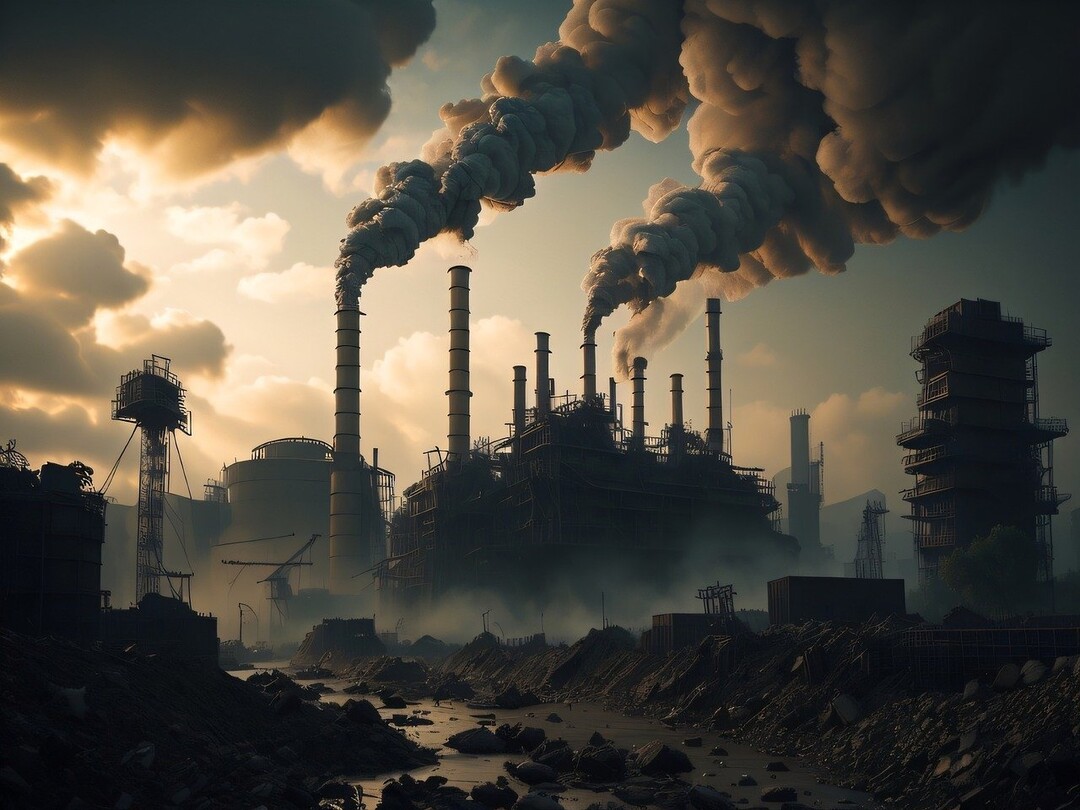
The first Industrial Revolution took place from the late 18th century to the mid-19th century, centered on Europe and the United States. The transition from an agricultural society to an industrial society occurred, with active movement from rural areas to cities. Representative industries of this period were the textile industry and the iron and steel industry, with the development of the steam engine becoming the central driving force of the Industrial Revolution.
As the efficiency of steam engines improved greatly, industrial utilization surged, and they began to be used in transportation such as railways and ships. With the emergence of steam-powered cotton spinning and mechanical looms, the textile industry grew rapidly. Iron and steel technology also developed innovatively, with the introduction of coke-based ironmaking methods, and as the use of large blast furnaces expanded, productivity in the steel industry increased dramatically. These technological innovations enabled large-scale production in industry and also brought about urbanization and changes in the labor market.
These changes, coupled with the growth of industry centered on Britain, were accompanied by social change. The population increased rapidly, and in the labor market, a transition from agriculture-centered to manufacturing-centered work occurred. Accordingly, the employment structure also changed, with the proportion engaged in agriculture decreasing and the proportion in manufacturing and service industries increasing.
The Second Industrial Revolution refers to the period from the late 19th century to just before the First World War, characterized by the introduction of electrical energy and the development of mass production systems. As railways, telegraphs, and telephone technology spread, innovation occurred throughout industry, and factory automation using electrical energy began in earnest. During this period, the automobile industry emerged, and with the introduction of Henry Ford's conveyor belt system, a mass production system was established.
The development of the chemical industry was also an important factor. With the development of ammonia synthesis technology, fertilizer production became possible, dramatically improving agricultural productivity. Also, as the petroleum industry grew, fuel supply stabilized, which played an important role in the development of the automobile and aviation industries.
The industrial development of this period, coupled with the spread of the capitalist economic system, led to the formation of the working class and the activation of the labor movement. As large factories appeared, the working class formed, and demands for improvements in working conditions and wages increased. Accordingly, labor unions were organized and socialist ideas spread, and political changes also occurred alongside.
The Third Industrial Revolution vs. the Internet Information Revolution

There is a perspective that tries to view the Information Revolution or Digital Revolution as an extension of the Industrial Revolution. From this viewpoint, the Internet Information Revolution is explained as the Third Industrial Revolution, which refers to the digital revolution that began in the mid-20th century. The core of this period was the development of computer and internet technology, with rapid development of information and communication technology (ICT) dramatically improving data processing, storage, and network technology. These changes had a great impact across the economy and social structure.
Meanwhile, the term "Third Industrial Revolution" was defined from a somewhat different perspective by economist Jeremy Rifkin. He argued that internet technology and renewable energy would combine to promote the Third Industrial Revolution, and saw that fundamental changes in economic structure occur when new communication technologies and energy systems merge. In reality, the emergence of the internet dramatically increased the speed of information sharing and propagation, contributing to industrial automation and increased efficiency.
The industrial innovation of this period meant a transition from an existing manufacturing-centered economy to a knowledge-based economy. E-commerce and the software industry grew rapidly, and as globalization accelerated, economic boundaries between countries gradually blurred. Also, as artificial intelligence (AI) and robotics technology developed, major changes began to appear in the labor market.
Despite these discussions, the concept of the "Third Industrial Revolution" is not widely used in academic circles. Instead, the view that the subsequent Information Revolution is a more discontinuous innovation through terms such as "Information Highway Revolution" or "Digital Revolution" is gaining more persuasive power.
The Fourth Industrial Revolution?
Klaus Schwab (2016) advocates for the Fourth Industrial Revolution, explaining that a new revolution is beginning that shows fundamental differences in speed (Velocity), scope (Scope), and systems impact. That is, technological development is progressing at exponential speed, having disruptive effects across almost all industries and countries, and is fundamentally changing production and management systems. These changes are promoted by ICT-based technology convergence and are further accelerated through the development of innovative technologies such as artificial intelligence, robotics, the Internet of Things, autonomous vehicles, 3D printing, nanotechnology, biotechnology, materials science, energy, and quantum computing.
However, the view of looking at the development of current artificial intelligence and superintelligence technology as an extension of such industrial revolutions is very lacking in persuasiveness. The core elements of the Fourth Industrial Revolution emphasized by Schwab are the satisfaction of Customer Expectations, Product Enhancement, Collaborative Innovation, and changes in Organizational Forms. This is merely a process of continuous innovation already being realized due to the Internet Information Revolution, not a discontinuous change significant enough to be given the name of a new industrial revolution. That is, it is nothing more than packaging the continuous development of the internet revolution as a new industrial revolution.
In particular, while the concept of the Industrial Revolution has been defined around changes in physical capital and labor, the current Intelligence Revolution demands a paradigm shift that goes beyond existing capital and labor relationships to fundamentally redefine the roles of humans and machines. The phenomenon of machines appearing as autonomous agents that make their own judgments, going beyond simple production tools, is fundamentally different from existing industrial revolutions.
The Industrial Revolution progressed centered on the mechanical replacement of labor, and machines existed as tools operated by humans. However, in the superintelligence era, machines are changing from simple tools for productivity improvement into economic actors making autonomous judgments and decisions. In a situation where the relationship between humans and machines is being completely reconstructed, explaining this within the existing framework of the Industrial Revolution overlooks the essence of the transformation.
We must now break free from the outdated concept of the Industrial Revolution and establish concepts and frameworks that can define the new era. The Superintelligence Revolution should be viewed not as a simple extension of automation, but as the "Third Machine Revolution" that fundamentally reestablishes the roles of humans and machines themselves. New technological changes are not simply increasing economic productivity, but are advancing toward newly defining the way human existence is and social relationships are. It is necessary to acknowledge this paradigm shift and adopt a new conceptual approach appropriate to it.
2. Perspective of the Information Revolution
The Information Revolution refers to fundamental changes in humanity's methods of communication, accumulation of knowledge, and the distribution of information. Media historian Irving Fang defines human history through six Information Revolutions: the Writing Revolution, the Printing Revolution, the Mass Media Revolution, the Entertainment Revolution, the Communication Device Revolution, and the Internet Revolution, the Information Highway Revolution.

From the Writing Revolution to the Information Highway Revolution
The Writing Revolution, which began in Greece in the 8th century BC, through the combination of the alphabet and papyrus, became an opportunity to develop from an oral culture that relied only on human memory to systematic knowledge accumulation through writing. Subsequently, in the mid-15th century, the combination of Gutenberg's metal movable type and paper technology originating from China promoted the Printing Revolution, making possible the mass reproduction and distribution of knowledge. As a result, the Reformation, Renaissance, and Enlightenment movements were promoted, and as information accessibility expanded, the foundations for democratic thinking and academic development were laid.
In the mid-19th century, the Mass Media Revolution occurred with more advanced printing technology, mass printing technology using steam engines, and the appearance of telegrams. As newspapers and magazines established themselves as media for the general public, the popularization of information accelerated. The emergence of cheap newspapers called the "Penny Press" became an opportunity to further expand information accessibility.
Following this, the Entertainment Revolution, which began in the late 19th century, made possible the transmission of information through sight and hearing through the development of recording technology, photography, and video recording technology. The popularization of cinema and phonographs promoted the spread of popular culture, and the subsequent appearance of radio and television created new forms of communication combining audio and video.
In the 20th century, as the telephone, radio, and television became universal, the way information was transmitted became more immediate and popular. In particular, the development of wired communication using telephone lines and broadcasting technology dramatically changed the way the public consumed information and entertainment. These changes ultimately led to the development of computer and internet technology, and the Information Highway Revolution, which began in earnest in the 1990s, laid the foundation for the production and distribution of digitalized information globally.
The Two Stages of the Digital Revolution
The Information Revolution, commonly referred to as the Internet Revolution or Digital Revolution, can be further divided into two stages. The first stage of the Digital Revolution was focused on increasing productivity and efficiency through the convergence of computers, the internet, and wired communications. At this stage, the digitalization of information and mass storage and analysis of data became possible, causing major changes in the economy and industrial structure.
The second stage of the Digital Revolution transitioned to individual consumer-centered information utilization through the development of mobile technology, cloud computing, and artificial intelligence (AI). The spread of smartphones and social media innovatively changed individuals' ways of accessing information and communicating, creating an information environment with decentralized and personalized media. This era is defined as the "Era of Individual Sovereignty," with an acceleration of the process in which information consumers transform from simple recipients into producers.
The Information Revolution and the Wave of Superintelligence

The core of the Information Revolution lies not in simple technological advancement, but in how the way information is distributed changes human thinking and social structures. If the Industrial Revolution was a revolution that improved human productivity through machines and automation, the Information Revolution can be seen as a revolution that expands human thinking ability and creativity. The development of artificial intelligence (AI) is forming a new relationship between humans and machines at the apex of this Information Revolution and is heralding the advent of the Superintelligence Revolution.
In the superintelligence era, humans and machines will interact in real time based on data, and the existing ways of producing and consuming information will fundamentally change. In particular, as artificial intelligence acquires the ability to learn autonomously and make decisions, the flow of information will transform more sophisticatedly and rapidly. Accordingly, the reliability of information, ethical issues, and the reestablishment of the roles of humans and artificial intelligence will become important social challenges.
3. Perspective of the Machine Revolution
The "Second Machine Age," which frequently appears in discussions of the "Fourth Industrial Revolution," refers to an era in which artificial intelligence, computing power, network technology, and digitalization combine to innovatively change economic and social structures. Brynjolfsson (Erik Brynjolfsson) and McAfee (Andrew McAfee) use this concept to explain that the modern economy is experiencing epochal changes driven by smart machines. (Brynjolfsson & McAfee, 2016).
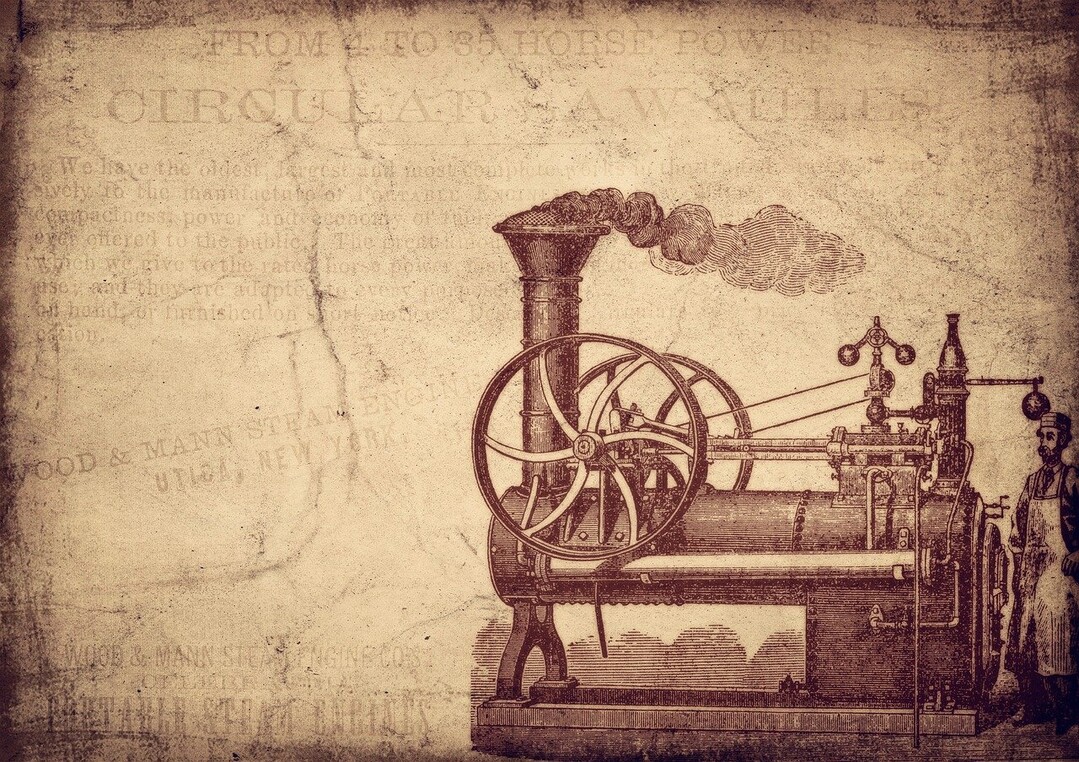
The First Machine Age vs. The Second Machine Age
The traditional Machine Age refers to the period from the late 19th century to the early 20th century (1880-1945), and the key technological innovations of this period were conveyor belt-based mass production systems, development of the steel industry, railway and automobile and airplane and construction using steel beams enabling skyscrapers, large-capacity hydroelectric power, high-speed printing technology, and the appearance of photography and radio. Due to these technological innovations, a Mass Market of mass production and mass consumption was formed, and as large corporations grew rapidly, social changes such as labor exploitation problems and the emergence of labor unions were also accompanied.
The core of the Second Machine Age lies in machines automating human cognitive work through powerful software such as artificial intelligence (AI), going beyond simple tools. This is a differentiating factor from the First Machine Age, when machines assisted human labor.
Brynjolfsson and McAfee point out the fear of job reduction (technological rejection phenomena like the Luddite movement) within these changes, but simultaneously predict that new forms of job creation will occur. That is, the "Bounty" created by technology will compensate for the reduction of existing jobs and form new industries and job categories.
Mechanization and Economic Inequality
The greatest beneficiaries of the Second Machine Age are consumers and companies and investors who create new machines. Due to technological development, opportunities to enjoy high-quality products and services at low prices are increasing, maximizing economic efficiency through this. However, the problem is that this economic prosperity is not distributed equally.
Brynjolfsson and McAfee explain this imbalance by comparing Kodak and Instagram. Kodak was a company that employed 145,000 people at its peak, but Instagram was acquired by Facebook for $1 billion in 2012 with only 13 employees. As a result, in the First Machine Age, productivity, jobs, and average wages rose together, but in the Second Machine Age, it is importantly pointed out that productivity improvement does not necessarily lead to job increases or income distribution.
This imbalance is likely to expand the gap (Spread) between the Super-rich and ordinary workers, causing problems such as middle-class stagnation, intensified income inequality, and increased long-term unemployment. In particular, the gap between workers with high-level skills and those without will widen further, and this difference is likely to act as a factor amplifying social conflict.
4. The Superintelligence Revolution: The Third Machine Age
The Machine Revolution, along with the Industrial Revolution, has changed human productivity and economic structure. The First Machine Age was the process of machines replacing human physical labor in the extension of the Industrial Revolution. Following this, the Second Machine Age created an environment in which machines could perform even human cognitive labor based on artificial intelligence and digital innovation. However, we are now entering the new paradigm of humans and machines coexisting, the era of the "Third Machine Revolution."
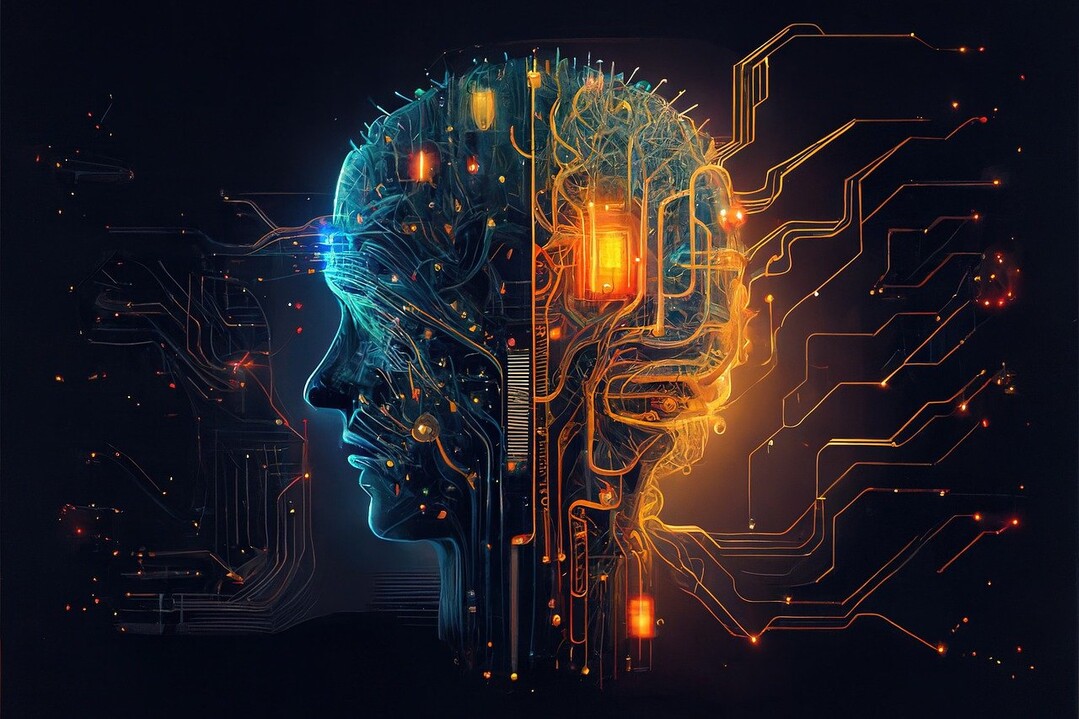
The Third Machine Age: Coexistence of Humans and Machines
The Third Machine Age goes beyond simple mechanization and automation to mean a new paradigm in which artificial intelligence (AI) and robots cooperate and coexist with humans. This heralds not simply the replacement of jobs, but an era in which machines and humans work together to create new economic value.
In the Second Machine Age presented by Brynjolfsson and McAfee, productivity increased as machines replaced human cognitive work, but job creation and wage increases were not accompanied. This led to economic inequality and intensified the contraction of the middle class and long-term unemployment problems. However, in the Third Machine Age, machines will function not as competitors to humans but as collaborators, playing a role in complementing human creativity and emotion.
In the Third Machine Age, superintelligence (AI) functions not as a simple calculation tool but as an autonomous decision-maker. Machines will be equipped with the ability to analyze data and learn to find optimal solutions on their own, enabling collaboration between humans and machines in various fields such as finance, medicine, education, law, and art.
Also, this revolution will bring changes to the economic order. Moving away from the existing economy based on mass production and consumption, a new economic structure will be formed where customized production and personalized services are central. As blockchain and decentralized economic models expand, the centralized corporate management approach will change, and an era in which individuals directly act as economic actors will arrive.
The most important challenge in the Third Machine Age lies in how to define and coordinate the roles of humans and machines. Machines will maximize productivity by taking over repetitive and dangerous tasks that are difficult for humans to perform, and humans will focus on creating new value based on creativity and emotion that machines cannot solve.
For this, the education and vocational training system must change. Instead of traditional occupations disappearing, education that strengthens human creativity and problem-solving ability will become important. Also, new job categories collaborating with machines will emerge, and human-centered ways of using technology will develop.
Also, as machines cooperate with humans across society, not only the labor market but also social values and ethical issues will newly arise. Discussion is needed on how to coordinate the roles and responsibilities of humans in an environment where machines make autonomous decisions.
Along with this, new social systems are required to resolve economic inequality problems. Concepts such as Basic Income are increasingly likely to be reviewed as realistic policies, and deeper consideration will be given to how the wealth created by machines will be fairly distributed to all humans.
The Future with Superintelligence
The Third Machine Age should be not an era in which humans and machines are in opposition, but an era in which new value is created through cooperation and coexistence. As superintelligence and robotics technology develop, the human work environment and economic structure will change, and policies and institutions that appropriately utilize and coordinate these changes will be needed.
Ultimately, the Machine Revolution going forward will be a process of creating a new social paradigm in which humans and machines coexist. In the wave of superintelligence, we must recognize machines as companions and continue to expand the roles and values of humans.