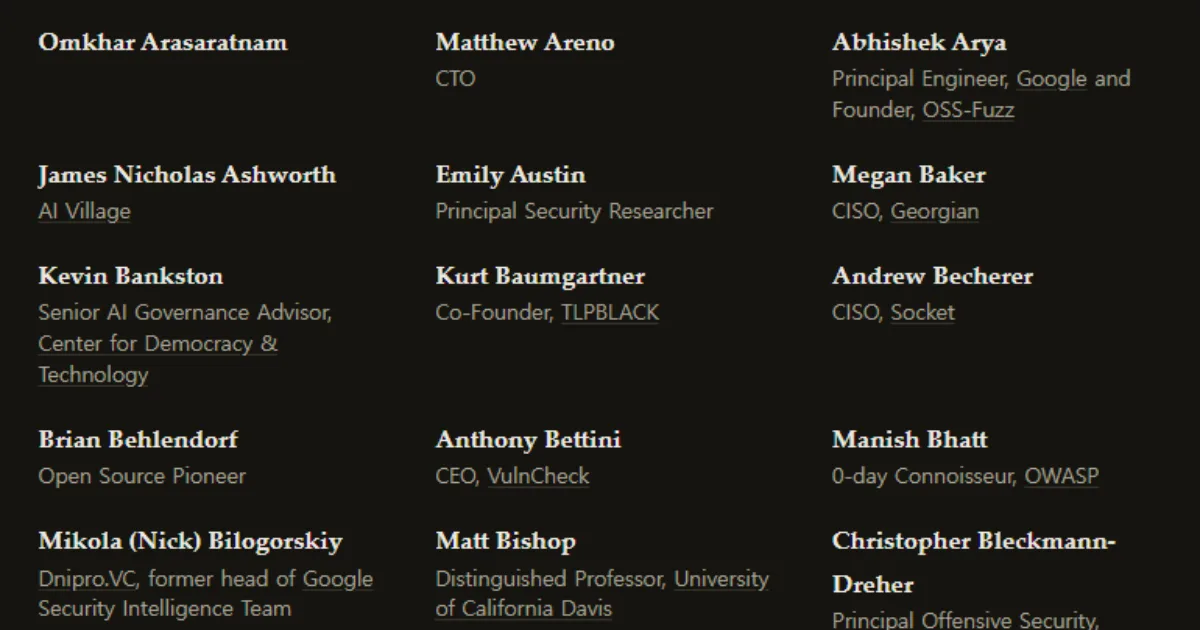
The open letter is not limited to a regulatory dispute surrounding Anthropic’s specific models. It marks a broader shift in how the U.S. government is beginning to treat frontier AI systems: not merely as commercial software products, but as strategic assets comparable to semiconductors, encryption technology and military equipment.
At the same time, the controversy exposes a growing collision between traditional export-control mechanisms and the operational reality of a cloud-based AI industry.
First, AI Export Controls Are Shifting From Products to Access Rights
Traditional export controls have focused on physical or digital products that cross borders: semiconductors, manufacturing equipment, source code and encryption modules.
In the Fable and Mythos case, however, the object of control is not a file, a chip or a piece of equipment. It is the right to log into a cloud service and call a model.
That distinction changes the nature of export controls in the AI era.
In the past, governments could restrict exports by preventing a product from being shipped abroad. Today, a model may remain inside a U.S. data center while still being treated as effectively exported if a foreign national accesses it remotely.
Nationality, location, employment status, cloud accounts and API permissions can all become variables in national-security controls.
The problem is that this approach conflicts directly with the operating model of global technology companies. AI firms rely on multinational research teams, globally distributed security and customer-support organizations, overseas subsidiaries and international enterprise customers.
Once access to a particular model is restricted based on nationality, the policy no longer functions as a simple limit on foreign sales. It becomes a rule that can reshape how global companies hire, collaborate, provide support and deliver services.
Second, Nationality-Based Restrictions Are Both Security Controls and Talent Controls
One of the most consequential aspects of the guidance is the possibility that it could apply not only to customers outside the United States, but also to foreign nationals living in the United States—including employees inside Anthropic itself.
That possibility matters because it expands AI security policy beyond interstate technology competition. It turns the issue into a question of which people can be granted access to advanced research and development capabilities inside the U.S. technology sector.
The competitive strength of the U.S. AI industry has long depended on its ability to attract researchers and engineers from around the world. If nationality-based restrictions on frontier-model access become normalized, the United States may block foreign access to critical technologies while simultaneously limiting the collaborative structures that support innovation inside its own companies.
For that reason, the debate cannot be reduced to a simple question of whether advanced technology should be transferred to China.
The deeper question is how much of its open global talent ecosystem and technology-industry operating model the United States is prepared to sacrifice in the name of national security.
Third, the Line Between Defensive and Offensive AI Is Becoming Harder to Draw
The central argument of the open letter is that vulnerability discovery and exploit generation are inherently dual-use capabilities.
The same model capability can become an intrusion tool in the hands of an attacker. But it can also serve as a defensive tool for code auditing, vulnerability management, legacy-system protection and patch-prioritization decisions.
That makes cyber-capable AI fundamentally different from nuclear weapons or even advanced semiconductors.
Restricting a specific piece of semiconductor equipment may slow an adversary’s manufacturing capability. Restricting AI systems that identify vulnerabilities, however, does not only reduce offensive capacity. It can also weaken the ability of defenders to find and fix vulnerabilities before attackers exploit them.
The central policy question is therefore likely to shift from “Should the model be blocked entirely?” to “Who should be allowed to use it, under what conditions, and with what safeguards?”
More sophisticated access-control frameworks may emerge as more practical alternatives to blanket bans. Such systems could include identity verification, purpose-based access checks, activity logs, monitoring of high-risk requests, rapid revocation mechanisms and coordinated response channels with security agencies.
Fourth, the Competitive Unit of AI Regulation Will Be Trusted Access Infrastructure
The controversy also creates a new strategic challenge for AI companies.
In the future, competitiveness may not be determined by model performance alone. Companies will increasingly need to demonstrate that they can grant access safely to specific countries, enterprises and researchers; block high-risk uses; and explain usage histories to regulators.
This means that AI model governance is no longer simply a back-office compliance function. It is becoming part of the product itself.
Enterprise customers want access to the most capable models. At the same time, they need to manage the risk that a model could suddenly become unavailable, restricted or subject to new regulatory requirements.
As a result, the market may place greater value not only on the most powerful model, but also on the model whose regulatory risk and continuity of access can be predicted with greater confidence.
This consideration may become particularly important in heavily regulated industries such as finance, defense, healthcare, public services and critical infrastructure. In these sectors, the key purchasing question may shift from “Which model performs best?” to “Which model can we use reliably over the long term?”
Fifth, U.S. AI Leadership Is Caught Between Expansion and Containment
The Anthropic controversy also reveals a deeper tension in the U.S. approach to AI leadership.
On one hand, the United States wants domestic AI companies to dominate global markets, establish technical standards and build large international ecosystems. On the other hand, it is concerned that the most capable models could be used by China, Russia or other strategic competitors for military, intelligence or cyber operations.
The difficulty is that these goals cannot always be achieved at the same time.
Excessive restrictions could discourage adoption of U.S. models abroad and push customers toward Chinese, European or open-weight alternatives. But weaker restrictions could increase the risk that frontier systems are used in hostile cyber operations or intelligence collection.
The core competition in AI is therefore shifting from a question of who possesses the most powerful model to a more complex question: who can distribute powerful models most widely while controlling access most precisely?
The Anthropic case may be one of the first major examples of the U.S. government intervening forcefully in that emerging problem. It also demonstrates how quickly such intervention can generate legal, technical and industrial consequences.
AI Export Control Must Become an Access-Design Policy
The largest question raised by the open letter is straightforward: how should governments control AI systems that may be misused for cyberattacks?
The answer is unlikely to lie in simple bans or blanket denials of access.
Model capabilities will continue to spread. Alternative systems with comparable or near-comparable capabilities will emerge quickly. And in cybersecurity, the boundary between defensive and offensive capability is rarely clear.
In such an environment, restricting a single U.S. model may do less to slow an adversary than to narrow the set of tools available to American and allied defenders.
Future AI security policy may therefore need to evolve beyond broad export bans. It may need to focus instead on identifying high-risk users, providing controlled access to trusted defenders and detecting and disrupting actual misuse as quickly as possible.
The Anthropic dispute is not simply the moment when the United States began treating AI as a strategic asset. It is the moment when the more difficult debate began: how should strategic AI capabilities be controlled without undermining the defensive, industrial and innovation systems they are meant to protect?