On October 23, 2026, ABG EPE IP LLC and other music rights holders filed a lawsuit against AI company Anthropic in a U.S. federal court. They alleged that lyrics from 274 songs recorded by Elvis Presley had been used to train AI without permission. The plaintiffs sought $41.1 million in statutory damages for willful copyright infringement—the maximum of $150,000 per work—along with separate damages for claims including the removal of copyright management information.

This was not Anthropic’s first music copyright lawsuit. Similar cases have followed since major music publishers first sued the company in 2023. The plaintiffs range from major and independent publishers to companies, trusts, and individuals holding rights in particular catalogs. But Anthropic’s AI assistant, Claude, was not being sued for imitating Elvis’s voice or producing new recordings of his songs. The target was the lyrics Claude reads and writes.
How could an AI that responds in text infringe the music of the “King of Rock and Roll”? And why does the music industry keep taking such systems to court?
Music Copyright Has Two Layers
When people hear that someone has “stolen music,” they often picture an unauthorized recording or an illegally shared audio file. We tend to think of music as sound. But copyright protection extends beyond what we hear.
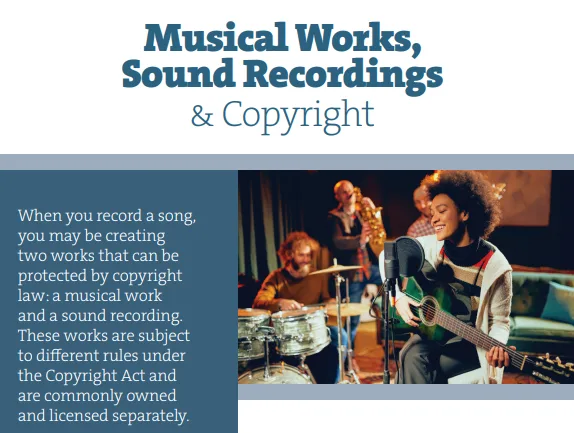
Under U.S. law, a recorded song involves two distinct types of rights. The first covers the sound recording—the particular sounds captured in a recording. Record labels, producers, or other parties may hold these rights under contractual arrangements. The second covers the underlying musical work: the melody and lyrics. Music publishers may own or administer the rights in these works through agreements with composers and lyricists. Just as a song can exist as sheet music and written lyrics without anyone singing it, these rights exist independently of any particular recording.
This distinction helps explain who is suing over what. The lawsuits brought by record labels against music-generation companies Suno and Udio targeted the unauthorized use of sound recordings. By contrast, the music publishers suing Claude’s developer have focused primarily on lyrics. Both are music copyright disputes, but the protected material and the alleged acts of infringement differ.
Lyrics are also written works. Like poetry, they often consist of concise, expressive language and can receive copyright protection independently of a melody. They also have a licensing market of their own. Services such as LyricFind, Musixmatch, and Genius obtain licenses to provide lyrics. When AI reads lyrics and reproduces them in its responses, it therefore enters an existing system of rights and commercial relationships.
How Text AI Became Entangled in Music Lawsuits
The dispute over lyrics did not begin with the Elvis lawsuit. Over the past three years, litigation and court decisions have turned text AI’s use of lyrics into a concrete legal issue.
In October 2023, music publishers including Universal Music Publishing Group affiliates, Concord, and ABKCO sued Anthropic. Their evidence centered on Claude’s actual responses. They alleged that it reproduced lyrics when asked and even used lyrics from “What a Wonderful World” when prompted to write a short story in the style of Louis Armstrong. Three years after the lawsuit began, the parties appeared in court on October 21, 2026, to argue over whether Claude’s training constituted fair use. The judge did not rule at that hearing.
While the U.S. dispute continued, a significant ruling emerged in Germany. On November 11, 2025, the Munich Regional Court I found copyright infringement involving the lyrics of nine German songs in a case brought by the music rights society GEMA against OpenAI. The court found that the lyrics had been “memorized” in a reproducible form within the models and were also reproduced in their outputs. It held that these acts were not justified by the text and data mining exception. However, this was a first-instance decision concerning specific lyrics and models. OpenAI appealed, and the case is pending before the Munich Higher Regional Court. Nor does a ruling under German law apply directly to the U.S. fair-use debate.
The litigation broadened in 2026. On August 17, independent publisher Round Hill filed two lawsuits on the same day: one against music-generation company Suno and the other against Anthropic. Both challenged the unauthorized use of musical works, including lyrics. Music-generating AI and text-based AI had entered the same rights dispute through different uses of the material.
Two months later, Elvis’s name joined that growing line of cases.
Where Does Infringement Occur?
Where, exactly, is a text-generating AI alleged to infringe copyright? The phrase “AI stole the lyrics” combines several distinct activities: collecting lyrics, using them to train a model, retaining learned expression within that model, and reproducing lyrics for users. Separating these into four stages makes the issues clearer. Whether each constitutes copying under copyright law—and whether that copying is nevertheless permitted—requires a separate assessment.
First is collection: where and how the lyrics were obtained. The purpose of training does not eliminate questions about how data was acquired and retained. Bartz, a lawsuit filed by authors against Anthropic in 2024, illustrates this distinction. In 2025, the court found fair use in the use of books for model training and in the digitization of lawfully purchased print books that were destroyed in the conversion process. But it rejected the fair-use defense for downloading pirated books and retaining them in a permanent central library. A $1.5 billion settlement followed and received final court approval in July 2026. Music publishers’ separate allegations involving the torrenting of books containing lyrics similarly seek to establish liability for data acquisition itself. They have also alleged that copyright management information, such as titles, author names, and rights notices, was removed during collection and processing.
Second is training: copying lyrics without permission to train an AI model. In the United States, the central question is whether this qualifies as fair use. Courts consider the purpose and character of the use, the nature of the original work, the amount and significance of what was used, and the effect on the work’s market. The Concord plaintiffs allege that lyrics from 499 songs were copied into training data. But copying an entire work does not, by itself, settle the question. The purpose of the copying and its relationship to the original work’s use must also be examined.
Third is retention: whether learned lyrics remain reproducible within the model. A model is not a conventional database that stores documents, but it can sometimes reproduce expressions from its training material verbatim. This raises the question of whether a copy of a protected work exists within the model’s “weights”—the numerical parameters shaped by training. The GEMA ruling accepted this reasoning for the particular lyrics at issue. The Elvis plaintiffs likewise requested the impoundment or destruction of unauthorized copies held not only in training datasets and internal repositories but also in model weights. This remains a request by the plaintiffs; a U.S. court has not determined that the weights of the models at issue are infringing copies.
Fourth is output: what the model delivers to users. When a model reproduces lyrics verbatim or mixes passages from a song into other text, the analysis must consider how much protected expression was used and whether an exception such as fair use applies. “Synthetic lyrics”—new lyrics generated with reference to an artist’s style or a genre—require a different analysis. Similarity in style alone does not establish infringement. However, the market effects of such outputs may become relevant when assessing whether the underlying training qualifies as fair use. Infringement in the output and the legality of training are connected, but they are not the same question.
None of these issues requires the generation of an audio recording. Collecting, copying, and reproducing the lyrics of a musical work can be enough to create a dispute. The fact that Claude did not sing an Elvis song does not make the legal questions disappear.
AI Companies’ Defenses and Their Limits
Anthropic has substantial arguments of its own. Taken together, the filings in the Concord case and reporting on the October 21, 2026 hearing reveal four main points of contention.
Anthropic’s first argument is that its use is transformative. Lyrics were used alongside vast quantities of other text, it argues, not to reproduce the originals but to help the model understand language and generate a wide range of new outputs. The company therefore characterizes the use as serving a different purpose from the original works. The Bartz decision supports this position: the court described the use of books for model training as highly transformative. But the Concord plaintiffs point to a significant distinction. Bartz did not involve claims of infringing outputs reproducing the plaintiffs’ works, whereas they have presented examples of Claude returning their lyrics. They argue that courts must examine how particular works were used and reproduced, rather than looking only at the general purpose of training.
There is also precedent pointing in the other direction. In September 2026, the U.S. Court of Appeals for the Third Circuit upheld the rejection of a fair-use defense for AI training in Thomson Reuters v. ROSS. That case, however, involved a non-generative AI system using editorial summaries of judicial opinions to develop a competing legal research service. Its use differed from Claude’s, and the Third Circuit’s ruling is not binding on the California court.
The second issue is who bears responsibility for the output. Anthropic’s lawyer argued that users request the lyrics and trigger their generation, making it necessary to distinguish the company’s direct liability from users’ conduct. The publishers, by contrast, emphasize that Anthropic performed the training-related copying and designed and operated the models. The dispute concerns whether a user’s prompt relieves the company of responsibility and which acts should be attributed to whom. Although the Concord plaintiffs voluntarily dropped their secondary-infringement claims, they continue to pursue direct infringement and the removal of copyright management information.
The third question is whether market harm has been demonstrated. Anthropic argues that the publishers have failed to identify concrete harm caused by Claude. In the 2025 Kadrey v. Meta decision, the plaintiffs’ failure to present sufficient evidence of market harm also helped Meta prevail. That ruling, however, rested on the evidence in that particular case; it did not establish that AI training causes no market harm in general.
The publishers argue that reproducing lyrics can substitute for licensed lyric services, while outputs that incorporate passages from existing songs can encroach on established markets for their use. They further contend that mass-produced new lyrics could erode the market for human songwriters. At the hearing, their lawyer said Claude had received nearly 120,000 requests to generate synthetic lyrics over six months. That number alone, however, does not prove lost revenue or copyright infringement.
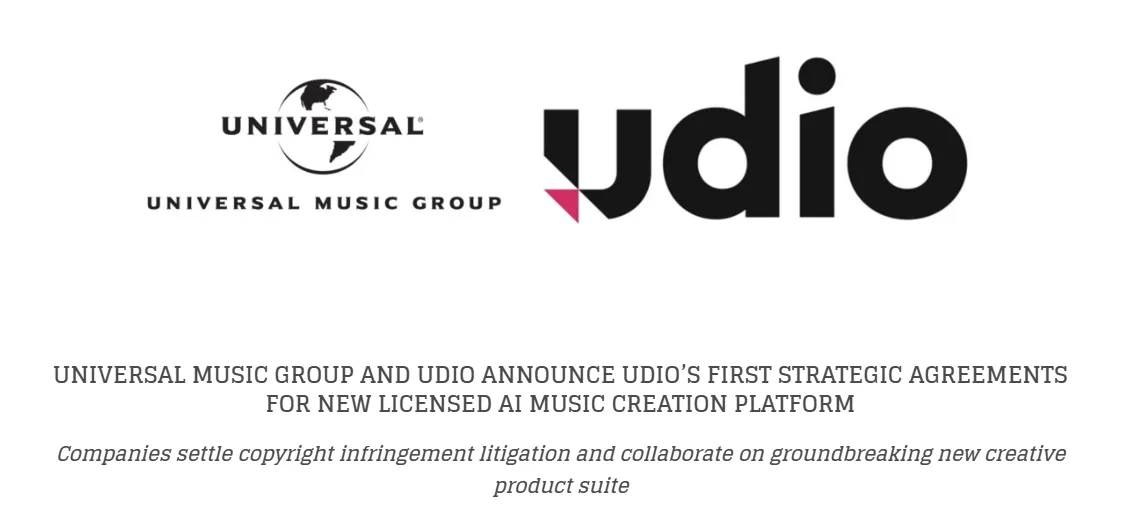
The market for training licenses is also contested. The publishers point to agreements with AI companies such as Udio and Klay, arguing that unauthorized training undermines an emerging commercial market. Potential market harm can be relevant to fair use, but the existence of a licensing market does not automatically make every unlicensed use infringing. Which markets copyright should protect, and what effects the use actually has, remain questions for the court.
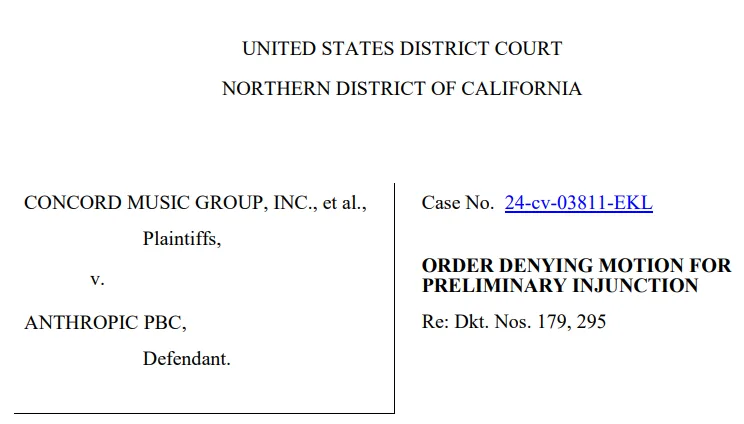
The final argument concerns guardrails that limit lyric reproduction. In January 2025, Anthropic and the publishers reached an agreement that included maintaining existing guardrails, which the court adopted as an order. In March, the court denied the publishers’ request for a preliminary injunction to halt training pending a decision on the merits. That denial did not establish that the training was lawful. Output restrictions cannot undo earlier data collection and copying, but they may matter to the fair-use analysis by reducing reproduction of the originals and the risk of market substitution. The plaintiffs, meanwhile, argue that guardrails are insufficient and that unauthorized copies remaining in training data and models must also be addressed.
Amid these competing arguments, a question from the judge exposed the boundary at the heart of the dispute. Would the publishers’ position mean that anyone—human or AI—needed a license to write new lyrics drawing on the style of an older song? The publishers’ lawyer, Matthew Oppenheim, replied that “copyright is a monopoly by nature.” Yet style itself is generally not protected by copyright. That does not automatically justify every use of existing works in training, either. The court must determine where to draw the line between the freedom to create new expression and the rights in the works used along the way.
AI Remembers Songs
The Elvis case fits this same framework. It was not filed because Claude sang “Can’t Help Falling in Love.” The plaintiffs allege that lyrics from that song and 273 others were copied into training data without permission and reproduced by Claude. At the center of the dispute is not Elvis’s recorded voice, but the words of the songs he performed.
The question, then, extends beyond whether AI sings. What may AI learn, and how may it reproduce what it has learned? If a model trained to learn language can also return the original expression, training and output cannot be treated as entirely separate issues. Nor does the absence of verbatim reproduction resolve every dispute. The process used to create new outputs and their effects on the market also require examination.
Where that boundary is drawn will shape which uses require permission and payment. That is why the Concord case matters. The court’s reasoning about which acts are permitted or restricted could inform both subsequent lawsuits and the terms of licensing agreements.
Some AI companies and music rights holders have already chosen to negotiate the scope and price of permitted uses. But an individual contract does not answer every question about uses outside it. Courts will continue to examine what can be done without permission, while negotiations establish the conditions under which permission will be granted.
These questions extend beyond lyrics. Poems, novels, and news articles are also texts that AI reads to generate new responses. Differences in how works are used and in their markets mean that the same conclusion cannot simply apply to all of them. But they share a question: how far should creators’ rights extend when existing expression is used to produce something new? The Elvis lawsuit is not asking whether AI can sing his songs. It is asking what permission and responsibility are required when AI learns their words and gives them back.