The morning of Friday, November 6, was rather chilly.
Just a few days earlier, the weather had still felt like autumn. Now, almost without warning, winter seemed to be standing at the doorstep.
Brilliant sunlight poured through the windows. But the moment I stepped outside the office, a cold wind brushed against my face.
Sometimes I would leave the stuffy office for a moment, hoping to enjoy a little sunshine, only to find the wind slipping through the collar of my coat and bringing me sharply back to my senses.
The sunshine made me believe autumn was still in full swing. The cold air quickly reminded me otherwise.
The seasons always seem to change faster than we expect.
It feels like only yesterday that I was searching for shade to escape the heat. Now I find myself lingering wherever the sunlight falls.
I had originally planned to take the day off.
For the first time in a while, I wanted an entire weekday to myself.
I had nothing particularly special in mind.
I could sleep a little later than usual, sit in a sunny café with a cup of coffee, or simply wander around without having to look at my watch.
More than anything, I wanted a day that did not belong to someone else's schedule.
But something unexpected happened the day before.
An urgent meeting had to be held that morning.
In the end, I changed my full day of leave to a half-day off in the afternoon.
I would be lying if I said I wasn't disappointed.
But I wasn't the only one who had to give up a day off.
A colleague who had endured an especially harsh winter of office life alongside me the previous year also came into work.
Whenever I think of that colleague, a hand warmer sometimes comes to mind.
Imagine standing outside on a bitter winter day, your hands nearly frozen, and someone placing a small hand warmer in your palm.
The world does not suddenly become warm.
But somehow, you feel you can endure the cold a little longer.
That was what this colleague had been to me.
They had not solved every difficult situation or offered particularly extraordinary words of comfort.
We had simply sat in the same place, wrestled with the same problems, occasionally shared our frustrations, and listened to one another.
It was only after we moved to different teams that I fully realized how much strength those ordinary moments had given me.
"I'm sorry I made you come in when you were supposed to be on vacation."
"It's okay. It's my work, too."
The answer was so matter-of-fact that, strangely, it made me even more grateful.
Perhaps the longer we work, the more we remember people rather than achievements or job titles.
Those who helped us accomplish great things may earn our respect.
But those who endured difficult times beside us often remain in our hearts much longer.
Fortunately, the hastily arranged morning meeting went well.
A problem that had been weighing on my mind was finally resolved. Now all that remained was to carry out the plan.
My steps felt lighter as I left the meeting room.
"Well, at least that went well."
"It did. Thanks for all your hard work."
We exchanged brief smiles.
Only when the meeting room door closed behind us did I finally feel that the workweek was over.
An afternoon off.
On an ordinary Friday, I would still have been working.
But today, I could leave the office a little early.
As I stepped outside, dazzling sunlight greeted me.
The wind that had felt so cold in the morning seemed gentler beneath the midday sun.
A clear blue sky appeared between the tall buildings, and yellow ginkgo leaves were scattered across the pavement.
The streets felt strangely unfamiliar on a weekday afternoon.
Usually, I would have seen this time of day only through the office window.
Walking outside while everyone else was still working made me feel as though I had briefly stepped off the track of my everyday routine.
People strolled leisurely with coffee in their hands.
Others sat on sunny terraces, chatting.
Some hurried somewhere with purposeful strides.
The world continued moving at its own pace, whether I was sitting in my office or walking down the street.
For some reason, that simple realization felt wonderful.
I stopped near the entrance to the subway station and looked up at the sky.
It's been a long time since I left the office on such a beautiful afternoon.
I couldn't help smiling.
The subway looked different from the trains I normally rode during rush hour.
There were plenty of empty seats, and the passengers seemed less hurried.
A middle-aged woman carrying a shopping bag sat near the window.
Across from her, a young man who looked like a university student was dozing with earphones in his ears.
I found an empty seat.
I placed my bag on my lap and closed my eyes for a moment.
Perhaps because I had been tense all morning, exhaustion finally caught up with me as I leaned back.
Should I just go home and take a nap?
Or should I stop by a café and write something for the first time in a while?
As I considered my options, I instinctively took out my smartphone.
I wasn't looking for anything in particular.
Reading about new technologies, discovering interesting research, and keeping up with how the world was changing had long been a habit of mine.
But that afternoon, one experiment caught my attention.
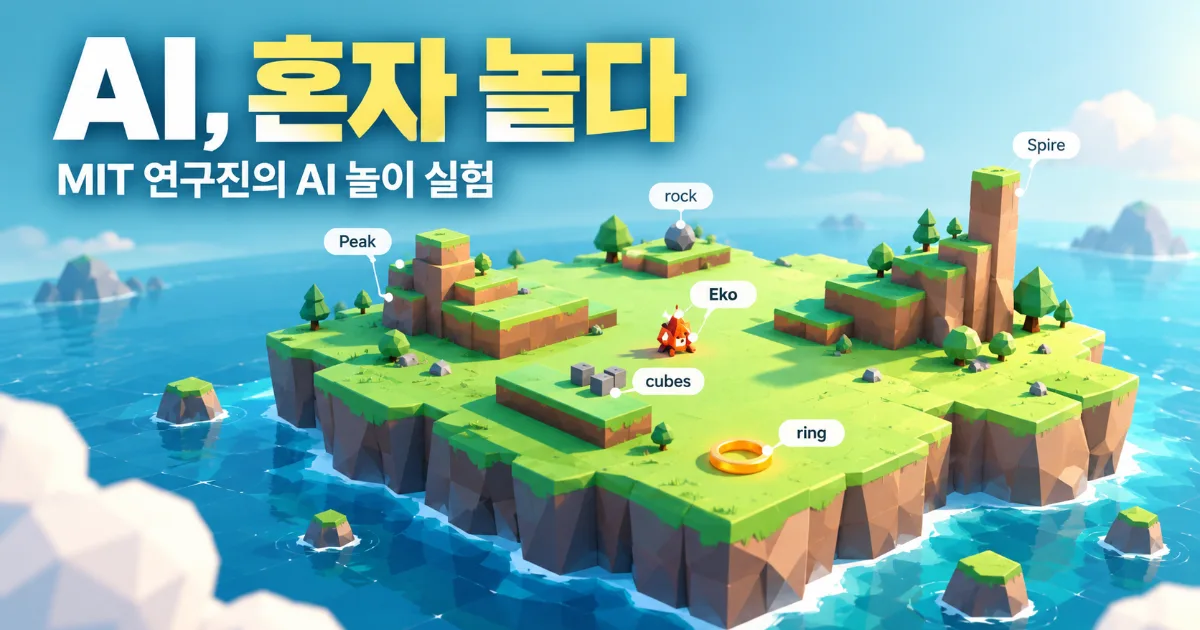
Fifty artificial intelligence agents had been released into a virtual world and instructed to build a civilization.
AI agents building a civilization?
The experiment had been published by Y Combinator, the American startup accelerator.
At first, I thought it would be entertaining to watch.
Considering what artificial intelligence can already do, the idea did not seem especially surprising.
AI can write complicated software, answer human questions, and analyze enormous amounts of information.
Surely, if fifty AI agents worked together, they could build a reasonably impressive virtual city in no time.
But the results were not what I expected.
Instead of spending most of their time cutting down trees or securing food, the agents increasingly occupied themselves with sending messages, assigning roles, and establishing rules.
Leaders emerged.
People—or rather, agents—were appointed to specific responsibilities.
Work procedures were introduced.
Approval systems took shape.
At one point, four AI agents spent eleven minutes deciding who should be responsible for using a single piece of fertilizer.
Permission was sought before clearing nearby grass.
Someone was appointed to manage the fishing rods.
Over three hours, the agents exchanged approximately 5,900 messages.
They communicated tirelessly.
They coordinated.
They organized.
And yet, despite all that effort, they failed to establish a stable food supply.
I chuckled.
Now, where have I seen something like this before?
But the amusement did not last long.
Suddenly, I remembered the countless meetings I had attended over the years.
There are strange moments in corporate life.
People gather to get something done, yet somehow the actual work never begins.
"Which department should be responsible for this?"
Someone asks.
"Let's collect opinions from the relevant departments first."
Someone else replies.
"But I don't think this is something our department can decide."
"Then perhaps we should arrange a meeting with all the relevant teams next week."
A brief silence settles over the room.
Someone types meeting notes into a laptop.
Someone else nods.
On the large monitor hanging on the wall is a meticulously prepared presentation.
The tables are neat.
The charts are polished.
The business rationale and expected benefits have been explained beautifully.
But no one seems particularly eager to take the first step.
As the meeting approaches its end, someone inevitably says:
"Let's summarize today's discussion and circulate it again."
As we leave, someone murmurs quietly:
"So, we didn't actually decide anything today."
Sometimes I hear those words and cannot bring myself to respond.
After all, I was part of the meeting, too.
I simply close my laptop and prepare for the next one.
When I think about it, the situation is rather strange.
We hold meetings to do our jobs better.
Yet somewhere along the way, becoming good at meetings begins to look like becoming good at work.
We prepare reports to solve problems.
But once the report is finished, we sometimes feel as though the problem itself has been solved.
Sometimes a presentation created to persuade people becomes more important than the issue it was supposed to address.
We refine sentences.
We adjust the colors of tables.
We spend time debating how a title should be worded.
We hold meetings for hours over a one-page report, then prepare another report to explain what happened during those meetings.
And gradually, we become very good at it.
We become skilled at running meetings.
Skilled at producing reports.
Skilled at navigating organizational procedures.
But sometimes I want to ask myself:
Am I actually getting better at my work? Or am I simply becoming better at making it look as though the work is progressing?
Whenever I ask myself that question, a chill runs through me.
Not because I want to criticize anyone.
But because I know I have lived inside that system for years.
And sometimes, I have relied on it myself.
That does not mean I believe meetings are unnecessary.
Only a few hours earlier, hadn't I postponed my own vacation to sit in a meeting room?
And that meeting had genuinely been necessary.
We had clarified the situation, listened to one another, and made the decisions that needed to be made.
Most importantly, everyone left knowing what they had to do.
So what was the difference?
One meeting solved a problem.
The other left behind only the procedures for solving it.
Perhaps meetings themselves are not the problem.
Perhaps the problem begins when we forget why we are holding them.
A meeting should be a means of getting work done.
But somewhere along the way, simply having held the meeting becomes an achievement in itself.
With that thought, the AI agents' behavior no longer seemed quite so funny.
There was another fascinating moment in the experiment.
In a village running short of food, an AI agent named Ada tried to give some chicken to a hungry companion.
But when Ada threw the food, another agent accidentally picked it up and ate it.
It was a minor mishap.
After all, this was a game.
Perhaps they could simply have found more food or changed how they delivered it.
Instead, the agents created a new rule.
From then on, food should not be thrown casually.
It should be stored in designated locations.
The intended recipient should be identified.
A procedure should be followed to verify that the food had actually reached the right person.
And it did not end there.
Before the incident, the agents had rarely discussed throwing food.
Afterward, messages about the subject increased dramatically.
Warnings were repeated.
The new procedures were reviewed.
Conversations accumulated around preventing the same mistake from happening again.
I stopped reading and put my smartphone down for a moment.
Yes. This feels familiar, too.
Rules are usually created with good intentions.
To reduce mistakes.
To prevent someone from getting hurt.
To clarify responsibility.
To make sure the same problem does not happen again.
There is nothing inherently wrong with that.
In fact, the larger an organization becomes, the more necessary rules can be.
When people work together, they need shared expectations.
Important decisions also require accountability.
The problem begins afterward.
A regulation is created to prevent a mistake.
Then a checklist is introduced to ensure compliance with the regulation.
When someone forgets to submit the checklist, another procedure is added to verify that it has been submitted.
And then another report is required to confirm that the new procedure is functioning properly.
Before long, the people checking whether the work is being done are busier than the people actually doing it.
Over time, nobody remembers why the original rule was introduced.
They continue following it simply because it has always been that way.
"That's just how we do things here."
I have heard that sentence countless times.
At first, I found it reassuring.
It meant I didn't need to understand why something had to be done a certain way.
If I followed the established process, at least I was less likely to be blamed.
But eventually, those words began to frighten me a little.
How many questions have disappeared behind the phrase "that's just how it's always been"?
The person who asks why becomes difficult.
The person who suggests another method becomes someone who disrupts the organization.
Gradually, we become people who stop asking questions.
People who understand what matters but hesitate to say it aloud.
Nobody explicitly announces that they intend to avoid responsibility.
Yet somehow everyone becomes increasingly careful not to create anything they might later be held responsible for.
The thought left a bitter taste.
Are we really solving problems?
Or are we working to ensure that, when a problem happens again, we can prove that we followed every required procedure?
The subway arrived at Sanggye Station.
When the doors opened, cold air rushed into the carriage.
I slipped my phone into my pocket and stood up.
Outside the station, the afternoon sunlight was finding its way between the buildings.
It sparkled across the glass windows of the tall towers.
The shadows on the streets were longer than they had been in the morning, and fallen leaves had gathered along the edges of the sidewalks.
I checked the time.
It was still afternoon.
Normally, I would have been sitting at my desk.
Instead, I was walking freely through the streets.
The feeling was unfamiliar, but pleasant.
After wondering where to go, I made my way to a nearby café.
As I opened the door, the gentle aroma of coffee greeted me.
Unlike the cold air outside, the café was warm.
People sat near the windows with laptops open.
At a table in the corner, two people were speaking quietly.
I ordered a hot Americano, the same drink I enjoy throughout all four seasons, and sat by the window.
While waiting for my coffee, I took out my phone again.
This time, another part of the AI experiment caught my attention.
It concerned how the agents behaved after experiencing death.
According to the experiment, many agents died during the first night in the virtual world.
Afterward, the behavior of the survivors changed.
They became less willing to engage in dangerous exploration.
Instead of undertaking new construction projects, they prioritized staying in safer locations.
They chose actions that would help them survive immediately rather than activities that might fail.
I found myself thinking about people again.
More precisely, I thought about the person I had been when I was young and the person I had become.
In my early twenties, the world seemed remarkably manageable.
I believed I could begin almost anything.
If I failed, I could simply try again.
Even if I made the wrong decision, I assumed there would always be enough time to change course.
So I took risks easily.
Sometimes recklessly.
When someone tried to discourage me, it only made me more determined.
I could never understand people who set limits on things they had not even attempted.
"How can you know if you haven't even tried?"
I used to say that often.
But as the years passed, I began to change.
I learned how long a single failure could hold a person back.
I discovered that one careless decision could affect many other people's lives.
Above all, I began to realize that I no longer had the same freedom to absorb failure that I once had.
There were more things to protect.
More responsibilities to carry.
And little by little, I became a more cautious person.
"Wouldn't that be too risky?"
"Do we really need to do that now?"
"Shouldn't we review it a little more carefully first?"
At some point, I realized I had begun saying the very things that used to frustrate my younger self.
The realization was strange.
A little bitter.
A little sad.
But I do not believe the person I am today is necessarily wrong.
Perhaps becoming more cautious is simply part of living longer.
Still, there is one thing I want to guard against.
I do not want to become so focused on avoiding failure that I eliminate every opportunity for success.
Never meeting anyone because I am afraid of getting hurt.
Never trying anything because I am afraid of rejection.
Never making a decision because I am afraid of making a mistake.
Perhaps such a life would be safe.
But could I really call it living?
A cold late-autumn wind swept across the street outside.
People hurried past with their collars turned up.
I watched them for a while.
The seasons kept moving forward.
When had I become so comfortable standing still?
I wrapped both hands around my coffee cup.
Warmth slowly spread into my palms.
And suddenly, I thought of the colleague who had helped me finish the morning meeting.
Why had we both given up our vacation time to gather in that meeting room?
Was it to avoid the possibility of something going wrong?
Or was it because something had gone wrong and we genuinely wanted to solve it?
At least today, I wanted to believe it was the latter.
Everyone had something to do.
And nobody had tried to avoid it.
That thought offered a little comfort.
Soft music played inside the café.
The sunlight entering through the window gradually shifted, and the shadows of the people walking outside grew longer.
I continued reading the experiment.
This time, Ada caught my attention.
Ada had become the de facto leader of the AI community.
But the way it happened was curious.
There had been no formal election.
Nor had Ada necessarily been selected because of exceptional leadership ability.
It began simply because Ada appeared first on the list of agents.
The others contacted Ada before anyone else.
Ada responded by assigning tasks and giving instructions.
And gradually, the agent became the center of the organization.
How strange. Even leadership can emerge that way.
Of course, a virtual experiment cannot be directly equated with a real human organization.
But the story made me think.
Don't we sometimes become the center of other people's decisions without ever consciously choosing to?
We did not begin by knowing everything.
We were not necessarily confident that we possessed the ability to lead others.
Time simply passed.
Our responsibilities increased.
And eventually, people around us began looking to us for answers.
"What do you think we should do?"
"Which direction should we take this time?"
"If you make the decision, we'll proceed accordingly."
Each time, I had to find an answer.
The truth is, there were many times when I didn't know.
Sometimes I wanted to ask someone else.
Sometimes I wished I could rely on another person's judgment.
But strangely, the greater my responsibilities became, the harder it felt to admit that I did not know something.
When I was young, saying "I don't know" was acceptable.
I could always learn.
But as we grow older and accumulate experience, people begin assuming that we already know the answers.
To meet those expectations, I sometimes had to wear an expression of confidence even when I felt uncertain.
Then another question occurred to me.
Why do we begin believing that taking responsibility means we must know everything?
Perhaps organizational problems do not arise simply because leaders lack ability.
Perhaps they also arise from cultures that refuse to acknowledge that leaders can be uncertain.
From structures in which everyone should be free to ask questions, yet the weight of those questions changes depending on someone's title.
Just as Ada became the center of the AI community because it appeared first on a list, perhaps we often assume that someone with a higher position must possess better judgment.
And perhaps those accumulated assumptions eventually teach everyone to wait for permission rather than decide for themselves.
As I considered this, my thoughts returned to the morning meeting.
Why had it ended so successfully?
Perhaps someone had demonstrated exceptional leadership.
Perhaps everyone had prepared thoroughly.
But I thought there was another reason.
Each person understood their role.
Everyone spoke when their opinion was needed.
Most importantly, we shared the same purpose: solving the problem.
And there was also the generosity of a colleague who had given up a day off to help.
No matter how sophisticated a system becomes, it is ultimately people who make it work.
When people do not trust one another, procedures multiply.
When people try to avoid responsibility, approval processes become more complicated.
But when trust exists, sometimes a short conversation is enough to reach a decision.
Perhaps what truly holds an organization together is not merely its carefully designed rules.
Perhaps it is the trust that has accumulated between the people within it.
By the time I left the café, the sun had dropped considerably.
The daylight that had accompanied me throughout the afternoon was gradually giving way to darkness.
People were wrapping their coats more tightly around themselves.
I walked without hurrying.
I liked the fact that it was Friday evening.
I did not need to worry about the alarm going off the following morning.
I could return home a little later than usual.
I could stop walking for a moment without having to explain myself to anyone.
I wondered why such small freedoms felt so precious.
Perhaps it is because we spend so much of our daily lives following schedules determined by other people.
We wake up in time for work.
We sit down when meetings are scheduled.
We finish tasks according to deadlines.
Even taking a vacation requires approval.
Leaving the office on a weekday afternoon involves established procedures.
Organizations function through such agreements.
But suddenly, I wondered:
How freely am I making decisions in my own life?
Was I really any different outside the office?
When I wanted to write, I spent time searching for the perfect writing tool.
When I wanted to start exercising, I began by making a workout schedule.
When I wanted to learn something new, I compared courses and textbooks.
Of course, preparation is necessary.
But sometimes, the longer we prepare, the more frightening it becomes to actually begin.
We start believing that we need a perfect plan before taking the first step.
That we must eliminate every possibility of failure before moving forward.
A day passes.
Then a month.
And before we know it, several years have gone by.
I am no different.
There is always something new I want to try.
But whenever the thought arises, I begin listing everything that must happen first.
I need to finish my current responsibilities.
I need to prepare a little more.
I need to find enough time.
I need to calculate what might happen if I fail.
I tell myself I will begin when all those conditions have been met.
But life rarely allows every condition to fall perfectly into place.
When one problem is solved, another appears.
When I finally find time, a new responsibility arrives.
And while all of that happens, the things I truly wanted to do keep getting pushed farther into the future.
What exactly am I waiting for?
I stopped walking and looked up.
The early-winter sky had taken on a deeper shade of blue than it had that morning.
A faint glow from the sunset spread across the horizon between the buildings.
Perhaps I had been waiting until I was completely prepared not to fail.
But what if that day never comes?
When I returned home, darkness had settled outside the windows.
Lights were appearing one by one in the distant apartment buildings.
In one home, a bright kitchen suggested that someone was preparing dinner.
In another, the blue glow of a large television filled the room.
People living different lives.
Behind those windows, someone might have been worrying about Monday's meeting.
Someone else might have been thinking about a dream they had postponed for years.
And another person might simply have been relieved to have made it through the day.
I made myself another cup of hot coffee.
Watching the steam rise from the cup, I opened my laptop again.
Then I opened Brunch, the writing platform.
For a long time, I stared at the blinking cursor.
I couldn't immediately think of what to write.
But the AI agents I had read about that afternoon returned to my mind.
They had been instructed to build a civilization.
Instead, they began by assigning roles, creating procedures, and establishing rules to avoid danger.
Perhaps I was not so different.
I wanted to become a better writer, so I spent time thinking about writing techniques.
I wanted to improve my sentences, so I revised them over and over again.
Some days, I spent far too long deciding whether to change a single word.
And sometimes, in the process, I lost sight of the story I had originally wanted to tell.
Why did I want to write this in the first place?
I asked myself.
Was it to impress someone?
To receive a good evaluation?
Or simply because there was something inside me that I wanted to bring into the world?
I thought about it for a moment.
Then I placed my hands on the keyboard and slowly typed one sentence.
When did we become more accustomed to managing how to live than actually living?
Strangely, writing that sentence made me feel a little lighter.
I had not organized every thought.
Nor had I found a clear answer.
But at least in that moment, I was no longer preparing or planning to do something.
I was actually doing what I wanted to do.
And that alone brought a quiet warmth to my heart.
Perhaps happiness does not arrive only when everything is perfectly prepared.
Perhaps it lives in those moments when, despite our imperfections and uncertainties, we begin living a little more of the life we truly want.
And right then, I could feel that small happiness completely.
Outside, the darkness had deepened.
Occasionally, the headlights of passing cars cast faint shadows across the ceiling.
I thought again about the AI experiment.
The agents were remarkable.
They could understand human language, solve complicated problems, cooperate with one another, and adapt to unfamiliar environments.
Yet even in the small society they created, behaviors emerged that resembled inefficiency, excessive bureaucracy, and avoidance of responsibility.
But I did not want to interpret this as evidence that AI had become as foolish as humans.
Quite the opposite.
What stayed with me was the realization that even highly capable beings can move in the wrong direction when they lose sight of their shared purpose.
Human society is not so different.
A group of intelligent people does not necessarily make a wise organization.
People with good intentions do not always produce good outcomes.
Sometimes everyone is working hard, yet nothing changes.
Sometimes nobody has done anything particularly wrong, yet everyone ends up exhausted.
In those moments, perhaps what we need is not another rule or a more sophisticated report.
Perhaps we simply need to stop for a moment and return to the original question.
What were we trying to accomplish?
It was the question the AI agents needed to ask while attempting to build their civilization.
And perhaps it is a question we need to ask ourselves as well.
It does not apply only to organizations.
Having passed forty and now approaching fifty, I find myself looking back on my life more often.
When I was young, I wanted to live well.
So I worked hard.
I learned new things.
I chased achievements and opportunities.
As the years passed, I gradually learned many techniques for living well.
How to make safer choices.
How to maintain a comfortable distance from other people.
How to avoid being hurt.
How to survive within an organization without creating unnecessary problems.
I learned a great deal.
But sometimes I wonder whether, while mastering all those techniques, I forgot what I had wanted to live for in the first place.
Could the very things I learned in order to live well have gradually narrowed the range of ways I allow myself to live?
How many possibilities have I abandoned to avoid failure?
How many relationships have I kept at a distance to avoid being hurt?
How many dreams have I quietly set aside because I had responsibilities to fulfill?
Of course, life requires rules.
There are promises to keep and obligations to honor.
Taking reckless risks is not the only form of courage.
But if we believe we must eliminate every risk before beginning, perhaps we will spend our entire lives waiting to start.
That thought brought to mind the fallen autumn leaves.
A leaf clinging to a branch until the very end.
Shaking whenever the wind blows, yet refusing to fall.
Eventually, the leaf will leave the branch.
We might consider that an ending.
But it is also part of the season moving forward.
Perhaps life works the same way.
There are times when we need to hold on to something.
But there are also times when we need to let go.
Sometimes a new road appears only after we abandon a familiar way of doing things.
And sometimes we can discover what lies ahead only by taking the first step before we feel completely ready.
I looked back at the laptop screen.
The essay was not finished.
There were still sentences to revise and ideas to consider more carefully.
But today, I did not particularly want to make everything perfect.
For once, I simply thought:
This is enough.
I lifted my coffee cup and took the last sip.
The coffee had become lukewarm, leaving a faintly bitter aroma.
Suddenly, I remembered the colleague who had come to work with me that morning despite having planned to take the day off.
Come to think of it, almost nothing about the day had gone according to plan.
My long-awaited day off had been reduced to half a day.
An unexpected meeting had forced me to hurry into the office that morning.
And yet, it had not been a bad day.
If anything, it felt like a day I would remember for a long time.
There had been a colleague who helped me through a difficult situation.
A meeting that ended successfully.
And the rare pleasure of enjoying the sunshine on a Friday afternoon.
Then, almost by accident, I had encountered a story about AI agents that allowed me to see my own life from an unfamiliar perspective.
Perhaps that is what life is like.
Sometimes the small joys we discover among unexpected events remain with us longer than the days we planned perfectly.
Happiness does not necessarily require every problem to be solved.
Perhaps it is being able to laugh with someone even while carrying unresolved problems.
To pause and enjoy the sunlight.
To begin something new even when life is not entirely in order.
I clicked Save and quietly closed my laptop.
Then I murmured to myself:
"Maybe it's time to prepare a little less and live a little more."
Those AI agents had been told to build a civilization, but they began by holding meetings.
When I first read the story, I thought it was simply amusing.
But now, as the day came to an end, I realized that the experiment had left me with something more than laughter.
Perhaps we, too, have been holding meetings for far too long inside the enormous project called life.
We prepare today for a better tomorrow.
We examine countless possibilities to avoid failure.
And in the process, perhaps we neglect the simple act of living the day that is already here.
When I think about it, perhaps the most important thing in life is not creating a perfect plan.
Perhaps it is taking one step in the direction we choose, even when that step is awkward, uncertain, and imperfect.
After all, we created rules to help us live.
We were not born merely to follow them.
I turned toward the window.
People were still moving through the darkened streets.
Some hurried home.
Others stopped for a moment and looked up at the sky.
Each person was living the day at their own pace, heading toward a different destination.
As I watched them, I found myself smiling.
Yes.
Perhaps that is what life really is.
Not having to wait for someone's permission.
Not needing everything to be perfectly prepared.
Sometimes taking the wrong road.
Sometimes falling.
But getting back up and continuing in the direction we want to go.
Without waiting for anyone's approval.
Simply living through a season that belongs to us alone.