Meta has introduced two AI apps designed for very different purposes. One is Style Sketch, a fashion app that suggests new outfits using clothes users already own. The other is Waddle World, a virtual pet app that remembers what users tell it. The two apps came to public attention through TechCrunch reports published on October 28 and 29. Waddle World, however, had quietly been available in the Philippines since late September, before those reports appeared.
Waddle World is currently available only in the Philippines, while Style Sketch is offered in Indonesia, Singapore, and Thailand. Meta released both apps without separate official announcements and has not disclosed plans to expand into other markets. Although both services use generative AI, they are designed around familiar activities, allowing users to enjoy the experience without having to think much about the underlying technology.
While AI companies compete to develop increasingly capable general-purpose models and integrated services, Meta has also been releasing standalone apps focused on specific activities. This year alone, the company has experimented with Pocket, which lets users create mini-games using natural language; a standalone version of Vibes, its AI video feed; and StoryKit, an AI-powered storytelling app. Although their functions differ, these efforts share a common foundation: generative AI is not only adding new capabilities to apps but also making apps themselves easier and faster to develop and launch.
AI That Chooses Outfits and Remembers Your Day
Style Sketch is an AI fashion app that suggests new outfits based on clothes users already own. By connecting an Instagram or Facebook account, users can build a virtual wardrobe from photos they have previously posted. They can also add clothing without connecting an account by taking photos or short videos or uploading images from their camera roll.
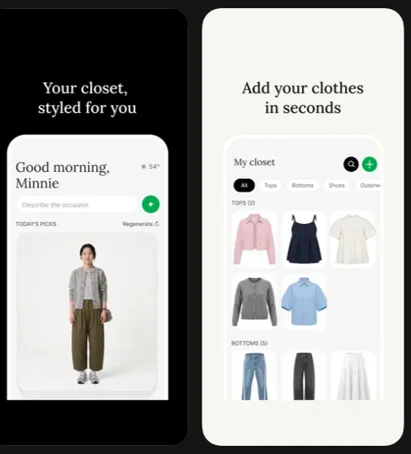
Once the wardrobe is created, AI recommends clothing combinations and displays how they would look on a virtual model tailored to the user's body shape and skin tone. Users can select a particular item and build outfits around it or receive suggestions based on the day's weather. The app can also recommend outfits for each day of a trip based on the destination and itinerary.
These features are not entirely new. Several existing services already offer AI-powered outfit recommendations and virtual try-on experiences, including wardrobe management apps such as Alta, Google Photos' digital wardrobe features, and virtual try-on tools from Google and OpenAI. What makes Style Sketch noteworthy is its emphasis on clothes users already own and their personal style, rather than encouraging new purchases. Its ability to draw on photos stored on Instagram also reduces the effort required to register an entire wardrobe from scratch.
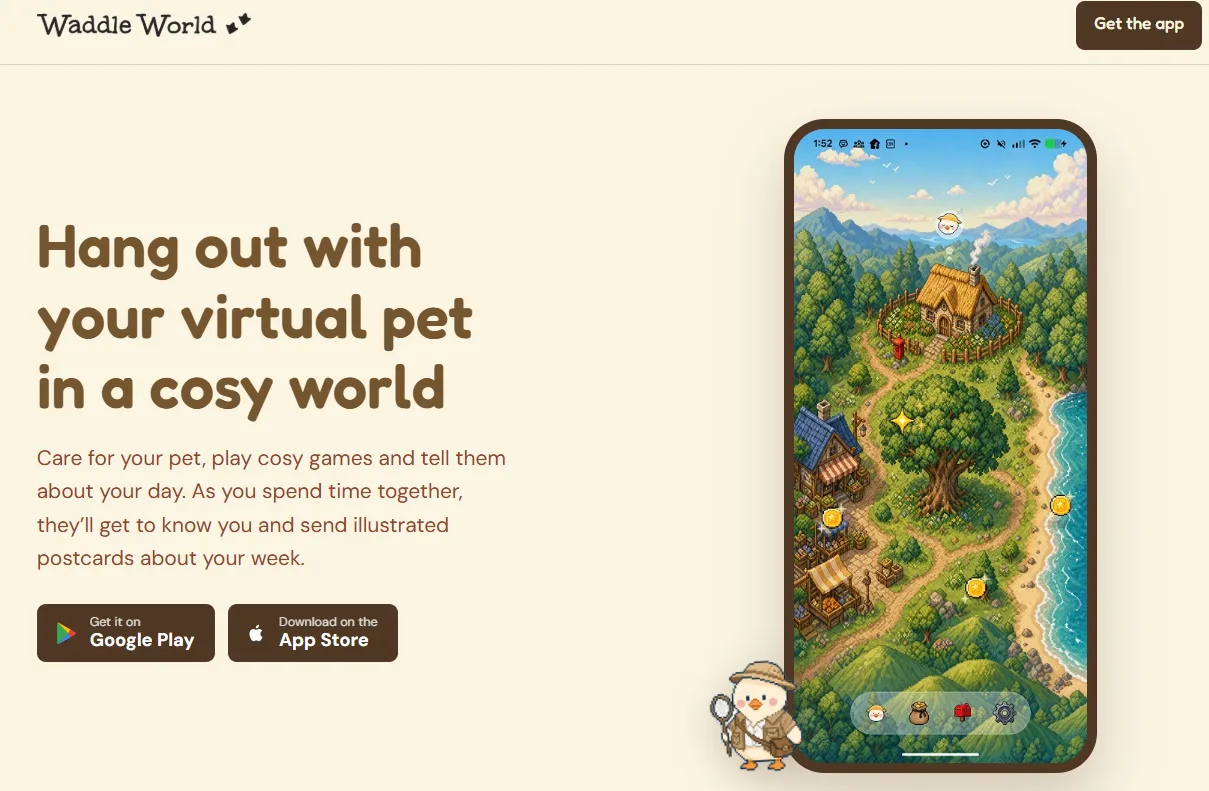
Waddle World, meanwhile, focuses less on solving practical problems and more on interacting with a virtual character. In a world rendered in 16-bit pixel graphics, users can hatch and care for a virtual pet while enjoying mini-games such as stacking groceries on the pet's head, catching falling stars, and solving word puzzles. Meta describes the app as a "journal disguised as a pet."
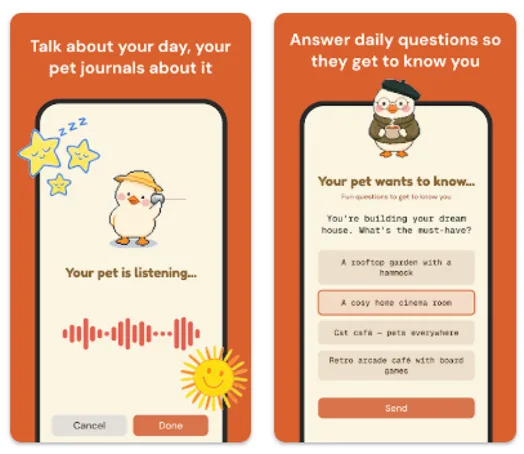
When users share stories about their day through voice or text, the pet transforms those stories into diary entries written from its own perspective, accompanied by small illustrations. It remembers previous conversations and uses them in later interactions, while also sending personalized postcards reflecting what users have shared. Users receive weekly emails summarizing what their pet has learned about them. Points earned through mini-games can be spent on food and toys for the pet.
Notably, Waddle World does not rely on daily login streaks or competitive scores to keep users engaged in the way many mobile games do. Meta presents it as a place users can visit whenever they like, without the pressure of maintaining streaks or chasing scores. The company also positions the app as a virtual pet experience rather than a personal assistant or productivity tool. It is intended for users aged 18 and older.
The two apps offer different experiences. Style Sketch emphasizes the practical convenience of choosing outfits, while Waddle World focuses on emotional engagement with a virtual character. Yet both share an important characteristic: instead of making users figure out what to ask AI to do, they integrate AI capabilities naturally into specific activities.
Why Build Multiple Apps Instead of One All-Purpose AI?
Behind Meta's steady stream of new apps is a shift in how software is developed. During the company's second-quarter earnings call on July 29, CEO Mark Zuckerberg said AI was helping teams develop products faster. He pointed to Instagram Instants, Forum, a standalone app for Facebook Groups, and Seller, a standalone app for Marketplace sellers, as examples of products introduced this year. He predicted that launching new apps would become much easier and outlined plans to turn more ideas into standalone products.
This direction builds on Meta's long-standing efforts to discover new services. Although Facebook and Instagram have given the company enormous user bases, successfully growing new standalone apps has always been a separate challenge. One example was Creative Labs, an experimental initiative launched in 2014. Apps such as Slingshot, Riff, and Rooms failed to gain substantial traction, and the initiative shut down in late 2015. At the time, Meta said some of their features had been incorporated into the main Facebook app. The company's NPE Team, established in 2019 as another internal experimentation group, also released numerous apps, most of which were eventually discontinued.
Experimenting with new apps is therefore nothing new for Meta. What has changed is the potential for generative AI to reduce the time and cost involved. AI coding tools and development automation can assist with prototyping, writing code, and testing. This allows companies to turn more ideas into working apps, evaluate user responses, and then decide whether to expand or revise them.
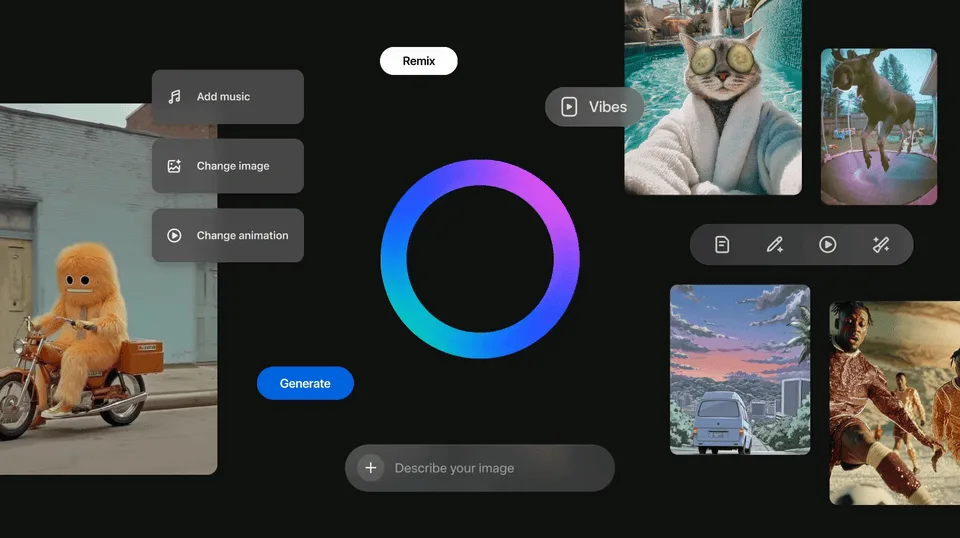
Meta's standalone app experiments this year reflect this approach. Pocket was first released in Brazil in June before expanding to the United States in August. Vibes, which began as a feature within the Meta AI app in 2025, has been tested as a standalone app in markets including Mexico and Brazil since February. In July, StoryKit, an app that helps parents create personalized stories for their children, was piloted in Mexico.
However, Meta has not disclosed how extensively AI was used to develop each app. Pocket, for example, was built on technology and expertise from the Gizmo development team, which Meta brought in from the startup Atma Sciences. It would therefore be inaccurate to assume that Style Sketch or Waddle World was developed rapidly using AI alone. What can be established is that Meta views AI as a technology that improves development efficiency and intends to use it to support more standalone app launches.
This could also change the role of individual apps. Traditionally, an important strategy was to integrate many functions into a single service and grow its overall scale. In an environment where development is faster, companies can instead release smaller apps focused on specific purposes and evaluate how users respond. Rather than placing every feature inside one large service, they can use multiple standalone apps to discover which experiences people actually want.
Small Apps, Built on the Assets of an Established Platform
Making apps faster does not mean every company competes on equal terms. Even as AI models and development tools become more widely accessible, creating experiences that users genuinely want still requires an understanding of their interests and behavior. This is where Meta's existing platforms and user relationships can become valuable assets.
Style Sketch illustrates this advantage. One of the most inconvenient parts of installing a new fashion app is registering all the clothes users own and defining their preferences. Meta aims to reduce that effort by allowing users to draw on photos they have already posted to Instagram or Facebook. With user consent and account linking, visual information from an existing service can be brought into a new app. This suggests that connecting previously accumulated information with new capabilities may be as important a differentiator as image generation technology itself.
Waddle World demonstrates a different form of personalization. Rather than inferring preferences from photographs, it builds a character's responses around conversations and daily records. As the pet remembers what users have shared and creates diary entries, illustrations, and weekly postcards, each person's experience becomes increasingly individualized. AI is not simply generating a fresh response each time; it is connecting previous interactions to future experiences.
Although personalization is central to both apps, the information they handle is different. One deals with clothing, photographs, and preferences, while the other processes daily experiences and conversation records. Such information can make services more useful and engaging, but it also touches on users' private lives. Older social media photographs, for instance, may contain information about other people or locations in addition to clothing. Meta states that Waddle World's diary entries and messages from the pet are not visible to others unless users choose to share their postcards. Even so, what information is stored, how it is used in recommendations or responses, and whether users can review and manage it remain important questions.
Meta also has established distribution channels through Facebook and Instagram. Zuckerberg has said the company intends to use recommendation systems to connect new apps with people who may be interested in them, following an approach similar to the one used for Threads. At the time of the same earnings call, Threads had surpassed 500 million monthly active users. In other words, competition is not only about the cost of building an app, but also about the ability to find and reach its potential audience.
Can Rapid AI App Experimentation Become a Sustainable Business?
Releasing apps quickly and building services that people continue to use are two different challenges. Generative AI can improve the efficiency of certain stages of initial development, but ongoing operations still involve model inference costs, data management, content safety, updates, and customer support.
AI-powered apps, in particular, may incur costs each time users activate features that require running a model. A growing user base is welcome, but companies must also manage expenses that increase with usage. Lowering the barriers to development does not eliminate the challenges of operating and monetizing a service.
Meta has also been experimenting with monetization. For Vibes, the company announced plans for a freemium model that would keep basic usage free while allowing subscribers to generate more videos. During its earnings call, Meta also introduced Meta One, a subscription offering designed to provide additional features and AI capabilities across multiple apps. Style Sketch and Waddle World, by contrast, are currently free, and their revenue models have not been disclosed.
Style Sketch could eventually expand toward fashion and shopping services, while Waddle World could develop into character-based content or personalized entertainment. For now, however, these remain possibilities rather than confirmed plans, and no meaningful data on long-term user retention has been made public. The fact that the two apps have been quietly released in only one or three countries, respectively, also suggests that they are closer to limited market experiments than full-scale global launches.
Ultimately, each app must give users a reason to return. An outfit recommendation app needs to become useful at recurring moments in everyday life, while a virtual pet app must encourage users to come back without relying on login rewards. Waddle World's decision not to emphasize streaks or scores is an interesting experiment, but its effect on long-term engagement remains to be seen.
Rapid app development makes more experiments possible, but users will ultimately determine which products survive. As launching apps becomes easier, the act of releasing a new service becomes less of a differentiator. What matters increasingly is how much practical value an app delivers within a specific activity. As with Creative Labs, some experiments may disappear, while selected features could eventually be incorporated into larger services.
AI Services Are Becoming More Numerous—and More Specialized
Style Sketch and Waddle World illustrate that generative AI does not necessarily have to develop within a single, all-encompassing service. While AI continues to evolve toward answering general questions and assisting with complex tasks, it is also becoming part of familiar activities such as choosing outfits and recording daily experiences.
This shift opens up new possibilities for the software industry. Companies can turn more ideas into actual services, test responses in limited markets, and use the results to determine their next steps. Yet as more apps enter the market, competition for users' attention will intensify, while differentiated experiences and sustainable operations will remain significant challenges.
Now that AI is beginning to change how software itself is made, the important question is no longer how many apps a company can build. It is which of those apps will become a lasting part of users' everyday lives.