The relationship between AI companies and governments has entered a new phase.
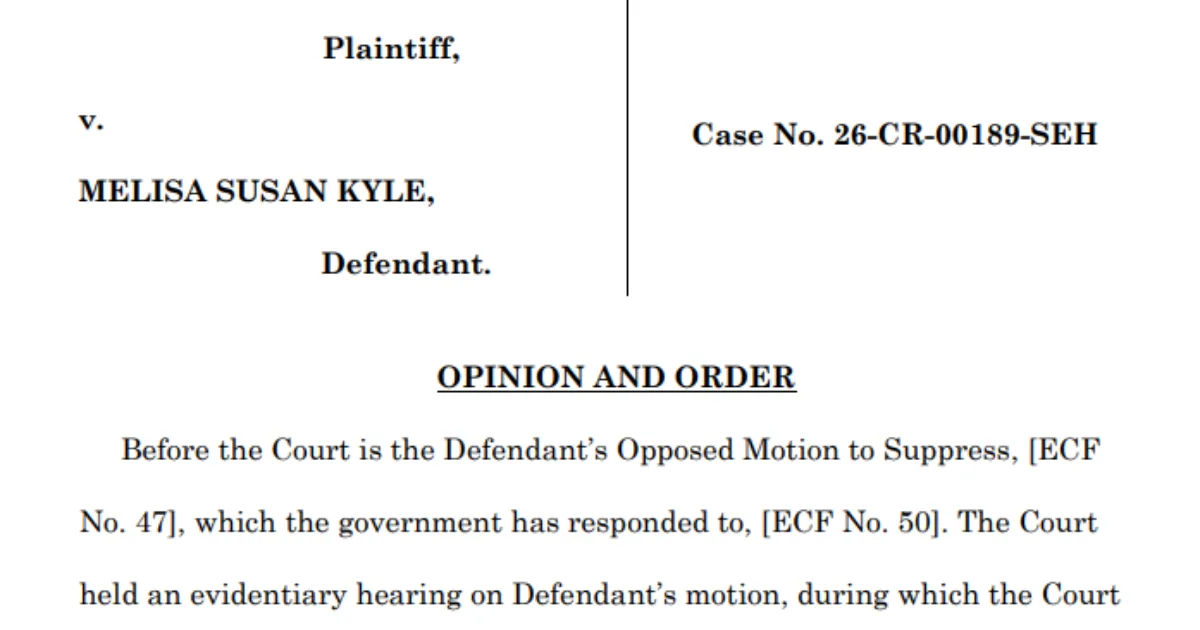
The U.S. District Court for the Northern District of California ruled in favor of Anthropic in its lawsuit against the U.S. government. The court found unlawful the actions of President Donald Trump and Secretary of War Pete Hegseth, who had designated Anthropic as a national-security supply-chain risk, ordered all federal agencies to stop using Anthropic products, and instructed defense contractors not to do business with the company.
On the surface, the case appears to be about government procurement, national security and AI supply-chain risk. But when one follows the reasoning of the ruling, the core issue becomes clearer.
The government has the freedom not to trust a company’s technology and to choose another supplier. But it cannot brand a company as a national-security threat and effectively exclude it from the entire federal government and defense ecosystem simply because that company publicly questioned how the government wanted to use AI.
The court stated the principle clearly.
“The empty invocation of national security is not a blank check to punish and retaliate against government critics.”
This ruling goes beyond a legal victory for Anthropic alone. It is an important case about the power relationship between governments and private technology companies in the age of AI, the politicization of AI safety debates, the limits of national-security justifications, and the extent to which frontier AI companies’ speech is protected.
As AI becomes core infrastructure for defense, intelligence, surveillance and cyber operations, governments will depend more deeply on AI companies. At the same time, AI companies will have little choice but to speak publicly about where their models should or should not be used, what uses may be dangerous, and what safeguards are necessary.
This ruling deals precisely with that boundary.
The government may choose not to use a particular AI company’s model.
But it may not punish that company because it criticized the government.
Anthropic is a company built around AI development, safety and policy research. Its flagship product is the large language model Claude. According to reporting on the ruling, U.S. intelligence and defense agencies had used Claude, and the dispute intensified after Anthropic resisted allowing its systems to be used for fully autonomous weapons and mass surveillance of Americans.
The relationship was not hostile from the beginning.
Anthropic had undergone security reviews, and its technology had been used in sensitive government contexts. The court also noted the contradiction between treating Anthropic as a national-security threat and, at other points, continuing to discuss contracts and cooperation with the company.
The conflict became serious over restrictions on AI use.
The government wanted AI services available for “any lawful use.” In other words, if a military or government use was legally permissible, the government wanted freedom to use the model for that purpose.
Anthropic resisted removing all restrictions. It drew lines around two areas.
Lethal autonomous weapons.
Mass surveillance of Americans.
Anthropic’s position was not merely an abstract ethical statement. The company argued that Claude was not ready to be used safely and reliably in lethal autonomous warfare or mass surveillance. In the case of surveillance, the concern was that AI could transform the scale and nature of information-gathering in ways existing legal frameworks did not fully anticipate. In the case of lethal autonomous warfare, the consequences of error could be too severe.
The government saw the matter differently.
The Department of War believed that a private company should not restrict the military’s operational judgment. Hegseth took the position that contracts for AI services should include language allowing any lawful use.
Up to that point, the matter still belonged largely to contract negotiation.
The government may decline to contract with a company that does not accept its terms. Anthropic could also refuse to provide its model under terms it considered unsafe. The company said it would cooperate with an orderly transition if the government chose another supplier.
The problem was what came next.
On February 27, 2026, Trump criticized Anthropic publicly and directed federal agencies to stop using the company’s technology. Hegseth then announced that Anthropic had been designated a national-security supply-chain risk and said contractors, suppliers and partners doing business with the U.S. military should not engage in commercial activity with Anthropic.
The scope of the measure was sweeping.
Federal government use of Anthropic technology was halted.
A transition period would lead to effective exclusion.
Defense contractors doing business with the government were told not to transact with Anthropic.
The effect resembled a secondary boycott extending beyond direct defense use.
The court viewed this as going beyond ordinary procurement judgment. There is a difference between the Department of War deciding not to use Anthropic products and ordering the broader federal and defense-contractor ecosystem to exclude the company.
The government framed the measure as a national-security and supply-chain-risk action. But the court found the evidence weak.
The government’s core concern was that Anthropic might shut down Claude, alter model behavior during wartime, or introduce hidden bias or backdoors. But the court found that Anthropic lacked backdoor access to technology already delivered to the Department of War, undermining the claim that the company could secretly manipulate deployed models to disrupt defense operations.
In other words, the central risk asserted by the government — that Anthropic could covertly alter deployed models and sabotage national-security operations — was not supported.
What remained was essentially trust.
The government argued that Anthropic had become increasingly adversarial through media statements and was critical of the Department of War’s AI-use position, making it hard to trust the integrity of its models.
But the court found that lack of trust could not become a constitutional basis for punishment.
What Anthropic had done was publicly raise concerns about the government’s use of AI. In particular, it had argued that safeguards were needed around mass surveillance and lethal autonomous warfare. That was not merely a private contractual dispute. It was speech on matters of major public concern.
AI safety, military AI use, surveillance and the relationship between technology and democracy are central issues in public debate. A company does not lose its right to speak on those issues simply because it is negotiating with the government.
The court instead saw evidence that the government had targeted Anthropic’s speech and viewpoint.
Trump and Hegseth publicly criticized Anthropic’s ideology, values and public stance. The court viewed such statements as evidence that the government was not merely ending a contract because terms did not match, but trying to make an example of a company because it had publicly criticized the government’s position.
This is the core of the ruling.
The government has broad discretion in national-security matters. But that discretion cannot become a tool to punish critics. The court found that the government’s actions reflected a desire to make Anthropic a public example.
The court also pointed to contradictions between the government’s words and actions.
If Anthropic truly posed a grave national-security threat, it would be difficult to explain why the government continued to pursue cooperation and contract discussions with the company in other sensitive areas. The court treated this inconsistency as evidence that the national-security explanation looked more like a post hoc justification than the real reason for the action.
The ruling was also unfavorable to the government on procedural grounds.
The court found that Anthropic had been denied due process. The government had labeled Anthropic a supply-chain risk and deprived it of access to federal and defense-contractor business opportunities without meaningful notice or an opportunity to respond.
The government argued that national security allowed it to bypass prior procedures. But the court found that a general invocation of national security was not enough. Anthropic was a U.S. company with substantial interests in federal contracting. Without a specific showing of urgency, the government needed to explain the basis of the risk designation and allow the company to respond.
The case also raised issues under administrative law.
The supply-chain-risk statute at issue was designed to address risks in sensitive information-technology procurement, including sabotage, malicious functionality and threats to system design, integrity or operation. The court found that Anthropic’s conduct did not fit that kind of risk.
Publicly defending contract conditions and criticizing government AI use is not the same as covert sabotage or insertion of malicious code. A supply-chain-risk designation is supposed to address hostile technical compromise, not serve as a tool to exclude a difficult contracting partner or a supplier critical of government policy.
The business significance of this ruling is substantial.
AI companies are becoming core infrastructure suppliers for defense, intelligence, administration, health, finance and regulatory agencies. Governments increasingly want to purchase, deploy and integrate AI models into sensitive work. In this process, AI companies are no longer ordinary software vendors. They become private infrastructure providers for state functions.
But AI companies are also among the actors most familiar with the limits and risks of their own models. They must be able to speak about technical limitations and safety concerns, especially in military, surveillance and cyber domains.
This ruling sends one signal to AI companies.
Contracting with the government does not require giving up the right to speak publicly about AI safety. Refusing to accept every government use condition does not automatically make a company a national-security threat.
At the same time, the ruling also creates a burden for AI companies.
If an AI company wants to restrict government use on safety grounds, its standards must be technically grounded, consistent and transparent in contract terms. One reason Anthropic’s position gained force in this case was that it identified two relatively narrow and clear restrictions: lethal autonomous warfare and mass surveillance of Americans. It also said it would assist with a transition if the government chose another provider.
In other words, AI safety principles cannot remain abstract slogans. They must be explainable policies that operate in real procurement and deployment environments.
For the government, the ruling is a warning.
The government has broad discretion in national-security procurement. But when that discretion is exercised as political retaliation or public shaming, courts may scrutinize it. Public orders and social-media attacks can become evidence exposing the weakness of the administrative record, procedure and legal authority.
The ruling also affects the broader AI industry.
The government’s measures created a chilling effect not only for Anthropic, but for the wider government-contracting ecosystem. Defense contractors and technology companies could become uncertain about whether they may continue using APIs or products involving Anthropic. Employees at major AI companies may also worry that public debate about AI risks and misuse could trigger retaliation.
That point matters deeply in the AI safety debate.
The people who understand frontier AI risks best often work inside the companies and ecosystems building the technology. If they can be excluded from government supply chains because they criticize government policy, AI safety discussions will become quieter.
And if that happens, the government may end up using more dangerous technologies with fewer warnings.
This ruling reveals the paradox of national security in the AI era.
The government wants safe AI.
To get safe AI, companies and researchers must be able to speak about risk.
But if companies are punished for speaking about risk, safety discussions disappear.
The moment safety becomes a reason to demand silence, safety itself becomes weaker.
This conflict is likely to repeat.
AI models will enter defense operations, intelligence analysis, cyber defense, surveillance, administrative automation, weapons support and public services more deeply. Governments may demand “all lawful use.” AI companies may refuse uses they believe are not yet technically safe.
This is not only Anthropic’s problem.
OpenAI, Google DeepMind, Meta, xAI, Mistral, Cohere and AI companies in other countries may all face similar questions.
How far may a private AI company restrict use by national-security customers?
How far may a government exclude a supplier that raises safety concerns?
How should model safeguards and military autonomy be balanced?
Where is the line between contract negotiation and public speech?
To what extent can national security be reviewed by courts?
This ruling offers one early answer.
The government may choose the AI supplier it wants.
But it may not punish a company because of its criticism on AI safety.
National security is important.
But it is not above the Constitution.
In the AI era, supply-chain risk is no longer only about semiconductors, servers or cloud infrastructure. Model values, safety policies, use restrictions and public corporate speech are now becoming part of the supply-chain-risk debate.
To manage this, governments need more careful procedures, stronger evidence and greater transparency.
Above all, trust must flow in both directions.
It is true that governments must be able to trust AI companies.
But AI companies and researchers must also be able to trust that governments will not retaliate against them for raising safety concerns or public criticism.
If that trust collapses, AI safety will stop being a technical debate.
It will become a power struggle.
This ruling draws a line.
National security may be a reason to choose an AI company.
It cannot be a license to silence one.