On November 3, 2025 (local time), the UK House of Commons held an official debate on "Video Games: Consumer Law," prompted by the "Stop Killing Games" petition campaign reaching 190,000+ signatures (exceeding the threshold for parliamentary consideration). The campaign protests the reality that when online-based games terminate server services, users can no longer access games they already purchased — demanding publishers provide alternative means (offline mode or private server support) enabling continued play after service termination. The parliamentary debate expanded beyond consumer protection to question whether video games should be considered "cultural heritage" and how digital-era "ownership" should be redefined. The government maintained no plans for relevant law revision, but MPs and user communities agreed on the need for long-term discussion of game preservation and accessibility. An MP's statement from the parliamentary record (Hansard): "We don't dispose of every copy of Shakespeare. Games, similarly, are cultural products reflecting our era." This framing repositions games alongside literature, music, and film as 21st-century creative media. The broader tension: the shift from physical media to digital licenses/services has quietly transformed "purchase" from permanent ownership to temporary access rights — a transformation that went largely unnoticed until server shutdowns began erasing purchased content. The UK case may represent the beginning of broader legislative action across multiple jurisdictions as digital content ownership rights become an increasingly contested area of consumer law.
Games Should Be Remembered Like Shakespeare
The dilemma of game preservation and ownership revealed in the UK 'Video Games: Consumer Law' discussion. In the UK Parliament on November 3, 2025, 'Video Games: Consumer Law' was debated.
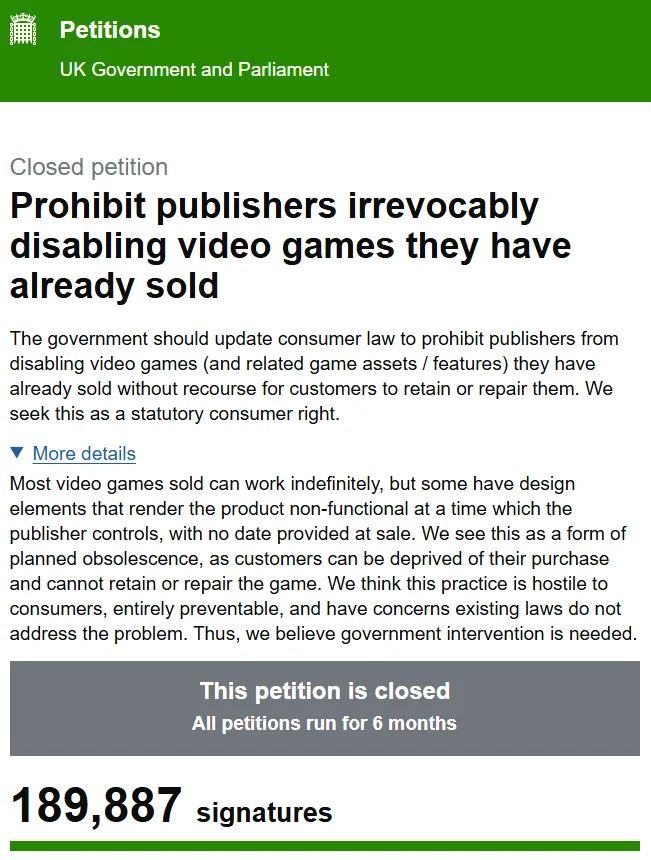
Source: META-X metax.kr
The Dilemma of Game Preservation and Ownership Revealed in UK''s ''Video Games: Consumer Law'' Debate
ⓒ META-X metax.kr
All rights reserved.
Free to share with attribution.
All rights reserved.
Free to share with attribution.