3:32 a.m.
My phone rang.
To be precise, it was not a regular phone call. It was a VoiceTalk call.
Who would call me on VoiceTalk at this hour?
Half asleep, I looked at the screen.
It was someone whose name I recognized, but whom I had deleted from my friends list. Every year, I clean up my KakaoTalk contacts. If neither I nor the other person has contacted each other for a year, I delete that person from KakaoTalk. I think of it as the minimum courtesy we can offer each other.
I assumed it had been a mistake and ended the call. I also left the chatroom.
But a little while later, the call came again.
This time, I was fully awake.
Why at 3:30 in the morning?
It may have been nothing. But in the dark, imagination runs much faster than reality.
Was the account hacked?
Had someone found my phone number?
Why VoiceTalk, not a regular call?
I was annoyed too.
That day, I had planned to wake up earlier than usual to see the sunrise. If my mind became this alert, I felt I would spend nearly two hours wide awake.
Lying still, I told myself,
It’s nothing.
In today’s world, perhaps it is naive to think that information such as my phone number or email address is a secret known only to me.
Just go back to sleep.
I forced myself to cut off the thought.
Fortunately, I fell asleep again.
It was a meeting room.
There was a professor who had taught me, people I had worked with during my days as a journalist, people I had met at the company, and people I had come to know at school. They were all mixed together.
I was not trying to draw attention to myself. I was simply finding what I needed to do and quietly taking care of it.
Then, at some point, the place changed into an event venue.
This time, my son was beside me.
He said he wanted to try playing golf. But strangely, in his hands was a golf club made of chocolate.
“You can’t hit a golf ball with that.”
If he hit a hard golf ball with a chocolate golf club, it would obviously break. So I ran around the venue trying to find him a proper golf club.
I asked a staff member,
“Can I borrow a golf club?”
The staff member said,
“Today happens to be the day of a drawing. If you’re lucky, you might win one.”
“What time is the drawing?”
“In the evening.”
I shook my head.
“We don’t have time to wait until then. I’ll just buy one.”
I ran again.
While running around to find a golf club for my son, I suddenly realized that I had left my bag somewhere.
Around me, people began appearing and saying their belongings had been stolen. My heart sank. I hurriedly found my bag and checked inside.
The money in my bag was still there.
Thank goodness.
Then it happened.
Bzz.
Bzz.
It felt as if the entire space inside the dream was vibrating.
I opened my eyes.
My Galaxy Watch Ultra was vibrating on my wrist.
5:10 a.m.
It was the alarm.
And that was how the final morning of the trip began.
“Son, wake up. We need to go see the sunrise.”
I woke my son.
The two of us quickly got dressed and ran outside the hotel.
A light rain was falling.
It was a little unexpected. The weather had been really good throughout the trip. On the day we rode bicycles, the day we walked through downtown Yonago, and the day we crossed Eshima Ohashi Bridge, we had not really been caught in rain.
So when I saw the rain falling on the final morning, I strangely thought,
Thank goodness.
If it had rained throughout the trip, I would have been disappointed.
But this was the day we were returning home. We had done almost everything we wanted to do here.
Yes. It’s okay for the rain to come now.
The rain arriving only on the final day felt like a small kindness this trip was offering us.
Still, I wanted to see the sunrise.
The problem was that I did not even know exactly where the sun would rise. We left the hotel and simply ran toward the sea.
The dawn air was damp.
The sky was completely cloudy.
There was no golden light spreading over the sea as I had imagined.
There was not much time left.
I said to my son,
“Son, let’s go to the top floor where the open-air bath is.”
We ran back to the hotel.
5:20 a.m.
There were less than ten minutes left before the expected sunrise time.
We took the elevator up to the 12th floor. We hurriedly took off our clothes and entered the bath area. I wanted to see the sky directly rather than through glass, so I went first to the open-air bath.
Somewhere, there seemed to be a very faint yellow glow.
But from the men’s open-air bath, I had to turn my head far to the side to barely see that direction.
Then my son said,
“Dad, let’s see it from inside.”
When I came back into the indoor bath, he was right. The viewing angle was actually better. I stood with the water up to about my knees and looked out the window.
5:25 a.m.
There were too many clouds.
My son said,
“Dad, I’ll go to the end of the 11th floor and look from there.”
Then he hurriedly got dressed and went downstairs.
I was left alone.
5:26 a.m.
The rain was still falling lightly, and thick clouds hung over the mountains.
Honestly, I was disappointed.
We had rushed around from dawn just to see one sunrise, and it felt as if the whole thing would end without showing us anything.
Then I saw a very thin gap between the mountain and the clouds.
It was long and narrow, like the shape of eyes when someone smiles slightly.
I kept looking at that place.
Maybe it was around 5:29.
Something sparkled through the gap. It looked golden, or perhaps emerald. It seemed like powdered jewels trembling like waves.
I do not know whether it was actually the sun, or whether light had refracted through the clouds and looked that way. Maybe I saw what I wanted to see.
Still, I decided to believe it was the sun.
And in my heart, I said,
May my son and I always live kindly toward each other, caring for one another.
It was less a wish than a promise.
In that moment, I felt I understood a little what I truly wanted for my son.
It was not that he would study well.
It was not that he would go to a good university or become successful.
It was not that I would rise to a higher position at work.
I simply wanted us to live for a long time as people who cared for each other.
That was enough.
I went down to the 11th floor to find my son.
He was standing by the window at the end of the hallway, looking outside. Because he had rushed down, he said he had left a few things in the changing room.
I went back up to the 12th floor, gathered his belongings, and returned to the room with him.
My son lay down on the bed and fell asleep again.
I did not sleep.
I picked up my phone and began writing down what had just happened.
Only a few days earlier, I had been using the same phone to look at company work. Seeing that, my son had felt hurt. He said that even though we were on a trip, it did not feel like his father was fully with him.
But on the final morning of the trip, I was using the same phone to record the sunrise I had seen with my son.
It was the same object.
What had changed was where I was looking.
Perhaps the tool itself does not take me anywhere. In the end, the question is what I choose to look at through that tool.
As morning arrived, my mind slowly returned to reality.
Today was the day we were going back to Korea.
But when I looked outside, the fog was extremely thick. The whole world was white, as if the boundary between sky and ground had disappeared.
Suddenly, I became worried.
Will the plane be able to take off?
At the start of the trip, I had worried about whether we would be able to enter the country properly. On the day we were leaving, I was worrying about whether we would be able to depart properly.
A little later, thankfully, the rain clouds and fog began to clear.
As we checked out of the hotel, I said to the staff,
“Yukkuri yasumasete itadakimashita. Arigatou gozaimashita.”
“I was able to rest well. Thank you.”
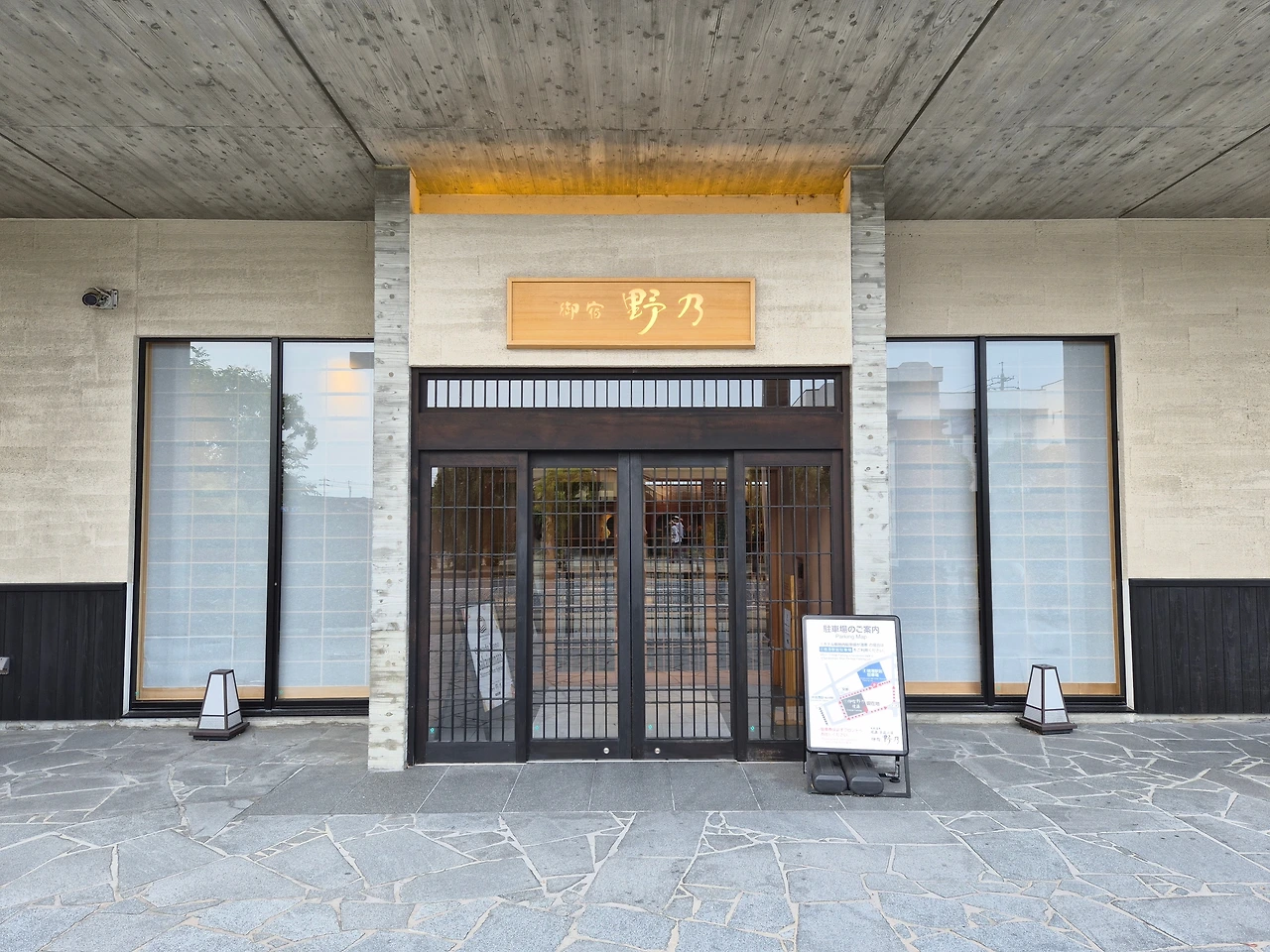
I really had rested well.
It was not only my body that had rested.
For a while, I felt as if I had escaped from the inside of my head, where I had been constantly asking what I needed to do at work, whom I needed to lead, and whether I was doing things properly.
10:27 a.m.
We boarded the Sakai Line train heading to Yonago Airport.
I remembered the moment a few days earlier when we first took this line.
I had been anxious about every little thing: whether we had bought the right ticket, whether this was the right train. One train arrived first, but no one got on, and that only made me more nervous. In the end, I trusted the departure time my son had remembered and waited. That was how we had arrived in Sakaiminato.
Now we were running along the same tracks in the opposite direction.
At first, it had been an unfamiliar route.
On the way back, it had become a route I knew.
I looked out the window. The clouds that had covered the sky all morning were slowly splitting apart.
As if telling us that now it really was all right to leave.
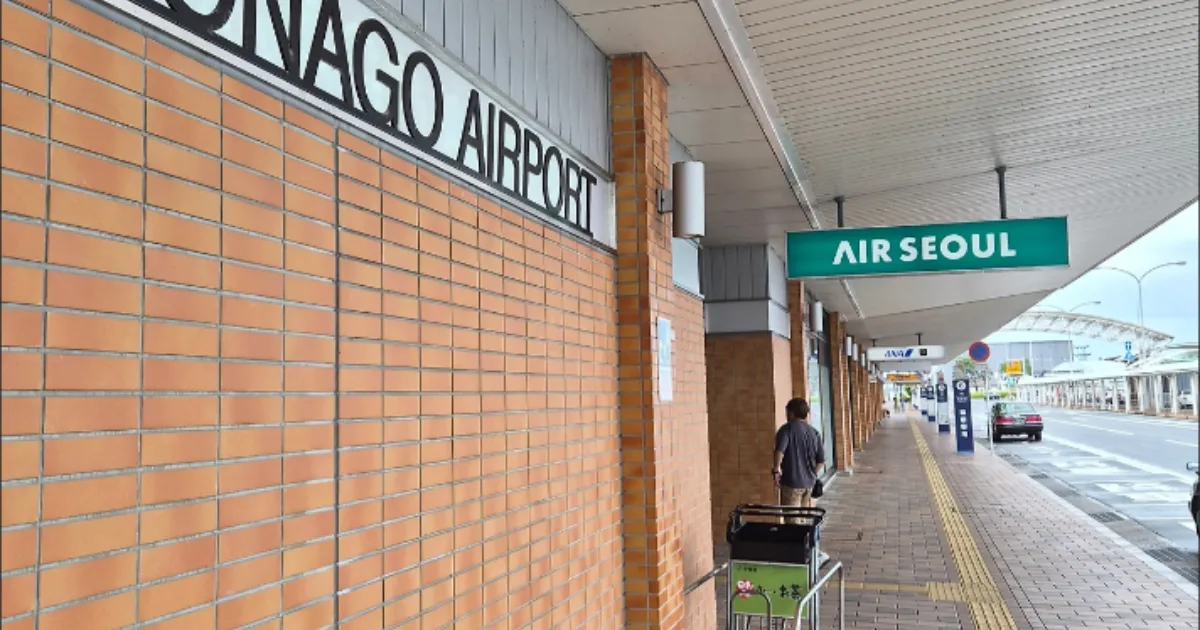
Yonago Airport was still quiet.
During this trip, I had felt several times that wherever we went, there were not many people.
It had been that way in the alleys of Sakaiminato. When we rode bicycles just a little outside the town, it sometimes felt as if only my son and I remained in the world.
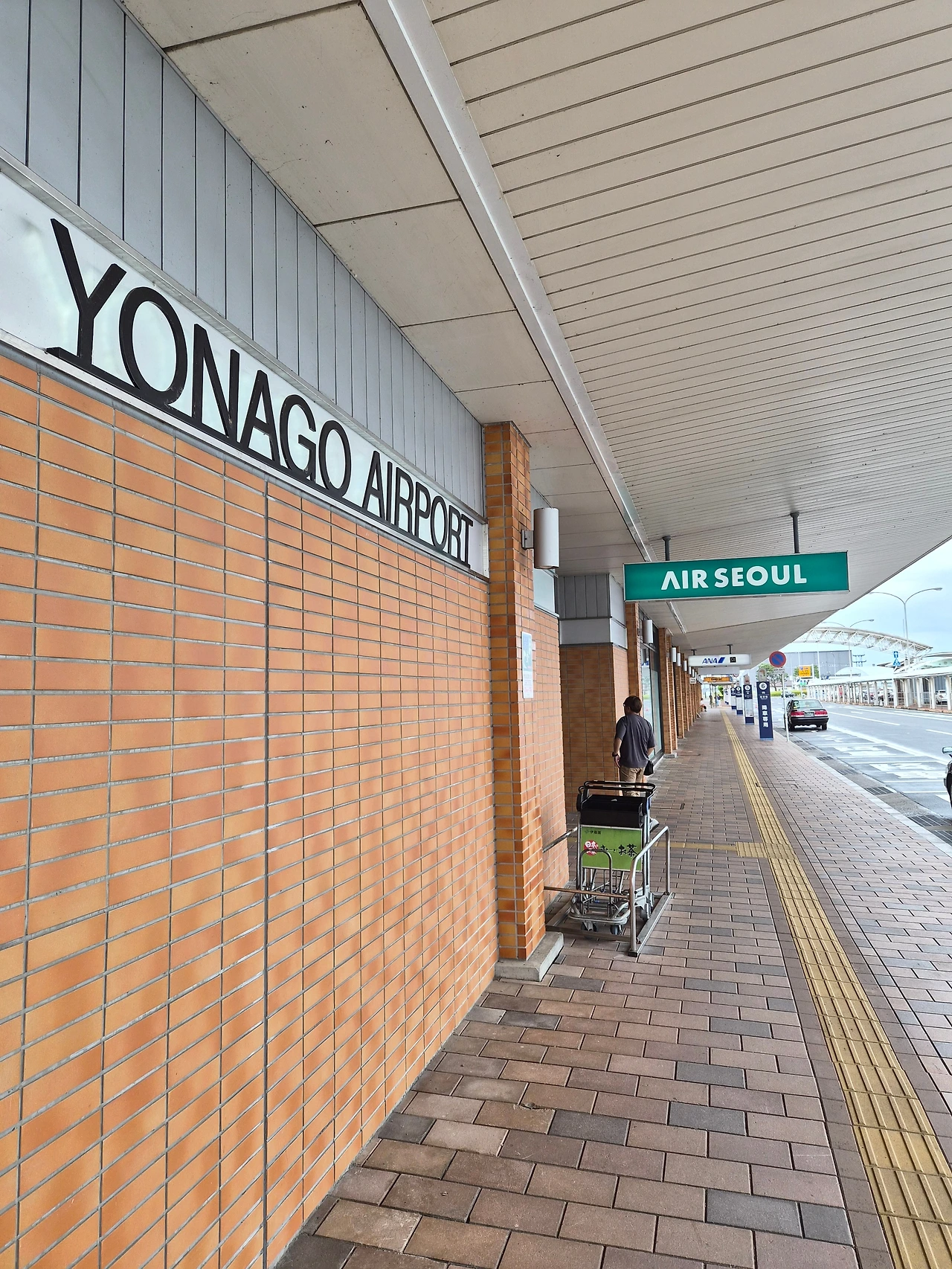
The airport was similar.
I tried to check in online with Air Seoul, but it did not work. In the end, we went to the check-in counter.
But there was no one there yet.
We waited for the counter to open.
We had time left.
There was not much to do.
We had already looked around the few places worth seeing, and there were not many people.
Maybe because of that, time itself seemed visible.
In Yonago, the city had felt as if it moved slowly. Even the airport clock seemed to flow slowly until the very end.
We had our final meal before departure.
My son chose a grilled beef set meal, and I ordered a seafood rice bowl. That was how it had been throughout the trip. My son chose what he wanted to eat, and I chose what I wanted to eat.
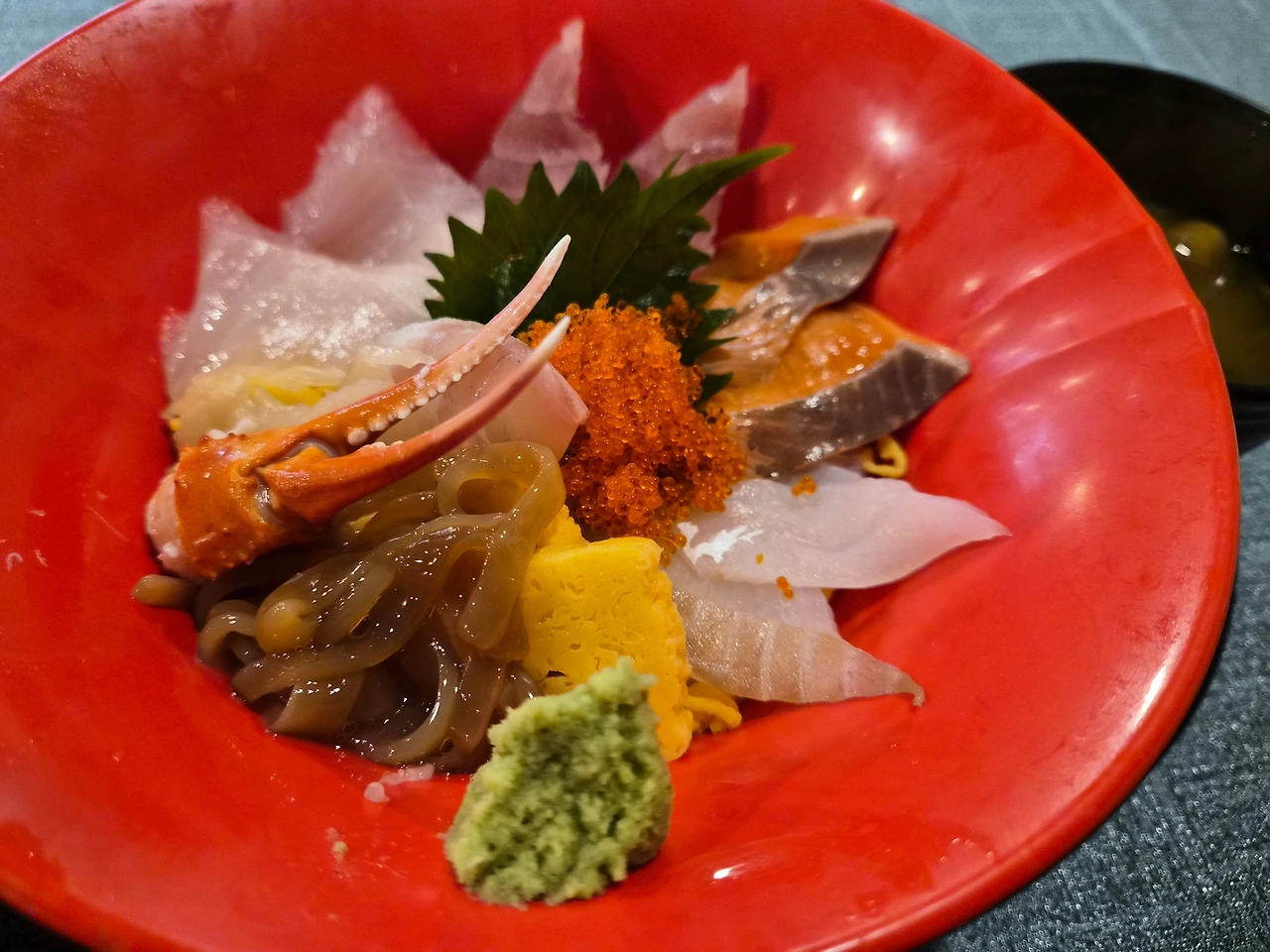
Sitting at the same table did not mean we had to like the same food.
We could eat different things and still eat together.
Maybe family is like that too.
We live in the same house but like different things. We spend the same time together but remember it differently. Still, we can return to the same table.
Before the trip, I had exchanged money onto my Travelog card, and by then I had used it all. Accommodation, meals, bicycles, groceries, my son’s model kits and shoes, and various other things had drained it away.
By the last day, the money I had brought had almost mysteriously run out.
At first, I had worried about how much money we would spend on the trip. But by the end, there was not even a need to worry about what to do with the remaining money.
Time was similar.
The money I had brought was almost gone.
The time we could spend here was almost gone too.
All that remained was returning home.
Check-in was completed.
Departure procedures were done.
Now all we had to do was wait for the plane.
Then my son kept looking at a bag of wagyu-flavored potato chips in the duty-free shop.
He clearly seemed to want to try them.
I handed him 1,000 yen.
“Go buy what you want.”
According to my calculation, he would have a little money left after buying the chips. I planned to use that change to buy myself a drink.
A little later, my son returned.
In his hands were the wagyu potato chips and a chocolate.
“What’s this?”
“For Mom.”
There was no ill intent in his words. In fact, he had bought it because he was thinking of his mother.
But strangely, I felt hurt in that moment.
It was not because I could no longer buy a bottle of something to drink. Something else came to mind first.
Why did you decide how to spend my money?
It was true that I had given him the 1,000 yen. But I had my own idea of how it would be used. My son had treated the money I gave him as if it were his own and decided to buy a gift for his mother.
I said to him,
“It’s good that you thought of Mom and bought chocolate. But this wasn’t your money. If you spend it however you want without asking Dad, and then use it to give someone a gift, Dad doesn’t feel good about that.”
My son said nothing.
The atmosphere that had been fine just moments earlier became awkward again.
I did not know how many times this had happened during the trip. Things got better, then went wrong. We made up, then felt hurt again.
For a moment, I thought,
Even until the very end, this happens.
It felt a little bitter.
Maybe I had wanted the final scene of the trip to be warm, like a movie.
A father and son understanding each other, smiling for a photo, leaving one good sentence behind, and boarding the plane.
But real families do not end like movies.
My son was still my son.
I was still me.
Each of us thought of the other in our own way, and when those ways did not match, we felt hurt.
We boarded the plane that way.
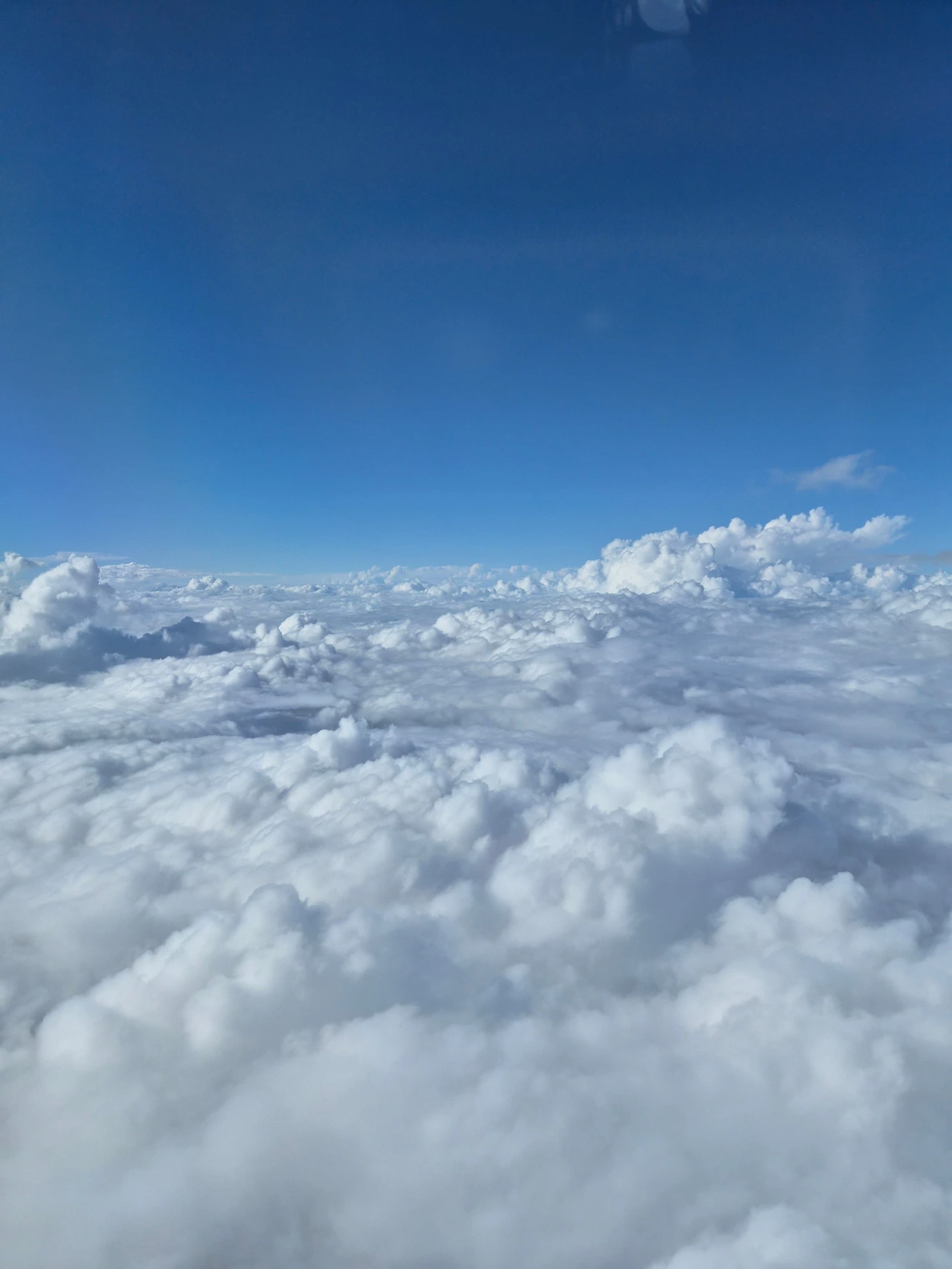
We arrived in Korea.
The airplane door opened, and I heard familiar Korean. We had only been away for a few days, but the airport scenery felt strangely unfamiliar and familiar at the same time.
My son and I went to eat.
This time, we ordered the same thing.
Budae kimchi stew with an egg set.
For several days, my son had chosen what he wanted, and I had chosen what I wanted. But at the moment the trip ended, we sat with the same food in front of us.
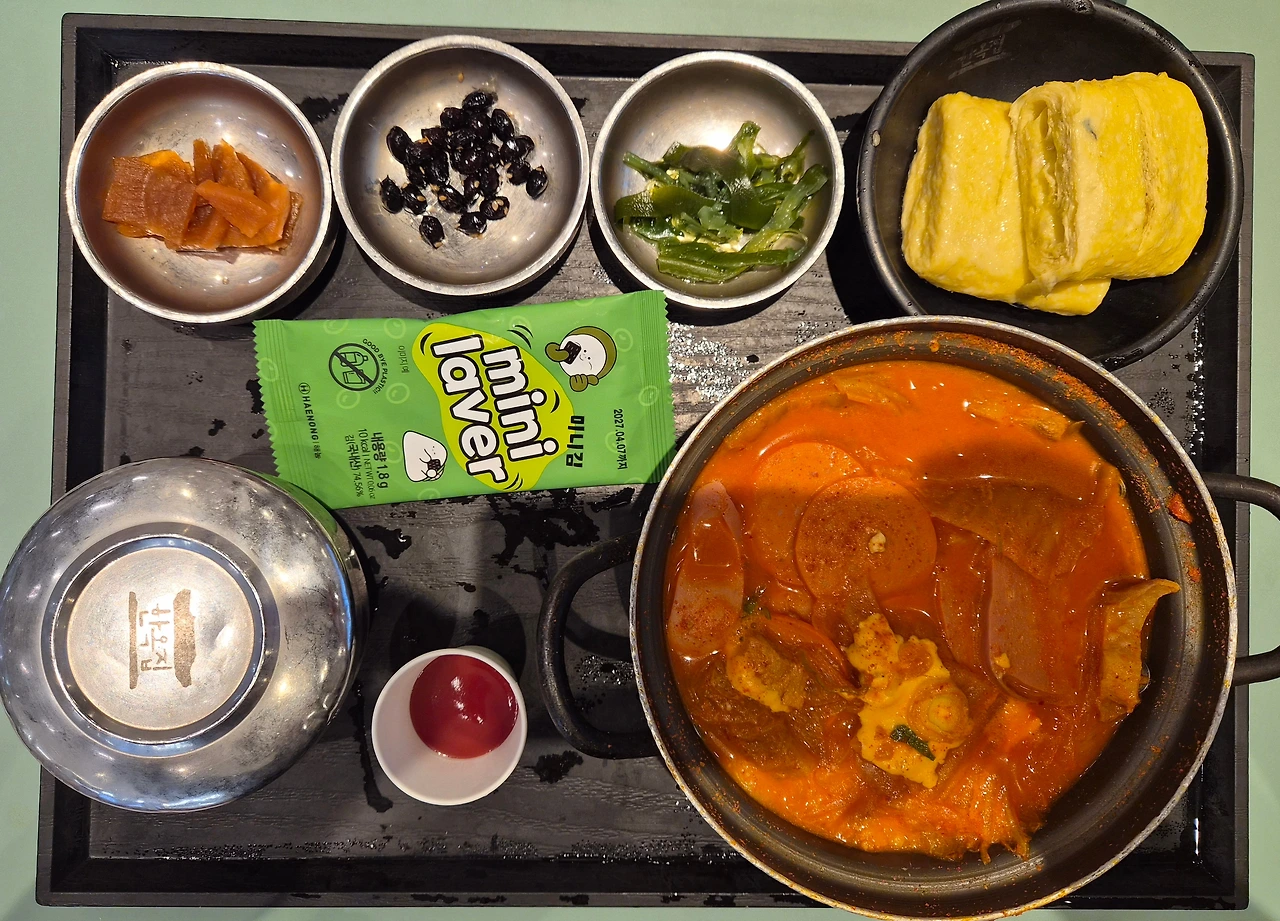
I did not bring up again what had happened at the Japanese airport.
The stew boiled.
We ate.
That was enough.
Maybe, in a family, not everything has to be resolved perfectly on the spot. Sometimes it is enough to eat together while still feeling a little hurt, ride the same bus, and return to the same home.
Now all we had to do was take the airport bus to Junggye Station.
From there, we would go home, and the trip would truly end.
A few days earlier, we had taken the same bus in the opposite direction toward the airport. Back then, I was anxious. I had barely finished my first proposal PM assignment, but part of my mind was still at work. I was also worried about whether I could manage an overseas trip alone with my son.
Now we were returning in the opposite direction.
Soon I would go back to work. There would be unread emails. New tasks would appear. I would clash with someone’s opinion again. I would again ask myself what leadership means.
On some days, I would think I had done fairly well.
On other days, I would blame myself and wonder why I could not do better.
My son would also return to his place.
He would go to school, meet friends, play games, and watch YouTube.
There would be times when he made choices different from what I wanted. No matter how much I spoke, he would try to do things his own way.
That is natural.
My son is not someone who lives my life for me.
He will live his life in his own way.
I will live mine in my own way.
Before leaving for this trip, I had simply hoped that I would be able to talk a lot with my son.
But after the trip, I realized that conversation was not the only thing we had shared.
I felt hurt by my son, and my son felt hurt by me.
I looked at my phone, and my son disappeared into his phone screen.
I worried about my son’s time, and my son worried about the time he was supposed to spend with his father.
I tried to lead him, and at other moments I left every choice to him.
Through all of that, I slowly learned something.
Leading someone does not mean making every decision for them.
But it also does not mean handing every decision over to them.
It means speaking about the direction I see, listening to what the other person thinks, sometimes walking ahead, sometimes following the other person, and eventually walking in the same direction.
Perhaps my relationship with my son is no different.
We will probably miss each other’s meaning countless times from now on.
A day when we perfectly understand each other may never come.
Still, that is all right.
As it was on Eshima Ohashi Bridge, all we need to do is not stop.
“I’m sorry.”
“That hurt Dad a little.”
“This is what I think.”
“What do you think?”
We can keep saying such things and move forward one step at a time.
My son will make countless mistakes. He will insist on his own way and fall. He will face moments when things do not go as he wants and feel frustrated.
Then one day, he will create something with his own strength and feel great joy.
I will not be very different.
Though I am well past forty, I will still make mistakes, misjudge things, get hurt by people, and make work harder because of my own stubbornness. And on some days, I will feel proud for a long time because of one thing I managed to accomplish.
In that way, we will each live another year from our own places.
There may be many days when we cannot talk much.
There may be more days when we exchange only a few words because we are busy.
Still, from time to time, I will think of this trip.
The faint light that appeared for a moment between the clouds at dawn.
The moment we rode bicycles through empty alleys.
The moment we walked the streets of Yonago searching for model kits.
The moment I gripped the bicycle handles tightly and walked across Eshima Ohashi Bridge, afraid but still moving.
And even the moments when we hurt each other over small things.
A trip is probably not made only of good moments.
Only when the moments of misunderstanding are included does it truly become our trip.
When we get home, we will unpack our bags.
We will take out the clothes that need washing, organize the things we bought at the supermarket, and place my son’s model-kit boxes in a corner of his room. After a few days, we may not look at the photos very often. Daily life will quickly swallow us again.
Then one day, my son may say,
“Dad, where are we going next year?”
By then, he will be a little bigger than he is now. His voice may be lower. He may prefer traveling with friends more than traveling with his father.
I, too, will be dealing with different worries. I may have taken on another project, or I may be going through changes I cannot imagine now.
Still, I am curious.
Where will we be next year?
What will my son want to eat there?
What will I be worrying about?
What will we argue about once?
In front of what scenery will we laugh again?
And when night comes, what kind of conversation will we have?
On the final morning of this trip, looking at the small light between the clouds, I wished for only one thing.
That my son and I would always live kindly toward each other, caring for one another.
Looking back, I do not think “always getting along” means never fighting.
We may feel hurt.
We may get angry.
We may fail to understand each other.
Our feelings may go wrong again over something as small as a bag of potato chips at an airport.
Still, we return eventually to the heart that cares for the other person.
Maybe that is what it means to live well together.
The airport bus is moving toward home.
My son will return to his life.
I will return to mine.
We will make mistakes again, insist on our own ways, feel frustrated, and achieve things as we live through another year.
And when time passes and the day comes when the two of us can travel together again, I want to ask him once more.
“Son, where should we go this time?”
The trip has ended.
But the journey with my son has not.
That is why I am already a little curious.
Next time, where will we be,
and what stories will we tell each other?