Should news publishers have to allow Meta to scrape articles from their own websites simply because they use Facebook?
That question has sparked a new controversy in the American news industry.
The dispute centers on Meta's commercial terms, scheduled to take effect on October 30, 2026. The terms contain provisions allowing Meta to automatically collect content from external websites associated with business accounts.
The concern is that the collection rights are not limited to content posted directly on Facebook or Instagram.
The terms also cover domains, webpages, and URLs associated with a business or its products and services, along with content accessible through those addresses.
For a news publisher operating a Facebook page and sharing links to articles on its own website, the provisions could be interpreted as giving Meta a contractual basis to collect content from the publisher's website.
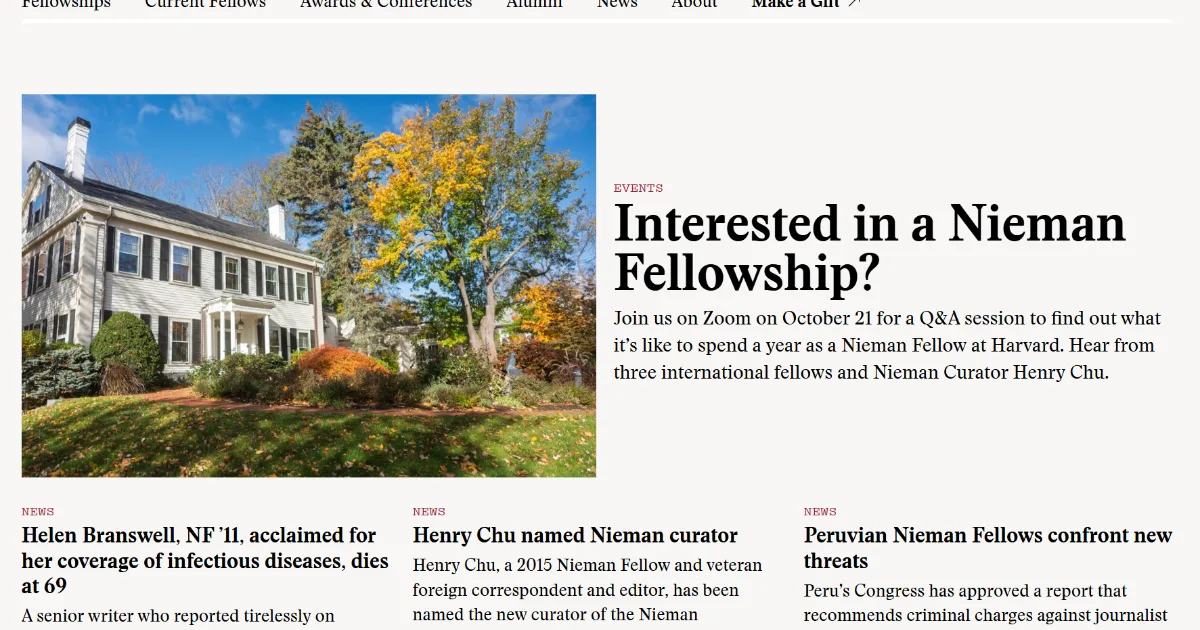
The controversy intensified after Harvard University's Nieman Journalism Lab reported on the issue on October 15.
The initial version of the terms explicitly allowed collected content to be used to provide, develop, improve, research, and train Meta products and services.
The word "train," particularly because of its association with artificial intelligence model training, immediately attracted attention.
News publishers pushed back.
Using Facebook or Instagram to communicate with readers, they argued, is fundamentally different from granting Meta permission to use independently produced journalism and information for AI development.
As criticism mounted, Meta revised the terms on October 16.
The company removed the word "train" and introduced language limiting the stated purposes of collected information to advertising and business products.
But the dispute did not end.
The revised terms still retained broad permissions for website collection.
The fundamental issue is therefore not simply whether publishers are authorizing AI training.
It is whether a Big Tech platform can use a service agreement to obtain rights over content published on websites outside its own platform.
The Issue Is Not What Publishers Post on Facebook, but What Exists on Their Own Websites
Meta's traditional service terms have primarily addressed how Facebook and Instagram users' content can be handled within those platforms.
The new commercial terms, however, can be interpreted as extending collection rights to external websites.
Under the provisions initially reported on October 15, Meta and its agents could use automated software, including web scrapers, bots, and crawlers, to access domains and webpages associated with a business's products or services.
The language also explicitly covered indexing, caching, analyzing, collecting, retrieving, and crawling content.
Periodically retrieving updates from those websites was included as well.
Most notably, the original terms stated that collected content could be used not only to develop and improve Meta products but also to train them.
The critical distinction is where the information is published.
There is a difference between Meta processing content that a news organization directly posts on Facebook and Meta separately retrieving articles from the publisher's own website.
Consider a news publisher sharing an article link on its Facebook page to attract readers.
The publisher's purpose is simply to introduce its journalism to an audience.
But the situation changes if Meta can rely on commercial terms to claim broad rights to collect content from the website linked in that post.
The boundary between promoting content through a platform and authorizing the use of external content becomes blurred.
James Grimmelmann, a professor at Cornell Law School interviewed by Nieman Journalism Lab, pointed out that the provision could be interpreted as allowing Meta to use content from publishers' websites for AI training.
Under the broadest interpretation, the terms could potentially support large-scale collection of external website content and its subsequent use within Meta's services or AI systems.
However, this remains a possible legal interpretation of the contractual language.
It does not establish that Meta has actually collected all articles from publishers' websites or used them for AI training.
Nevertheless, the sensitivity of the issue is understandable.
Articles, photographs, videos, and databases are core assets that news organizations invest substantial resources in producing.
Why Did Meta Remove the AI Training Language?
Meta responded quickly after the October 15 report.
In the revised terms issued on October 16, the company removed "train" from the sentence describing how collected content could be used.
The original wording referred to using content to provide, develop, improve, research, and train Meta products and services.
The revised version described the purposes as providing, developing, improving, and researching advertising and business products.
Meta explained that the update was not intended to obtain new rights.
Instead, the company characterized it as a consolidation of crawling-related provisions previously scattered across multiple agreements.
According to Meta, website collection provisions had already appeared in separate terms associated with generative AI tools used to create advertising.
The company maintained that the revised terms were not designed to scrape news publishers' websites for AI training.
It also said website operators could express their crawling preferences through robots.txt.
Legal experts, however, questioned whether the revisions adequately addressed the underlying concerns.
Matt Topic, an American attorney specializing in media and intellectual property, noted that the revised terms still permitted collected content to be used for developing business products.
Removing the word "train" does not necessarily resolve the issue, he argued, because "develop" remains broad enough to potentially encompass training processes involved in creating AI-powered business products.
Grimmelmann raised similar concerns.
Although the revision provided more specificity about the purposes of content use, it did not sufficiently narrow the core permission to collect material from external websites associated with a business's products or services.
Ultimately, the dispute is not about deleting a particular word.
It concerns whether the scope of collectible content and the technological purposes for which that content may be used are clearly and meaningfully limited.
Accept the Terms or Give Up the Business Account
One of the most controversial aspects of the new terms is the method of obtaining consent.
Meta instructed businesses that did not agree to the revised commercial terms to stop using its products for business or commercial purposes.
In practical terms, continuing to use business services requires accepting the updated agreement.
The scope of services covered by the commercial terms is extensive.
It can include operating Facebook pages and groups, managing Instagram business accounts, running advertising campaigns, communicating with customers through Messenger, managing WhatsApp channels, and using Meta Business Suite.
For news organizations, these are not necessarily optional conveniences.
Many publishers have long relied on Facebook and Instagram to distribute journalism and communicate with readers.
Audiences discover news through social platforms, while publishers use those platforms to reach potential new readers.
Some outlets depend heavily on Facebook to maintain relationships with particular communities.
Under these circumstances, social platforms can become essential distribution channels.
But if maintaining access to those channels requires accepting broad provisions concerning collection from external websites, publishers face a difficult choice.
Should they accept the terms to preserve their relationships with readers?
Or should they stop using the platform because of concerns about losing control over their content?
Stephen Beale, publisher of the independent publication The Steampunk Explorer, who first brought the issue to Nieman Journalism Lab's attention, said he was considering closing his account.
For Beale, Facebook is more than a promotional channel.
His publication's reader community is deeply established there, and some readers communicate with the outlet exclusively through Facebook.
Even so, he strongly objected to Meta potentially claiming rights to collect content from external websites merely because a publisher uses its business services.
This dilemma may be especially difficult for independent publications and small publishers.
Large news organizations can mobilize legal departments and technical teams.
Smaller outlets may struggle with the cost of interpreting complex contractual provisions and reducing their dependence on major platforms.
Can robots.txt Really Protect Publishers' Content?
Meta says website operators can manage content access through robots.txt.
The robots.txt file is a standard mechanism through which website operators communicate which paths automated crawlers and search engines are allowed or discouraged from accessing.
For example, a publisher can specify that a particular crawler should not access its news article pages.
But robots.txt is fundamentally a file communicating access rules.
It is not a firewall that technically prevents every attempt to retrieve content.
Its effectiveness depends on crawlers respecting those instructions.
The Meta controversy raises a more fundamental question.
If a platform interprets its commercial terms as providing contractual permission to collect website content, how should that permission be reconciled with restrictions expressed through robots.txt?
Benjamin Sobel, a professor at the University of Wisconsin Law School, explained that robots.txt can communicate a website operator's preferences but does not necessarily provide an independently enforceable legal mechanism compelling every crawler to comply.
Meta maintains that it respects existing crawling preferences.
However, according to Nieman Journalism Lab, the revised commercial terms themselves did not explicitly require Meta to honor robots.txt settings.
This exposes a distinction between technical controls and legal permissions.
A website operator can express a preference that crawlers not access particular content.
A platform may nevertheless claim that a separate service agreement authorizes collection.
Which position should prevail?
This is not merely a website administration question.
It sits at the intersection of contract law, copyright law, privacy protection, and unfair competition principles.
Another provision adds uncertainty.
Both the original and revised terms included language allowing Meta to create "test credentials."
Grimmelmann noted that the wording could potentially be interpreted to include Meta creating test accounts to access websites requiring registration.
That interpretation does not establish that the terms legally authorize bypassing paid subscription barriers.
Nor does it establish that Meta has actually used such credentials for that purpose.
Nevertheless, the language increases uncertainty about the boundaries of content access.
Is Meta Extending Social Platform Power into Content Collection Rights?
One of the central legal questions concerns tying or bundling conditions.
In competition law, tying can arise when access to one product or service is made conditional on accepting another product or service.
A similar structural concern appears in Meta's revised terms.
Publishers use Meta's business services to communicate with readers.
But to continue using those services, they must accept contractual language permitting broad collection from external websites.
Sobel suggested that this arrangement evokes the competition-law concept of tying.
However, combining several conditions in a service agreement does not automatically constitute unlawful tying.
A legal assessment would need to examine relevant markets, market power, whether the products or services are distinct, potential anticompetitive effects, and legitimate business justifications.
It would therefore be premature to conclude that the terms violate competition law.
The underlying concern remains significant.
A platform's influence in one market may enable it to obtain additional rights in another.
Meta operates social media platforms used by countless businesses and news organizations.
Those businesses participate because they need access to readers and customers.
If maintaining that access requires businesses to grant broad collection permissions over content produced elsewhere, the platform's influence may extend from distribution into content utilization.
That is the heart of the controversy.
Publishers Produce the Journalism. Platforms Want the Data.
The dispute is especially sensitive because news content has become increasingly valuable in the AI industry.
High-quality journalism can be important data for AI models.
News organizations invest in reporting, verification, editing, and legal review.
They do more than reproduce corporate announcements.
They establish facts, compare stakeholder perspectives, examine competing claims, and interpret the significance of events.
That work costs money.
AI companies, meanwhile, can collect publicly accessible internet content to develop or improve models.
Conflicts have consequently emerged over the conditions under which news content should be used.
Publishers demand compensation and control over the material they produce.
AI companies argue for the legitimacy of using publicly accessible information in training and technological development.
Lawsuits concerning AI training, copyright, and fair use are ongoing in American courts.
Even if a contract contains language authorizing website collection, that does not automatically resolve every copyright question.
Additional legal complications can arise when individual articles include third-party copyrighted material or when the holder of rights to particular content is not the same entity operating the business account.
The legality of AI training may also depend on the specific use and applicable jurisdiction.
Meta's revised commercial terms add another dimension to this debate.
Previously, the central question was whether publicly available web content could be used for AI training.
Now another question has emerged.
Can a platform obtain consent to collect external website content through the contractual terms governing use of its services?
Competition over access to content is expanding beyond technical web crawling into the acquisition of contractual rights.
The Paradox: Pay to Share Links, but Allow Content Collection
The controversy has been intensified by Meta's recent policies concerning external links.
Meta previously introduced a paid subscription service called Meta One.
Under the arrangement described in the reporting, some Facebook and Instagram accounts face limits on the number of external links they can publish, with expanded link-posting capabilities requiring a paid subscription.
Some news organizations have reportedly been exempted from those limits, meaning the restrictions do not apply uniformly to all publishers.
Even so, the contradiction perceived by the news industry is clear.
Publishers may face restrictions or costs when posting links designed to bring readers to their own websites.
At the same time, Meta is including provisions in its terms that could permit automated collection of content from those websites.
This arrangement raises questions about how value is distributed between content creators and platforms.
Publishers create the content.
Platforms control significant portions of the audience relationships and traffic through which that content is discovered.
If platforms also acquire contractual permissions to use external content for AI and business product development, the imbalance of power between content producers and distribution platforms could become greater.
The issue extends well beyond a dispute between Meta and news organizations.
As search engines, social media, AI chatbots, and content recommendation platforms expand, the relationship between those who produce information and those who build services around it may need to be redefined.
Why American and European News Organizations Are Both Pushing Back
As the controversy grew, news industry associations began responding.
The European Publishers Council announced plans to raise the issue with the European Commission and other authorities, seeking an urgent examination of potential copyright concerns, contractual fairness, and abuse of market power.
The United Kingdom's News Media Association called for intervention by the government and regulators.
The News/Media Alliance in the United States also characterized the provisions as unfair and potentially unlawful.
Their shared concern is not simply the technology of web crawling.
It is the possibility that a major platform could use its power over news distribution to obtain contractual rights to access content produced by publishers.
Regulatory conclusions, however, remain to be determined.
The concerns presented so far include objections from industry associations and interpretations by legal experts.
There has not been a final court ruling establishing that the revised terms violate copyright or competition law.
Nevertheless, the fact that news organizations across multiple jurisdictions have raised similar objections suggests that the controversy extends beyond an individual commercial contract.
What Changes After October 30?
Meta's revised commercial terms are scheduled to take effect on October 30, 2026.
Three points are currently clear.
First, Meta has retained broad language permitting automated collection from external websites associated with business accounts.
Second, it removed the original language explicitly referencing AI training and narrowed the stated purposes of using collected information to advertising and business products.
Third, Meta has not presented a way for publishers and businesses to reject only this provision while continuing to use its business services.
But many questions remain unanswered.
What categories of publishers' websites will Meta actually collect?
Which product-development activities will use the collected content?
To what extent might the content support AI-based business products?
What happens if robots.txt restrictions conflict with Meta's interpretation of its contractual permissions?
The scope of access to subscription content and pages requiring registration also requires clarification.
These issues may become clearer through implementation after the terms take effect and through subsequent regulatory scrutiny.
It would therefore be inaccurate to conclude that the revised agreement automatically authorizes AI training on every news article published by participating organizations.
But it would be equally premature to conclude that removing the word "train" eliminates the concerns.
The scope of collection and the purposes for which collected content may be used still leave room for broad interpretation.
How Far Can Consent to Content Use Extend in the AI Era?
The controversy over Meta's commercial terms illustrates a new challenge confronting the content industry in the age of AI.
Historically, the relationship between internet platforms and publishers was primarily organized around news distribution and advertising revenue.
Publishers produced articles.
Platforms recommended those articles to users or provided links to them.
But AI has changed the role of content.
An article is no longer only information for a reader.
It can also become data used by AI models and services.
From a platform's perspective, broader access to content may create opportunities to improve search, recommendations, advertising, and AI-powered products.
From a content producer's perspective, however, it may become increasingly difficult to control how independently produced information is used.
The Meta dispute illustrates how this conflict is taking a new form.
Meta says it is consolidating existing terms.
Publishers see an expansion of rights over external content.
Meta says access can be managed through robots.txt.
Legal experts question how those technical preferences interact with separately claimed contractual permissions.
Meta removed explicit AI training language.
Publishers remain concerned about the breadth of collection rights and the meaning of business product development.
These differences are not merely semantic.
They concern what purposes a platform may use content for, who has authority to grant those rights, and how far consent obtained as a condition of service can legitimately extend.
For news organizations dependent on platforms for audience access, another question is equally important.
How meaningful is the freedom to choose when rejecting the terms could also mean losing an important distribution channel?
The relationship between content producers and platforms is becoming more complex in the AI era.
A single news article can be part of a publisher's journalism service, indexed by search engines, used as training material for AI models, or incorporated into an AI-generated answer.
Unless the economic value and legal rights associated with those uses are clearly addressed, conflict is likely to continue.
The central question raised by this controversy is straightforward.
Can the right to use Facebook and the right to collect content from a publisher's independent website be bundled into a single contract?
Meta has attempted to connect those two domains through its commercial terms.
The news industry argues that the connection is excessive.
And the fact that the dispute continues even after the removal of explicit AI training language shows that the problem is not limited to one AI model or one training technique.
The boundaries of authority are being redrawn between those who produce content and the platforms that distribute, collect, and use it.
Ultimately, the controversy goes beyond the question of who trains AI.
Who has the right to access content?
How are those rights obtained?
Can content producers meaningfully refuse?
And does agreeing to use a platform mean also consenting to the platform's use of content produced outside it?
Meta's revised commercial terms have brought these questions back to the forefront.
The ultimate consequences of the terms scheduled to take effect on October 30 remain uncertain.
But one development is clear.
In the AI era, platform power is no longer limited to determining where users consume content. Platforms are increasingly seeking to determine who can collect that content and for what purposes it may be used.
The controversy surrounding Meta's commercial terms may mark the beginning of a new struggle over those rights.