There are many reasons to return to a game bought long ago. An unfinished story may come to mind, or we may want to revisit roads we once drove along or places where we spent time with friends. New content is not always necessary. Sometimes, simply being able to launch a game that lives in our memories is enough.
Yet paying for a game does not necessarily mean we can play it again. When Ubisoft shut down the servers for its racing game The Crew in March 2024, existing buyers lost access to the game through its official service. Ubisoft had previously announced its delisting and shutdown schedule, citing server infrastructure and licensing constraints, and explained that the game would become inaccessible on every platform once the servers closed. In this arrangement, a purchase record or a saved copy of the game files is not enough to keep playing. Some of what the game needs to run resides on the company’s servers.
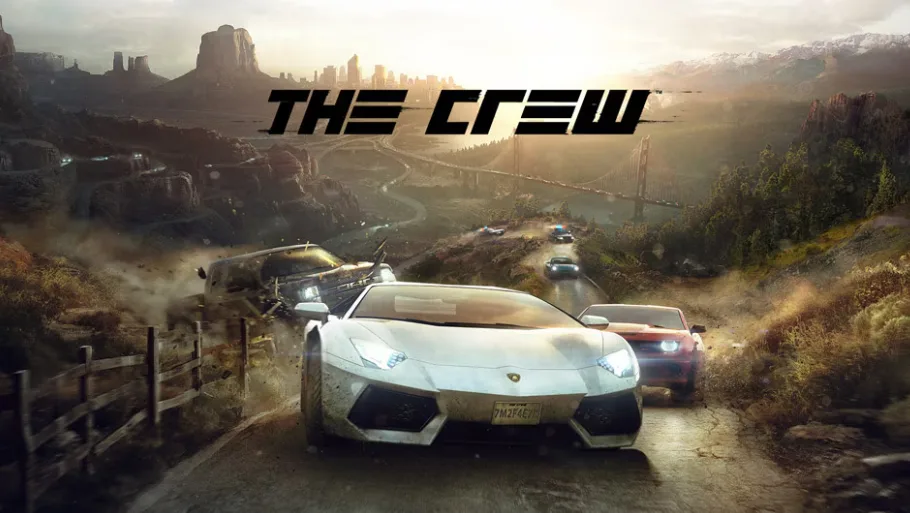
The shutdown of The Crew subsequently helped spark the Stop Killing Games movement. A desire to revisit a game grew into a broader debate over how far the rights associated with a purchased game should extend.
Did we buy a game, or did we buy permission to use it for as long as the company provides the service?
Between the Purchase Button and the Terms of Service
Clicking “Buy” on a game’s store page is a familiar process. We check the price, make a payment, and see the game added to our account’s library. It is easy to regard that library as a collection of games we own. Even if we do not play immediately, we naturally expect to be able to install and launch them later. Yet the purchase presented on screen may differ from the transaction described in the terms of service. Digital games may be provided through licenses that grant permission to access and use software under certain conditions. Access then depends not only on possessing the files, but also on account status, authentication methods, and whether the servers remain operational.
To understand this problem, it helps to distinguish between the different ways a game can “disappear.” Delisting prevents new customers from buying it. Existing buyers can continue using it as long as downloading and running the game remain possible. If downloads also become unavailable, reinstalling after replacing a device or deleting the files becomes more difficult. A server shutdown presents another problem. Depending on what the servers handle, it may remove only certain online features or make the entire game unplayable. What matters to players is which conditions their games depend on, and what they can do when those conditions no longer hold.
Ownership here should not be understood as acquiring the copyright to the entire game. Buying a book does not give someone permission to reproduce and sell it at will. Likewise, the ability to use a game that buyers expect must be considered separately from copyright in the creative work.
From “Explain What People Are Buying” to “Protect Their Rights After Purchase”
Ensuring that customers clearly understand what they are buying is an important starting point. California’s AB 2426, which took effect in January 2025, requires sellers, subject to certain exceptions, to clearly disclose that a transaction grants a license and explain the relevant conditions—or obtain the buyer’s acknowledgment of those facts—when using terms such as “buy” that suggest unrestricted ownership of digital goods. The intent is that burying this information in general terms of service is not enough.
Such disclosures help buyers understand the transaction before paying. But knowing what one is buying and being able to use that game later are separate matters. Clearly explaining that a purchase grants a license does not automatically provide a way to run the game after its service ends.
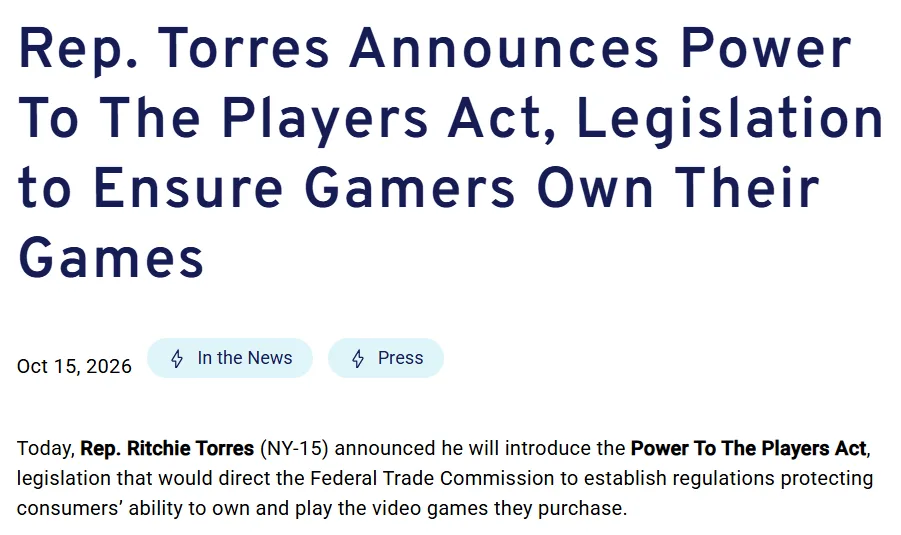
According to the announcement, the proposal would direct the Federal Trade Commission to establish rules protecting consumers’ ownership and use of purchased games. Games with online functionality would also have to provide an offline mode before the servers supporting them shut down. The ability to transfer and resell games is another central aim of the announcement. This remains an announcement of planned legislation, however; its precise scope and implementation will need to be assessed against subsequent legislative text.
The two approaches ask different questions. California’s law concerns whether the nature of the transaction is adequately explained at checkout, while Torres’s proposal asks what rights should remain with buyers afterward. A debate that begins with transparency in the transaction thus extends to continued access to purchased games.
What Does It Mean to Own a Digital Game?
Discussing digital game ownership requires considering what people should actually be able to do. Being able to download a game again, run it after company support ends, transfer it to another person, and preserve the necessary files and data are connected, but distinct, issues.
First, downloading a game again requires infrastructure through which someone stores and distributes the files. Guaranteeing permanent access to downloads raises questions about who will maintain that infrastructure and for how long. Allowing users to keep installation files themselves could reduce their dependence on a distribution service. Yet retaining those files may still be insufficient if the installed game requires external authentication or a server connection.
Whether a game can run after company support ends also depends on its technical structure. In October 2025, The Crew 2 introduced Hybrid Mode, allowing players to choose between online and offline play. It offers an example of providing a way to play without connecting to the servers. However, features that require an online connection—including multiplayer, global rankings, and vehicle livery sharing—are unavailable offline. Preserving the ability to play is therefore different from preserving every part of the experience offered during active operation.
Transfers and resale require further design decisions. Because digital files can be copied, a system must determine what happens to the original user’s access when the right to use a game passes to someone else. The extent to which the base game, additional content, and account-linked purchases can be transferred together also needs consideration. Putting the principle of “being able to give it to someone else” into practice requires examining both transaction and account systems.
Preservation, too, extends beyond the game files alone. It is necessary to establish what is required to play again, including save data, the software environment, and any essential server functions. When a game contains music, third-party technology, or other elements belonging to multiple rights holders, the conditions under which those components can remain available must also be considered.
For these reasons, a single solution is unlikely to suit every game. A game built primarily around solo play may require a different response from one designed around real-time interaction among many players. Future discussions will need to establish a minimum level of continued access for users and consider how games with different structures can meet it.
The Rights That Should Remain After Purchase
Games evolve through updates, connect players through servers and accounts, and offer new experiences throughout their operation. These approaches have expanded what games can do, while also leaving players dependent on a company’s operations and technical infrastructure even after paying. When a company decides to end support, players may lose the ability to play a game they have already purchased.
Continued access after a service ends therefore needs to be considered as part of selling and operating a game. Providing advance notice of usage conditions and shutdown dates is a starting point. It must be followed by concrete measures addressing what data users can retain and how they can continue playing.
The meaning of game ownership cannot be fully explained by the terminology of a contract. It depends on what remains possible after purchase: whether we can reinstall a game years later and enter a familiar world once more.
When a company decides to shut down a service, what should remain for the people who have already bought the game?
The debate over game ownership now demands standards that can answer that question.