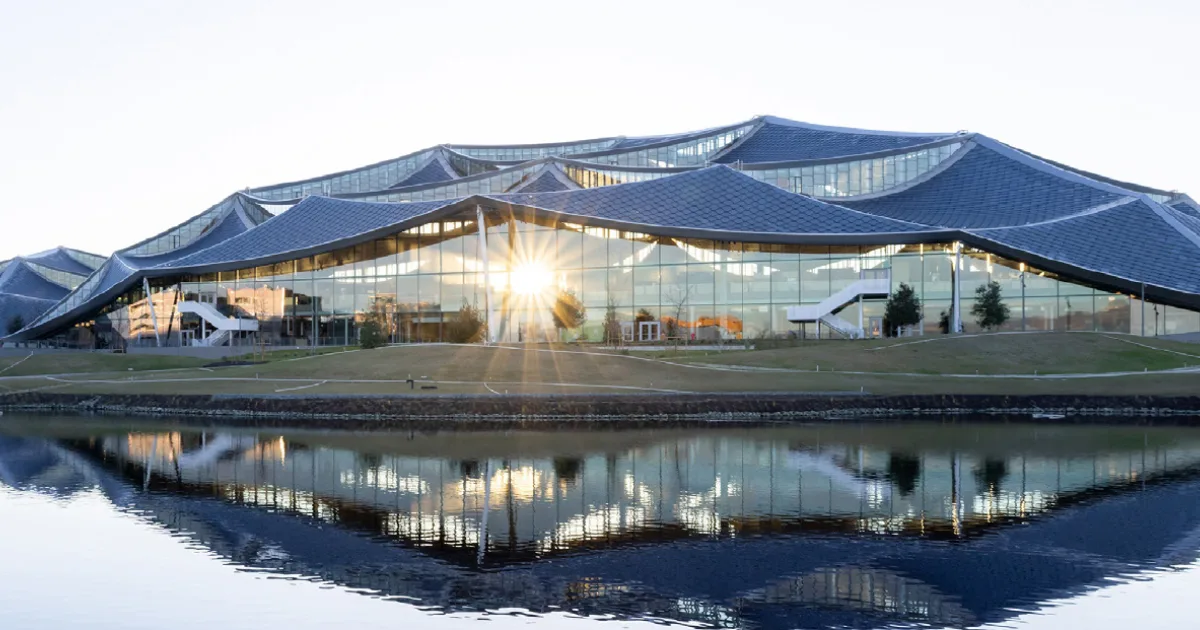
Google says it matched 100% of its electricity use with renewable-energy purchases again in 2025.
At first glance, that sounds as though Google’s data centers and offices are powered entirely by solar and wind energy around the clock.
But that is not what the claim means.
Google’s achievement is based on annual renewable-energy matching. Over the course of a year, the company contracted for or purchased an amount of renewable electricity equivalent to the electricity it consumed.
That is an important milestone.
But it does not mean every Google data center is running on carbon-free electricity every hour of every day.
A data center may consume electricity at night, when solar generation is unavailable. It may operate during periods of low wind, when wind generation falls. It may be located in a region where the local grid still depends heavily on coal or natural gas.
In those moments, the electricity physically supplied to the data center may still include fossil-fuel generation.
That is why Google itself says annual 100% renewable-energy matching is no longer enough.
The company is shifting toward a more demanding goal: operating on carbon-free electricity every hour of every day, in every location where it operates.
The strategy is known as 24/7 Carbon-Free Energy, or 24/7 CFE.
It reflects a basic but increasingly important distinction in the AI era.
Buying enough renewable electricity over a year is not the same as using carbon-free electricity at the moment a data center actually consumes power.
Annual Matching Solves an Accounting Problem, Not Every Grid Problem
Annual renewable-energy matching is based on energy accounting.
A company calculates how much electricity it uses in a year. It then purchases renewable-energy certificates or signs power-purchase agreements for an equivalent amount of renewable generation.
This can help finance new wind and solar projects. It can reduce a company’s market-based emissions footprint. It can also send a strong demand signal to electricity markets.
But annual matching does not guarantee that renewable electricity is physically available at every hour.
Solar power rises during daylight hours and disappears at night.
Wind power varies depending on weather conditions.
Data centers do not have that flexibility.
They operate continuously.
They process cloud workloads, support search queries, run AI models, deliver video, manage storage, handle enterprise applications and maintain digital services every minute of the day.
This creates a mismatch.
A company may contract for large amounts of solar power during the day and still rely on fossil-heavy grid power after sunset. It may purchase wind generation in one region while its data center in another region continues to draw electricity from a local grid supplied by coal or gas.
That is why annual renewable matching can create a misleading impression.
It can show that a company has purchased enough clean power in total, while obscuring the fact that fossil-fuel electricity may still be used during certain hours and in certain locations.
Google’s own environmental reporting has increasingly emphasized this limitation.
The company argues that a true carbon-free electricity system must account for not only the total amount of clean energy purchased, but also the timing and location of that energy.
The Three Words That Change the Standard: Time, Place and Reliability
Google’s 24/7 carbon-free energy strategy rests on three ideas.
The first is time.
Clean electricity must be available at the exact hour when the company uses power.
It is not enough to generate surplus solar electricity at noon and use that generation to offset fossil-fuel power consumed at midnight. If a data center is running at night, the goal is to ensure that carbon-free power is available at night as well.
The second is place.
A renewable-energy contract in one part of the country does not necessarily decarbonize a data center operating in another power market.
A wind farm in the U.S. Midwest may help increase renewable generation there. But it may have little direct effect on the electricity mix used by a data center in Asia, Europe or another part of North America.
Google’s 24/7 strategy therefore focuses on improving the electricity system where the data center actually operates.
The third is reliability.
Wind and solar are essential to decarbonization, but they are variable. A 24-hour carbon-free electricity system requires additional resources that can provide clean power when the sun is not shining and the wind is not blowing.
That may include batteries, long-duration energy storage, hydropower, geothermal energy, nuclear power, demand-response systems and more flexible electricity markets.
The goal is not simply to buy more renewable electricity.
It is to build a power system capable of delivering carbon-free electricity continuously.
Google’s Progress Shows Both Achievement and Distance
Google said that about 65% of the electricity used across its data centers and offices in 2025 was matched with carbon-free electricity on an hourly basis.
That was close to the 66% level reported in 2024.
Maintaining roughly the same level of hourly carbon-free matching while electricity demand rises sharply is not insignificant. It suggests that Google has continued to add clean-power resources even as its AI, cloud and digital-service operations expand.
But it also shows how far the company remains from its 2030 goal.
Google’s operations span multiple power systems around the world. Some grids have relatively high levels of carbon-free generation because they benefit from nuclear power, hydropower, wind, solar or other clean resources.
Other grids remain heavily dependent on fossil fuels.
Google has reported that some of its major grid regions reached more than 80% carbon-free electricity matching in 2025. But other regions remained far lower, in some cases at only single-digit or low double-digit levels.
This gap reveals the limits of corporate climate ambition.
A company can sign contracts, invest in clean-energy projects and improve efficiency. But it cannot instantly transform a regional grid.
Each power system has different resource conditions, transmission networks, regulatory rules, land constraints, market structures and construction timelines.
Some regions have abundant wind or solar resources. Others face difficult permitting systems, limited land, high costs, transmission bottlenecks or political barriers to building new energy infrastructure.
Asia-Pacific remains one of the more difficult regions for the 24/7 carbon-free energy strategy.
The region is central to semiconductor manufacturing, electronics production and expanding AI infrastructure. But clean-power availability is uneven, while electricity demand is growing quickly.
For Google, the challenge is therefore not simply technological.
It is geographic and political.
AI Data Centers Are Becoming Grid Infrastructure Issues
Google’s shift toward 24/7 carbon-free energy is not only an environmental branding exercise.
It reflects the growing influence of AI data centers on regional electricity systems.
A large data center can add substantial demand to a local grid. When multiple data centers are built in the same area, utilities may need to expand generation capacity, transmission lines, substations and other infrastructure.
That raises questions about cost.
If utilities build expensive new infrastructure to serve data centers, who pays?
There is growing concern that ordinary households and small businesses could absorb part of the cost through higher electricity rates.
Google has said it aims to cover the energy and infrastructure costs associated with its own growth rather than shifting those costs onto other customers. In the United States, large energy users and utilities are increasingly exploring long-term agreements under which companies help fund the infrastructure required for their expanding operations.
The principle is important.
AI data centers should not become a hidden burden on local communities.
But the practical challenge remains difficult.
Clean-energy projects cannot be built overnight.
A new wind, solar, geothermal, nuclear or storage project requires land, permits, financing, equipment, community consultation, grid studies and transmission connections. In many cases, it can take years before a signed contract becomes actual electricity flowing into the system.
Google has warned that more than 2,000 gigawatts of potential carbon-free energy projects are waiting in U.S. interconnection queues. The company has also noted that grid-connection processes can take four to five years in some cases.
AI data centers can be developed quickly.
The grid infrastructure needed to power them cleanly cannot.
That time gap is becoming one of the defining energy-policy problems of the AI era.
Google Is Becoming an Energy-System Investor
To address the problem, Google is expanding beyond conventional renewable-energy procurement.
The company is investing across a wider portfolio of carbon-free energy sources, including nuclear generation, small modular reactors, geothermal power, hydropower, battery storage, long-duration storage, carbon-capture technologies and fusion energy.
In Iowa, Google has supported plans connected to the potential restart of the Duane Arnold nuclear plant. If restarted, the facility could provide roughly 600 megawatts of firm carbon-free electricity.
In Tennessee, Google has pursued plans involving small modular reactor capacity beginning after 2030.
In Nevada, the company has backed an advanced geothermal project with regulatory approval for 115 megawatts of capacity.
In the PJM and MISO power markets, Google has also established frameworks for hydropower agreements that could reach up to 3,000 megawatts.
Fusion energy remains much further away from commercial maturity. But Google has also entered into an agreement to purchase 200 megawatts of carbon-free electricity from a planned fusion facility expected to begin commercial operations in the 2030s.
These investments show that Google is changing its role.
It is no longer only a buyer of renewable-energy certificates or a corporate customer signing wind and solar contracts.
It is becoming an investor in the electricity system itself.
That shift reflects the new reality of AI.
A company operating massive data centers cannot separate its growth strategy from grid modernization, energy security, transmission planning and the development of firm carbon-free power.
The Meaning of “100% Renewable Energy” Is Changing
For years, “100% renewable energy” was the benchmark for corporate climate leadership.
It remains meaningful.
Companies that purchase renewable electricity can help create demand for clean-power projects. They can reduce emissions associated with their operations and signal that fossil-fuel dependence is no longer inevitable.
But the AI era is raising the standard.
Data centers operate continuously. They are increasingly concentrated in specific regions. Their electricity demand is growing rapidly. Their impact on local grids is becoming harder to ignore.
That means annual accounting is no longer sufficient.
The questions that matter now are more specific.
When was the electricity generated?
Where was it generated?
Was it available when the data center needed it?
And did it reduce fossil-fuel generation in the actual grid where the facility operates?
Google’s 24/7 carbon-free energy strategy is an attempt to answer those questions.
Its success will not depend only on better AI models or more efficient chips.
It will depend on transmission lines, power markets, grid reform, nuclear projects, geothermal systems, batteries, storage technologies and agreements with the communities that host new infrastructure.
In the AI era, the future of clean computing will not be decided only in data centers.
It will be decided across the electricity grid.
The claim of “100% renewable energy” is no longer the end of the story.
It is the beginning of a more difficult question:
Was the electricity clean when and where the AI system actually used it?