The AI dictation app market has run into an unexpected barrier. The problem is not weak speech recognition. It is not poor AI model performance either. The obstacle is Apple’s iPhone operating system update.
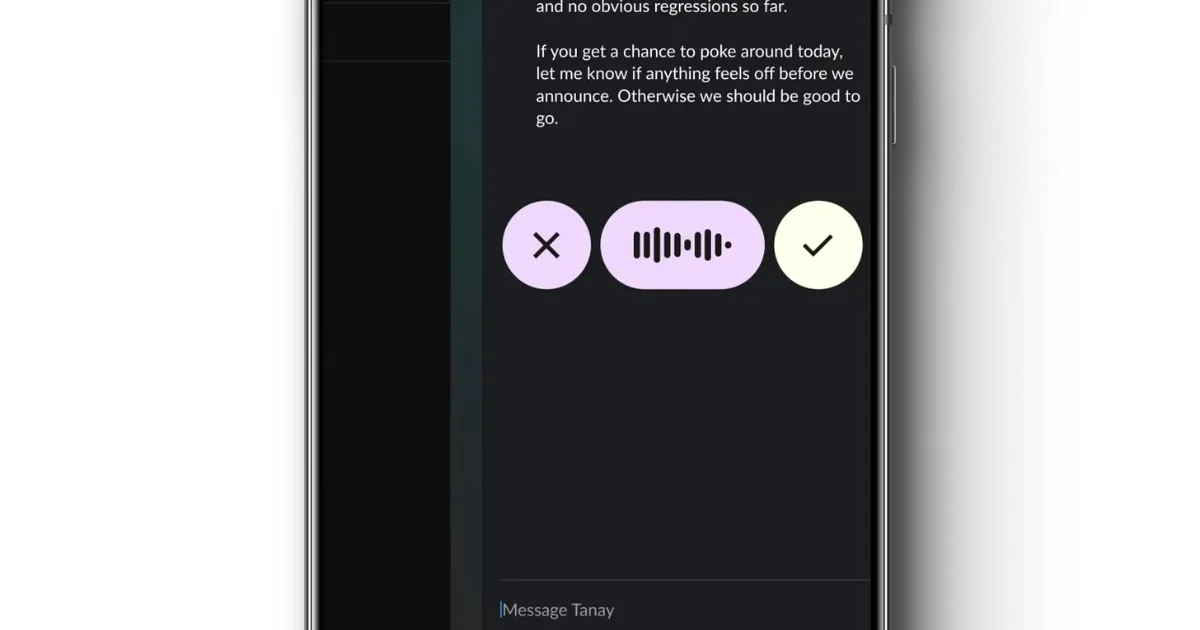
After the release of iOS 26.4, the user experience for AI dictation apps such as Wispr Flow became more cumbersome. Previously, users could be writing in apps such as KakaoTalk, Notes, email or Slack, tap the Wispr Flow keyboard button, briefly move into the Wispr Flow app and then automatically return to the original app. The experience felt nearly seamless. Users could speak naturally and have their words inserted into the app where they had been writing.
That flow has now been disrupted. Since iOS 26.4, users must manually swipe back to the original app after starting voice input. Speech recognition itself has not been blocked. But the core value of a dictation app — a frictionless writing experience — has been weakened.
At first glance, this may look like a minor inconvenience. For voice AI apps, however, it is a major problem. The purpose of an AI dictation app is to let users speak at the moment a thought appears, have AI turn that speech into natural written language, and insert the result directly into the app they were already using. If users must switch apps one more time and swipe one more time, many may simply return to typing.
The issue is not limited to Wispr Flow. Other voice input apps, including SuperWhisper, were also reportedly affected. The core issue appears to be that Apple has restricted keyboard apps from identifying the app where a user started voice input. For an AI dictation app, this information matters. The app needs to know where the user came from in order to send them back automatically. If that signal is blocked, automatic return becomes difficult.
From Apple’s perspective, the change can be framed as a security and privacy measure. Keyboard apps sit close to user input. If they can know which app a user is typing in and when the microphone is activated, that information could be sensitive. Apple’s desire to restrict such visibility is understandable.
The problem is that the same restriction may also limit innovation in AI apps. AI dictation apps are not merely tools that convert speech into text. Their competitive strength lies in adapting tone and writing style depending on whether the user is composing an email, replying in a messenger, drafting a work document or writing a note. If the app cannot understand context, the AI becomes less capable of producing smarter, better-fitting text.
This is where the difference between iPhone and Android becomes clear. Android offers relatively more flexibility for apps to provide floating buttons or launch voice input from almost anywhere on the screen. Wispr Flow, for example, works on Android as a floating button. Users can keep using their existing keyboard and activate voice input only when they need it.
This model has a major usability advantage. Even if voice AI is powerful, speaking is not always the best input method. Short replies, numbers, proper nouns, passwords and code may still be faster to type manually. A good voice input experience should not completely replace the keyboard. It should sit naturally beside it.
Google’s move is also notable. The company recently released a quiet iOS voice input app called Google AI Edge Eloquent. The app uses on-device AI models to recognize speech and refine sentences. One of its key features is that some functions can operate without an internet connection.
If Google eventually integrates AI dictation into Android at the system level, the landscape could shift further. Android users may be able to dictate and polish text through the operating system without jumping between separate apps. Even if the number of third-party apps is smaller than on iPhone, the actual user experience on Android could become stronger.
The episode raises an important question for the AI era. Is the competitiveness of an AI service determined only by model performance? The answer is no. In real-world use, operating system permissions, app switching, microphone access, keyboard integration and whether floating buttons are allowed all matter. Even the best AI dictation app can become inconvenient if the operating system blocks the path.
The core of the voice AI market is frictionless input. Users must be able to speak the moment they want to speak. Their words must be turned naturally into written language. And that text must appear directly in the app where they were already working. If this flow breaks, much of the appeal of voice AI disappears.
Apple has built user trust through strong privacy protections and a tightly controlled ecosystem. But in areas such as AI voice input, where app-to-app connectivity and contextual understanding are central, that control can restrict third-party innovation. By contrast, Android’s more open structure may give it an advantage in creating smoother AI voice input experiences.
That does not mean Apple is necessarily at a disadvantage. Apple could strengthen its own dictation capabilities, Apple Intelligence or Siri to provide system-level voice AI. But if that happens, third-party AI dictation apps may have less room to grow inside the iPhone ecosystem.
Ultimately, the iOS 26.4 controversy is not simply an app malfunction. It is a case study in how platform power operates in the AI era. In the past, a good app could attract users if it delivered a better experience. Now, even a strong AI app may struggle to deliver a complete experience if the operating system does not allow it.
The winner in the AI dictation market may not be the company with the best speech recognition model. It may be the company that lets users speak most naturally across the most apps with the fewest actions. And the key to that competition is held not only by app developers, but also by platform operators such as Apple and Google.
The conclusion is clear. The future of voice AI does not end with how accurately a system understands speech. The real competition is whether users can speak anywhere. The confusion after iOS 26.4 shows that the success of AI apps depends not only on technical capability, but also on how open the operating system’s door remains.