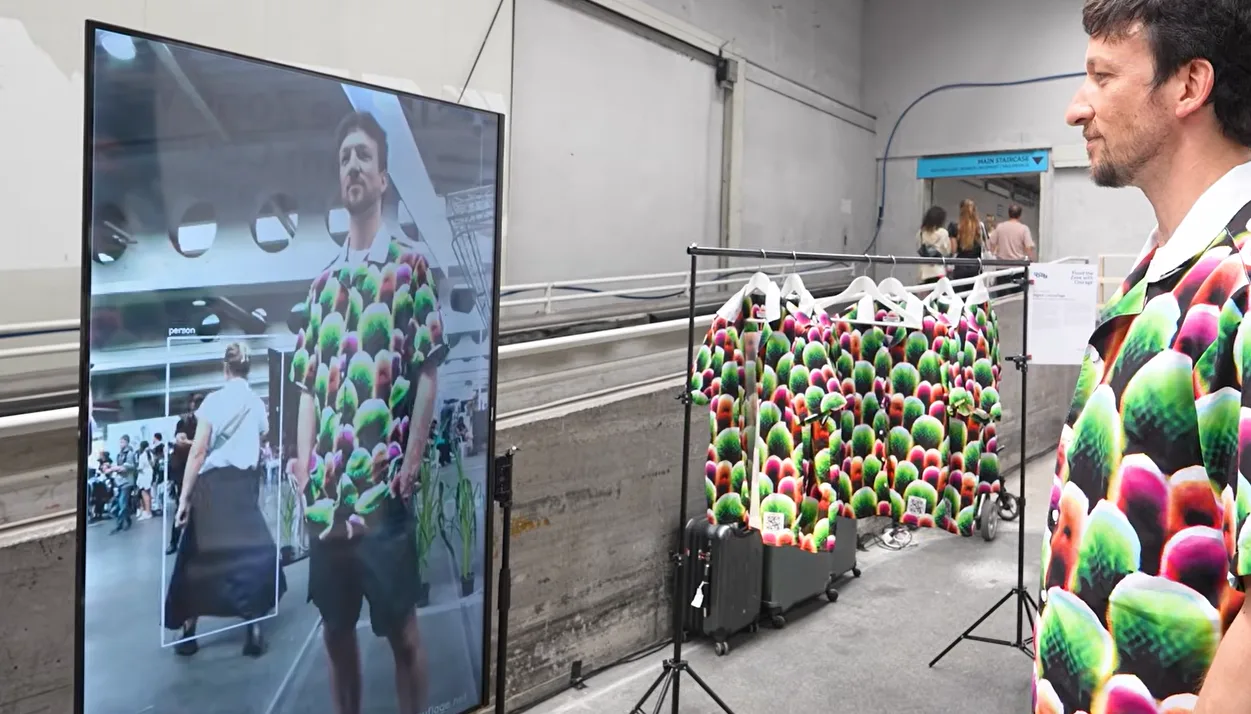
Meta is reportedly preparing a new pair of smart glasses without a camera. The internal codename is “Luna.” Meta has not officially announced the product yet, but according to information reported so far, unlike the existing Ray-Ban Meta glasses, Luna will have neither a camera nor a display. Instead, it is expected to feature six microphones, speakers, and a button for quickly calling up Meta AI. With the camera removed, the temples are also said to be slimmer, making the glasses look more like ordinary eyewear than existing smart glasses.
Removing the camera from smart glasses is a bigger change than it may seem. In recent smart glasses, the camera has gone beyond simply taking photos or videos. It has become the “eyes” through which AI can understand the world the user is looking at. Meta has continued to strengthen this function over the years.
And yet, this time Meta is reportedly moving in the opposite direction by removing the camera altogether. Is this simply about adding a cheaper product to the lineup? Or has Meta begun to reconsider what smart glasses actually need in order to become part of everyday life?
The Camera Was at the Core of Smart Glasses
Meta has treated the camera as an important part of its smart glasses for years.
The Ray-Ban Meta smart glasses released in 2023 featured a 12-megapixel ultra-wide camera. Users could take photos and videos while wearing the glasses and even livestream directly to Facebook or Instagram. One of the key ideas was that people could capture exactly what they were seeing without taking out a smartphone and looking at a screen.
The role of the camera expanded further the following year. Meta AI became able to recognize what the wearer was looking at. Users could ask what an object in front of them was, or ask the AI to read and translate text on signs and menus. The camera was no longer just a recording device. It had become a sensor that allowed AI to understand the physical world.

With the second-generation Ray-Ban Meta released in 2025, video recording quality was upgraded to 3K. Better photo and video capture and a stronger ability for AI to understand the physical world developed side by side within the same product.
The direction was fairly clear. First, Meta made it easier to capture what the wearer saw. Then it enabled AI to share the wearer’s point of view. After that, it improved the quality of what could be recorded. The camera had become one of the defining features of Ray-Ban Meta.
But Luna reportedly removes it entirely. A feature Meta had spent years strengthening is now being left out of a new product. Behind that choice lies a long-running tension: the camera brought convenience, but it also brought discomfort.
As the Camera Improved, So Did the Discomfort Around It
The camera greatly expanded what smart glasses could do, but it also created a new kind of unease.
When someone raises a smartphone and points it at you, you can usually tell that you might be recorded. Smart glasses are different. The person may simply appear to be looking at you, while a camera is pointing in almost exactly the same direction.
That naturally raises a simple question:
“Is that pair of glasses recording me right now?”
Meta has been well aware of this issue. Ray-Ban Meta glasses include a white “Capture LED” on the front to indicate when the camera is in use. It flashes briefly when a photo is taken and continues blinking while video is being recorded. The indicator is not primarily there for the wearer. Its purpose is to let people nearby know that the camera is active. Meta has also explained that for smart glasses to be accepted in everyday life, trust and reassurance for people around the wearer matter as much as convenience for the wearer.
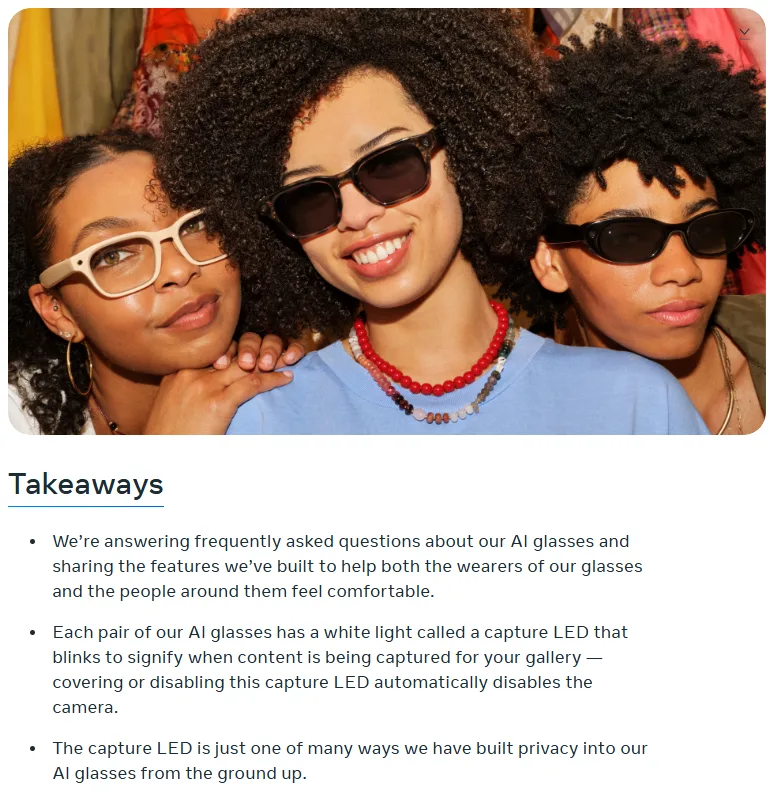
But another problem soon appeared. Some users began covering the LED.
Starting with the second generation, Meta made the camera unusable when the glasses detect that the indicator light has been covered. Later, attempts went beyond simply placing tape over the LED. Some users began physically modifying or damaging the light itself. Meta responded by expanding its safeguards so that the camera is disabled when such tampering is detected. The company has also said it removes posts and listings that advertise LED-modification services and may take legal action against businesses offering them.
The process illustrates the dilemma built into camera-equipped smart glasses. Meta added an indicator so that people nearby could tell when recording was taking place. Some users then tried to remove that signal, which required another layer of protection. One safeguard produced a new way to bypass it, and another safeguard had to be added in response.
The protections have become increasingly sophisticated, but the original discomfort has not disappeared. For people nearby, the issue is not really whether they can verify that the indicator is functioning correctly. It is that they remain aware that there is a camera on the glasses in front of them.
This is also part of the reason debates over smart-glasses recording have been growing in several countries. Critics point out that even when a recording indicator is present, people nearby may not notice it immediately, and it may remain unclear whether they have consented to being recorded. Similar concerns have led some public institutions and facilities to restrict the use of smart glasses.
Of course, it would be premature to conclude that Luna’s camera was removed specifically because of these concerns. The product has not yet been officially announced, and Meta has not explained the reasoning behind its development.
Still, one thing stands out when looking at the direction of Meta’s previous products. Until now, the company has kept the camera and continued adding ways to reassure people nearby. With Luna, the camera itself is reportedly gone. Instead of adding another way to reduce discomfort, Meta may simply be removing one of the features that causes it.
What Do Smart Glasses Become Without a Camera?
At this point, it is worth considering that smart glasses have an unusual second type of user.
Most personal devices are designed primarily around the experience of the person using them. With earphones, comfort and sound quality matter. With smartphones, the experience centers on the person looking at and interacting with the screen. People who do not use the product are usually one step removed from that experience.
Smart glasses are different.
The person wearing the glasses is affected by the product, but so is the person looking back at them. That second person did not buy the glasses, did not turn on any of their features, and did not agree to use them. Yet once a camera mounted on the glasses is pointed in their direction, it becomes difficult for them to remain entirely outside the product’s experience.
As noted above, Meta has so far tried to reduce that discomfort while keeping the camera. If Luna arrives in the form currently reported, the approach changes. The camera is removed altogether. And that leads naturally to another question:
If there is no camera and no display, what exactly do these glasses do?
Based on what is currently known about Luna, the answer is surprisingly simple. Several microphones listen to the user, Meta AI processes the request, and speakers deliver the response. A button on the side can also be used to call up the AI directly. In terms of basic functionality, it does not look all that different from wireless earbuds. The user speaks, AI processes the request, and an answer comes back through audio. There is no display for showing information in front of the eyes, and no camera that lets the AI directly observe the surrounding environment.
The difference lies in how the device is worn.
Earbuds are usually inserted when needed, while glasses can be put on in the morning and worn all day. For people who need vision correction, glasses are less like an electronic device and more like part of everyday life. In that sense, something that can remain naturally on the face for long periods may offer AI a more suitable place to live than either a smartphone or a pair of earbuds.
Seen this way, the meaning of smart glasses begins to shift.
For years, the future of smart glasses has largely been imagined through AR: maps appearing in front of the eyes, messages floating in the field of view, and digital information layered onto the physical world. That vision made better displays, cameras, and sensors essential. Luna strips much of that away. It does not need to show something in front of the wearer, nor does it need a camera constantly reading the surroundings. Instead, it keeps an AI close at hand, ready to respond whenever the user speaks to it.
That also means smart glasses do not necessarily have to compete only on how much they can see and show. One path may lead toward AR glasses with more advanced cameras, displays, and spatial-awareness features. Another may lead toward a much simpler product that keeps the shape of ordinary eyewear while leaving only AI at the center.
Looked at this way, Luna changes the role of smart glasses. Rather than being primarily a device for “seeing,” they could move closer to becoming an AI interface that is always nearby. Removing the camera, of course, does not solve every privacy issue. According to current reports, Luna will still include multiple microphones. When those microphones are active, where the audio is processed, and what data is stored remain separate concerns. Still, the burden on people nearby may be different if they no longer have to wonder whether they are being filmed. And that change invites a broader rethink of where smart glasses may be heading next.
Are Smart Glasses Better Simply Because They Show More?
Smart glasses have long been imagined as the next screen after the smartphone. The direction was toward showing more information, reading more of the surrounding environment through sensors, and bringing as many functions as possible closer to the face. Luna suggests a different possibility.
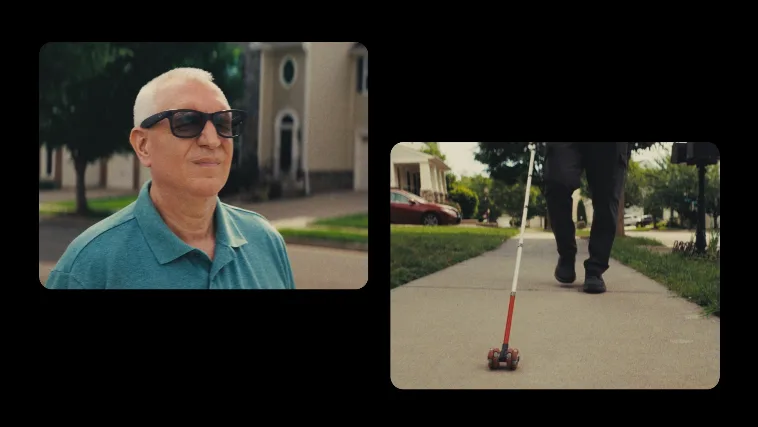
For a device that is meant to be worn every day, what matters is not only how many things it can do, but also how naturally it can fit into everyday life. Glasses are already familiar objects that many people wear throughout the day. Smart glasses, then, may have a more realistic path forward if they feel less like conspicuous pieces of advanced technology and more like ordinary glasses with useful functions quietly built into them.
Adding features and removing features do not necessarily point in opposite directions. Cutting functions that are not essential and keeping the ones people actually use can also improve the overall experience. If reports are correct that Luna removes the camera and display while focusing on AI, it would also suggest that smart glasses do not necessarily have to aim to become miniature AR devices.
Ultimately, the next stage of smart glasses may be defined less by the number of features they contain and more by how naturally they can become part of everyday life.