In August 2026, reports emerged that YouTube was discussing multimillion-dollar exclusive-release deals with some popular creators. The idea was not to lock up their videos permanently, but to have them released first on YouTube for a certain period without being posted simultaneously on competing platforms such as Netflix. The proposed compensation reportedly includes direct production funding for specific programs and a share of revenue from major brand deals organized by YouTube.
There is pressure in the opposite direction as well. Creators who release videos on Netflix at the same time may be less likely to participate in certain YouTube marketing campaigns or events and could also be excluded from revenue-sharing opportunities tied to major brand campaigns. In other words, additional rewards for exclusivity and reduced benefits for simultaneous distribution are being discussed at the same time.
YouTube has not announced this as an official policy, and the reported deals have not all been finalized. Negotiations are said to be underway with multiple creators, with some reportedly close to reaching agreements.
This would not be the first time YouTube has directly funded specific content or creators. The company previously provided production support and financial incentives through YouTube Originals and in response to competing platforms. Still, the core model behind YouTube’s growth has remained relatively simple: creators make and upload videos, YouTube places ads around them, and the resulting revenue is shared.
What makes the latest move interesting is what YouTube appears willing to pay for. Even if creators sign non-exclusive deals with Netflix, they can keep their YouTube channels and continue uploading the same videos there.
YouTube is not paying extra simply to obtain the videos themselves. It is paying so that the same videos do not appear on other platforms at the same time for a certain period. The focus of competition is therefore shifting away from ownership and toward release timing and exclusivity windows.
What is beginning to carry a price is not who owns the video, but where it appears first and how long it can be watched only there.
Netflix Opens a Second Distribution Window
To understand this shift, it is useful to look first at what Netflix is doing. It is often said that “Netflix is taking YouTube creators,” but the recent deals are not primarily about creators leaving YouTube. Instead, more creators are keeping their existing channels while supplying the same content to Netflix as well.
A representative example is Mythical Entertainment. Beginning September 7, 'Good Mythical Morning', 'Mythical Kitchen', and 'Last Meals' will be released on Netflix on the same day they are uploaded to their main YouTube channels. Alan Chikin Chow and Nick DiGiovanni have also signed non-exclusive deals that allow them to continue their YouTube activities while distributing the same content on Netflix.
For creators, this means gaining another distribution outlet without having to move their channels. They can earn additional revenue by supplying videos they were already producing to Netflix while maintaining their existing relationship with YouTube audiences.
Netflix is acquiring creator content in two broad ways. It produces original programs directly with creators and brands such as America’s Test Kitchen and Dave Chang, while licensing existing YouTube-based content from creators such as Mythical Kitchen, Nick DiGiovanni, and Wishbone Kitchen.
The first approach is familiar territory for Netflix: developing new programs and funding them as Netflix originals. The second is somewhat different. Because the content already exists, Netflix can reduce some of the cost and risk involved in developing a new program from scratch. It can also look at YouTube data to see which concepts have already attracted significant audiences.
There are already signs that this kind of content can perform well on Netflix. In the first half of 2026, 'Ms. Rachel', which grew out of YouTube, ranked among Netflix’s ten most-watched programs. It showed that creator-led content can attract substantial audiences outside YouTube as well.
For Netflix, this is better understood not as a replacement for original production, but as another way to acquire content without having to make everything as an original.
Creator content also has the advantage of already having its format and audience response tested on YouTube. Netflix does not necessarily have to develop a new program from the ground up, while creators can keep their existing channels and gain additional revenue and access to new viewers.
What makes this structure interesting is that Netflix does not need to pull creators away from YouTube entirely. It makes people and content that remain on YouTube available inside Netflix as well.
What Netflix has opened, then, is not so much a new home for creators as a second distribution window. And once that second window opened, YouTube began placing a value on the order of release itself.
They Now Meet on the Same Screen
Until a few years ago, the two services were perceived somewhat differently. YouTube was strongly associated with content watched on personal screens such as smartphones and PCs, while Netflix was closer to a streaming service for watching films and series on the living-room TV. They were already competing for viewers’ time, but the screens on which they were commonly consumed and the types of content associated with them were different.
That distinction has become much less clear.
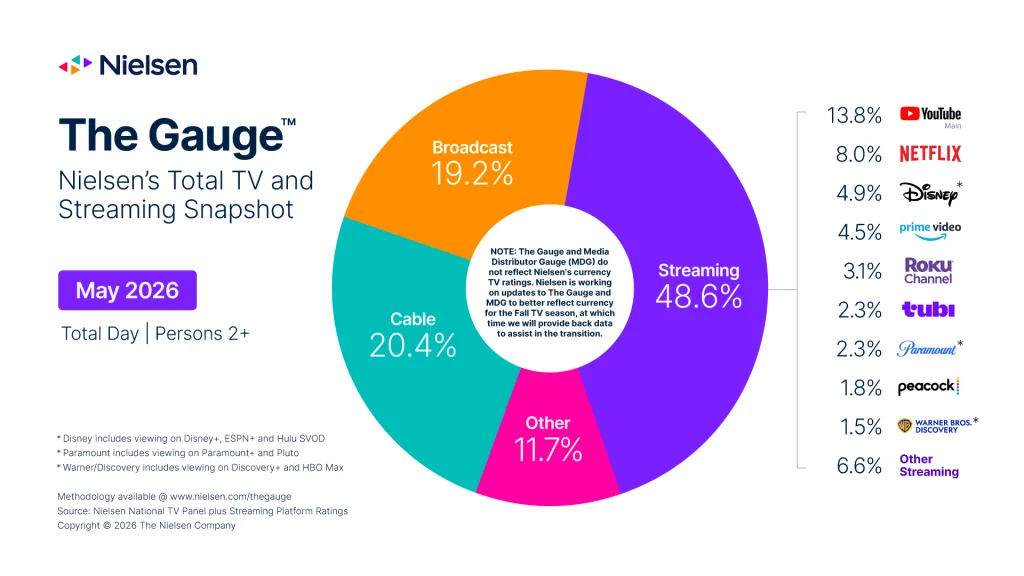
According to Nielsen, YouTube accounted for 13.8% of all U.S. TV viewing time in May 2026, ranking first among all media distributors for the third consecutive month. Netflix accounted for 8.0% in the same month. Given that YouTube’s share stood at 12.5% in May 2025, viewing YouTube on the living-room TV has continued to expand.
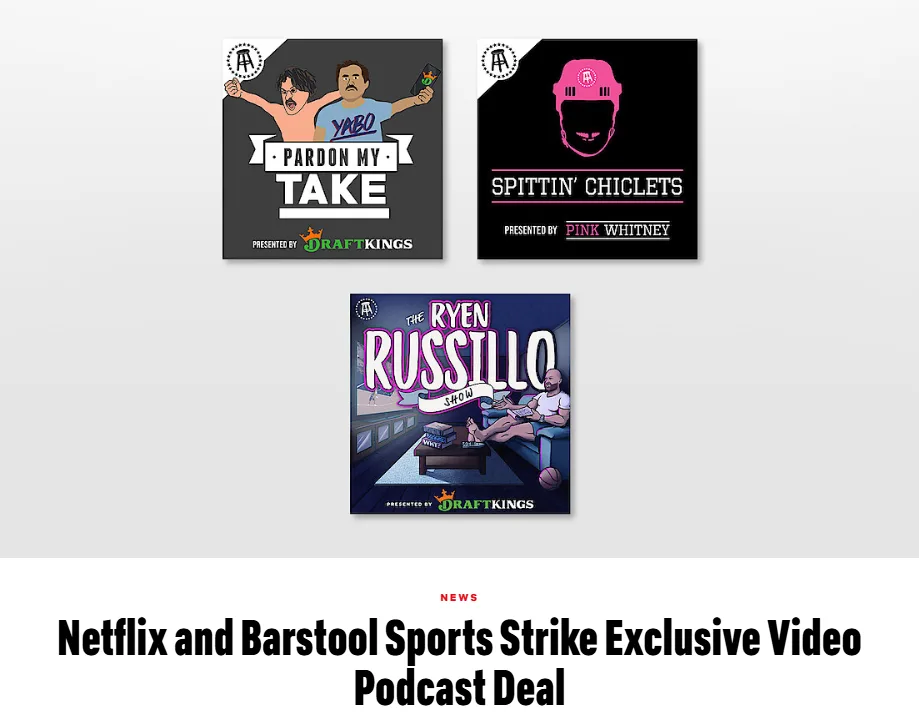
Even the formats of their content are moving closer together. Hour-long video podcasts and long-form talk content have become common on YouTube, while Netflix has begun adding video podcasts to its catalog. Through deals with Spotify, The Ringer, iHeartMedia, Barstool Sports, and others, Netflix is expanding its lineup of talk, interview, and sports-podcast content. Formats such as talk shows, cooking programs, and interviews—once closely associated with traditional television—have grown on YouTube and are now also being consumed on Netflix. At the same time, longer viewing sessions on YouTube have brought the length and format of content on the two services closer together.
YouTube and Netflix no longer occupy completely separate viewing environments. They now compete directly for the same viewing time on the same TV screen. As YouTube creator content begins appearing on Netflix as well, the competition between the two services is becoming less about categories of content and more about who captures the viewer’s time.
This also changes the conditions of competition around creators. When Netflix brings over content that grew on YouTube, it is not moving it into a completely different viewing environment. Because the two services are already competing for time on the same living-room screen, the platform on which the same creator content is available has become a more direct competitive factor.
Creators Have Gained a Price, but Also New Conditions
As platforms begin competing for some of the same creators, the bargaining power of certain top creators has clearly increased. In the past, the central issue was largely how much advertising revenue they could earn within YouTube. Now, release order, whether simultaneous distribution is allowed, and who pays production costs can all become part of the negotiation.
But having more options does not necessarily mean having more freedom.
Accepting a Netflix deal can bring additional revenue and access to new viewers, but it may also come with production conditions such as advance delivery deadlines or restrictions on certain brand sponsorships. Accepting a YouTube exclusivity offer, meanwhile, can bring additional compensation while reducing the creator’s ability to distribute the same content on other platforms.
Creators are therefore not simply comparing which side offers more money. They also have to weigh existing channel views and ad revenue, brand partnerships, and additional distribution income. A new contract can expand revenue sources while also requiring creators to give up part of the way they currently run their businesses.
Nor are the benefits of this competition available to everyone. The multimillion-dollar offers reported so far are aimed at a small group of top-tier creators, and the terms appear to vary from person to person. For most creators, the existing system of advertising revenue sharing and recommendation algorithms remains unchanged.
This could make the difference between top creators and everyone else even more visible. While leading creators receive separate offers directly from platforms, most others still compete under the existing rules. Questions may therefore emerge over how many creators are included in these negotiations and what criteria platforms use when deciding whom to approach.
There is precedent. YouTube previously offered financial incentives to some creators when the video startup Vessel tried to secure priority publishing rights from online talent. The difference this time is that the rival is Netflix, a platform with an enormous subscriber base and its own established content ecosystem.
What Is Being Traded Is Not Ownership, but Order
Reducing the current competition to “who gets the creator” misses an important part of what is changing. In many of the recent deals, creators continue to maintain their YouTube channels and distribute the same content across multiple platforms. Neither the person nor the channel necessarily moves; instead, a single piece of content begins traveling through different distribution windows.
What matters increasingly is where it appears first and how long it remains exclusive to one platform.
The film and television industries have long managed release order in this way. A movie may first appear in theaters, move to streaming after a certain period, and later pass into other distribution channels. The timing and sequence of each window can affect the revenue generated by the same work.
Creator content has historically had far less of this structure. Videos were mainly uploaded to YouTube and monetized there through advertising. With few large alternative distribution outlets, there was little reason to design a separate release sequence.
Now, however, different arrangements are beginning to emerge depending on the content: simultaneous release, early release, and limited-period exclusivity. Mythical Entertainment, for example, distributes some programs on YouTube and Netflix on the same day, while some video-podcast deals have involved removing existing YouTube feeds or shifting video distribution exclusively to Netflix.
In other words, creator content is beginning to adopt multiple distribution models. The new contractual question is becoming less about who owns the content and more about when, where, and in what order it is shown.
This is not yet a standard rule across the creator economy. YouTube’s exclusivity offers are still reportedly being discussed with a limited number of top creators, and many details—including the duration of exclusivity—remain undisclosed.
Still, the direction is becoming visible. Creator content is beginning to be treated not simply as a video uploaded to one platform, but as content whose value can change according to release timing and distribution order.
Streaming competition once centered on which platform could secure particular films and television series. With creator content, the competition is now extending to which platform gets to show the same video first.


