Institutional Remedies Needed to Prevent Recurring Impersonation Cases
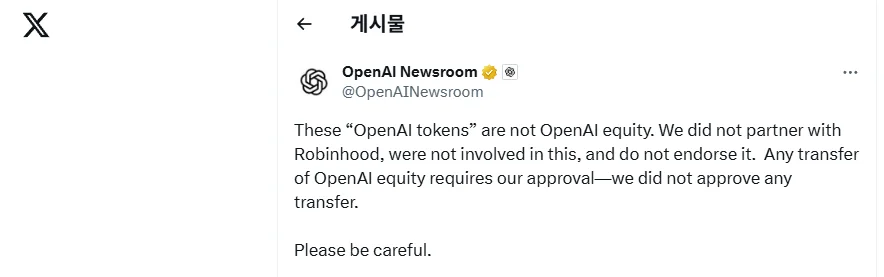
July 3: OpenAI through official statement warned "the so-called OpenAI Tokens currently in circulation are not our company equity and have never received OpenAI approval or participation in any way." Specifically addressing "Robinhood partnership" rumors spreading in some online communities and investment platforms: "These are completely false, and we have not partnered with Robinhood." This appears to be a firm response to the situation where some cryptocurrencies using OpenAI name to attract investors under the guise of virtual asset-based investment schemes are in circulation. OpenAI stated "company equity cannot be transferred without approval, and we have not given any approval for this matter." The crypto fraud pattern: using the name of a high-profile AI company to imply credibility for a token sale is a well-established crypto scam pattern; "OpenAI tokens" follow the pattern of "Meta tokens," "Apple coins," and similar schemes that have defrauded investors by implying corporate backing that does not exist; the legal exposure for fraudsters is securities fraud and wire fraud; OpenAI public statement creates a clear record that the company explicitly denied authorization, which supports law enforcement action. The investor protection lesson: AI company names are being systematically exploited in crypto fraud because (1) AI excitement creates investment FOMO; (2) the legitimate companies like OpenAI are not publicly traded, creating plausible ambiguity about equity access; (3) regulatory oversight of crypto tokens is still developing and slower than the fraud innovation pace.