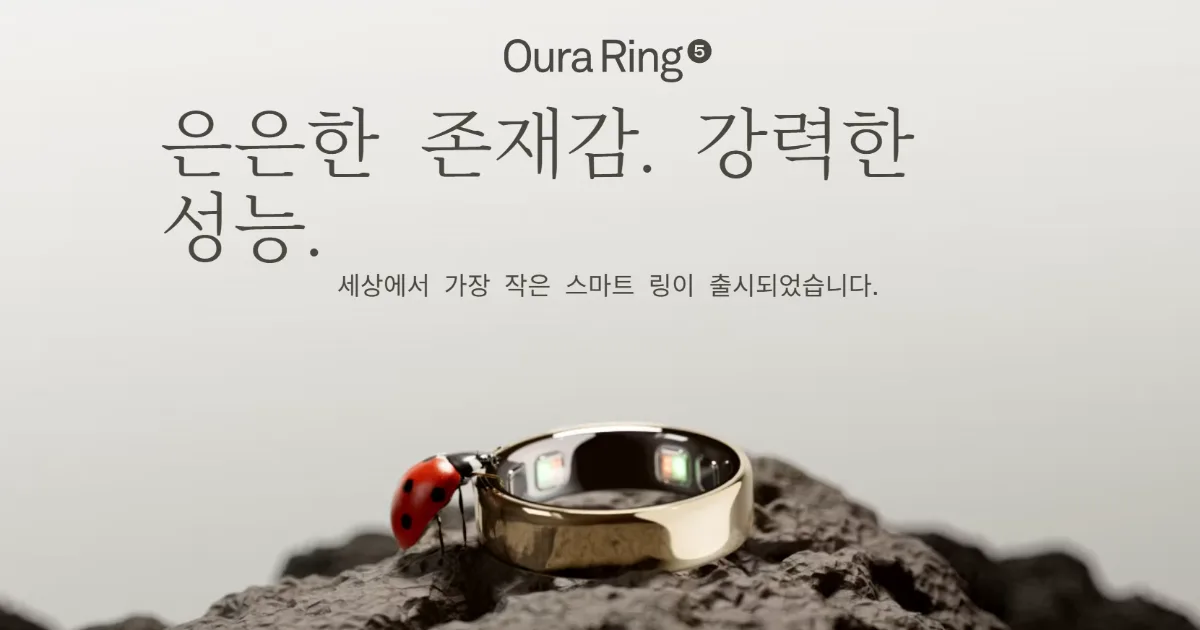
A proposed class action lawsuit has been filed in the United States against Oura.
On August 20, 2026, Madison Surber filed a complaint in the U.S. District Court for the Northern District of California against Oura Inc., Oura Health Oy and related entities. The core allegation is that Oura misled consumers by overstating the sleep-stage tracking capabilities of its smart ring.
The complaint does not focus on whether Oura Ring measures signals such as heart rate or body temperature.
Instead, it targets a more sensitive claim: whether Oura marketed the ring as if it could accurately track whether a user was awake, in light sleep, in deep sleep or in REM sleep.
The challenged phrases include claims such as “Built for accuracy,” “Unparalleled Accuracy,” “79% agreement with gold-standard polysomnography” and “95% Sleep Staging Accuracy compared to clinical sleep lab.”
According to the plaintiff, Oura Ring cannot directly measure sleep stages.
The reason is simple.
Sleep does not happen in the finger.
It happens in the brain.
Sleep stages are defined by signals such as brain waves, eye movements and muscle tone. The clinical gold standard, polysomnography, or PSG, uses signals such as EEG, EOG, EMG and ECG. Oura Ring, by contrast, is worn on a finger. It does not have scalp electrodes. It does not track eye movements. It does not measure jaw-muscle tone.
In the plaintiff’s framing, Oura Ring does not “measure” sleep stages.
It uses AI models to estimate them from surrounding physiological signals.
This case is not only a consumer complaint about one device.
It asks a broader question for AI healthcare products:
When can a company say it “measured” something, and when must it clearly say it “estimated” it?
What Oura Is
Oura is a wearable healthcare company best known for its smart ring.
Founded in Oulu, Finland, Oura built its brand around a ring-shaped device that tracks health-related metrics such as sleep, recovery, activity, heart rate and temperature. Unlike smartwatches worn on the wrist, Oura emphasized the finger as a comfortable and continuous tracking location. Sleep and recovery became its central value proposition.
According to the complaint, Oura reached a valuation of around $11 billion after its Series E financing in 2025, sold more than 5.5 million rings cumulatively, and generated more than $1 billion in revenue in 2025. The complaint also alleges that Oura sold about 3 million rings in 2025 alone.
Oura’s growth reflects the broader direction of wearable healthcare.
Consumers increasingly want to understand their bodies through numbers. They want to know how many hours they slept, how deeply they slept, how well they recovered and whether they should exercise today. As sleep deprivation, insomnia, fatigue and stress become part of everyday life, sleep trackers have become more than gadgets. They have become tools of self-management.
Oura captured that desire.
Every morning, users open an app and check their sleep score. They see total sleep time, deep sleep, REM sleep, light sleep, sleep efficiency, awake time and recovery status. These numbers are not merely data points. Users interpret their bodies through them and adjust their daily behavior accordingly.
That is why accuracy matters.
A wrong number is not just wrong information.
It can change how a person thinks about their health and acts during the day.
The Advertising Claims at Issue
The complaint focuses on Oura’s marketing language.
According to the plaintiff, Oura promoted its products as being built for accuracy and claimed to provide highly accurate readings across more than 50 health metrics. It also represented that its sleep-stage classification had 79% agreement with PSG and, more recently, claimed 95% sleep-stage accuracy compared with a clinical sleep lab.
These numbers matter because consumers may read them as signs of clinical reliability.
A claim such as 79% or 95% is different from vague marketing language. It looks like measured, validated performance. When combined with phrases such as “clinical sleep lab,” “gold-standard polysomnography,” “25+ PhDs” and “in-house interdisciplinary science team,” the product can appear not merely as a consumer wearable, but as a scientifically validated health measurement device.
That is precisely what the complaint challenges.
The plaintiff argues that Oura gave consumers the impression that its ring could track sleep stages with something close to clinical-lab reliability. Yet the ring allegedly cannot directly measure the physiological signals that define those stages.
The legal question will likely focus on the impression created for a reasonable consumer.
Did Oura adequately explain that its sleep-stage outputs are estimates?
Under what conditions were the accuracy figures calculated?
Could consumers reasonably understand the claims as medical-grade sleep-stage measurement?
Can caveats in technical documents offset strong accuracy claims on sales pages?
That is where the weight of the case lies.
Why Sleep Staging Is Difficult From the Finger Alone
The scientific argument in the complaint is relatively straightforward.
In modern sleep medicine, sleep stages are classified using brain activity, eye movements and muscle activity. REM sleep is, by definition, connected to rapid eye movement. Deep sleep, or slow-wave sleep, is identified through slow brain waves observed through EEG.
To directly observe REM sleep, one must observe eye movements.
To directly identify deep sleep, one must observe brain waves.
Oura Ring does not directly observe either.
The ring uses surrounding physiological signals such as heart rate, heart-rate variability, movement, skin temperature and, in some models, blood-oxygen trends. These signals can correlate with sleep states. But correlation and direct measurement are not the same.
For example, if heart rate drops and movement decreases, the user may be more likely to be in deeper sleep. But those signals alone cannot prove that the person is in neurologically defined N3 sleep. REM sleep is similar. Unless the device directly measures eye movement or brain activity, REM staging depends on algorithmic inference.
This distinction is the core of the lawsuit.
Oura’s sleep-stage outputs may be useful estimates.
But the complaint argues that it is misleading to advertise them as if they were accurate measurements comparable to a clinical sleep study.
This is the dilemma of wearable healthcare.
Consumers want clear numbers.
Biological data is uncertain and probabilistic.
AI turns that uncertainty into scores and graphs.
In the process, an estimate can begin to look like a measurement.
Oura’s Own Explanations May Become Part of the Dispute
One interesting feature of the complaint is that it uses Oura’s own technical explanations as part of its argument.
The complaint alleges that Oura’s own materials explain that PSG uses EEG to measure brain waves and determine sleep stages, and that using Oura Ring is not the same as undergoing a PSG sleep study. It also points to Oura’s acknowledgement that the ring does not measure electrical brain activity or eye movements.
The plaintiff’s logic is this:
Oura knew the difference between PSG and a finger-worn ring.
Oura knew its ring did not measure brain waves or eye movements.
Nevertheless, its sales and marketing materials emphasized sleep-stage accuracy and comparisons with clinical sleep labs.
As a result, consumers could not adequately understand the product’s limitations.
Whether this argument succeeds will depend on the court.
Oura may argue that it offers meaningful sleep insights as a consumer wearable and that its accuracy claims are grounded in validation studies. It may also argue that the ring is a wellness tracker rather than a medical diagnostic device, and that sleep-stage data is provided for informational use.
But the placement and strength of disclosures will matter.
Do limitations in technical documents carry the same weight as bold accuracy claims on sales pages?
Could consumers see those limitations at the point of purchase?
What expectation does “95% Sleep Staging Accuracy” create?
In healthcare marketing, small caveats often struggle to outweigh large promises.
The Plaintiff’s Purchase Experience
The named plaintiff, Madison Surber, alleges that she purchased an Oura Ring 4 Gold in California around May 22, 2025 for approximately $513.68. Before purchase, she allegedly saw Oura Ring displays at Best Buy and was exposed to advertising claims on Oura’s official website and Best Buy’s product page.
According to the complaint, she believed Oura Ring could provide accurate sleep-stage tracking data. After using the device, she allegedly found that it did not accurately track actual sleep time, awake time or sleep quality, and that she did not receive the advertised sleep-stage tracking benefits.
That individual purchase is the starting point for the proposed class action.
The plaintiff seeks to represent Oura Ring purchasers across the United States, as well as a California subclass. The lawsuit seeks monetary relief and injunctive relief that would change Oura’s advertising and sales practices.
In other words, this is not only a refund case.
It is an effort to stop or modify Oura’s sleep-stage accuracy claims and require clearer disclosure of the product’s limits.
Can “AI Estimation” Be Sold as “Scientific Measurement”?
The importance of this case extends beyond Oura.
The wearable healthcare industry is built on a similar structure. Devices measure physiological signals. AI algorithms interpret those signals into scores and insights. Users apply those outputs to health decisions.
The problem is whether consumers understand what is directly measured and what is algorithmically estimated.
Heart rate is relatively close to a direct measurement.
Skin-temperature change is detected by sensors.
Movement is measured through accelerometers.
But sleep stages, recovery, stress and readiness scores are inferred by combining multiple signals.
AI makes the product more useful.
But it also makes the product more ambiguous.
The user sees a number: a sleep score of 82, 95% accuracy, 1 hour and 15 minutes of REM sleep, 45 minutes of deep sleep.
Numbers look certain.
But consumers may not know whether the number reflects a neurological measurement, a statistical estimate or a model output with significant individual variation.
The Oura case targets that ambiguity.
When an AI healthcare product provides health data, how clearly must it draw the line between “we measured this” and “we estimated this”?
That question could spread across smart rings, smartwatches, sleep apps, mental-health apps, glucose-estimation wearables and stress-tracking services.
Behavior Change Makes the Issue More Serious
The complaint also argues that inaccurate sleep-tracking data can materially affect consumers’ lives.
It cites the idea that many consumers change their behavior based on sleep-tracker data. According to the complaint, 68% of consumers reported changing behavior based on information obtained through sleep trackers.
That matters.
A healthcare wearable is not just an information app. Users may adjust sleep schedules, reduce or increase exercise, change caffeine intake or decide whether to seek medical help. A low sleep score can create anxiety. A high score can create reassurance.
If the data is wrong, behavior can also be distorted.
This is especially important for people already struggling with sleep issues. For them, a sleep score can carry psychological weight. Some users may trust the app’s number more than their own felt sense of whether they slept well. For some, the number may comfort them. For others, it may deepen anxiety.
As wearables move deeper into health markets, the responsibility attached to accuracy claims increases.
The standard for a simple fitness gadget cannot be identical to the standard for a health decision-support tool.
Oura’s Marketing Network Is Also at Issue
The complaint does not treat Oura’s advertising as a single webpage.
It alleges that Oura’s message of accurate sleep-stage tracking was repeated through its website, product pages, social media, retail partners, blogs, influencers, celebrity effects, targeted ads and retargeting.
It also refers to advertising optimization tools such as Meta’s Dynamic Creative and TikTok’s Smart Creative. In these systems, advertisers provide multiple images, videos, headlines and text elements, and the platform combines them into different ads for different users.
This reflects a new feature of modern consumer litigation.
In the past, false-advertising lawsuits often focused on a specific television commercial, package label or product statement. In the digital advertising era, each consumer may see different ad variations. Algorithms mix text and images in real time, and retargeting produces repeated exposure.
Even so, the complaint argues that consumers do not need to remember every individual ad phrase.
The issue is the overall impression created by repeated messaging: that Oura accurately tracks sleep stages.
This logic may become more important in future AI advertising cases.
As advertising becomes more personalized, it becomes harder to prove exactly what message each consumer saw. At the same time, companies can repeat the same core claim across countless ad combinations. Courts may increasingly look not only at individual statements, but at the overall impression created by a campaign.
Price Premium and the Class Action Structure
The complaint notes that Oura Ring is a high-priced product, often costing more than $300. The named plaintiff allegedly paid about $513.68 for an Oura Ring 4 Gold.
The damages theory is familiar.
Consumers bought the product believing the advertised feature was true.
If the feature was not actually delivered, consumers overpaid.
Therefore, they may be entitled to restitution or recovery of a price premium.
The plaintiff also seeks injunctive relief.
That means the case is not only about compensation. It asks the court to require changes to Oura’s advertising, disclosures and possibly manufacturing, marketing and sales practices. The complaint suggests that monetary relief alone would not solve the public misunderstanding.
If the case proceeds, the impact on Oura may be less about damages and more about marketing language.
Can Oura continue using phrases such as “95% Sleep Staging Accuracy”?
How can it compare itself with a “clinical sleep lab”?
Must it distinguish more clearly between measurement and estimation?
Where must it disclose that sleep-stage data is for wellness reference rather than medical diagnosis?
Those may become the central issues.
Where Oura May Push Back
It is important to remember that the complaint reflects the plaintiff’s allegations.
Oura has not yet fully presented its defense in the litigation.
The company may argue that its algorithm has been validated through research and that, as a consumer wearable, it provides meaningful sleep insights. It may argue that it never claimed to be identical to PSG, but instead reported agreement or accuracy metrics from comparative studies.
Oura may also argue that “accuracy” refers to specific study conditions, specific criteria and particular algorithm versions, not a guarantee of clinical diagnostic performance for every individual in every situation.
The distinction between a consumer wellness wearable and a medical device may also matter.
Oura may argue that it is not a medical diagnostic device, that sleep-stage data is informational and that users are advised to consult professionals for medical decisions.
The case should therefore not be reduced to the claim that “Oura Ring is useless.”
The issue is more precise.
Whether Oura’s sleep data can be useful is one question.
How Oura advertised the accuracy and nature of that data is another.
An AI estimate may be helpful for wellness.
But selling that estimate as if it were comparable to clinical measurement raises a different legal and ethical question.
The court will have to examine that difference.
A Warning for Wearable Healthcare
This lawsuit is a warning for wearable healthcare companies.
Health-related products grow by selling trust. Consumers rely on a company’s science team, validation studies, PhD staff and accuracy figures. But the more strongly a company uses scientific language to build trust, the more legal responsibility it may create.
This is especially true when AI is involved.
AI estimates what it cannot directly observe.
That estimation can be useful, but it is uncertain.
If uncertainty is hidden behind definitive scores, legal risk grows.
Consumers cannot easily understand algorithmic limitations on their own.
Consumers with health anxiety may become especially dependent.
Companies should review their marketing language carefully.
Is the product measuring something or estimating it?
Is the claim clinical-grade or wellness-oriented?
Is the accuracy figure an average or a personal guarantee?
How different were the study conditions from real-world use?
Does the product separate signals directly measured by sensors from metrics generated by AI?
If those distinctions are not clear, a wearable’s strongest marketing claim can become its biggest legal risk.
The Next Regulatory Question for AI Healthcare
The Oura lawsuit also points to the next regulatory issue in AI healthcare.
AI products increasingly provide health metrics: sleep, stress, recovery, heart irregularities, estimated glucose, mental-health risk, menstrual-cycle predictions, fatigue and biological-age indicators. Most of these combine direct measurements and algorithmic estimates.
Consumers often cannot distinguish them.
In the app, everything appears as a number.
Sleep score is a number.
Heart rate is a number.
REM sleep time is a number.
Recovery score is a number.
Stress score is a number.
But the scientific nature of each number differs.
Some are sensor measurements.
Some are predictions based on multiple signals.
Some are scores designed to guide behavior.
Consumer protection and regulation may increasingly demand clearer distinctions.
Future AI healthcare products may need to disclose:
direct measurements versus algorithmic estimates;
clinical diagnostic use versus wellness reference use;
average accuracy versus individual error range;
differences between study conditions and real-world use;
warnings against relying on the product for high-risk health decisions;
and performance changes after AI model updates.
The Oura case could become an early marker for that regulatory direction.
What This Means for Korea
The issue is relevant to Korea as well.
Smartwatches, smart rings, sleep apps and health-management platforms are increasingly common among Korean consumers. Many users check sleep scores, stress indexes, recovery scores, heart-rate variability, oxygen saturation and exercise readiness every day. Healthcare apps increasingly speak like health coaches, and AI provides personalized advice.
This lawsuit offers several lessons for Korean companies.
First, accuracy claims in health-related marketing must be handled carefully. Comparisons with clinical tests can create expectations of medical reliability.
Second, companies should clearly distinguish between sensor-based direct measurements and AI-based estimates. If consumers confuse the two, false or exaggerated advertising concerns may arise.
Third, companies must recognize that app numbers can change health behavior. Sleep and stress data can affect users’ psychology and lifestyle choices.
Fourth, celebrity and influencer marketing can create trust quickly, but also increases responsibility. Health products should not be treated like ordinary lifestyle goods.
Fifth, putting limitations deep inside terms of service or technical documents may not be enough. Consumers need to understand limits at the point of purchase and inside the app interface.
As wearable healthcare moves between wellness and medicine, Korean advertising and consumer-protection regulators may also become more demanding.
Wearables Measure the Body. AI Interprets It.
The Oura Ring class action is more than a dispute over the accuracy of one smart ring.
It exposes a fundamental issue for the wearable healthcare industry.
Sensors measure some signals from the body.
AI interprets those signals into health scores, sleep stages and recovery states.
Consumers often receive those outputs as facts about their bodies.
But measurement and interpretation are different.
Measuring heart rate and movement from the finger is not the same as directly measuring sleep stages in the brain. Estimating REM sleep from peripheral signals is not the same as identifying REM through eye movements and brain activity. AI-generated estimates may be useful, but they are not the same as clinical measurements.
The plaintiff argues that Oura blurred this boundary.
According to the complaint, phrases about accuracy, clinical sleep labs, 79% agreement, 95% accuracy and a science team of more than 25 PhDs gave consumers strong confidence. Yet the ring allegedly does not measure the EEG, EOG or EMG signals that define clinical sleep staging.
Whether the court accepts that argument remains to be seen.
But the industry lesson is already clear.
Competition in AI healthcare is not only about showing more numbers.
It is about explaining what those numbers are.
What did the device directly measure?
What did the AI estimate?
How uncertain is the result?
How might consumers interpret it?
A wearable measures the body.
AI interprets the body.
And what consumers often pay for is not only the measurement, but the confidence created by the interpretation.
The Oura lawsuit asks how far that confidence can be advertised.