Streaming services deliver films, television series, broadcast programs, and sports over the internet for immediate viewing. Rather than following broadcast schedules or relying on physical media, viewers can choose what to watch on smartphones, televisions, and computers whenever they wish. Subscription-based platforms such as Netflix, Disney+, and Peacock are among the best-known examples.
Streaming initially grew by dismantling the channel bundles associated with cable television. Cable subscribers often paid for packages containing channels they never watched, whereas streaming allowed them to choose individual services and pay directly for the content they wanted. With that greater freedom came a more direct relationship between viewers and the companies supplying the content.
As film studios, broadcasters, and sports rights holders launched their own apps, however, that freedom created a different kind of burden. The amount of available content increased, but so did the number of accounts, pricing plans, and billing dates. Viewers now have to determine which service carries a particular title, and may need to add another subscription whenever a popular series or sports package moves elsewhere.
The problem is no longer a shortage of things to watch. It is the growing difficulty of deciding which services to keep, which ones to cancel, and where to find content scattered across multiple apps. Standalone streaming services now compete not only over programs and sports rights, but also over the pathways through which viewers discover, choose, and pay for them.
In this environment, a bundle is more than a discounted package. For viewers, it can reduce the work of finding and managing separate services. For streaming companies, it offers access to audiences beyond their own apps. The Peacock–YouTube Premium partnership announced in July 2026 illustrates how competition is beginning to shift from standalone apps toward the distribution systems that connect content with viewers.
Peacock Becomes Part of the YouTube Premium Offering
Peacock is a subscription streaming service operated by the U.S. media group NBCUniversal. It brings together NBC and Bravo programming, Universal Pictures films, Peacock originals, and live sports including the NFL, NBA, Premier League, and Olympic Games. Whereas Netflix built much of its global identity around original programming, Peacock functions more as a digital home for NBCUniversal’s television, film, and sports assets.
On July 27, 2026, NBCUniversal and YouTube announced a multi-year strategic partnership. Beginning in early 2027, eligible YouTube Premium subscribers in the United States will receive access to Peacock Premium as part of their membership.
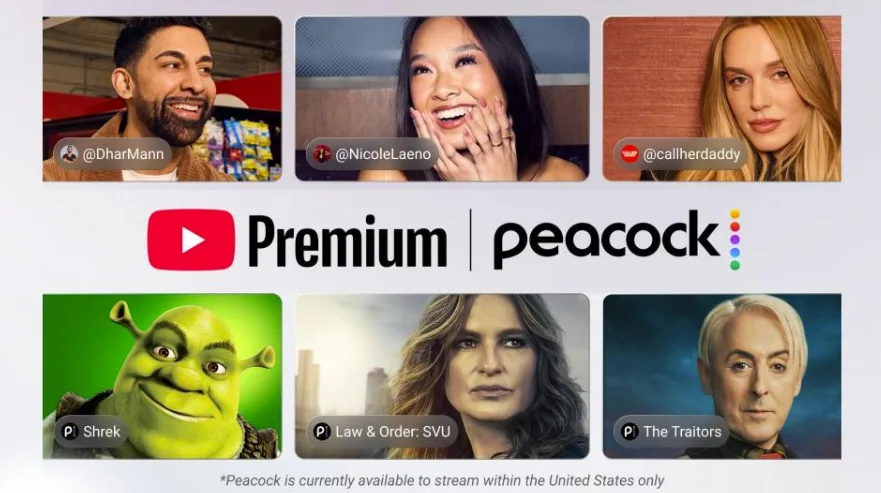
The offering will include programs such as ‘Love Island USA,’ ‘The Real Housewives,’ ‘Law & Order: SVU,’ ‘Saturday Night Live,’ and ‘The Office,’ along with Universal films and major sports including the NFL, NBA, MLB, Olympic Games, and Premier League. NBCUniversal described the agreement as the largest wholesale distribution partnership in Peacock’s history.
YouTube Premium has traditionally centered on ad-free viewing, background playback, downloads, and YouTube Music. Adding Peacock broadens it beyond a subscription that simply improves the YouTube experience. It begins to resemble a wider entertainment package that also includes films, television, and sports supplied by an outside media company. According to the official announcement, subscribers will be able to access Peacock through the YouTube environment.
That does not mean the two services are becoming one. The bundled Peacock Premium plan includes advertising and remains distinct from Peacock Premium Plus, the higher-priced tier with fewer ads. Key details—including account linking, plan upgrades, customer data, and revenue sharing—have not yet been fully disclosed.
The arrangement is therefore best understood not as a merger of Peacock and YouTube, but as a distribution partnership that places Peacock’s content and subscription offering within YouTube Premium’s subscriber ecosystem.
Peacock Was Already Using YouTube as a Distribution Channel
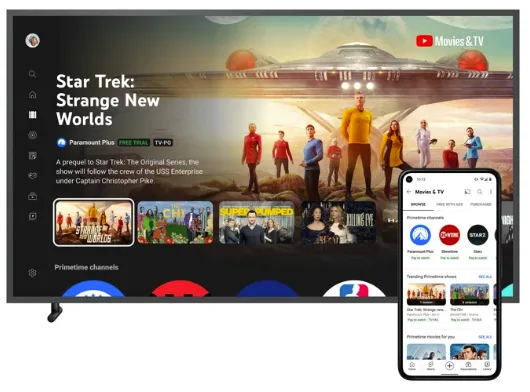
The partnership did not begin with a single announcement. Peacock was already selling subscriptions through YouTube’s Primetime Channels, a feature that allows users to subscribe to outside streaming services and watch their content within YouTube.
Peacock began appearing on Primetime Channels in late June 2026. Peacock Premium Plus launched first as a separate subscription priced at $16.99 a month, with the ad-supported Peacock Premium plan scheduled to follow later that summer. At the time, Peacock Premium was sold independently for $10.99 a month.
At that stage, YouTube was primarily a storefront. Users had to seek out Peacock and pay an additional fee. Under the YouTube Premium bundle scheduled for 2027, eligible subscribers will instead receive Peacock Premium as part of an existing subscription.
The distinction lies in how Peacock reaches the viewer. On Primetime Channels, the customer chooses Peacock first. In the YouTube Premium bundle, Peacock is presented to an audience that has already subscribed to YouTube. Its role on the platform therefore expands from an individually purchased product to a benefit distributed across a much larger subscriber base.
The relationship also extends well beyond Peacock. The agreement includes a multi-year renewal for NBCUniversal channels on YouTube TV, cooperation in advertising technology, wider international distribution for Universal+ and Hayu, and selected live-sports production collaborations involving NBC Sports and YouTube.
Seen together, these arrangements position YouTube as more than a video-sharing platform. It is becoming a broad distribution partner capable of connecting NBCUniversal’s television channels, streaming services, advertising operations, and sports content through several different services.
Peacock No Longer Assumes It Must Grow Through Its Own App Alone
Peacock’s problem is not a lack of content. Its catalogue includes originals such as ‘Love Island USA,’ programming from NBC and Bravo, and Universal’s film library. Live sports—including the NFL, NBA, Premier League, Olympic Games, golf, and college sports—also provide strong reasons to subscribe.
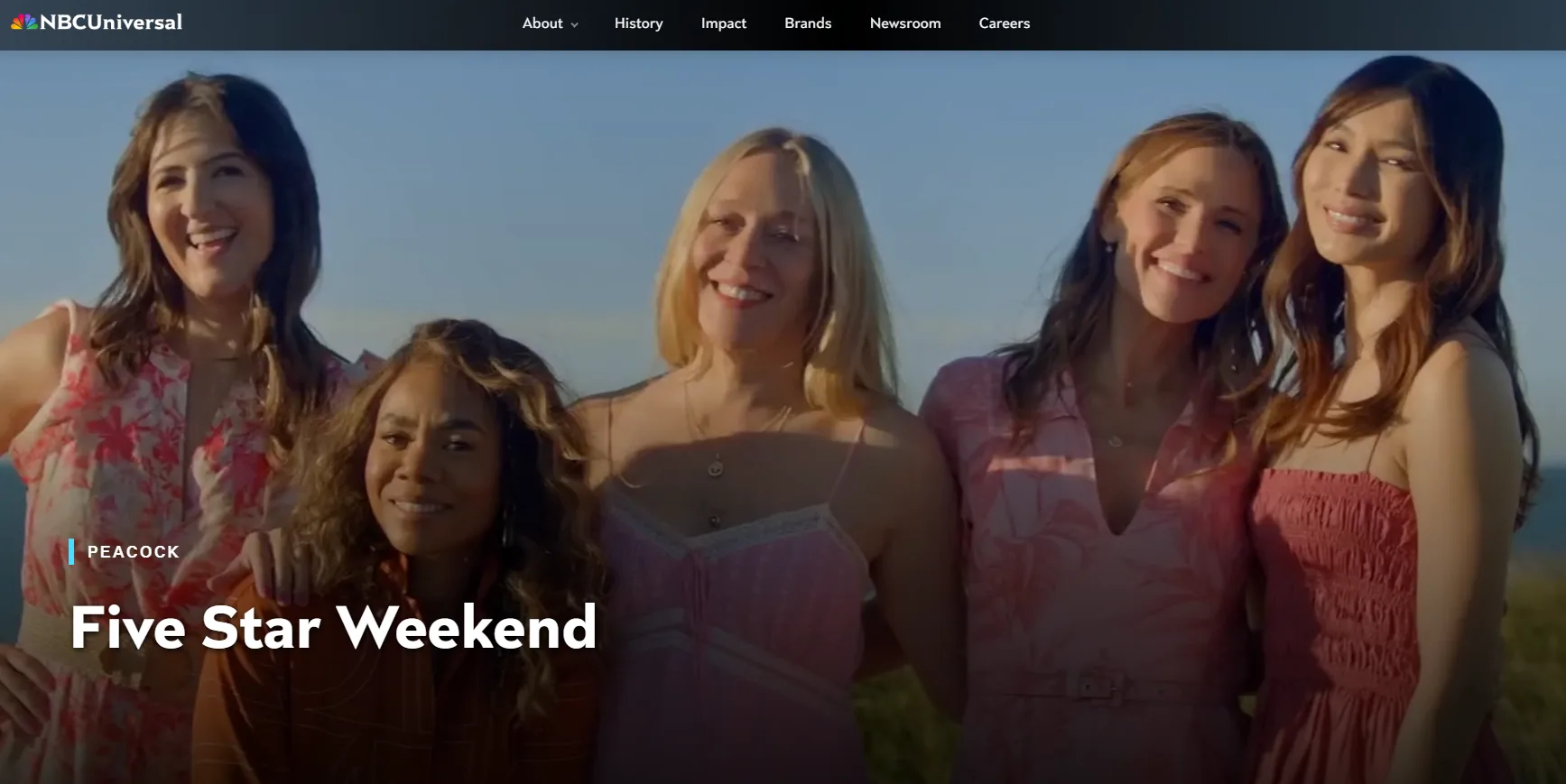
In the summer of 2026, Spanish-language FIFA World Cup coverage and the eighth season of ‘Love Island USA’ helped drive viewing. NBCUniversal said Peacock’s Spanish-language streams of the first 96 World Cup matches generated 65 billion minutes of viewing, while ‘Love Island USA’ expanded engagement among younger and mobile audiences. Forty percent of Peacock viewers watched both.
Yet owning strong content is not the same as building a large audience through a standalone app. To subscribe to Peacock directly, viewers must first know the service exists, install the app, compare its pricing, and begin another payment relationship. For people already managing several subscriptions, those steps can become a barrier in themselves.
Peacock had about 48 million paid U.S. subscribers in the second quarter of 2026 and had recently recorded its first profitable quarter. YouTube Premium and Music, by comparison, had surpassed 125 million subscribers worldwide. The figures are not directly equivalent: Peacock’s total is U.S.-based, while YouTube’s is global and may include trial users. Even so, YouTube gives Peacock access to a substantially broader pool of existing subscribers.
By joining YouTube Premium, Peacock can place its programming in front of viewers who are already paying for a subscription. It reduces the need for those viewers to search for Peacock separately and make another purchase decision. Instead of relying only on advertising, free trials, and price promotions, Peacock can draw on the customer base of an established distribution platform.
This does not mean Peacock is abandoning its own app. It will continue to offer direct subscriptions while also selling through Primetime Channels and participating in the YouTube Premium bundle. The strategic change lies elsewhere: Peacock is no longer assuming that every new subscriber must be acquired directly. It is combining direct distribution with wholesale access to outside platforms.
YouTube Moves Toward the Center of Distribution Without Owning the Content
For YouTube, the value of the deal extends beyond Peacock’s popular programs and sports. More importantly, it strengthens YouTube’s position as a platform through which outside streaming services are sold, discovered, and used.
YouTube already operates several layers of video distribution. The core platform allows creators, broadcasters, and studios to publish video. Primetime Channels sells subscriptions to outside services. YouTube TV bundles broadcast and cable networks. YouTube Premium has built a paying audience around ad-free viewing, music, downloads, and other convenience features.
Peacock brings those layers closer together. Premium members will gain access not only to YouTube video and music but also to films, television series, and sports supplied by an outside media company. YouTube can therefore increase the value of Premium without acquiring Peacock or bearing the full cost of producing its programming and securing its sports rights.
That differs from the traditional streaming model. Services such as Netflix and Peacock largely attract viewers by producing or licensing content for their own apps. YouTube can also grow by becoming the place where other companies’ content and subscription products meet an existing audience.
The stronger Peacock’s offering becomes, the more attractive YouTube Premium becomes. The larger YouTube’s subscriber base grows, the more valuable its distribution becomes to other media companies. External services strengthen YouTube’s subscription product, and that stronger product can in turn attract additional partners.
YouTube does not own Peacock. What it gains is a central position in the process through which Peacock reaches audiences and expands subscriptions. Alongside the power to produce content, YouTube is building the power to shape how content is presented, to whom it is offered, and within which subscription package it appears.
What Is Returning Is Not the Cable Bundle but a Digital Gateway
Streaming grew by breaking apart cable packages that required viewers to buy channels they did not want. As the market fragmented, however, films, television series, and sports spread across a growing number of apps. Viewers once again found themselves spending more time locating content and managing subscriptions.
The Peacock–YouTube Premium bundle may therefore resemble a return to cable. Both models gather different kinds of content under a single subscription. Yet the sources of power behind them are different.
Cable companies drew their strength from physical networks and channel placement. They decided which channels belonged in which packages and where each one appeared in the lineup. Viewers chose from within a structure the cable operator had already arranged.
Digital platforms replace the channel lineup with an interface and an algorithm. Search results, recommendation systems, homepage placement, and links to the next program all shape how viewing unfolds. The platform does more than carry content. It influences what appears first, what follows, and what remains visible.
The new form of distribution power therefore depends not only on how much content is gathered in one place, but on who designs the environment in which viewers encounter it. Search, recommendations, unified accounts, and automatic billing are becoming infrastructure in much the same way cable networks once were.
Under these conditions, even companies with valuable content may struggle to reach audiences through their own apps alone. As services multiply, viewers are more likely to encounter content inside platforms they already use than to search for and join another app. Streaming companies may continue to distribute directly, but they increasingly supplement that route with platforms that already possess large audiences and established payment relationships.
As that pattern grows, a platform becomes more than a marketplace bundling several services together. It gains influence over which content appears first and which subscriptions are easiest to choose.
What is re-emerging, then, is not the old cable package. It is a digital gateway that organizes the routes through which streaming services are discovered and accessed.
From Competition Among Apps to Competition Among Gateways
The Peacock–YouTube partnership points to a change in what streaming companies compete over. Until now, the central question has been which service could secure the strongest catalogue of popular programs and sports rights. Increasingly, however, ownership of good content may matter alongside the ability to place that content where viewers can easily find and use it.
As the number of services grows, not every company can attract enough subscribers through its own app. Even excellent programming may face limits if viewers must discover a new service, install another app, and start another subscription. Streaming companies therefore have to think not only about improving their own products, but also about how those products connect with platforms where audiences already spend their time.
Peacock’s inclusion in YouTube Premium is part of that shift. It does not simply turn YouTube into another streaming service. Rather, it expands YouTube’s role as a distribution base that other content companies can use to reach larger audiences. Competition is no longer defined only by how much content a company owns. It also includes the platforms through which that content is discovered and how easily discovery becomes a subscription.
In the next phase of competition, owning content will remain important, but so will designing the path through which it reaches the viewer.


