Suno has published its principles for building responsible music AI.
On August 6, 2026, Suno co-founder and CEO Mikey Shulman explained the company’s vision for the future of generative music AI, its operating principles and new measures it plans to introduce. He described music as one of the oldest and most universal forms of human expression, and one that has always evolved with technology. If previous waves of technology made it easier for people to find and listen to music, the next wave, he argued, will allow far more people to experience the joy of making music.
Suno’s message is clear.
AI music is not meant to replace people. It is meant to help more people create music.
But the real significance of the announcement lies not only in that optimistic vision. It lies in the safeguards attached to it.
Suno emphasized that AI should enable originality, not imitation. It said AI should not become a tool for copying existing artists. It also announced a new download policy designed to make it harder to mass-export AI-generated songs to streaming platforms. In addition, Suno said it would adopt audio watermarking and fingerprinting technologies so that songs created on Suno can be identified even when shared on other platforms.
This is not just a product update.
It is a signal that the generative music AI industry can no longer avoid questions of copyright, imitation, distribution fraud and platform transparency.
Suno is talking about the democratization of music creation.
But it also needs to win the trust of the music industry.
“Great Music Is Made by People” Is a Defensive Line
Suno’s first principle is simple: “Great Music is Made by People.”
At first glance, this sounds like a technology company’s philosophy. But it is also a defensive message.
The music industry fears that AI music tools could replace human artists, songwriters and producers. The anxiety becomes sharper if AI systems are trained on existing music and can generate similar-sounding works. In that scenario, the role, rights and revenue base of human creators may be weakened.
Suno’s answer is that technology can open new creative methods, but it cannot replace the human experiences, emotions and imperfections that give music meaning.
That claim matters.
One of the strongest criticisms of AI music is that machines steal and replace human creativity. Suno is trying to change that framing. It presents AI not as a substitute for human creators, but as a tool that enters the human creative process.
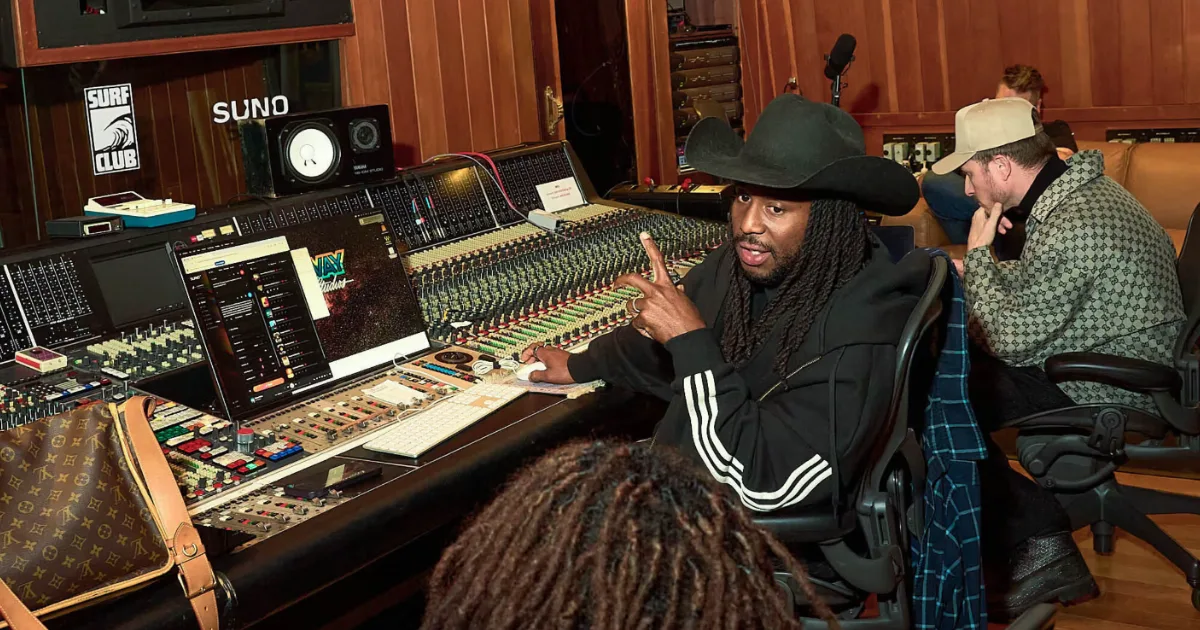
To support that message, Suno said it works with artists, songwriters, musicians and producers as it builds its models and products. It said it holds weekly writing camps with artists at different career stages to learn how Suno’s tools fit into real creative workflows, where they fall short and what should be improved.
This is not merely community outreach.
It is a relationship-repair strategy with the music industry.
If Suno wants to survive over the long term, it cannot rely only on technology users. It needs to work with artists, rights holders, labels, publishers and distribution platforms. The message “we build with artists” is the starting point for that cooperation.
The Tension Between Creative Access and the Music Industry
Suno believes music creation should be open to more people.
A person may want to create a lullaby for a child, a song for a partner or a piece of music to preserve a memory. That music may never be commercially released, but it can still have real value for the person who made it.
This captures the positive promise of AI music.
Not everyone has learned an instrument. Not everyone has studied composition. Not everyone has access to a studio or a producer. But many people want to express emotion through music. AI can lower that barrier.
The problem comes next.
Personal creation and mass commercial distribution are different.
An individual making a song for family is not the same as a user generating thousands of tracks and uploading them to streaming platforms for revenue. Suno also emphasizes this distinction.
The company said that helping more people create music is fundamentally different from using generative technology to export large volumes of content. Suno does not believe it should decide what has artistic value. But it does believe it has a responsibility to make it harder for AI tools to be misused in ways that harm a healthy music ecosystem.
This is where the new download policy becomes important.
Suno said it will soon introduce a new download policy to limit the ability to mass-distribute songs to streaming platforms. Professional, creative and personal use cases will remain available. The company said most users will not be affected, but large-scale abuse will become much harder.
This points to an important direction for the AI music industry.
Generation may become easier.
Mass distribution must be controlled.
AI Should Enable Originality, Not Imitation
Suno’s strongest principle is that AI should enable originality, not imitation.
AI should help people make something new. It should not help them copy someone else’s work.
This goes to the heart of the AI music debate.
Music combines voice, style, arrangement, melody, rhythm, lyrics and production texture. If a user can enter a specific artist’s name and ask the model to “make something like this person,” AI music quickly becomes an imitation tool. That can raise issues not only of copyright, but also publicity rights, name and likeness rights, voice rights, brand identity and fan trust.
To avoid this, Suno says it uses a training strategy it calls “Original Creation, By Design.”
One key measure is that Suno did not use artist names in training metadata. The company said its goal is to help people create original songs, not songs that sound like existing artists. For that reason, it intentionally excluded artist names from training metadata.
Suno also said that, unlike many AI music platforms, it has never allowed prompts using specific artists or copyrighted songs. If a specific artist is mentioned in a prompt, Suno removes the name and converts the request into descriptive musical characteristics.
Instead of a specific singer’s name, for example, a prompt may be transformed into terms such as dreamy synth-pop, gritty guitar-driven rock or lyrical piano ballad.
This approach may become a core norm for AI music.
Style can be described.
A specific person should not be imitated.
Working With Audible Magic and Musixmatch
Suno also said it works with third-party technology providers such as Audible Magic and Musixmatch to check whether uploaded audio files or lyrics use artists’ work without authorization.
This is important.
The risks of an AI music platform do not come only from text prompts. A user may upload part of an existing song, submit copyrighted lyrics or bring in audio that resembles a famous artist’s voice and ask the system to transform it. In these cases, the platform may not know whether the user has the necessary rights.
That means pre-screening technology for audio and lyrics is necessary.
Audible Magic is known for content identification and rights-management technology. Musixmatch is associated with lyrics data and related technology. Suno’s partnership with these providers suggests that AI music platforms cannot be only generative model companies. They also need rights-management systems.
The future competitiveness of AI music services may not be decided only by model quality.
It will also depend on who can detect unauthorized use, cooperate with rights holders and provide transparency across distribution channels.
AI music is a creative technology.
It is also a rights-management technology.
What the Download Policy Is Targeting
Suno’s planned download policy is the most concrete measure in the announcement.
The potential for abuse is clear. A user can generate hundreds or thousands of tracks and upload them to streaming platforms. If combined with manipulated artist names, playlists and bot-driven plays, this can become streaming fraud. It can damage the revenue of real artists and erode trust in streaming platforms.
Suno said most personal, creative and professional uses will not be affected.
But mass distribution will be restricted.
This is a delicate balance.
If the policy is too strict, it may limit legitimate creators and producers. If it is too loose, AI-generated music could flood streaming platforms. Suno is trying to adjust that boundary through policy.
The key distinction is that downloading is different from generating.
Creating a song inside a platform for personal use is one thing. Exporting large volumes of content into the external streaming ecosystem is another. Suno appears to be focusing less on blocking creation itself and more on reducing abuse at the distribution stage.
AI music governance must handle this difference.
Creative freedom and mass-distribution control should be designed separately.
Why Watermarking and Fingerprinting Matter
Suno said that as AI becomes a larger part of music-making, people need reliable ways to understand when AI was used.
That is why it is introducing new transparency tools.
The company said it has begun rolling out tools aligned with emerging industry standards so that songs generated on Suno can be identified even when shared on other platforms. It also said it will introduce new audio watermarking and fingerprinting technologies in the coming weeks to work more closely with distribution platforms against fraud and abuse.
These tools are designed to be robust, durable and inaudible to listeners.
Watermarking and fingerprinting are essential infrastructure for the AI music ecosystem.
Platforms need to identify AI-generated tracks.
They need to detect mass uploads and duplicate distribution.
Rights holders need ways to track unauthorized imitation or fraudulent release patterns.
Disputes over whether a song was AI-generated need evidence.
Suno also drew an important boundary. It said these tools are not intended to judge whether a song is good, meaningful or sufficiently human.
That distinction matters.
Watermarking is not a value judgment.
It is a transparency tool.
The goal is not to automatically devalue AI-generated music.
The goal is to make AI use identifiable.
Disclosure Should Be a Choice for Artists and Platforms, Suno Says
Suno said that, ultimately, decisions about what to disclose should belong to artists and platforms.
The company sees its role as providing transparency options and building tools that make industry-wide cooperation easier. This connects to the broader debate over AI music labeling.
Some argue that music involving AI should always be labeled. Listeners, they say, have a right to know whether the music they hear was made by humans or generated by AI. Others worry that if AI was used only as one tool in the creative process, mandatory labeling could become a stigma.
Suno takes a middle position.
It wants AI-generated music to be technically identifiable, but it leaves disclosure decisions to artists and platforms.
This approach may make industry cooperation easier. Streaming platforms can decide whether to display AI-use labels or use identification tools for policy enforcement. Artists can disclose AI use according to their own creative process and platform requirements.
But the debate remains.
Listeners’ right to know and creators’ freedom of expression must be balanced. The issue becomes even more complex because fully AI-generated songs, AI-assisted composition, AI arrangement, AI vocal synthesis and AI mixing or mastering are all different. One label cannot explain everything.
AI music transparency may be harder as a classification problem than as a technical problem.
Strengthening Community Guidelines
Suno also said it is updating its community guidelines to make prohibited activities clearer.
The company said it already had positions on harmful behavior, but now wants users to understand more easily what is not allowed on Suno.
The prohibited activities are specific.
Attempts to recreate existing songs.
Uploading material without rights.
Using someone’s voice or likeness without permission.
Fraud, spam and fake engagement.
Using bots to evade systems.
Deceptive audio presented as real.
Other harmful activities.
Suno’s Trust and Safety team pre-screens content and investigates reports submitted through in-app tools. Depending on severity, enforcement may include warnings, temporary suspensions, permanent account bans or referrals to relevant authorities.
This shows that AI music platforms are moving beyond simple creation tools.
They are becoming community and distribution platforms.
If user-created music can be shared and distributed externally, the platform must manage abuse. Voice imitation and deceptive audio can connect to politics, fraud, defamation, sexual deepfakes and celebrity impersonation.
The safety problem in AI music is not only copyright.
It is also identity, fraud and synthetic audio deception.
The Tensions Suno Did Not Resolve
Suno’s announcement offers responsible principles, but the tensions remain.
The biggest unresolved question is training data.
Suno said it did not use artist names in metadata and does not allow prompts that request specific artists. But the music industry’s central debate remains: what music was used to train the model, whether that training was authorized and whether rights holders should be compensated.
Removing artist names can reduce imitation risk.
But it does not fully resolve the rights issue around training data. If a model learned from copyrighted music, it may learn style, structure and sound patterns even without artist names. Rights holders may still challenge the training itself.
Another question concerns the effectiveness of mass-abuse controls.
Suno has not yet disclosed the exact details of the download policy: how strict the limits will be, how mass distribution will be detected, whether users can bypass the system and how rules will differ between ordinary users, paid users and professional users.
Watermarking and fingerprinting are also not complete solutions.
If audio is altered, re-recorded or heavily edited, detection may become harder. If platforms do not adopt common standards, identification systems may remain limited.
Suno’s announcement is an important direction.
It is not a complete solution.
A Signal to the Music Industry
Even so, the announcement should be read as a signal to the music industry.
Suno said artists, songwriters, labels, publishers, platforms and technology companies must work together to find answers. That is an acknowledgment that an AI music company cannot set the rules alone.
The music industry has a complex rights structure.
Composition rights, lyric rights, sound-recording rights, performance rights, publishing rights, label rights, sampling rights, voice and likeness rights, and platform distribution contracts all overlap. AI music disrupts all of them at once.
Suno’s emphasis on industry cooperation is not only about image management.
If AI music is to become mainstream, rights holders and distribution platforms must participate. Streaming platforms need policies for AI-generated tracks. Labels need systems for managing AI music. Artists need ways to protect their style and voice. Compensation models must be discussed.
Suno also mentioned Spark, a creator-support program for emerging unsigned artists, offering grants, mentorship and marketing support. This reinforces the message that an AI company can contribute to the music ecosystem.
AI music companies are now technology companies and music industry players at the same time.
Without the trust of the music industry, long-term growth will be difficult.
What This Means for the Korean Music Industry
The announcement is also important for Korea’s music industry.
K-pop has powerful artist IP, global fandoms and sophisticated music distribution systems. A specific artist’s voice, singing style, concept, fan language and worldbuilding can have significant economic value. If AI music tools imitate specific artists, generate similar tracks at scale or create fake songs targeted at fandoms, the damage could be serious.
Korean platforms and entertainment companies should consider several questions.
How should artist names and song titles be controlled in prompts?
How can voice, singing style and stylistic imitation be detected?
How should mass uploads of AI-generated music to streaming platforms be monitored?
How should Korea participate in watermarking and fingerprinting standards?
How can fan-made AI covers be distinguished from malicious imitation?
How can artist-authorized AI use be distinguished from unauthorized use?
K-pop also has a strong fan-creation culture.
Fan remixes, covers, memes, videos and derivative works can help fandoms grow. But AI changes the boundary. Songs using synthesized voices of specific members, unauthorized AI duets, fake unreleased tracks and commercial AI covers can emerge.
Creative participation should not be blocked entirely.
But standards for rights, transparency, labeling and distribution control are necessary.
The Core Balance: Creative Access and Rights Control
Suno’s announcement is built around two principles.
The first is creative access. More people should be able to make music. Music is not only for professionals. Personal and emotional expression has value. AI can make that possible.
The second is rights control. AI should not be used to imitate existing artists, exploit unauthorized materials, flood streaming platforms with generated tracks or create deceptive audio.
These principles are in tension.
If the system is too open, abuse increases.
If it is too restrictive, creative access decreases.
Technology can democratize creation, but the music industry depends on rights and trust.
Suno says it wants to balance these demands.
It excludes artist names from prompts and metadata.
It does not allow requests to imitate specific songs or artists.
It uses third-party technology to check uploaded audio and lyrics.
It is changing download policy to reduce mass-distribution abuse.
It is introducing watermarking and fingerprinting to identify AI-generated songs.
It is clarifying and enforcing community guidelines.
These measures are becoming close to a minimum standard for the AI music industry.
The Next Competition in AI Music Is Trust
Suno’s announcement shows the next phase of the generative music AI industry.
At first, the technology itself received the attention. The shock was that a song could be created from a few lines of text. Anyone could generate music with melody, vocals and arrangement.
Now the questions are changing.
Whom does the music imitate?
How was the training data collected?
How are artist names and styles protected?
Can AI-generated tracks be identified on other platforms?
How can mass generation and streaming fraud be prevented?
How are unauthorized audio and lyrics blocked?
How is unauthorized use of voice or likeness enforced?
Suno has responded with responsible principles and new tools.
Its core message is that great music is made by people, AI should enable originality rather than imitation, downloads should be controlled to prevent abuse, AI-generated audio should be identifiable through watermarking and fingerprinting, and community guidelines should be clearer and more enforceable.
This will not end every debate.
Training data, rights compensation, AI labeling standards, cross-platform adoption and the details of mass-distribution limits will remain contested. But it is clear that Suno has entered a stage where it must talk not only about technical performance, but about the trust of the music ecosystem.
The future of AI music may allow more people to make songs.
But for that future to be healthy, artists, rights holders, platforms and listeners need trustworthy systems. Opening the door to music creation and protecting the music ecosystem must happen together.
Suno’s announcement is a declaration that it wants to find that balance.
The next competition among AI music companies will not be decided only by who makes the most convincing songs.
It will be decided by who builds more responsibly, labels more transparently and prevents abuse more effectively.