Smartphones, wireless earbuds and digital pens have become almost inseparable from everyday life. But for people who live with cardiac implantable electronic devices, such as pacemakers or implantable cardioverter-defibrillators, these small consumer gadgets may pose an unexpected risk.
The issue lies in the magnets built into modern electronics. Today’s smartphones, wireless earbud cases and tablet styluses often contain strong magnets for wireless charging, device alignment, accessory attachment and cover positioning. Under ordinary circumstances, these magnets provide convenience. But when placed close to a cardiac implant, they may interfere with the device’s operation.
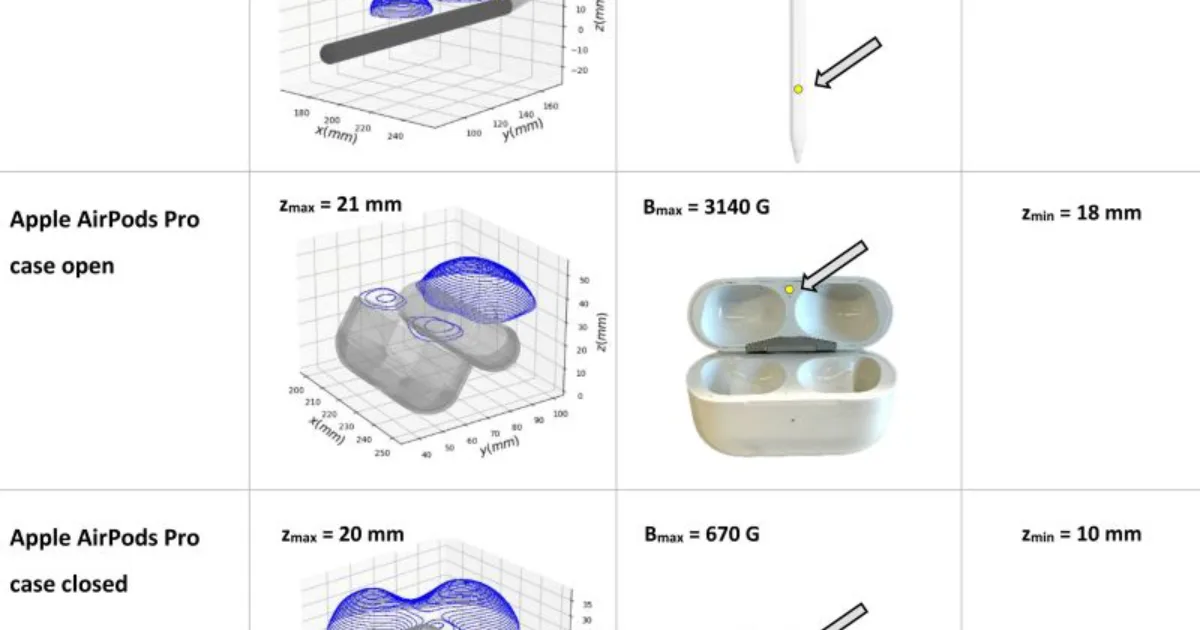
A study by Corentin Féry and colleagues, published in Circulation: Arrhythmia and Electrophysiology, measured the magnetic fields of portable electronic devices and analyzed their potential interaction with cardiovascular implantable electronic devices, or CIEDs. The devices tested included Apple AirPods Pro with a wireless charging case, the Microsoft Surface Pen, the second-generation Apple Pencil and, for comparison, the iPhone 12 Pro Max.
The study focused on a function known as “magnet mode.” CIEDs such as pacemakers and implantable defibrillators are designed to respond to external magnets. In clinical settings, physicians use dedicated magnets to switch these devices into standardized operating modes. For example, an implantable defibrillator may temporarily suspend tachycardia detection and therapy, while a pacemaker may switch into asynchronous pacing.
This function is intended to help medical professionals control the device safely. The problem arises when magnets in everyday electronics unintentionally trigger the same response.
According to the study, international standard ISO 14117 sets 10 gauss as the minimum magnetic field threshold at which a CIED may switch into magnet mode. Below that level, the device should not enter magnet mode.
Measuring the Invisible Field
The researchers precisely measured the three-dimensional magnetic fields surrounding portable electronic devices. Magnetic fields change rapidly depending on distance and direction, so measuring only one point is not enough to assess risk accurately.
The team used a magnetic field mapper equipped with 64 three-axis magnetic sensor chips. With an automated three-dimensional stage, they measured magnetic field distribution around the surfaces of the devices at a resolution of up to 2 millimeters.
The results showed potential risk across a wider range of devices than many consumers may expect. For Apple products, the researchers found magnetic fields of 10 gauss at distances of up to about 20 millimeters from the surface. For the Microsoft Surface Pen, the 10-gauss threshold was detected at a distance of about 29 millimeters.
This means that if a cardiac implant comes within that range, magnet mode could potentially be triggered.
The researchers also conducted ex vivo tests using five implantable defibrillators from Boston Scientific and Medtronic. In those tests, the portable electronic devices triggered magnet mode at distances of 8 to 18 millimeters. In other words, the magnetic field maps were confirmed by actual responses from medical devices.
The Risk Is Not Limited to the iPhone
The study is important because the risk is not limited to the iPhone. Apple’s iPhone 12 series previously raised concern because of MagSafe magnets and their possible interference with pacemakers and implantable defibrillators. Studies on the interaction between the iPhone 12 Pro Max and cardiac implants were published, and the FDA and medical community have advised patients to keep smartphones and smartwatches with magnets at a safe distance from implanted medical devices.
The FDA recommends that consumer electronics with magnetic interference potential be kept at least 6 inches, or about 15 centimeters, away from cardiac implantable devices.
But this study broadens the scope of concern. The researchers found that the AirPods Pro charging case, second-generation Apple Pencil and Surface Pen can generate magnetic fields above 10 gauss, similar to the iPhone 12. Notably, the Apple Pencil 2 was not clearly mentioned in Apple’s list of products with potential medical device interference, yet the study found that it could interact with CIEDs at distances of up to 8 millimeters from the surface.
Why Pockets Matter
The findings become more important when connected to real-life habits. Many people place phones, earbud cases or digital pens in shirt or jacket chest pockets. Pacemakers and implantable defibrillators are typically implanted under the skin in the chest area. As a result, placing a device in a chest pocket may bring it much closer to the implant than users realize.
This is why the study’s title refers to the “risk inside pockets.”
Wireless earbud cases may be especially easy to underestimate. Smartphones are large and heavy, so users are more likely to be aware of where they place them. AirPods cases, by contrast, are small and light. They are easy to slip into a shirt pocket without thought. But those cases contain magnets that hold earbuds in place and align them for charging. Small size does not necessarily mean low risk.
Digital pens raise similar concerns. The Apple Pencil and Surface Pen use magnets for attachment or charging with tablets. If a person with a cardiac implant habitually places a stylus in an inner jacket pocket or shirt pocket during work or school, caution is needed. The researchers concluded that headphone cases and tablet pens should also be viewed as clinically relevant product categories, much like the iPhone 12.
Distance, Not Panic
The study should not be interpreted to mean that all electronic devices are always dangerous. The risk depends strongly on distance and position. Magnetic fields weaken rapidly as distance increases. In the study, magnet mode was triggered only at distances ranging from a few millimeters to a few centimeters.
That is why the FDA and manufacturers recommend a wider safety margin of about 6 inches, or 15 centimeters. Apple also notes that medical device manufacturers may recommend keeping potential sources of interference at least 6 inches away from medical devices, and more than 12 inches away during wireless charging.
For ordinary use, patients do not need to panic. The real concern is placing a device directly over the implant, carrying it for long periods in a chest pocket, or resting it on the chest while sleeping. These habits can reduce the distance between the consumer device and the medical implant into a potentially risky range.
What Patients Should Do
The advice for patients is straightforward. People with pacemakers or implantable defibrillators should avoid placing magnet-containing consumer electronics in chest pockets.
Phones should be kept in a pants pocket, bag or another location away from the implant site. Wireless earbud cases and digital pens should also be stored away from the chest. Electronic devices should not be placed directly over the implant area. If patients notice unusual symptoms or suspect device malfunction, they should contact their physician or the device manufacturer immediately.
What Clinicians and Manufacturers Should Consider
The study also has implications for clinicians. In the past, patient education often focused mainly on smartphones. Now, physicians may need to discuss a broader range of portable electronics, including wireless earbud cases, smartwatches, digital pens and even other magnet-containing consumer products.
It is also important to ask patients how they actually carry their devices. The risk is not determined only by product names. It often arises from everyday storage habits.
Manufacturers face a similar challenge. Magnets are likely to become more common in consumer electronics. Wireless charging, accessory attachment, foldable devices, wearables, augmented reality devices and smart rings may all rely more heavily on magnets and electromagnetic components.
That means product documentation and safety warnings should make potential medical device interference clearer. Users should be able to understand that even a small device may affect a cardiac implant if placed too close.
Conclusion: The Safety Rule Is Distance
The study shows where technological convenience meets medical device safety. Magnets in consumer electronics make everyday experiences smoother. They snap earbuds into charging cases, attach pens to tablets and align smartphones with chargers. But when the same magnets are placed close to a cardiac implant, they can become unintended signals.
The key message is not prohibition, but distance. The study identified magnetic field zones extending up to about 20 millimeters for Apple devices and about 29 millimeters for the Surface Pen. But in real life, following FDA and manufacturer guidance to keep such devices at least 15 centimeters away from the implant site is a more practical safety rule.
The conclusion is clear. Digital devices are becoming smaller, closer to the body and more dependent on magnets. At the same time, cardiac implantable devices operate inside the body to protect life. As these two technologies move closer together, everyday habits become the last line of safety.
The era when patients only needed to be careful with smartphones is over. AirPods cases, Apple Pencils, Surface Pens and other small electronic devices may also deserve attention. The convenience in a pocket can sometimes come too close to the safety of a medical device.