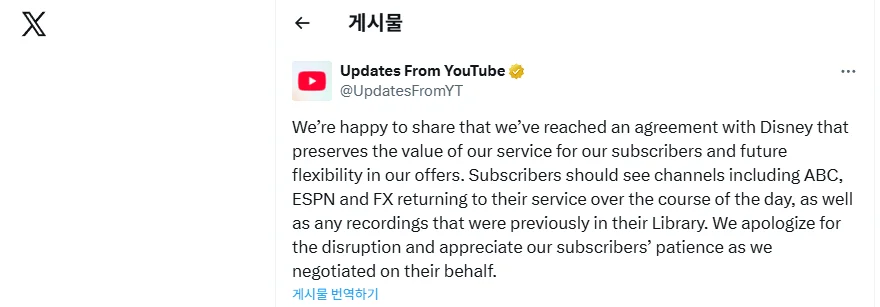
YouTube TV has reached a new agreement in its channel distribution negotiation with Disney, with major channels including ABC, ESPN, and FX returning to service the same day. YouTube TV announced through its official account it "negotiated to protect subscriber value and reached agreement while maintaining future flexibility in our offers." The four-day blackout has ended, but the incident is evaluated as revealing the rapidly changing power structure of the streaming market.
The structure of this conflict is not simply "contract expiration → channel interruption → re-contract." The core is a "power game surrounding content pricing." Disney demanded higher content licensing fees; YouTube TV didn't want to raise subscription prices; both sides continued negotiations while interrupting broadcast for several days. The resulting agreement is interpreted as YouTube's "defense success" — completing negotiation without subscriber price increases ("preserves the value of our service for our subscribers") while securing the ability to adjust price/bundle/package strategy going forward ("future flexibility in our offers").
The blackout was devastating in the streaming era unlike cable TV: subscription is one click, cancellation is one click — a few days of blackout can cause hundreds of thousands of cancellations. ESPN's presence as "the channel that must never be cut" (NFL, NBA, college football) and streaming brand trust damage made the stakes enormous.
Disney was aggressive because it has been losing billions annually on streaming services (Disney+, Hulu, ESPN+) and needed to raise content supply unit pricing for profitability recovery. YouTube TV's "future flexibility" expression suggests it has secured room to experiment with various fee models — independent packages, custom channel bundles, ad-based packages — while Google attempts to build platform-led bundles rather than accepting content company bundle requirements. This structural conflict is highly likely to repeat. The competition in the streaming market is most fundamentally about "who holds pricing authority over content" — platform vs. content provider. "The door opened, but the key is still held by the platform" applies here as much as in app store debates.