VR Games Showcase is an online event dedicated to introducing new VR games and updates across major platforms including Quest, PS VR2, and PC VR. Since launching in 2024, it has been held multiple times and has continued to operate as an independent showcase focused specifically on VR game announcements and updates.
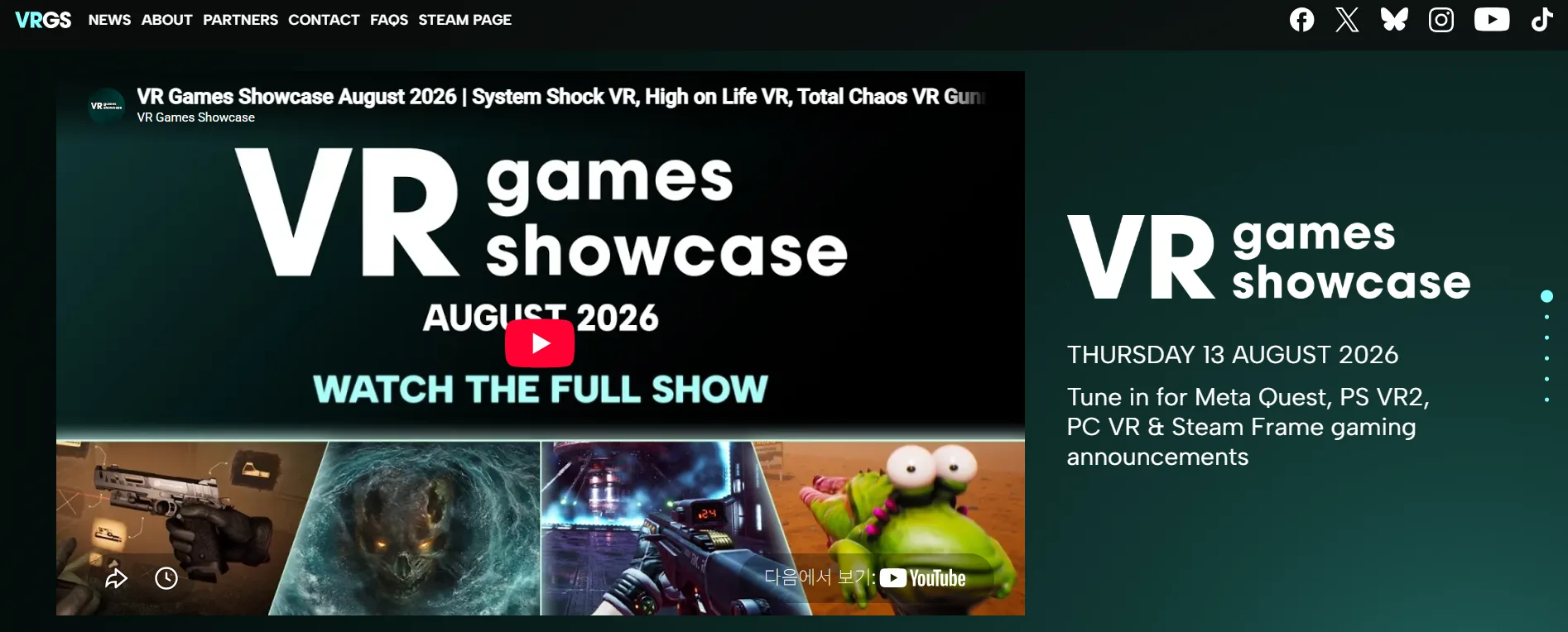
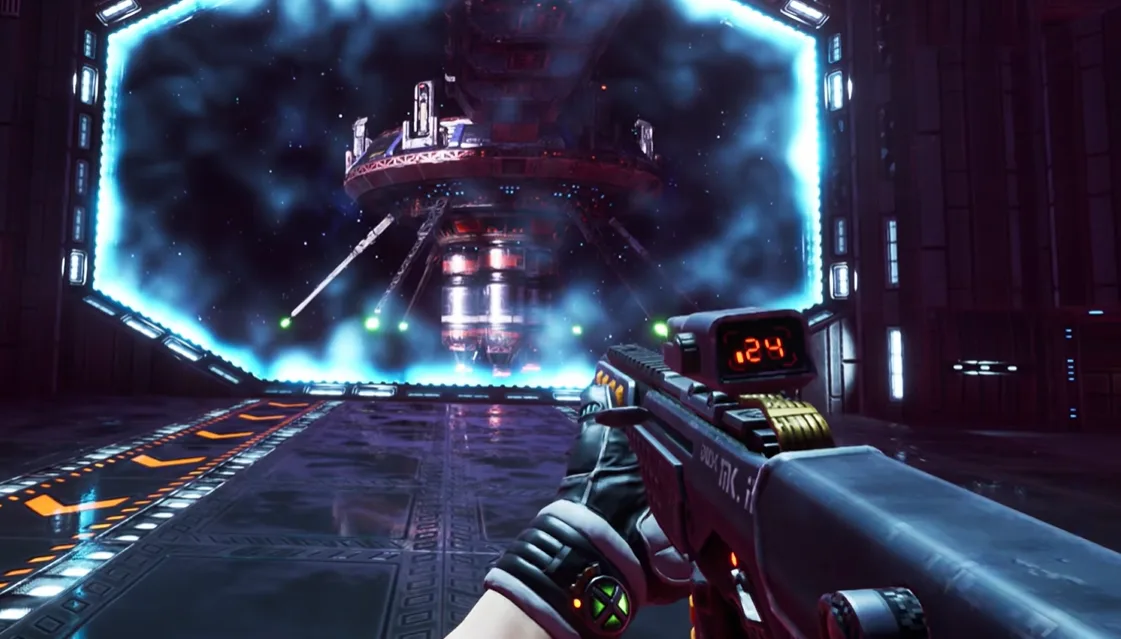
The August 13 showcase featured more than 25 titles. What stood out was that the lineup was not limited to entirely new IP. 'System Shock', remade by Nightdive Studios in 2023, and Squanch Games' 2022 comedy FPS 'High On Life' both returned as officially announced VR versions. Both projects are being developed for Quest, PC VR, and PS VR2.
Of course, bringing existing games into VR is nothing new. Official VR versions of well-known games have appeared before, while users have also continued to create unofficial VR mods for titles without native support. What was different at this showcase was that these conversions were no longer presented merely as side experiments or supplementary content. They appeared alongside other new releases as standalone commercial games.
This reflects a gradual expansion in how existing games can be reused. Rather than simply bringing established worlds and characters to another platform, developers are rebuilding them as products specifically designed around the conditions of VR.
So what does it actually take to turn an already completed game into a VR experience?
At first glance, the process may seem to involve little more than adapting the display for a headset and changing the control scheme. But there is a fundamental difference between controlling a character from outside the screen and physically entering that world in VR. Even when the same game serves as the foundation, developers must reconsider what players see, how they move, and which actions they perform themselves.
Not a Port, but a Redesign of the Rules of Play
'High On Life VR' demonstrates this difference particularly clearly. The original follows the structure of a first-person shooter, but with one unusual premise: the player's guns are not merely pieces of equipment. They are alien creatures called Gatlians, capable of speaking, making facial expressions, and talking directly to the player.
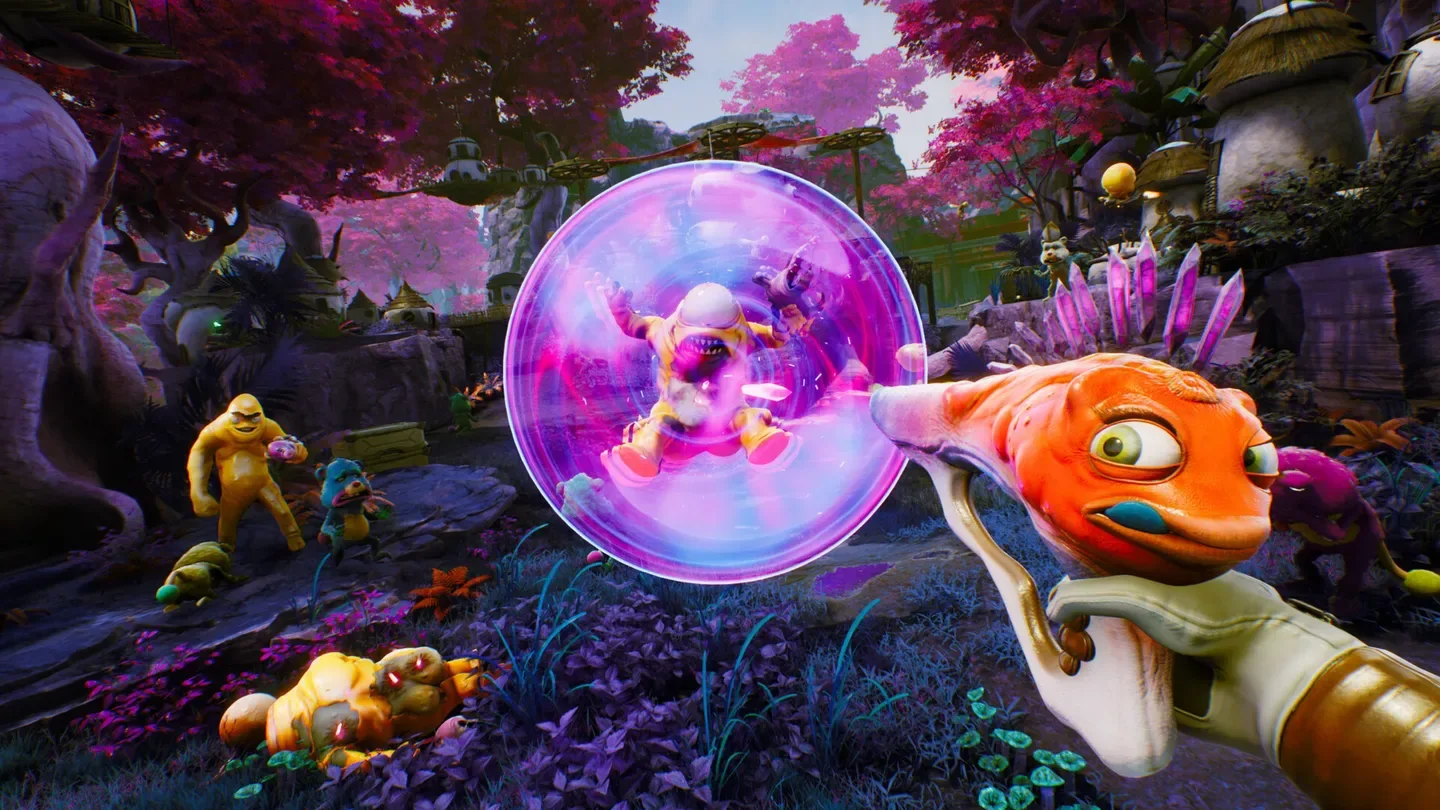
On a flat screen, players see these characters as weapons on the screen and operate them through button inputs. In VR, that relationship changes. The gun is now physically placed in the player's hand. Flat2VR game director Emily O'Neal has explained that the VR version is being designed around new interactions that allow players to hold Gatlians directly, reload them, stab with them, pull at them, and otherwise handle them with their hands.
Actions that required a single button press in the original therefore become physical movements in VR, creating an entirely new set of design problems. Developers must determine where the player's hands should be, how the weapon should respond to those movements, and what sequence of actions the player should perform. New animations and reactions that were unnecessary in the original must also be created. Reusing an existing weapon is not enough; even the process of putting that weapon into the player's hands has to be rebuilt.
That does not mean reproducing the real-world handling of a firearm as faithfully as possible will necessarily produce a better VR game. More detailed movements can strengthen the sense of direct interaction, but too many required actions can also interrupt the fast pace of the original combat. O'Neal has said the team is repeatedly testing where the right balance lies between multi-step physical interactions and simpler controls.
What matters in VR, then, is not simply adding as many realistic gestures as possible. The real question is which actions that once happened through button presses should now be transferred to the player's body, and how far those interactions should be simplified so that they do not undermine the pace and appeal of the original game.
Hardware introduces another set of constraints. The original was designed for PCs and consoles, while the VR version must also run on standalone headsets such as Quest 3 and Quest 3S. These devices have more limited computing resources than PCs or consoles, while VR must continuously track the player's head and hand movements and maintain a stable image in real time.
Flat2VR producer Alastair Burns has described running a large and visually busy game like the original at a stable 72 frames per second on Quest 3 as a significant technical challenge. In VR, stable frame rates matter for more than visual smoothness. If the player's physical movement and the visual response fall out of sync, or if frame rates fluctuate sharply, discomfort and motion sickness can become more likely.
For that reason, preserving every graphical effect from the original is not always the best choice. Developers must decide which elements should remain, which should be reduced or adjusted, and how the atmosphere and feel of the original can still be preserved in VR. The process requires not only redesigning controls, but also recalibrating how the game is presented for a different hardware environment.
The world, characters, story, and levels of an existing game can still be reused in a new version. But how players experience those elements in VR is a separate question. Turning a game into VR is therefore less about moving a finished product onto another device than about reconstructing an existing game so that it can be played in a fundamentally different way.
From Modding Community to Professional Studio
Studios specializing in this kind of reconstruction are now beginning to emerge. Flat2VR Studios, which revealed both 'High On Life VR' and 'System Shock VR', is one of the clearest examples. As its name suggests, the studio specializes in bringing flat-screen games into VR, but it did not begin as a company.
Flat2VR originated as a community of developers and modders who wanted to experience existing games in VR. Their work centered on adding VR functionality to games without official VR versions and sharing those modifications with other users. Rather than waiting for game companies to decide whether a VR version was commercially viable, users first turned their own desire to “play this game in VR” into working technical experiments.
That activity began to take on a formal business structure in 2024, when Flat2VR Studios was established. Unofficial mods face inherent limitations in distribution and commercialization because they modify existing games outside a formal licensing relationship. As a studio, however, Flat2VR could work directly with IP holders to create official VR versions that could be sold through platforms such as Quest, PS VR2, and PC VR.
An early example of that transition was 'Trombone Champ: Unflattened', released in 2024. The original 'Trombone Champ' already had a user-created VR mod, but Flat2VR Studios worked with original developer Holy Wow Studios to rebuild it as a separate official VR game. A form of VR conversion that had previously been explored unofficially by users became a commercial product through direct collaboration with the original developer.
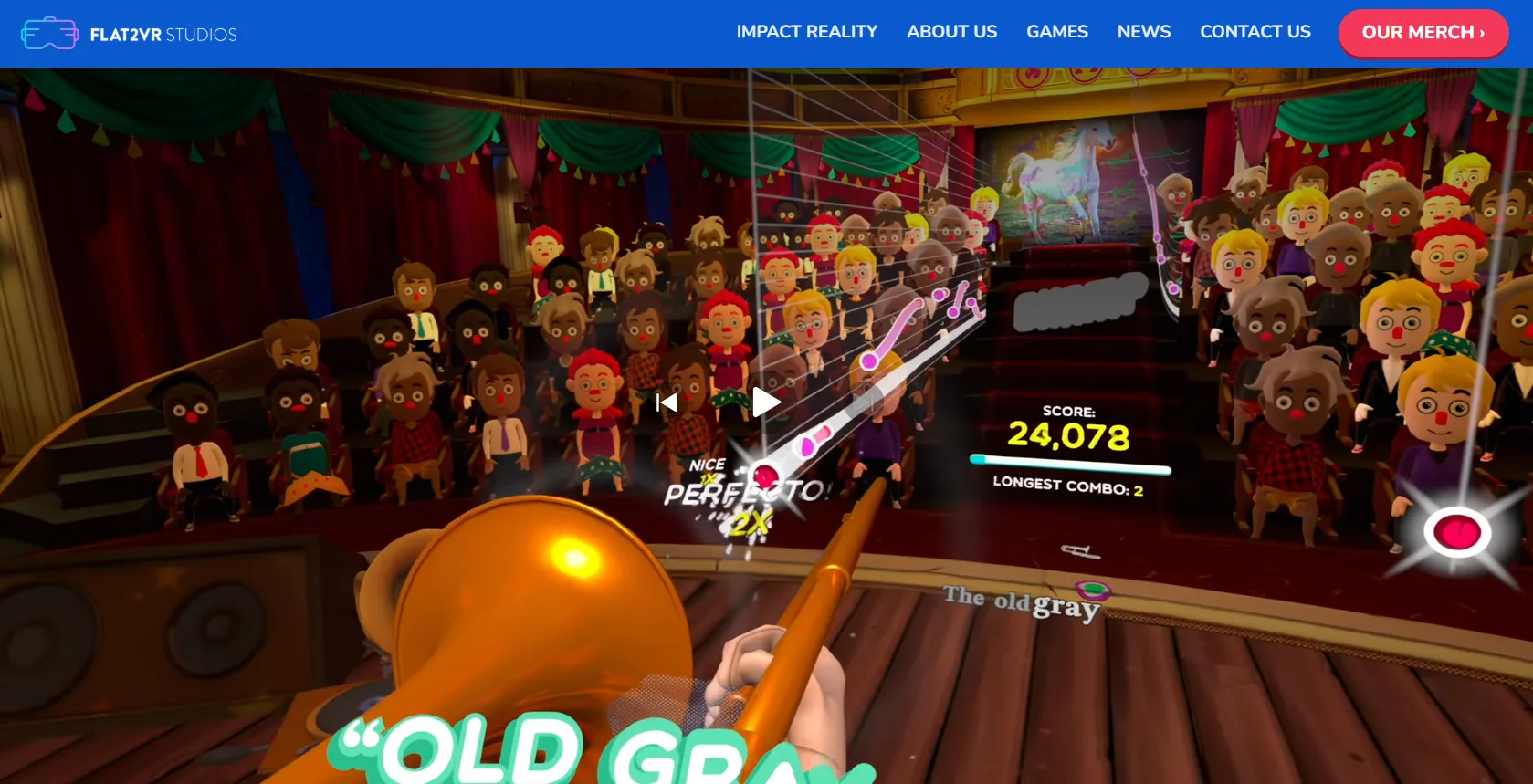
What matters here is not simply that a mod became an official product. The more significant change is that experience accumulated through modding has begun to feed directly into professional VR development. The people who had already experimented with which flat-screen games translate well to VR, which controls should become hand movements, and how much of the original should be rebuilt are now becoming the developers of official commercial products.
'High On Life VR' and 'System Shock VR', both revealed at this year's VR Games Showcase, suggest that this trend is expanding beyond isolated projects. Flat2VR Studios also announced plans to raise investment through StartEngine. The company intends to use the funding to expand its internal development team and publishing activities, while broadening its portfolio beyond VR adaptations to include original games.
What is ultimately interesting is not simply the growth of Flat2VR as a company, but the changing process through which VR versions of existing games are being made. In the past, users who wanted an unsupported game in VR often created their own mods. Now developers with that same background are working with original creators, dedicated teams, and formal budgets to build standalone commercial releases.
The VR play styles first tested by fans are beginning to enter professional game development.
A Place Beyond Remasters and Remakes
So what should these games be called? For now, terms such as “VR version” and “VR port” are commonly used. 'High On Life VR' and 'System Shock VR' are likewise being introduced as VR adaptations of their respective originals.
Yet the development process described above suggests that the word “port” does not fully capture the extent of the changes involved. Porting generally refers to making a game that runs on one platform work on another. Moving a console game to PC, or bringing an older-generation title to new hardware, are typical examples. The platform changes, but the fundamental way in which the player controls and experiences the game does not necessarily change with it.
A remaster is different again. Remasters usually preserve the basic structure of the original while updating elements such as resolution, textures, frame rate, and audio for modern hardware. Remakes involve a more extensive transformation, often rebuilding graphics, systems, combat, or even level design using contemporary technology.
VR versions alter something slightly different. They may inherit much of the original story, characters, spaces, and assets, but the relationship between the player and the game world changes. A game once controlled through a character on a screen becomes one in which the player turns their own head, moves their own hands, and performs actions directly. Even when the same locations and events remain, the player's sense of distance and the way they act within those spaces inevitably change.
In that sense, converting an existing game into VR has more in common with adaptation than with simple technical conversion. When a novel is adapted into a film, its plot and characters may remain intact, but scenes that were once conveyed through written description must be reorganized through actors, cameras, sound, and editing. The material may come from the original, but the method of communicating it has to be rebuilt around the language of a different medium.
VR versions face a similar choice between preserving the original and making full use of VR. Preserve too much, and there may be little reason to play the game in VR at all. Change too much in pursuit of VR-specific interactions, and the familiar feel of returning to the original game may begin to disappear.
For that reason, it may be more useful to view games such as 'High On Life VR' and 'System Shock VR' not simply as remakes, but as a form of VR reinterpretation. Rather than merely presenting an old game more clearly or rebuilding it from the ground up, they allow a familiar game to be experienced again through a different set of senses and actions.
If a remaster shows the game again and a remake rebuilds the game, VR rewrites the way the player and the game meet.
A Second Experience
Of course, the same approach cannot be applied equally well to every game. Each title has its own movement, combat, and camera systems, and some may require significant changes to controls or performance to reduce discomfort in VR. Being able to reuse assets from a finished game does not mean that creating its VR version is easy.
Even so, what makes this year's VR Games Showcase notable is that another way of reusing existing games is becoming increasingly visible. Beyond increasing the resolution of an older game or rebuilding it from scratch, developers now have another option: allowing players to experience a familiar world again through different senses and actions.
Players may walk through the same places, meet the same characters, and use the same weapons, yet the experience does not remain the same. The player is no longer looking at that world from outside the screen, but entering it directly, moving and acting within it. The novelty of adapting an existing game to VR therefore comes not from new stories or characters, but from a new way of meeting a game we already know.
What VR revives is not an old game, but the moment of encountering that game with your own body for the first time.