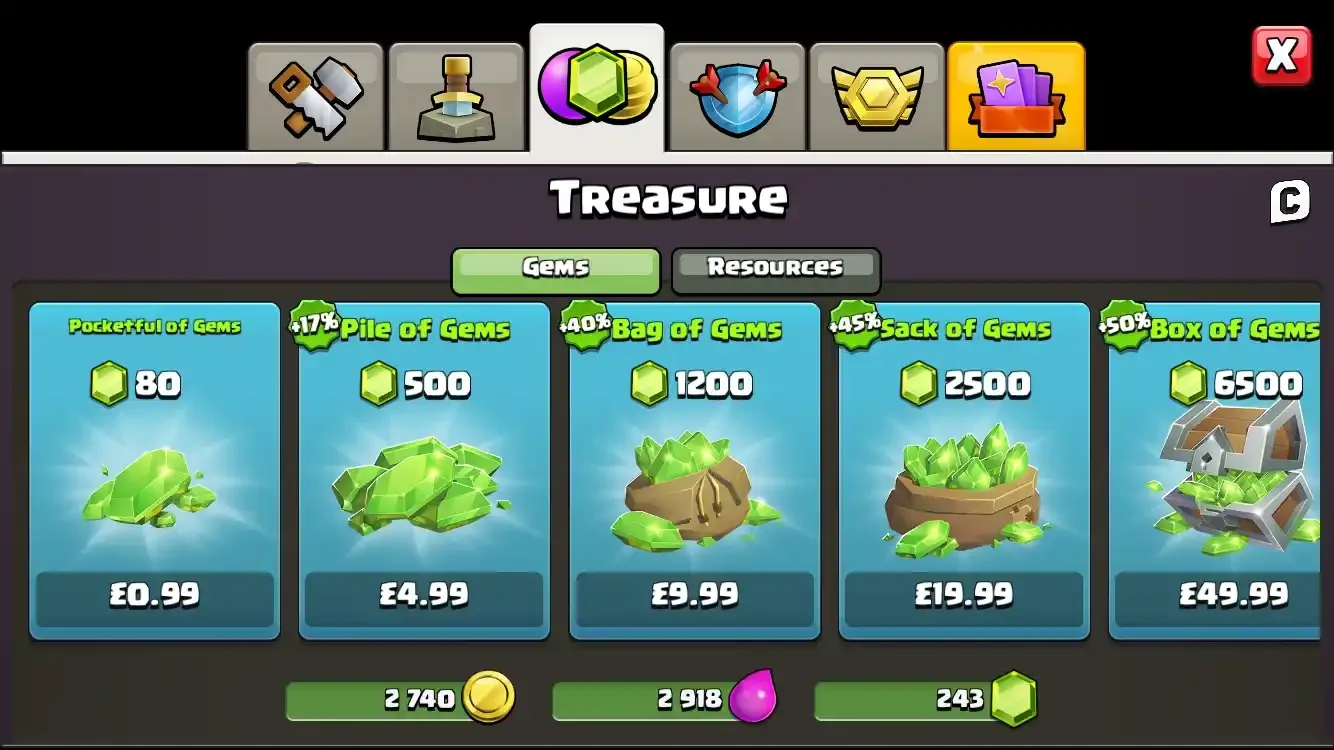
A player opens an in-game store to buy an item priced at 1,200 gems. But gems are sold only in bundles of 500 or 1,000. To purchase a single item, the player must spend more money than necessary, leaving unused gems in their account. It is a familiar situation for many gamers.
This practice of converting real money into virtual currency has become a target of regulatory scrutiny in Europe. On September 30, 2026, the European Union's Consumer Protection Cooperation (CPC) Network launched coordinated action involving nine game companies, including Riot Games, Supercell, and Ubisoft, over their practices for selling in-game virtual currencies. Just one day later, on October 1, South Korea's National Assembly passed an amendment to the Game Industry Promotion Act, strengthening game companies' responsibilities to protect users and expanding the authorities' investigative and enforcement powers.
Although both measures were introduced at nearly the same time and share the goal of protecting players, they focus on different aspects of the gaming experience. South Korea has primarily strengthened regulations concerning loot-box probability disclosures and compensation for consumer harm. The EU's latest action, by contrast, focuses on the process of purchasing and spending in-game virtual currencies.
How Much Is 1,000 Gems Really Worth?
Many online and mobile games use virtual currencies such as gems, diamonds, or crystals instead of direct cash payments. Players first purchase these currencies with real money and then spend them on characters, equipment, costumes, or other items. This system allows game companies to integrate purchases into the in-game economy and manage various products and rewards through a common currency.
The problem is that players may find it difficult to determine how much they are actually spending. For example, if 1,000 gems cost 9,900 won, an item priced at 800 gems is worth approximately 7,920 won. Yet the store may display only the price of 800 gems. The calculation becomes even more complicated when players must convert gems into another currency or receive bonus gems depending on the size of their purchase.
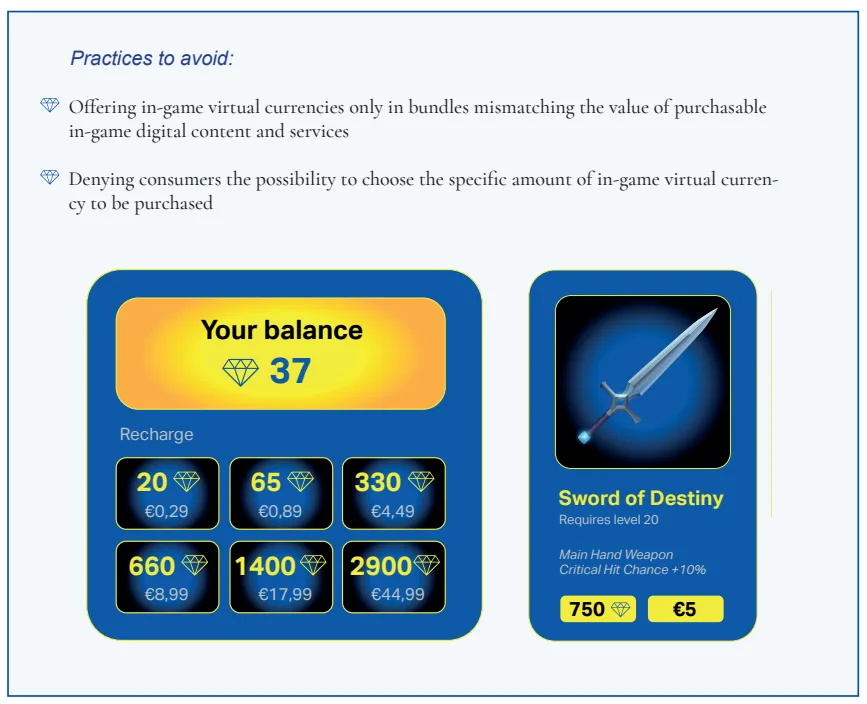
Selling virtual currency exclusively in fixed bundles is another point of contention. If an item costs 1,200 gems but the store offers only bundles of 1,000 and 500, a player must purchase 1,500 gems and will have 300 left over. Although those remaining gems can be used for future purchases, the player has effectively paid more upfront than was necessary for the item they originally wanted.
This is precisely the purchasing process the EU is examining. Its objective is not to ban virtual currencies themselves, but to address situations in which their use makes real-world prices difficult to understand or leads players to make unnecessary additional purchases.
In March 2025, EU consumer protection authorities published a set of key principles concerning in-game virtual currencies. These principles called for clear disclosure of real-money prices, warned against obscuring costs through complicated currency conversions, and opposed practices that force consumers to purchase more virtual currency than they need. They also emphasized consumers' withdrawal rights for purchased but unused virtual currency and raised concerns about practices that encourage children to spend money without fully understanding the payment system.
This does not mean that every use of in-game currency is considered unfair. Virtual currencies can serve important roles in game economies and reward systems, and selling them in bundles is not inherently prohibited. The EU's position is that when real money is involved, consumers should be able to understand the prices and conditions before making a purchase.
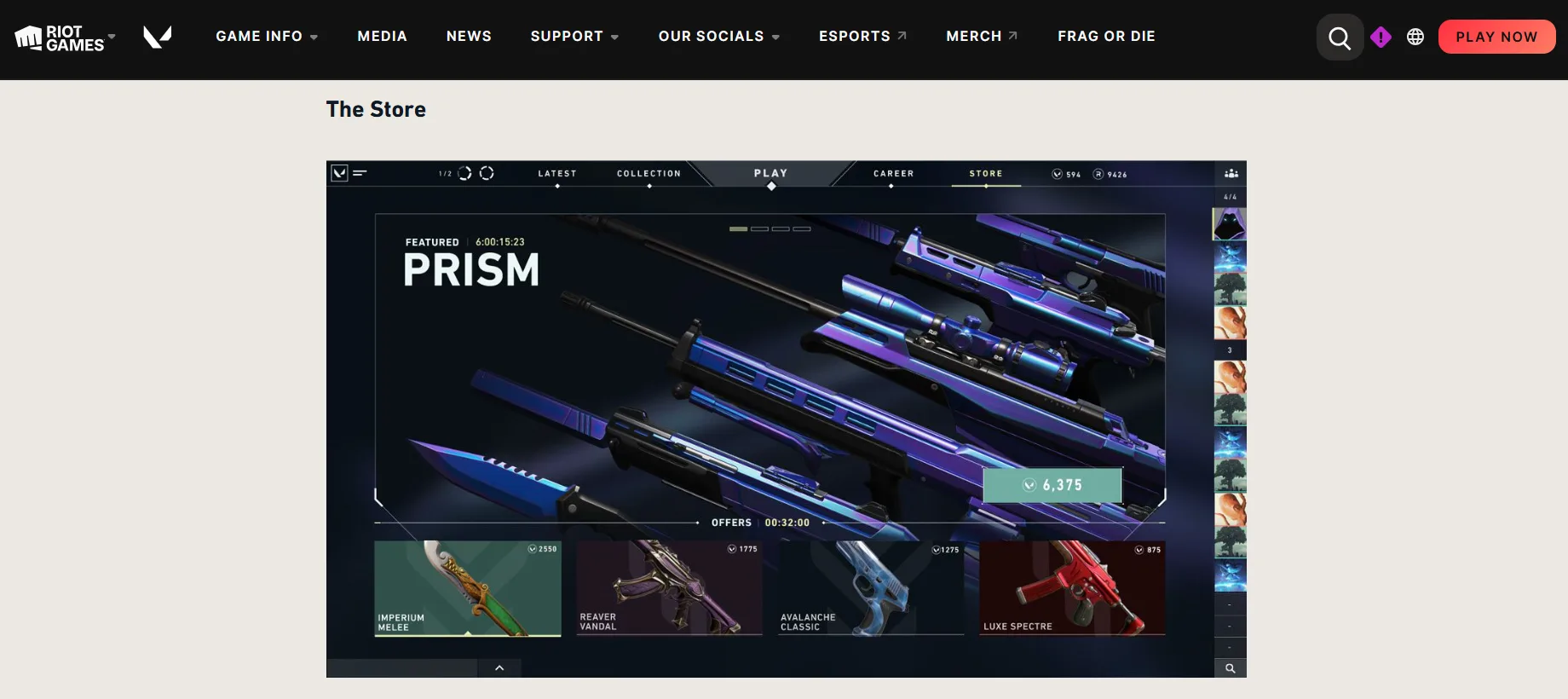
Following the publication of these principles, EU authorities held discussions with the gaming industry about possible improvements. However, disagreements over price transparency, refunds, and the legal nature of virtual currencies remained unresolved. On September 30, 2026, the authorities began coordinated scrutiny and discussions aimed at resolving these concerns with nine companies, including Riot Games, Supercell, and Ubisoft. Games covered by the action include VALORANT, Clash of Clans, Minecraft, and Candy Crush Saga.
The action involves examining whether the companies' virtual currency sales practices may violate EU consumer protection law and seeking appropriate solutions from the companies concerned. No final finding of infringement or penalty has been issued. If the concerns remain unresolved, national consumer protection authorities may take further enforcement action.
Ultimately, the EU's concern is not simply that virtual currencies exist in games, but whether players can clearly understand the relationship between the prices displayed in a game and the amount of real money they actually spend.
Is In-Game Currency Money or Content?
In-game currencies such as gems and diamonds have an unusual nature. Players purchase them with real money, but they generally cannot use them outside the game. Even within the game, they are typically limited to purchasing designated products or services. For players, they function as a means of payment, but they can also form part of a game's progression and reward systems.
These characteristics have led EU consumer protection authorities and the gaming industry to take different positions on how virtual currencies should be understood. Regulators emphasize that players purchase these currencies with real money and use them to pay for other products, giving them a direct connection to real-world monetary value. In their view, ordinary consumer protection principles should apply to the purchasing process, even when the currency itself is used only within a game.
The gaming industry, however, opposes treating virtual currencies solely as payment instruments. It argues that these currencies are part of game content, operating according to each game's rules and economic systems, and are fundamentally different from cryptocurrencies that circulate outside games. Industry representatives have also expressed concern that applying uniform regulatory standards could fail to account for differences in how individual games are designed and operated.
A March 2026 ruling by the Court of Justice of the European Union concerning RuneScape has also drawn attention in this debate. RuneScape is an online game in which players use in-game gold to trade items and other goods. The court considered how value-added tax should apply to transactions involving the exchange of in-game gold for real money. In its ruling, it treated the gold not as ordinary currency or a voucher, but as an electronic service forming part of the game.
The gaming industry has cited this ruling to support its argument that virtual currencies can be more than payment instruments and may also constitute game content. However, the judgment concerned the application of value-added tax to transactions involving a specific game's currency. It did not determine how in-game prices must be displayed or what refund rights consumers should receive. Its conclusions therefore cannot simply be applied to the current consumer protection debate.
The disagreement ultimately reflects the different characteristics of in-game currencies. Regulators focus on transactions involving real money, while the gaming industry emphasizes the role these currencies play within games. Neither perspective alone fully captures their nature.
Yet recognizing virtual currencies as part of game content does not eliminate concerns about transparency in the purchasing process. When players spend real money, the expectation remains that they should be able to understand actual prices and purchase conditions. How an in-game currency is legally classified and what information consumers should receive when purchasing it are related but distinct questions.
How Far Has South Korea Gone in Regulating Games?
South Korea has also steadily strengthened measures to protect game users. However, its regulatory focus has generally been less on the real-money prices of virtual currencies and more on loot-box probability disclosures and compensation for harm arising from purchases.
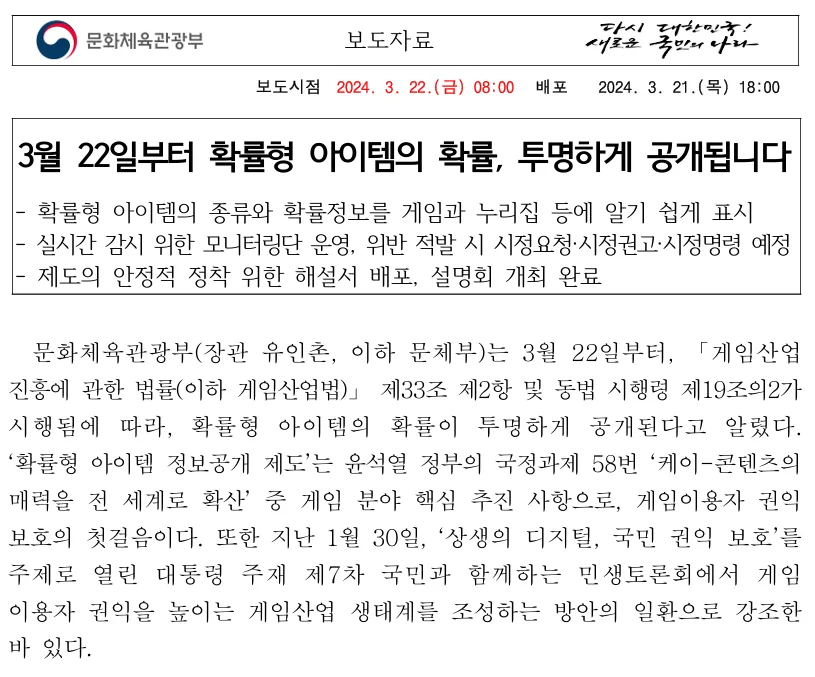
Since March 2024, game companies have been required to disclose information about loot-box types and the probabilities of obtaining particular rewards. In August 2025, new provisions took effect allowing damages of up to three times the actual loss in certain cases involving intentional violations of probability disclosure obligations. The rules also strengthened accountability by requiring game companies, in certain disputes, to demonstrate that they were not at fault.
On October 1, 2026, the National Assembly passed an amendment to the Game Industry Promotion Act that further expanded enforcement mechanisms for protecting players. It strengthened requirements concerning domestic representatives of overseas game companies and established additional grounds for authorities to request information when investigating possible violations or to respond when companies fail to comply with corrective orders. The changes aim to make consumer protection measures more effective in practice, rather than relying solely on disclosure requirements.
Purchases and refunds involving in-game virtual currencies are also subject to South Korea's existing e-commerce laws and applicable contractual terms. However, questions remain about how real-money prices for in-game items should be displayed and how to address sales structures that require players to purchase more virtual currency than they actually need.
Between the Rules of the Game and Real-World Payments
It remains unclear how significantly the EU's action will change in-game stores. Discussions between regulators and the gaming industry are ongoing, and the specific requirements and responses for individual games have yet to be finalized. If the EU's demands are reflected in future practices, changes could affect real-money price displays, virtual currency bundle sizes, and refund procedures for unused currency. South Korean companies operating games in Europe may also be affected.
This does not mean that virtual currencies must disappear from games. Gems and diamonds can form part of progression and reward systems, and their use may itself contribute to the gaming experience. However, the role a currency plays within a game's rules should be distinguished from the process of paying real money for it. Whatever function a virtual currency serves within a game, players should be able to understand how much they are actually spending.
In South Korea, the pricing and sale of in-game currencies could also become an increasingly important subject of discussion. Consumer protections have gradually expanded through stronger loot-box disclosure requirements and compensation mechanisms. Yet accurate probability information does not resolve every issue in the purchasing process. Whether players can easily identify real-money prices, whether requiring them to purchase more virtual currency than necessary is appropriate, and whether refund standards for unused currency are sufficient are questions that remain. Attention may now need to extend beyond what players can obtain in a game to the prices and conditions under which they purchase it.
South Korea already has e-commerce laws and other consumer protection measures. Before introducing new regulations, it may therefore be more useful to examine whether existing protections work effectively in actual in-game purchasing situations. A starting point could be to assess whether players can easily understand their rights and whether the different ways games sell virtual currencies create difficulties in applying existing rules.
Ultimately, the EU's and South Korea's recent measures raise a broader question about how far player protection should extend. Recognizing virtual currencies as part of game content does not necessarily conflict with protecting consumers during purchases. Players may spend gems or diamonds inside a game, but they acquire those currencies with real money. What matters is not only whether virtual currency is classified as money or content, but whether players can understand what they are buying, how much they are paying, and make informed choices.