From late 2025 through the spring of 2026, the results of the major game awards season were unusual.
'Clair Obscur: Expedition 33,' developed by Sandfall Interactive, a new studio based in Montpellier, France, won the top prize at the Golden Joystick Awards in November 2025 before sweeping nine categories at The Game Awards in December, including Game of the Year. Its winning streak continued into the following year. It took the highest honors at DICE and BAFTA, and in March won five categories at the Game Developers Choice Awards, including Game of the Year. Public attention, critical acclaim, and the judgment of fellow developers all converged on the same title.
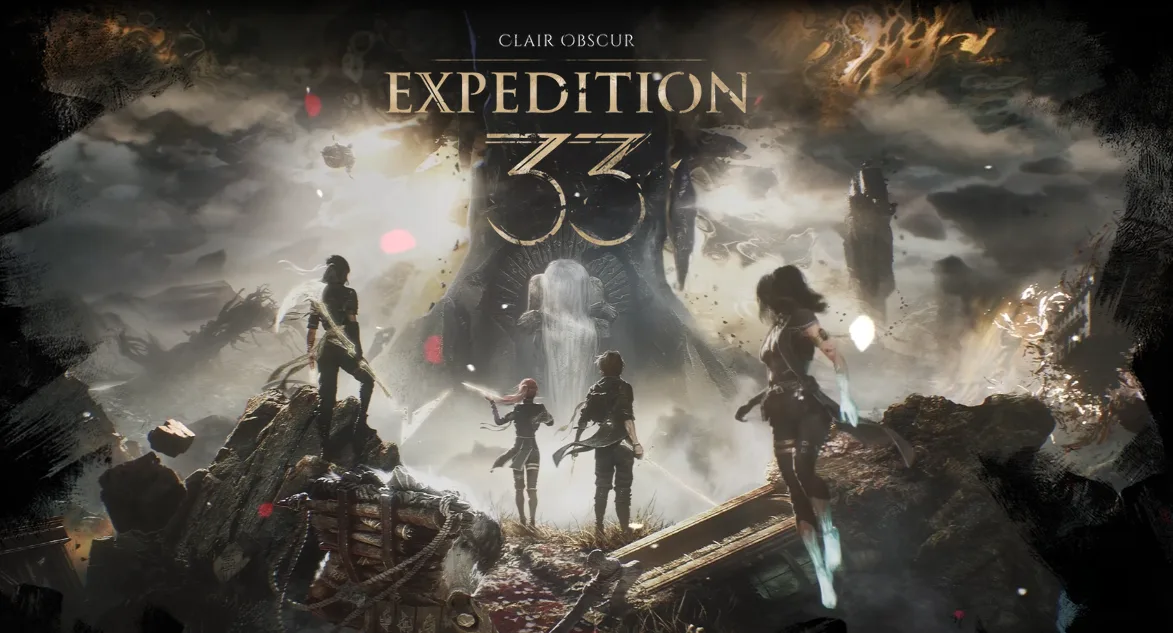
What matters even more than the awards, however, are the production and sales figures behind them. Sandfall’s core development team consisted of roughly 30 people. According to a New York Times report based on interviews with the studio, the game cost less than $10 million to develop. It launched at $49.99, $20 below the $69.99 price commonly charged for major AAA releases at the time, and surpassed 8 million copies sold in April 2026, around its first anniversary.
The size of the core team alone does not make this a simple small-scale production. External studios and specialists contributed to development, and the game used Unreal Engine 5 to achieve a high level of visual quality and cinematic presentation. Even so, compared with major releases that rely on budgets in the hundreds of millions of dollars and credits listing thousands of contributors, the gap between the cost and performance of 'Expedition 33' was clearly different. It demonstrated in concrete numbers that a relatively small internal organization and a controlled budget could still produce the visual polish and commercial results normally expected of a major game.
It is also difficult to dismiss this trend as the exception of a single title.
'Kingdom Come: Deliverance 2,' developed by the Czech studio Warhorse, produced a similar result through a very different approach. Studio co-founder Daniel Vávra said its development budget was approximately 1 billion Czech koruna, or around $40 million at the exchange rate of the time. It was a much larger project than 'Expedition 33,' but its budget was still well below that of recent blockbusters produced by major U.S. studios. The game sold 1 million copies in its first day and passed 6 million in June 2026. It reached that figure in roughly 17 months, a dramatic acceleration compared with the six years it took the first game to achieve the same result.
Other highly regarded games from the same year belonged to a similar tier. Team Cherry’s 'Hollow Knight: Silksong' and Supergiant Games’ 'Hades II' were both nominated for Game of the Year at The Game Awards. Each was the product of an independent studio that had spent years refining its own genre and development philosophy, and each was created within an organizational and financial structure different from that of a traditional AAA production.
Among them, 'Silksong' produced a particularly clear commercial result as well as critical recognition. In December 2025, Team Cherry announced that the game had sold more than 7 million copies. Players who accessed it through Game Pass were not included in that total. It was another example of how a title without the scale of a major publisher-backed blockbuster could still reach a market measured in millions by drawing on a long-established fan base and credibility within its genre.
This does not mean that large-budget games disappeared. Major releases such as 'Death Stranding 2' and 'Ghost of Yotei' were also nominated across leading awards and generated strong sales and attention. It would be inaccurate to describe 2025 simply as a year without major productions. Even so, the center of critical discussion and recognition was occupied by games built by smaller organizations working with more tightly controlled budgets.
Why the Middle Disappeared
What made this trend significant was that, only a short time earlier, this entire tier of production had been widely regarded as disappearing.
At Gamescom Asia in 2024, former PlayStation executive Shawn Layden described the decline of AA games as a threat to the industry’s ecosystem. As AAA development budgets climbed into the hundreds of millions of dollars, companies became less willing to accept risk. Resources consequently flowed toward proven sequels and projects resembling previous hits, while creativity narrowed.
The logic is simple. The more money invested in a single game, the greater the damage if it fails. When one or two unsuccessful releases can threaten a studio’s survival or destabilize the earnings of a publicly listed company, the standards for approving a project inevitably change. Established IP, familiar genres, and production models with proven audiences take priority. New ideas are evaluated less by their potential than by the scale of the loss they might leave behind.
The problem is that a larger budget does not mean the contents of a game improve in direct proportion. As teams grow, the cost of coordinating departments and external partners increases. The longer development continues, the more labor and technical maintenance costs accumulate. Once the amount that must be recovered rises, marketing and distribution spending must also expand to reach a broader market. As projects become larger, the cost of sustaining a massive organization and business operation grows alongside the cost of making the game itself.
Under this structure, games aiming for a moderate level of success occupy the most awkward position. To meet the revenue expectations of a major publisher, the project must become larger. Experimental projects unable to attract that level of investment are pushed toward the small-scale indie market. Mid-sized games fall short of the returns expected from blockbusters while remaining too large in organization and scope to survive on indie-level costs.
The two ends of the market remained, but the production model that once connected them weakened. On one side were blockbusters built around tens of millions of sales and long-term revenue. On the other were indie games trying to survive with limited resources. Projects that could succeed with only a few million copies sold, and fail without bringing down the entire company, became increasingly difficult to find.
To say that AA disappeared is therefore not merely to say that fewer games occupied a particular budget range. It means that the space to spend a moderate amount, aim for a moderate success, and experiment with new genres, systems, and forms of storytelling within those limits had begun to vanish.
Why It Has Become Possible Again
Why, then, have mid-sized games begun to succeed again? The most common answer is technological progress. Commercial engines have improved, digital distribution has become standard, and external production tools and asset libraries have expanded. All of this is true. Yet it does not fully explain why the shift is happening now. The more important question is not what new technologies appeared, but which parts of development they made cheaper and which risks they made easier to control.
Commercial engines and external tools raised the level of quality that a relatively small team could achieve. Studios no longer had to build every rendering, physics, and animation system from scratch, and proven tools reduced both development time and trial and error. This does not mean that a small team can now do everything a major studio does. It means that visual quality once requiring proprietary technology and a large workforce has become accessible with fewer people.
The change in distribution was even greater. In the era of physical media, studios had to manage manufacturing, shipping, inventory, and retail distribution. Without securing a sufficiently large shipment, reaching a global audience was difficult. Digital platforms removed much of that burden. A game no longer had to become a mainstream hit in one region if it could gather enough genre fans scattered across multiple countries to become profitable.
Subscription services such as Game Pass added another source of early exposure and access. Whether subscriptions increase sales or absorb players who would otherwise have purchased the game varies by title and contract. They are better understood not as a guarantee of success, but as another route through which a game can build initial attention and word of mouth.
Development organizations changed as well. A small core team could retain control over design, key technologies, and creative direction while working with external specialists on art, sound, and quality assurance. This did not eliminate development costs. It changed the structure from maintaining every discipline in-house for years to allocating spending by stage and specialty.
The methods actually used by the two games, however, had more to do with controlling scope and cost than with technology itself.
Sandfall never set out to make a vast open world. It built a traversable world map while keeping individual areas relatively contained, and centered combat on a turn-based system enhanced by real-time dodging and parrying rather than adopting full real-time action. The developers said that choosing not to build an open world was crucial to controlling cost and scope.
What disappeared by rejecting an open world was clear: the need to fill enormous terrain with objects, repeatable activities, extensive quests, and complex NPC behavior. In their place, resources could be directed toward the elements that defined the game’s identity, including its characters, combat, music, and art. Sandfall decided what not to build before deciding what else to add. The limitation ultimately made the game’s identity more distinct.
Warhorse took nearly the opposite approach. Development of 'Kingdom Come: Deliverance 2' began in mid-2019 and continued until its release in February 2025, a period of roughly six years. During that time, the studio grew from 131 employees to around 250. By team size and development length, it was not a small production. Even so, its budget remained at roughly $40 million.
This was possible because it was a sequel. Warhorse could carry forward the world, technology, historical research methods, and audience established by the first game. Its starting point was fundamentally different from that of a project required to build a new production system and market from nothing. The studio accepted the manpower and time required by a large RPG while preventing those costs from forcing the sales target into blockbuster territory.
The two titles cannot easily be described as games of the same scale. One was the debut of a new studio led by a core team of roughly 30 people. The other was a sequel built by an organization of several hundred on top of existing assets and experience. Their team sizes, development periods, and genres were different.
Yet neither attempted to complete the entire checklist traditionally associated with a major production. Sandfall reduced the scale of its spaces and concentrated on presentation and music. Warhorse reused what it already had and reduced the amount that needed to be created from scratch. Their methods differed, but the nature of the decision was the same. Changes in technology, distribution, and organizational structure made that decision possible; they did not make it on the developers’ behalf.
Success Does Not Yet Mean Revival
A handful of successful games is not enough to conclude that mid-sized development has returned as a stable industrial tier. What we see are the projects that survived, attracted attention, and became visible. Games that were canceled, launched without finding an audience, or failed to recover their investment and produce a follow-up disappear from the success narrative. The achievements of 'Clair Obscur: Expedition 33' and 'Kingdom Come: Deliverance 2' are clear, but whether those successes can be reproduced under similar conditions remains a separate question.
The boundaries of the term AA are also unclear. 'Expedition 33' was developed by a core team of about 30 with a budget below $10 million. 'Kingdom Come: Deliverance 2' involved an organization of roughly 240 people in its later stages and cost around $40 million. Two games with sharply different budgets, team sizes, and development periods are placed in the same category largely because both are smaller than AAA.
This suggests that AA cannot be defined by a simple headcount or budget range. What matters more is the relationship between investment and recovery. Can the project become profitable without depending on blockbuster-level sales? Can it fail without destabilizing the entire company? Can it make unconventional choices within those limits? To judge whether AA has truly returned, the industry must look beyond the sales of individual hits and ask whether this production structure can be repeated in the projects that follow.
Korea Arrived from the Opposite Direction
The Korean case makes the question more complicated.
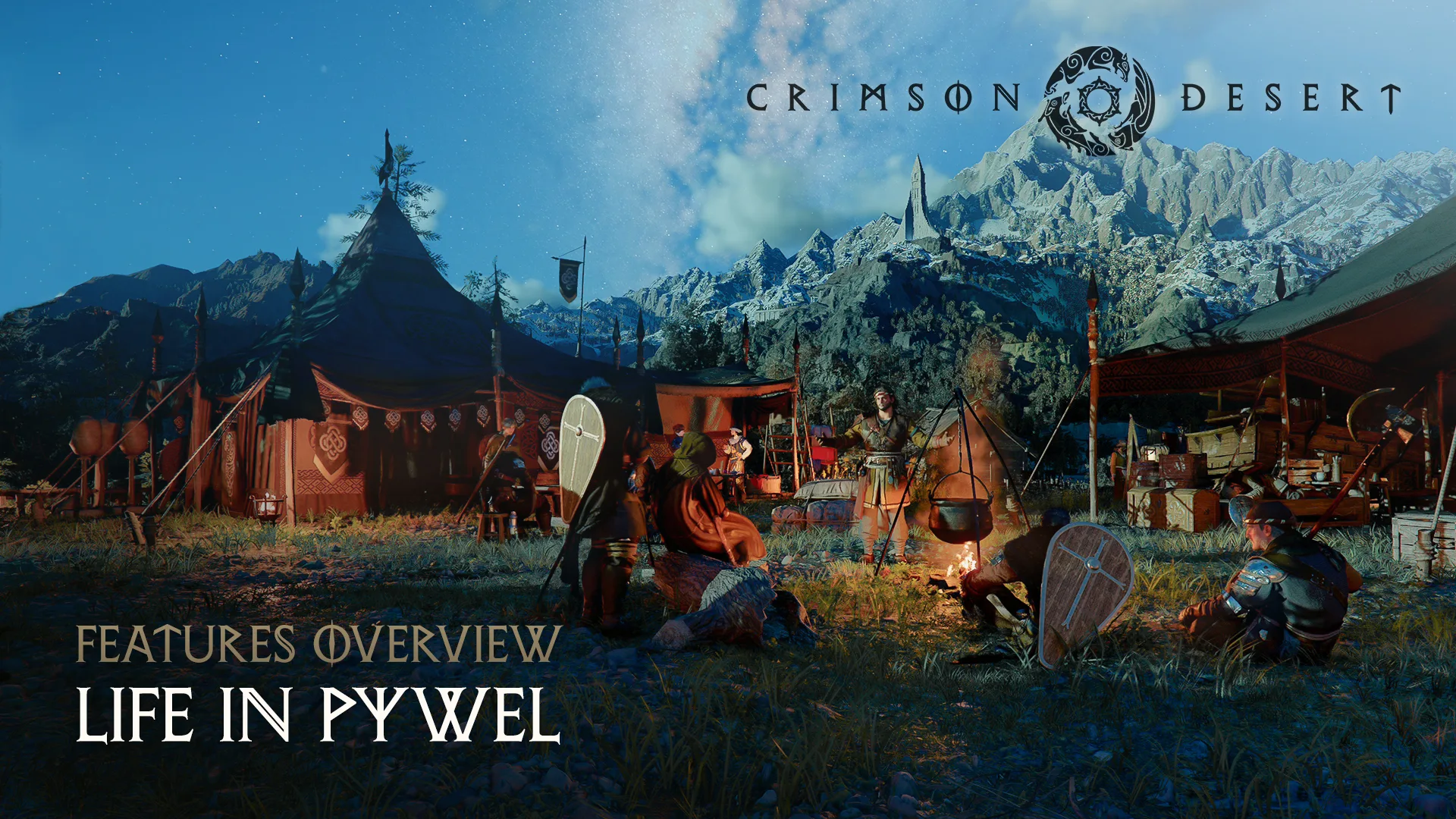
Pearl Abyss’s 'Crimson Desert' surpassed 6 million copies sold worldwide within 83 days of its March 2026 release. It was a rare case of a new open-world IP, developed over many years with a large workforce, achieving major commercial success in the global market. Although its production budget has not been disclosed, 'Crimson Desert' is closer to a large-scale project than to the mid-sized games examined here. In Korea, the most visible success of the year came from precisely the kind of long-term, high-risk, high-polish project that this article has treated as structurally difficult.
Meanwhile, conditions for smaller studios were far more unstable. Clover Games, known for 'Lord of Heroes,' filed for bankruptcy after the poor performance of a new release and subsequent restructuring. EVR Studio, the developer of 'MUDANG: Two Hearts,' lost most of its staff, leaving the project effectively suspended. Other companies shut down newly launched services or sharply reduced their organizations. Judging from the most visible cases of the first half of the year, major projects succeeded in the global market while the studios below them struggled simply to survive.
The reasons for the missing middle in Korea also differ from those in the West. In Western markets, rising AAA costs pushed mid-sized projects out. In Korea, mobile free-to-play games dominated the industry for so long that the foundation required to produce premium packaged games on a sustained basis never fully developed. The West is attempting to recover a middle tier that once existed. Korea is closer to trying to build a stable middle tier it has never consistently had.
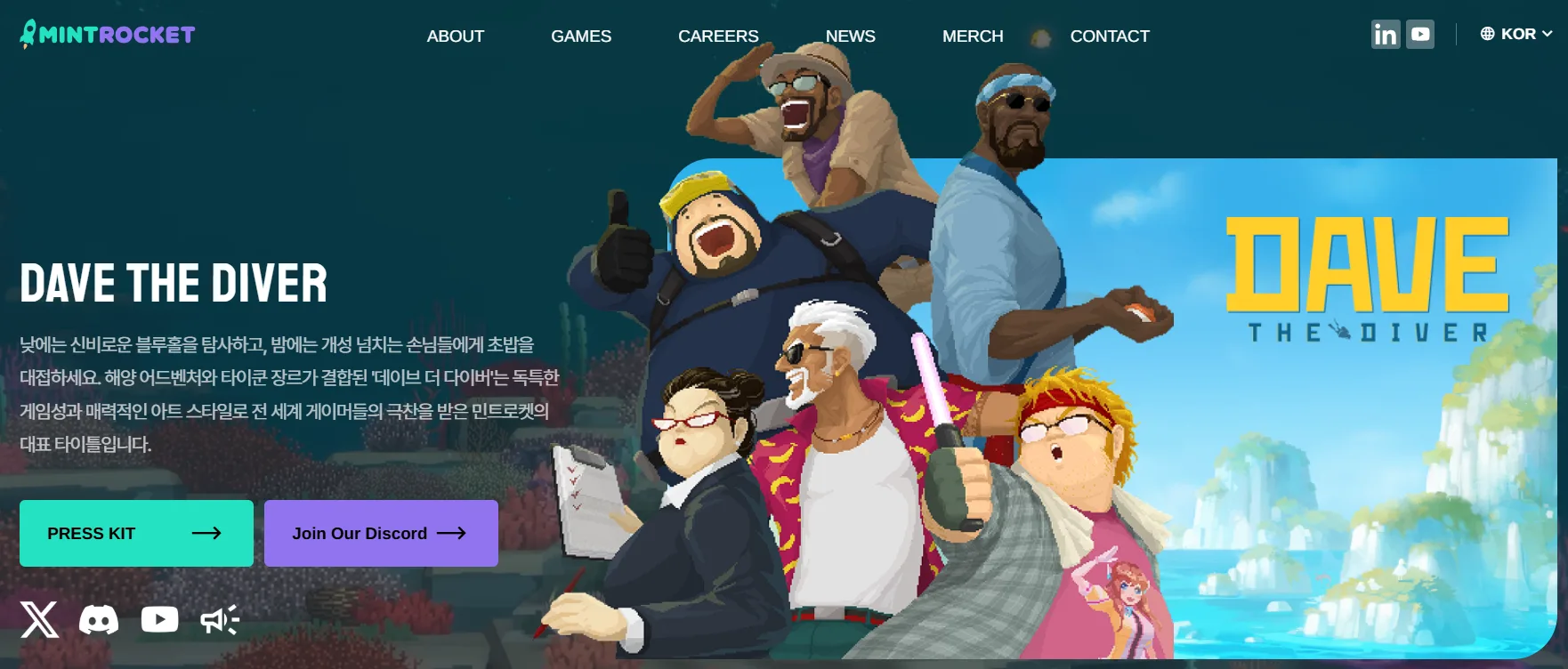
That does not mean the potential was absent. Nexon Mintrocket’s 'Dave the Diver' grew from 1 million copies sold in 2023 to more than 8 million by March 2026, with most of its revenue coming from overseas. 'Lies of P' and 'Stellar Blade' also passed 3 million copies each, demonstrating that Korean premium games could compete in the global market. Their team sizes and investment structures differed, but all three showed that Korean games could reach an audience measured in millions outside mobile and MMORPG markets.
Still, several successful titles have not yet become a stable path. For an industrial tier to form, projects of similar scale and structure must continue after each success, and the experience gained by their developers must spread across studios and future productions. Korea has already confirmed several times that mid-sized premium games can succeed. What it has not yet built is a system capable of producing and financing them repeatedly.
This is why some smaller Korean studios have recently reduced their dependence on publishers and shifted toward the PC and console market through Steam. Rather than chasing the revenue of a large MMORPG, they are targeting distinct genres and audiences with games designed to sell over a longer period. Whether this remains an individual survival strategy or develops into a new production tier within the Korean game industry is still an open question.
Conditions for Sustainability
For mid-sized games to become a stable industrial tier, simply making smaller games is not enough. A small budget is not a competitive advantage in itself. If cost reductions also remove the quality players expect, a low budget becomes a cause of failure. The successful games examined above did not rely on indiscriminate downsizing. They aligned the standard of success with the scope of production.
The first requirement is a development budget the company can absorb. The lower the amount that must be recovered, the more room there is to move away from familiar formulas. If a single failure threatens the survival of the company, even a highly original idea becomes difficult to approve. The budget should not be the result of costs accumulated during development; it should be the starting point that determines how much risk the project can bear.
The next requirement is a realistic sales target. A financial structure must exist in which selling 2 million copies can be recognized as a success before a proposal aiming for 2 million copies can be approved. If every project assumes tens of millions of players and long-term additional revenue, its scale will inevitably grow again. Mid-sized games can only be repeated when a moderate success is not treated as failure.
The development scope must also match that target. The strength of a mid-sized game does not lie in becoming a smaller imitation of a major release. Trying to match the size of an open world, the quantity of content, cinematic presentation, and total playtime of a blockbuster often produces nothing more than AAA ambitions with an AA budget. Developers must decide what not to include and concentrate resources on the elements players will recognize as the game’s value. 'Clair Obscur: Expedition 33' limited the scale of its spaces and invested instead in its characters, music, combat, and art.
This, however, is the limit of what developers can control directly. Even a game with an appropriate budget, sales target, and tightly defined scope cannot survive if players never discover it. Making a good game and being found are different problems. As the number of releases grows, securing store visibility, platform recommendations, media coverage, and streamer attention becomes increasingly difficult. Marketing capacity still tends to follow the scale of capital.
The sustainability of mid-sized development therefore cannot be created by developer discipline alone. Publishers must be willing to invest not only in projects with blockbuster potential, but also in games capable of producing stable returns within a limited market. Platforms must be able to connect specific games with the audiences most likely to value them, rather than concentrating attention only on titles that already dominate the market. The first three conditions determine how a game is completed. The final condition determines whether that completed game can reach the market.
Even when all these conditions are met and a game succeeds, another problem remains. Successful studios often find it difficult to remain at the same scale for their next project.
As sales grow and the fan base expands, expectations for the next game rise with them. Audiences ask for a larger world, more content, and more ambitious presentation. Developers increase staff and budgets in an attempt to continue their success. Investors and publishers also expect revenue to exceed that of the previous title. Success at the mid-sized level raises the fixed costs and break-even point of the next production.
This may be one reason the middle repeatedly empties out. Studios that fail disappear, while studios that succeed move toward larger projects. Rather than remaining in the tier where they accumulated experience and capital, successful companies move upward, leaving the vacant space to new teams that must take the same risks again from the beginning.
The sustainability of AA development cannot therefore be achieved simply by keeping a handful of studios at the same size. Even when successful companies move upward, new teams and projects must continue to emerge below them, supported by reliable investment and distribution routes. The goal is not to freeze individual studios at a fixed scale, but to create a cycle in which the success of one mid-sized game produces the conditions for the next.


