On September 17, KRAFTON’s regional competition, PUBG Asia Stars 2026, kicked off. The event featured UGC modes inspired by medal events at the Asian Games and, unlike conventional tournaments centered on professional players, brought PUBG Partners and streamers into the competition as regional representatives. A total of 48 participants from six regions—China, Japan, Korea, Chinese Taipei, Thailand, and Vietnam—took part, with matches scheduled for September 17, 19, and 20.

But problems emerged on the very first day. Vietnamese participants Himass and TanVuu were suspected of using information obtained outside the game during competition. At the center of the controversy was an act commonly referred to by Korean gamers as “bang-play” (방플), or stream sniping.
“Bang-play” refers to watching another player’s broadcast while playing. Internationally, the practice is generally known as stream sniping. By directly watching an opponent’s live stream or receiving information obtained from it, a player can learn details unavailable on their own screen, such as an opponent’s location, movement route, or combat situation. In a game like PUBG, where positional information is crucial, this can directly affect competitive fairness.
After the allegations surfaced, KRAFTON removed the two participants from the remaining matches and began investigating the facts. At that point, the issue might have ended with determining whether the two had engaged in misconduct and imposing sanctions accordingly. But the controversy did not stop with them. Questions continued over how the incident was handled and explained, and on September 19, all eight Korean participants decided not to take part in the remaining matches. KRAFTON ultimately canceled the final day scheduled for September 20, bringing the event to an end without establishing final standings.
KRAFTON issued an official apology on September 21. Two days later, on September 23, it announced the results of its final investigation, confirming that Himass and TanVuu had obtained information from outside the match and used it in their actual decision-making and tactics. Both participants received permanent suspensions covering their game accounts and eligibility to compete in official esports tournaments.
Unlike Hacking, Stream Sniping Exploits Information from Outside the Game
Stream sniping differs fundamentally from hacks or unauthorized software. While hacking typically involves modifying software or gaining abnormal access to information within the game, stream sniping relies on information obtained outside it, such as personal livestreams or real-time chat. Because legitimate broadcasts and chat can themselves become channels for information, the problem cannot be prevented through game security alone. Esports competitions therefore use measures such as adding delays to broadcasts or restricting chat during matches. At the same time, rules need to define what constitutes external information, how simply seeing that information differs from actually using it in play, and what level of penalty should apply when a violation occurs.
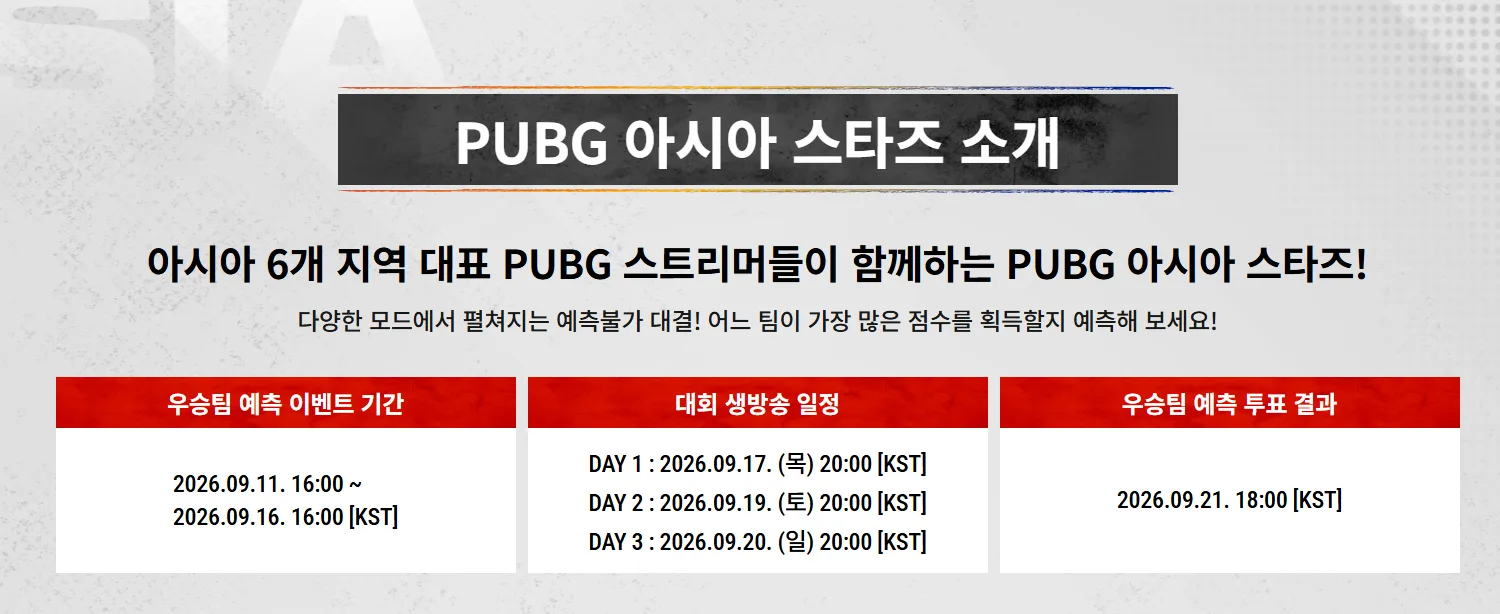
PUBG Asia Stars was a friendly, cross-regional event featuring professional players and streamers, and it was conducted in a relatively relaxed atmosphere. Broadcast delays were not mandatory, and clear standards for determining the use of external information, along with corresponding penalties, had not been established in advance. Some participants interpreted this approach as relatively permissive toward the use of outside information, but it was unclear whether that extended to using information obtained outside the game to influence actual gameplay.
These gaps made matters more complicated once an actual incident occurred. It was difficult to fully prevent outside information from reaching players during matches, and once the controversy emerged, organizers also had to determine what should count as the use of external information and how to establish whether that information had actually influenced gameplay.
Ultimately, the incident exposed two problems at once: how to prevent stream sniping before it happens and how to judge such conduct after it occurs. These questions later expanded into a broader controversy over tournament operations as KRAFTON investigated the two participants and explained the results.
How Did a Problem Involving Two Players Escalate into a Tournament-Wide Controversy?
The final investigation identified two Vietnamese players, Himass and TanVuu, as having engaged in misconduct. But as the incident unfolded, the controversy expanded beyond the conduct of the two participants to encompass how tournament organizers judged and handled the situation.

Two Korean expressions, “chat-play” (챗플) and “bang-play” (방플), appeared side by side as the incident was being explained. At the time, “chat-play” was used to describe receiving external information through a livestream chat. But the central issue was not simply how the information was obtained. It was whether the players had acquired information unavailable through normal gameplay and then used it during the match. The two Vietnamese participants initially acknowledged receiving outside information through their own stream chats, while the allegations raised at the time also included whether they had engaged in stream sniping involving an opponent’s broadcast. The subsequent investigation confirmed that information obtained from outside the game had in fact been used in their decisions and tactics. As the scope of confirmed facts changed over the course of the investigation—and as the terms “chat-play” and “bang-play” were used alongside each other—the explanation of what exactly had happened became increasingly complicated.
The way the Korean participants’ collective withdrawal was described also became controversial. The participants declined to play the remaining matches after raising concerns about the fairness of tournament operations, while KRAFTON described their decision as a “withdrawal from participation.” If “withdrawal” focuses on the fact that they no longer took part in the competition, “boycott” also conveys the reason for their absence: a refusal to participate in protest over a particular issue. The same action could therefore be understood differently depending on the term used to describe it.
Of course, these differences in wording alone are not enough to conclude that KRAFTON’s response was inappropriate. Because the investigation was still underway, officially presenting unverified claims as established facts could itself have created problems. But over the course of the controversy, the focus began to shift. What started as a question of whether two participants had used external information developed into another question: what standards the organizers were using to judge the conduct and how they were handling the case.
Responsibility for the misconduct did not shift from the players to KRAFTON. Rather, the players’ misconduct and the organizers’ responsibility to judge and handle that misconduct emerged as two separate issues at the same time.
A Question of Fairness Became a Question of Trust in the Ruling
KRAFTON ultimately confirmed misconduct by the two participants and imposed permanent suspensions. Judged by the outcome alone, this was a severe penalty. But before that conclusion was reached, all eight Korean participants had already decided not to compete in the remaining matches, and the tournament had ended without its final day being played. This sequence matters in understanding the incident. Determining conclusively whether misconduct occurred and ensuring that participants can continue competing while an investigation and ruling are underway are two different problems.
When a player violates tournament rules, the primary responsibility lies with that player. The organizer must establish the facts and make a judgment based on the rules. But when disagreements over the standards behind that judgment or the way the case is handled begin to affect whether other participants are willing to continue competing, the problem becomes difficult to resolve through sanctions against an individual player alone.
Fairness in competitive gaming is not maintained simply by applying the same rules to everyone. When a problem occurs, participants also need to understand the standards being used to judge it and the process through which a decision is being reached. Arriving at the correct ruling in the end and maintaining trust in the process that produces that ruling are separate matters.
This also raises a broader question about the scope of tournament operations. Operations are not limited to starting matches on time, enforcing rules, and producing results. They also include anticipating possible situations, preparing rules and response procedures before problems occur, and making judgments and taking necessary action quickly when they do. Not every situation can be anticipated, but organizers can prepare for how they will respond when the unexpected happens.
Ultimately, compelling competition requires more than good matches. It also requires the ability to prepare, judge, and act in ways that allow those matches to be accepted as fair competition until the end. Wins and losses have meaning only when players are understood to be competing under the same conditions, and spectators can focus on the competition only when that premise holds. How quickly and clearly fairness is restored when it comes into question is therefore not merely an administrative issue outside the game. It is one of the conditions that make the tournament—and the competition itself—possible.
Good tournament operations usually go unnoticed. If players can compete and spectators can focus on the contest, the organizers can remain in the background. But when preparation falls short, the opposite happens. Instead of the competition, the gaps in how it was run begin to take center stage.
If the tournament’s operations remain the bigger story after the matches are over, perhaps it is worth asking what the event failed to prepare for.