Generative AI and Creative Work: What Do Creators Lose?
From Creation to Curation: How AI Reshapes Skills, Autonomy, and Creative Work
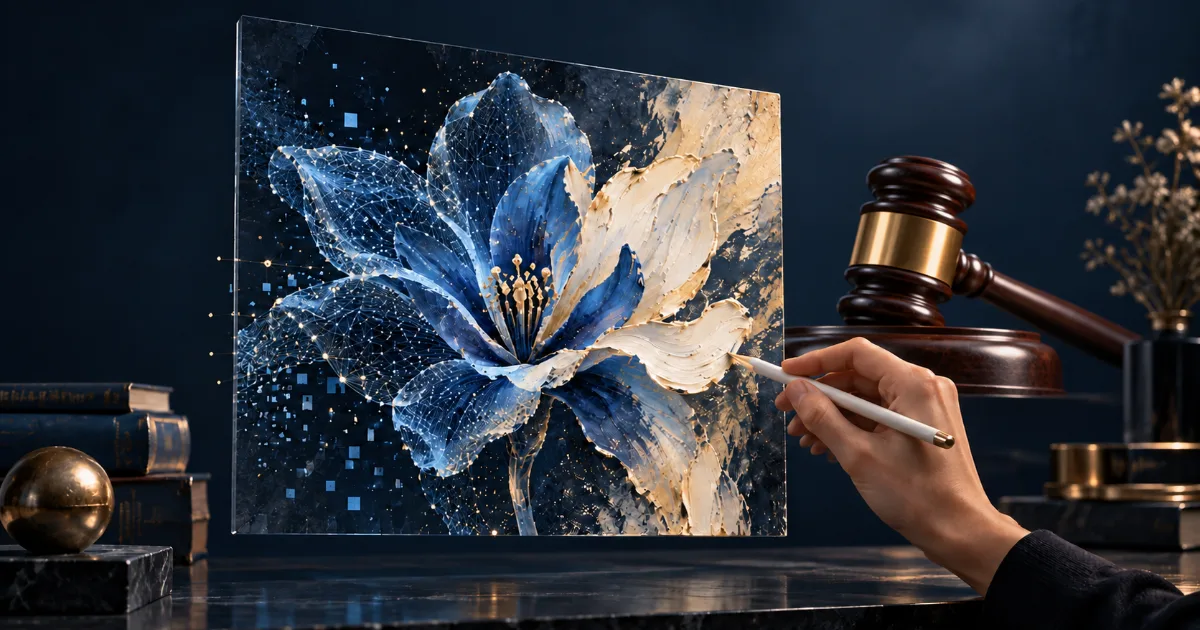
Generative AI allows a single person to produce images and music, edit videos, and complete an entire film. Tasks that once required collaboration among multiple specialists and substantial production budgets can now be carried out by individuals. Creators gain greater production capabilities while spending less time on their work. But if humans perform fewer tasks during the creative process, does that necessarily mean their work becomes more meaningful?
Published in the Journal of Business Ethics in 2026, Thomas Montefiore and colleagues' paper, The Impacts of Generative AI on the Meaningfulness of Creative Work, begins with this question. Rather than focusing on how well AI can produce creative works, the researchers examine how its adoption changes the human experience of creativity and the meaningfulness of creative labor.
AI Does Not Need to Surpass Human Creativity to Transform Creative Industries
Whether AI can surpass human creativity remains a subject of debate. The researchers argue that answering this question is not necessary to understand AI's impact on creative industries.
The paper introduces the concept of "satisficing creativity." Even if AI cannot establish a new artistic movement like Picasso, it can threaten the economic position of existing creators by producing works that meet consumer expectations quickly and at low cost.
From this perspective, understanding changes in creative labor requires distinguishing AI's artistic capabilities from its competitiveness in the marketplace. Artistic originality does not always correspond to the standards of quality demanded by the market.
Five Dimensions of Meaningful Creative Work
The researchers examine the meaningfulness of creative work through five dimensions: task integrity, or participating in a project from conception to completion; skill cultivation and use, or developing and exercising creative abilities; task significance, or contributing value to others and society; autonomy, or making decisions according to one's own intentions; and belongingness, or maintaining connections with colleagues and cultural communities.
AI affects these dimensions in different ways. For example, in 3D animation production, AI can reduce the time required for repetitive tasks and experimentation, allowing creators to develop their compositional skills and aesthetic judgment through more iterations. Conversely, delegating essential production techniques to AI may cause existing skills to deteriorate or eliminate opportunities to acquire new ones.
A similar paradox emerges when an individual uses AI to manage an entire film production. The creator gains the experience of completing a whole work and greater autonomy, while specialists who previously collaborated on the project may lose opportunities to contribute creatively. The exchange of ideas and peer recognition associated with collaborative production may also diminish.
The researchers particularly emphasize the interdependence of these five dimensions. When reduced use of technical skills weakens a creator's expertise, their control over the final output may also decline. If the work is then judged less valuable because AI was involved, the meaningfulness experienced by the creator may deteriorate through a chain of reinforcing effects.
The reverse is also possible. Even when reduced collaboration weakens belongingness, significant gains in autonomy and task integrity may increase the overall meaningfulness of creative work.
From Creator to Curator: The Changing Nature of Creative Labor
One of the paper's most significant observations is the possibility that creative work will shift from creation to curation, from directly making things to selecting and editing outputs.
Traditionally, creators identified problems, developed relevant skills, generated ideas, and evaluated possible solutions through repeated cycles. In a generative AI environment, people may spend more time comparing and modifying AI-generated outputs than generating ideas themselves.
This transition requires new forms of expertise. Evaluating AI outputs and guiding them toward a desired result can become creative skills in their own right. However, having more options to choose from does not necessarily mean having greater involvement in the creative process.
When idea generation and aesthetic judgment are delegated to AI, creators may retain the ability to select outputs while losing control over how their intentions are translated into the final work. The researchers suggest that this transformation may affect not only technical mastery but also self-expression and creative identity.
Do Creators Still Have the Freedom Not to Use AI?
These changes do not arise solely from individual choices. The researchers argue that as AI improves productivity and becomes widely adopted, maintaining traditional production methods may become increasingly difficult.
Creators who prefer not to use AI may nevertheless be compelled to adopt it to remain competitive in terms of cost and delivery time. They may have to accept new working methods for economic reasons, even when those methods make their creative activities less meaningful.
This situation produces another contradiction. Creators may need AI to remain competitive, yet revealing its use can cause audiences to assign lower value to their work or question their competence.
The paper discusses this phenomenon as the "AI penalty." Existing studies have found that people may evaluate works less favorably when told that AI was involved, even when they cannot distinguish human-generated content from AI-generated content.
In some cases, merely suspecting AI use can damage a creator's reputation. The consequences extend beyond those who use AI, potentially affecting those who do not. As suspicion surrounding production methods spreads, trust between creators, audiences, and professional peers may deteriorate.
A New Framework for Evaluating the Future of Creativity
This paper is a conceptual and ethical analysis that combines existing theories of creativity with research on meaningful work, rather than an experimental study measuring the effects of generative AI. The magnitude and relative importance of changes across the five dimensions therefore require further empirical investigation in different occupations and production environments.
Nevertheless, the study expands the criteria by which changes in creative industries can be evaluated. Even if AI increases the quantity and quality of finished works, opportunities for creators to develop skills, realize their intentions, and collaborate with others may decline. Conversely, AI can provide new creative opportunities to people who previously lacked the necessary technical abilities and resources.
The researchers also emphasize that changes in creative industries affect independent artists, creative specialists, and support workers differently. Expanding one person's production capabilities may reduce another person's employment opportunities. Evaluating AI adoption therefore requires examining productivity alongside who participates in creative processes, which abilities they develop, and how their contributions are rewarded.
The central question raised by this paper concerns not only what creators will be able to produce in the future, but also what they will continue to have the opportunity to make and judge for themselves.
Montefiore, T., Formosa, P., Bankins, S., & Sahebi, S. (2026). "The Impacts of Generative AI on the Meaningfulness of Creative Work." Journal of Business Ethics.