Riot Games has long been a company known for making “games that never end.” ‘League of Legends’ has remained in service since its launch in 2009, while ‘VALORANT’ and ‘Teamfight Tactics’ are also built around regular updates and seasonal content. Live-service and F2P (Free-to-Play) models—allowing players to start for free while continuously adding new characters, skins, and seasonal content—have been central to Riot’s success.
Recently, however, Riot has begun talking about something slightly different. At PAX West 2026 in September, Riot co-founder and Chief Product Officer (CPO) Marc Merrill said, “Not every game needs to be infinite.” He explained that not every Riot game needs to be free or designed around long-term service, and revealed that the company is already working on projects that are not free-to-play.
That does not mean Riot is abandoning live-service games. What is notable is that a company built on live-service success is now openly acknowledging that different games may require different lifespans and business models.
So why is Riot saying this now?
A Good Game Does Not Necessarily Last Forever
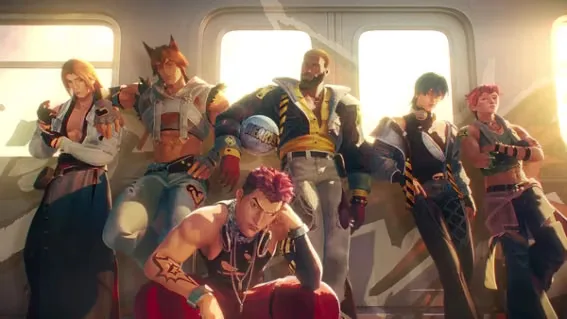
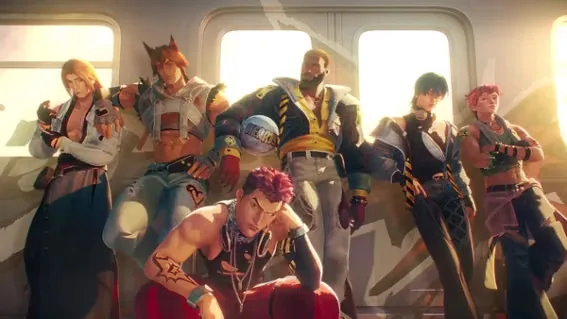
One reason can be found in ‘2XKO.’ Riot first revealed the project in 2019 under the name ‘Project L.’ The 2v2 fighting game uses characters and the world of ‘League of Legends.’ After years of development, it entered early access in 2025 and officially launched in January 2026. With free-to-play access, regular character additions, and online competition, ‘2XKO’ brought Riot’s live-service experience from ‘League of Legends’ and ‘VALORANT’ into the fighting-game genre.
But only months after its official launch, the direction changed. Riot said it had monitored player response, new-user acquisition, retention, and engagement through multiple updates, but the results did not translate into sustained growth. New characters, PvE content, and tournaments generated positive responses at times, yet the game failed to grow its player base enough, while operating costs significantly exceeded revenue.
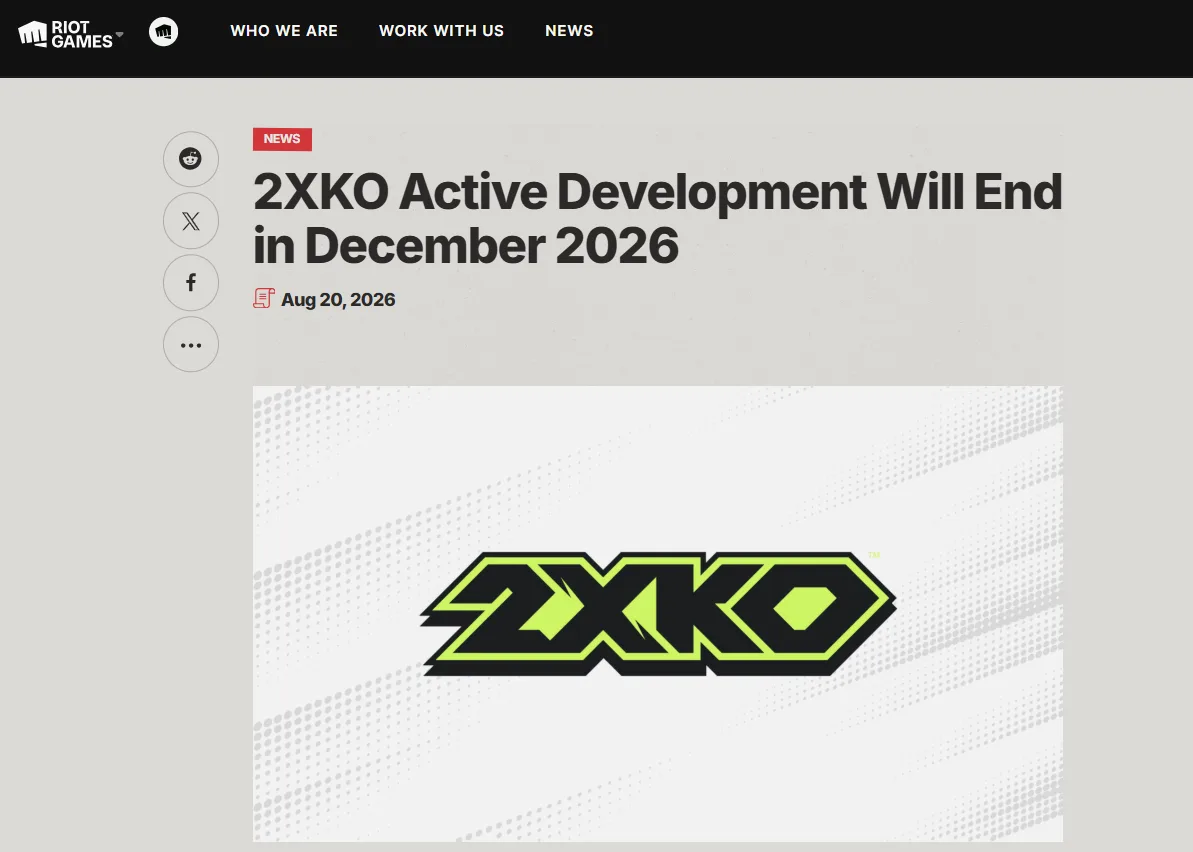
Riot ultimately concluded that it could not continue developing ‘2XKO’ at its current scale and decided to end active development by the end of 2026. The service itself, however, will not shut down. Servers, downloads, and offline play will remain available, while major new content will no longer be added.
This is where Merrill’s comments become more relevant. He did not view the decision to make ‘2XKO’ itself as a mistake. Instead, he explained that new games today are no longer competing only with other titles in the same genre. They are competing for the same limited amount of time against established games, YouTube, social media, streaming platforms, and other forms of entertainment.
Merrill’s explanation highlights the burden built into live-service games. Unlike a premium game that players can buy, enjoy for a certain amount of time, and then leave, a live-service game needs players to keep coming back. New seasons, additional content, server operations, and community support all depend on maintaining a large enough active player base over time.
Ultimately, making a fun game and making a game that people will continue playing for years are two different challenges.
What Live-Service Games Are Really Competing For Is ‘Time’
For a live-service game to keep growing, getting players through the door once is not enough. They need to return for the next season, try new characters and events, and continue investing their time. Launch is not the finish line; it is the beginning of long-term operation.
The problem is that players only have so much time. There is a limit to how much one person can keep up with ranked play in ‘League of Legends,’ seasonal content in ‘VALORANT,’ and battle passes and events across several other games. Even if a game is free to start, playing it over the long term still requires a continuing investment of time.
Market data also reflects this concentration. According to Newzoo’s analysis of the 2025 PC and console market, the top 20 games accounted for more than half of total playtime. The top 10 alone represented 47% of PC playtime, 49% on PlayStation, and 44% on Xbox. In other words, a relatively small group of established games already occupies a large share of players’ time.
New live-service games therefore have to compete with those titles as well. Being more entertaining than another new release is not enough; they must convince players to redirect some of the time they are already spending on games such as ‘Fortnite,’ ‘GTA,’ and ‘Minecraft.’
That is why, in the live-service market, time can be just as important a resource as money.
Developers appear to be aware of that pressure as well. In GDC’s 2025 developer survey, 33% of AAA developers said they were working on a live-service game, but only 13% of all respondents said they wanted their next project to be live-service. More than 40% said they had no interest in doing so. This does not mean live-service games are disappearing, but it does suggest that the model is no longer viewed as a universal formula for success.
Not Every Game Needs to Be a Player’s ‘Main Game’
Live-service games benefit from scale. More players mean smoother matchmaking, larger communities, and more activity around streaming and esports. The resulting revenue can then be reinvested into new content and updates, helping the service continue.
But the situation changes when a game fails to reach a certain scale. Updates and server operations continue to cost money, and if the player base does not grow, developing new content becomes increasingly difficult. That is why Riot emphasized the importance of reaching a “sustainable scale” in the case of ‘2XKO.’
There is also the question of player time. Live-service games continuously create reasons to return through login rewards, daily quests, battle passes, and limited-time events. In a single game, these may simply feel like more things to do. Across several games at once, however, the situation can change. One game has a quest that must be completed today, another has a weekly reward to claim, and another has a battle pass that needs to be finished before the season ends.
These systems can be effective at bringing players back, but they can also become a source of pressure. A 2022 CHI PLAY study found that players sometimes viewed recurring rewards such as daily quests and login bonuses as motivating, while others experienced them as fear of missing out (FoMO) or as obligations—things they simply “had to do.” At that point, a game can begin to feel less like leisure and more like another schedule to manage. For players juggling two or three live-service games at once, keeping up with every required login and event can become difficult. Not every game can occupy the position of a player’s “main game” at the same time.
Nor does every game need to be designed that way. Some games may be enjoyed casually once or twice a week. Others may leave a strong impression over 20 hours and then end. And some, like ‘League of Legends,’ can keep players returning for more than a decade. The point is not that one form is better than another, but that different games may require different lifespans.
This is where Merrill’s reference to the “premium game” becomes relevant. The term generally refers to games purchased upfront for a fixed price—what is commonly described in Korea as a package game or a one-time purchase title. These games do not necessarily need to retain players for years. Whether they last 10 hours or 50, they can focus on delivering the right experience within that span and end when the story or experience reaches its natural conclusion.
Merrill made a similar point. F2P works well for games designed to be played over long periods, where players can choose to purchase skins or other cosmetic items. But not every game needs to adopt the same structure. Systems built around constant engagement and long-term operation can, in some cases, place constraints on the game’s design itself.
Ultimately, not every game needs to become the “main game” that occupies a player’s daily life. Having an ending does not mean a game lacks content—it can also mean the developer is free to decide where the experience should conclude.
Not Every Game Needs to Last 10 Years
Paid, self-contained games are not entirely unfamiliar territory for Riot. Through ‘Riot Forge,’ the company previously released titles such as ‘Ruined King,’ ‘Song of Nunu,’ and ‘CONVERGENCE.’ These games were developed by external studios using Riot’s worlds and characters, and ‘Riot Forge’ itself was shut down in 2024.
That is why Merrill’s recent comments can be read somewhat differently. Riot is now openly saying that not every game under the company needs to be built around F2P or long-term live service. Merrill also confirmed that Riot is working on projects that will not be free, although the company has not yet revealed what those projects are or how they will be released.
At the same time, Riot is not moving away from live service. ‘League of Legends’ and ‘VALORANT’ continue to be operated for the long term, while the MMO currently in development is also being built with an extended lifespan in mind. Rather than abandoning one model for another, Riot is widening its options, allowing different games to adopt different business and operating models depending on their nature.
‘2XKO’ should not be read as evidence that live service itself is fundamentally flawed. ‘League of Legends,’ from the same company, has been running for more than 15 years. The difference is that some games can give players reasons to keep coming back for years, while others may not need that kind of structure at all.
The game industry has often treated long-running service as a sign of success. If seasons continue, players stay, and revenue keeps coming in, then a game is naturally regarded as a successful service. But not every game has to define its purpose around keeping players engaged for as long as possible.
Some games are at their best when they continue to evolve over many years. Others work better when they deliver a defined story and experience, then bring it to a close. What matters is not simply how long a game remains in service, but whether its lifespan and operating model fit the game itself.
Merrill’s statement that “not every game needs to be infinite” can be read as a sign that even Riot, a company built on live-service success, is now considering different lifespans and operating models for different games.
If a game’s lifespan is ultimately part of its design, then perhaps knowing where to bring it to a close matters just as much as knowing how to keep it going.