'Fallout: Factions,' a physical miniatures game released in 2024, is being reborn this month as an XR game of the same name. The original is a two-player wargame created by the UK's Modiphius Entertainment based on Bethesda's Fallout series, in which players place miniatures they have assembled and painted themselves among terrain pieces on a tabletop, measure distances with a tape measure, and roll dice to decide the outcome.
The US-based XR developer Mirrorscape has now brought this game back into the digital realm. The Fallout universe, which began as a video game, has passed through a miniatures game and expanded once again into digital form. This time, however, the battlefield appears not on a monitor but on a real tabletop. Instead of physical miniatures, terrain, and a tape measure, players simply put on a pair of glasses and sit down at an ordinary table to start the game.
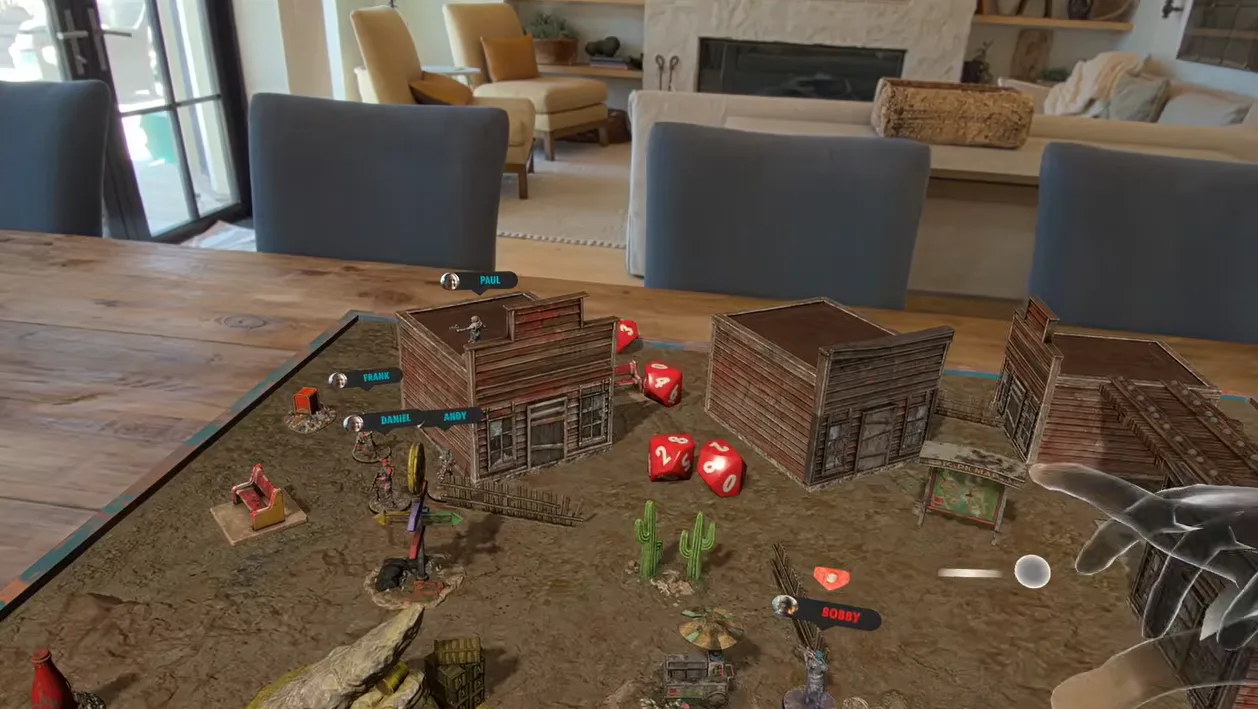
Fallout 4 VR, released in 2017, offered users the experience of stepping directly into the game world. Fallout: Factions XR, by contrast, brings the game into the real space where the user already is. The two draw on the same IP, but offer very different ways of experiencing virtual reality. This difference shows that XR need not be used only to build new virtual worlds. Reshaping existing content to fit real-world spaces can also be a way of using XR.
Three Conditions That Make Tabletop Games a Fit for Glasses-Based XR
This is not the first attempt to bring a digital game board onto a table. Tilt Five drew attention on Kickstarter in 2019 with a $299 set of AR glasses and a game board, and later brought well-known board games such as Catan to its platform. However, because projectors built into the glasses cast images onto a game board made of special reflective material, a dedicated board was required. Mirrorscape, too, has spent several years running an AR tabletop platform for smartphones and tablets, delivering this kind of experience.
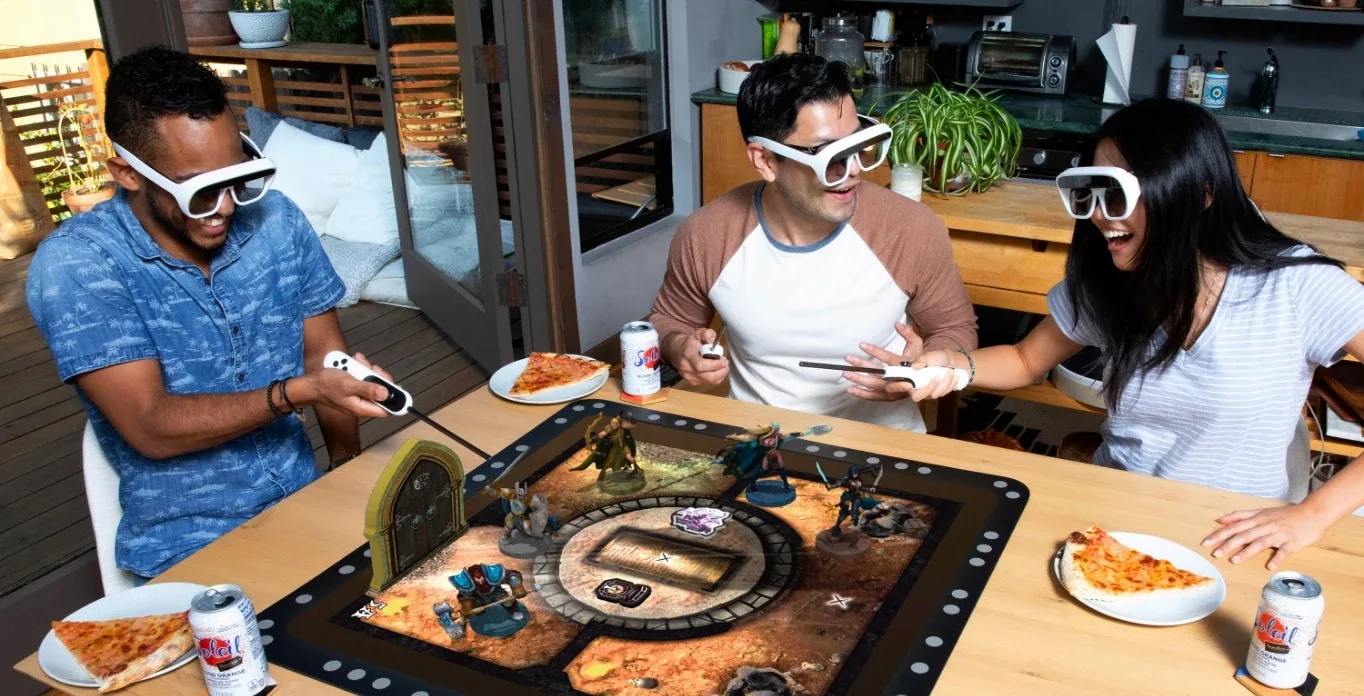
Fallout: Factions XR marks the extension of these efforts to glasses-based XR devices. XREAL Aura, the device the game runs on, is built on Google's Android XR and can render a digital battlefield on an ordinary table without a dedicated reflective board. Set to begin shipping in major markets, including Korea, from mid-November, the device uses an optical see-through design that lets users view their real surroundings directly. A popular game IP, a general-purpose XR platform, and a real-world play space have been brought together in a single piece of content. The naturalness of this combination owes much to the inherent characteristics of tabletop games.
The first is that the boundaries of the play space are clear. The battlefield in a tabletop game is generally confined to roughly the size of a single table. This fits relatively well with the characteristics of optical see-through glasses, which have a field of view of about 70 degrees. Unlike trying to fit a vast open world into a limited field of view, tabletop games make it easy to place the key elements within the range the user is looking at. Users may still need to shift their gaze depending on the size of the battlefield or their position, but the fact that the content itself is designed around a confined space is a clear advantage.
The second is turn-based play and a top-down perspective. Unlike action games that demand fast reactions and precise, continuous input, tabletop games proceed by surveying the situation and then deciding on moves or attacks. As a result, latency or precision issues with gesture input may place relatively little burden on gameplay. The perspective of looking down on the battlefield and moving pieces is also familiar to existing tabletop players, reducing the burden of adapting to a new control environment.
The third is that it is a form of play enjoyed face to face. Optical see-through glasses let users see the real world directly, so they can play while keeping the table and their opponent in view. This sets them apart from typical VR headsets, which replace the user's field of view with a virtual environment. Mirrorscape CEO Grant Anderson has explained that from the very beginning of the platform's conception, his goal was to preserve the experience of people gathering around a real table to play together. With this release, too, the company emphasized that the digital battlefield does not cost players their connection with the people sitting at the table with them.
With their confined space, familiar perspective, and face-to-face interaction, tabletop games thus have great potential for combination with glasses-based XR.
So how are these characteristics of tabletop games realized in the actual game, and how does the existing play experience change?
What Stays and What Changes
The most noticeable change in Fallout: Factions XR is in the hand movements once used to handle miniatures and dice directly. Players can select a piece by pressing their thumb and index finger together as if picking it up, then move it and set it down where they want. The dice, too, are controlled by grabbing them with the fingers and throwing them as one would in real life. The tactile feel of physical objects is gone, but the act of picking things up, moving them, grasping, and throwing remains. Rather than replacing physical interaction with buttons or mouse clicks, the approach seeks to recreate familiar hand movements in a digital environment.
Conversely, the tedious procedures that once had to be handled by hand are taken over by digital technology. The prime examples are distance measurement and combat resolution. The original starter set includes a dedicated tape measure, and players must check movement distances and weapon ranges themselves every time they move or attack. In the XR version, movement distance is displayed as a piece is moved, and selecting a ranged attack automatically highlights the weapon's range and the enemies that can be targeted. Once the dice are thrown, results and hits are resolved immediately. The act of throwing the dice is preserved, while the work of measuring distances and calculating outcomes is handed over to the digital system.
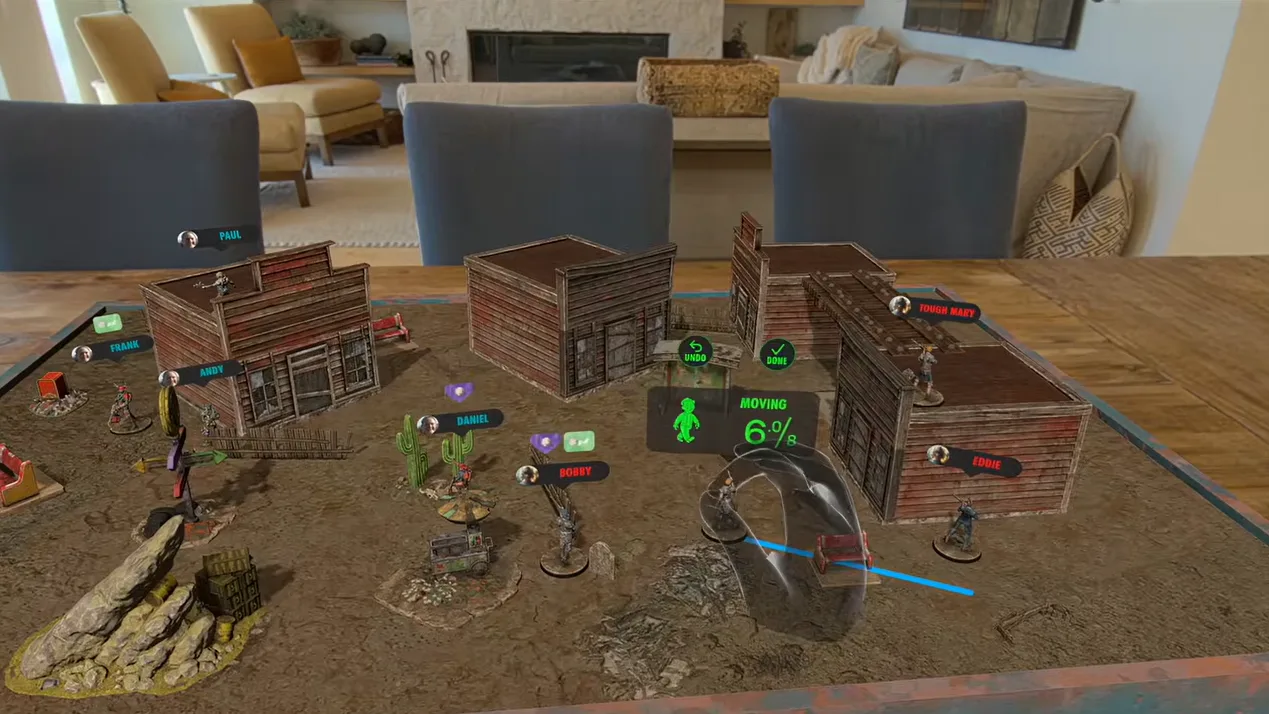
On top of this come experiences that were difficult to achieve in the physical game. Players can command their entire squad from above, then switch to the perspective of a single crew member to survey the battlefield, and can play not only face to face at the same table but also remotely against other players. The core rules are based on the physical game released in 2024, with three battlefields offered at launch and more planned over time. The game preserves the rules and tactical experience of the original while broadening the ways players can view the battlefield and the range of opponents they can meet.
These changes become even clearer when compared with other ways tabletop games have been brought into the digital realm. Conventional PC or mobile adaptations replace the physical game board with an on-screen interface. There is no need to set up or store a board, and remote play is possible, but the experience centered on a real table disappears. AR on smartphones or tablets can keep the real table, but the constraint remains of having to hold the device or view the battlefield through a screen. Glasses-based XR, on the other hand, keeps the table while letting players use both hands freely and interact with digital elements while looking directly at the real world.
Mirrorscape is a company that has gone through these changes step by step. CEO Grant Anderson, who previously worked in film visual effects and large-scale VR experiences, began by developing a tabletop platform for smartphones and tablets with the eventual mainstream adoption of AR glasses in mind. Fallout: Factions XR extends the AR technology and experience the company built up in the mobile environment to glasses-based devices. The platform has changed, but the fundamental direction of using the real table as a play space has remained.
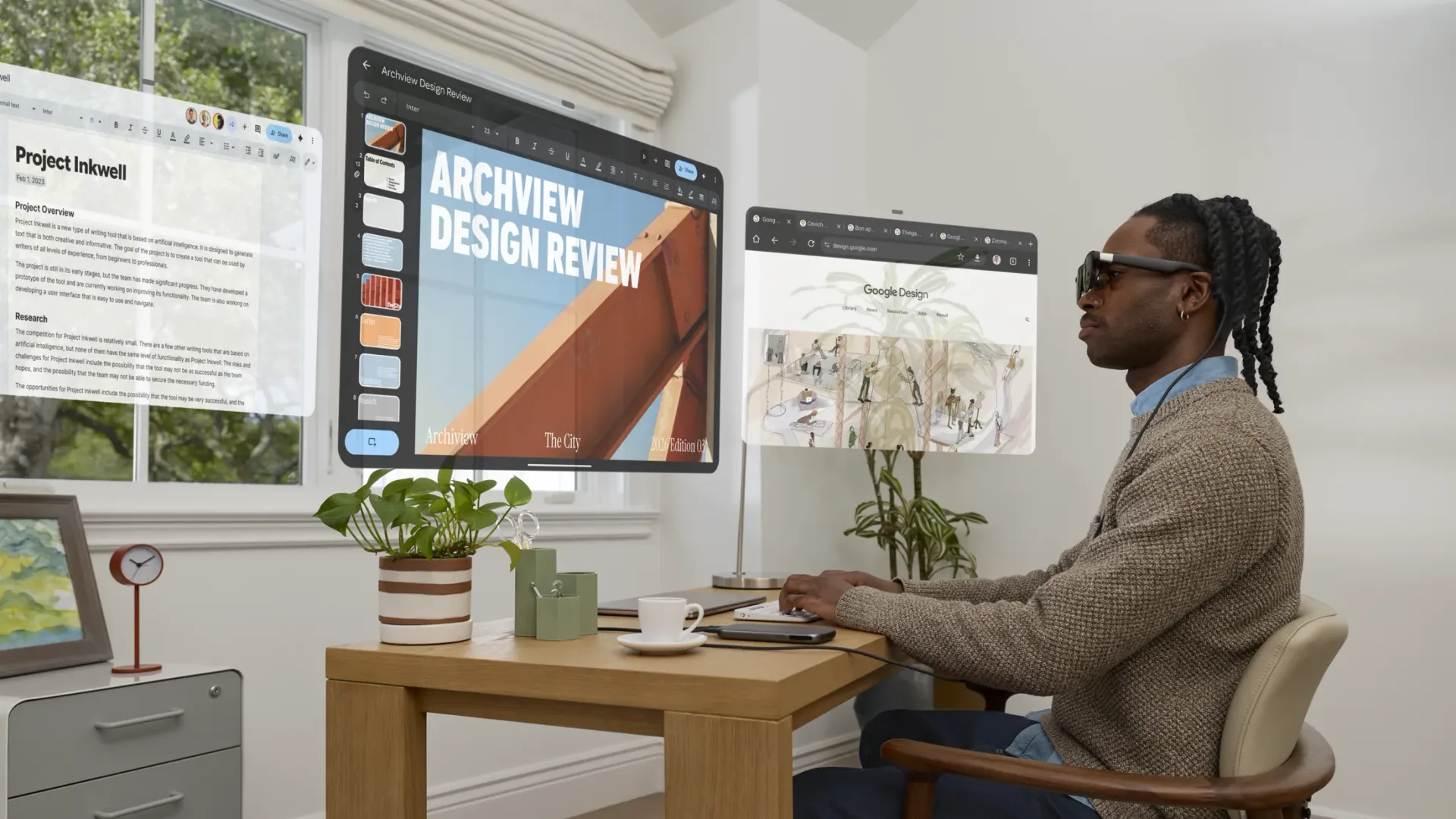
Ultimately, the essence of the change is not simply that the screen has moved to a pair of glasses. If PC and mobile adaptations secured digital convenience by moving the physical table onto a screen, glasses-based XR keeps the real table and adds digital functions on top of it. Rather than transforming existing play into something entirely different, it is a choice about what to keep from a familiar experience and what to replace with technology.
Four Players, One IP
This shift in experience is not merely a matter of developing a single game for a new device. Four kinds of players are involved in the making and distribution of Fallout: Factions XR: the original IP holder, a tabletop game maker, an XR developer, and hardware and platform companies. Each collaborates around a single game, but the value each seeks to gain along the way differs.
The starting point is Bethesda's Fallout IP. The UK's Modiphius Entertainment has expanded the series into tabletop games, beginning with Fallout: Wasteland Warfare and continuing through Fallout: Factions, reshaping the existing universe into the rules and experience of a tactical miniatures game. Mirrorscape takes on the role of moving this content back into the digital environment. Rather than developing the rules for every game itself, the company has pursued a strategy of partnering with established tabletop publishers such as Paizo and Kobold Press to bring proven content onto its platform. XREAL and Google, for their part, secure content that demonstrates what their new glasses-based XR device can do. The fact that Fallout: Factions XR was introduced as a launch title for Aura can be understood in the context of this relationship.
Nor was this partnership pursued in haste after the physical game succeeded in the market. Mirrorscape and Modiphius announced a partnership in March 2024 to bring several tabletop IPs, including Fallout, to AR. At the time, Fallout: Factions had opened pre-orders in February of that year but had not yet been officially released. This means that, at the very least, the XR expansion was not an after-the-fact decision made once the physical game's success had been confirmed. A strategy for developing the existing IP into multiple forms of content was in place relatively early.
The value of the Fallout IP here can be viewed on two levels. One is its recognition as a mainstream franchise. According to Amazon, season 2 of the Fallout TV series reached 83 million viewers worldwide in its first 91 days, and more than 100 million viewers watched seasons 1 and 2 combined over the same period. The games' player base grew after the series aired as well. One analysis found that after season 2 premiered in December 2025, concurrent players of Fallout 4 on Steam rose from around 20,000 to more than 40,000. The video content had the effect of rekindling interest in the games.
The other is the value of Fallout: Factions itself as a tabletop game. Its player base is narrower than that of the franchise as a whole, but it offers rules and a play experience that are already complete. Original designer James Hewitt designed Factions so that not only existing wargamers but also newcomers could enjoy it with relative ease. The XR version extends this accessibility to a new platform. Since players unfamiliar with physical miniatures games can experience the game's rules and tactics without building models or setting up a battlefield, it could become a new route for existing Fallout fans to approach the tabletop genre.
Similar efforts can be found in other XR games. Resolution Games' Demeo began in 2021 as a VR tabletop game based on its own original IP, and later partnered with Wizards of the Coast to release Demeo x Dungeons & Dragons: Battlemarked, which draws on the Dungeons & Dragons universe, in 2025.
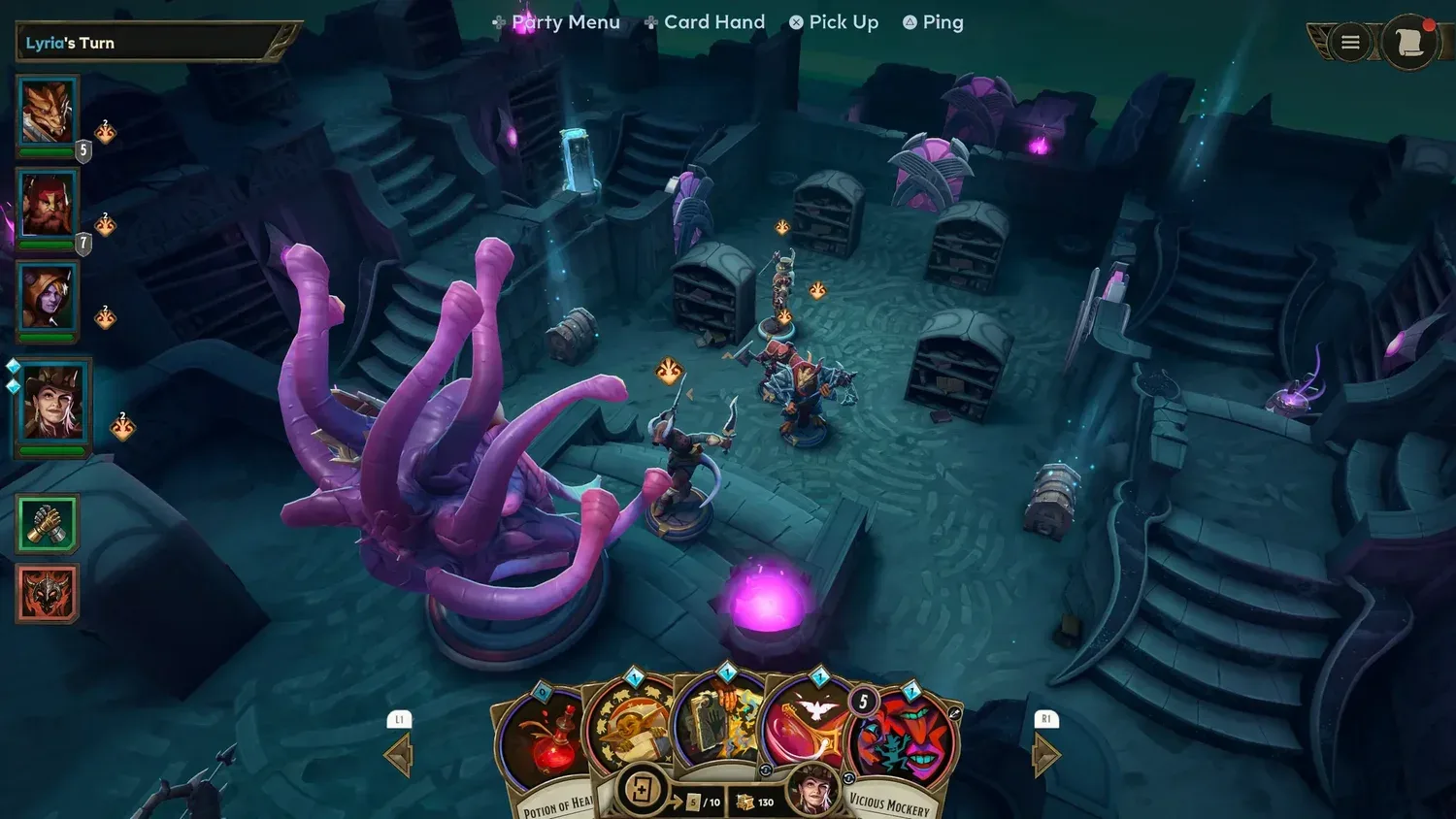
Its starting point differs from Fallout: Factions XR, which brought an existing IP to XR from the outset, but both share the combination of the spatial experience of the tabletop genre with a well-known game IP.
Of course, having an existing IP does not guarantee success in the XR market. Even with high recognition, if users lack sufficient reason to buy a new device or play in an unfamiliar way, that recognition is unlikely to translate into actual use. The pace of content expansion is another challenge. Modiphius has broadened the scope of the physical game, announcing shipments of a new starter set set in Boston in May 2026, but the XR version launches focused on the three factions of Nuka-World. How quickly the physical game's expansion content can be brought to XR may also shape the relationship between the two versions.
The XR expansion of existing IP offers new opportunities to both content makers and platform companies. Content makers can put the worlds and game rules they have already built to use in a different environment, and XR platforms can demonstrate the value of their devices through content users already know. It represents a different way of entering the market from developing new content from scratch.
An Option, Not a Replacement
If expanding existing content into XR can be a way to reach a new market, does it offer as much value to users? The first practical barrier is the price of the device. XREAL Aura starts at a launch price of $1,099, with the base model's regular price at $1,279. By contrast, the two-player Nuka-World starter set for Fallout: Factions costs £95 in the UK. Of course, the physical game also requires tools and time to assemble and paint the miniatures, and players who already own an XR device need not buy separate hardware. But for someone just starting out, the cost of a dedicated device can be a considerable burden.
The fact that it is a two-player game must also be taken into account. The physical version allows two players to face off across a single board and set of miniatures, but in glasses-based XR, each player needs their own compatible device to see the same battlefield. In remote play, on the other hand, players in different locations can each bring the battlefield into their own space and play together. The value of XR, therefore, may lie not only in the experience of sitting together at the same table, but also in letting physically distant players enjoy the game in much the same way. A technology that makes use of the real table becomes a means of connecting people who cannot share one.
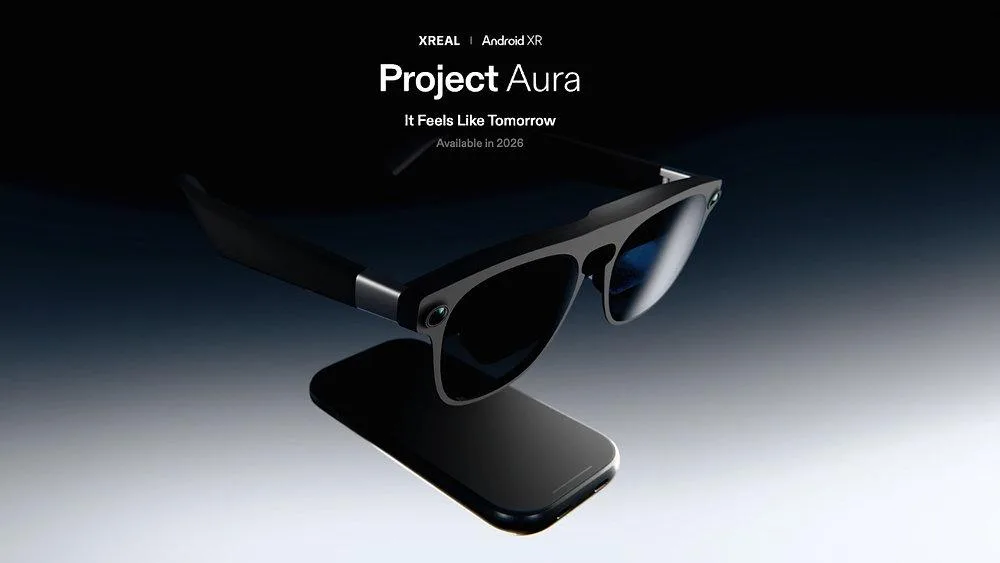
Convenience in actual use is another important variable. Aura connects to a separate computing unit by cable, so it does not operate entirely independently like ordinary glasses. It has the advantage of letting users play while seeing the real world directly, but how comfortable it is to wear for long periods or to control a game with hand gestures will need to be confirmed through real-world use. Even though tabletop games do not demand fast reactions, a single match takes a fair amount of time, so this kind of usability may affect sustained use.
Above all, there are pleasures that only the physical game can offer. Assembling and painting miniatures by hand and placing the finished models on the battlefield is not merely preparation; it is an essential part of the hobby of miniatures gaming. XR can shorten this preparation and make the game more accessible, but it is difficult to carry over the satisfaction of collecting and crafting that comes from the process.
The physical miniatures market also continues to show its strength. Games Workshop, the leading company in the field, recorded revenue of £659.7 million for the fiscal year ending May 2026, up about 6.8% year on year. One company's results do not represent the entire market, of course, but they show that the experience of building, collecting, and playing with physical miniatures still holds its own distinct value.
In the end, XR and physical games may be less a case of one displacing the other than of each being chosen according to the user's circumstances and tastes. When facing a distant opponent, or when lacking the space and time to set up a battlefield, XR may be the more convenient choice. On the other hand, for those who want to use miniatures they made themselves and enjoy the hobby gathered with friends, the physical game will be more appealing. XR may serve less as a technology that replaces existing play than as a means of adding new options for enjoying the same content in ways that were once difficult.
XR's Next Opportunity Is Already Here
These efforts are also connected to recent changes in the XR industry. Meta reported that Reality Labs revenue in the third quarter of 2026 fell 6% year on year, citing lower sales of Quest headsets as the cause. Growth in AI glasses sales, meanwhile, partly offset the decline. In January of the same year, the company closed three VR game studios and cut about 10% of the Reality Labs workforce, adjusting the direction of its investment in the business. This can be seen as a move to allocate more resources to AI glasses and wearable devices while maintaining its existing immersive VR business.
Of course, these changes do not mean that VR is in decline or that glasses-based XR will succeed. What can be confirmed, however, is that alongside approaches that move users entirely into virtual environments, approaches that use digital content while preserving the user's view of the real world are becoming increasingly important. And the more such devices enter everyday use, the more important it becomes what users can actually experience on them.
Fallout: Factions XR is one answer to that question, because it reshapes an existing tabletop game for a new spatial interface while preserving its rules and style of play. This approach can be applied not only to board games and miniatures games but also to a wide range of experiences already centered on real-world spaces, such as card games, educational tools, museum exhibitions, and watching sports. The fact that XREAL Aura featured spatial experiences related to the NBA and NASCAR among its launch content can be seen in the same light.
Of course, whether this potential will translate into an actual market remains to be seen. Device prices and adoption rates, the quality of the content, and whether users keep using it can all have an effect. The mere arrival of existing content on a new platform cannot guarantee its success; what matters is how meaningful a change XR brings to the existing experience.
XR does not necessarily have to take users into new virtual worlds. Simply adding new experiences to the games and play that already exist, and to the spaces of everyday life, can create real value. Perhaps XR content's next opportunity lies not in worlds yet to be built, but within the content we already know and enjoy.