On July 23, Microsoft began a new experiment for Xbox Insiders. It allows users to stream certain games they already own through the cloud without subscribing to Game Pass. The condition is advertising. An ad plays before the game session begins, and each session is limited to one hour.
Microsoft has not disclosed the exact length of the ads or the number of sessions available per day or month. The official announcement confirms only that ads play before a session and do not alter the game itself or the gameplay experience. The program is currently a limited test for Insiders in selected regions and on supported devices, and Microsoft has not decided whether it will become a full commercial service.
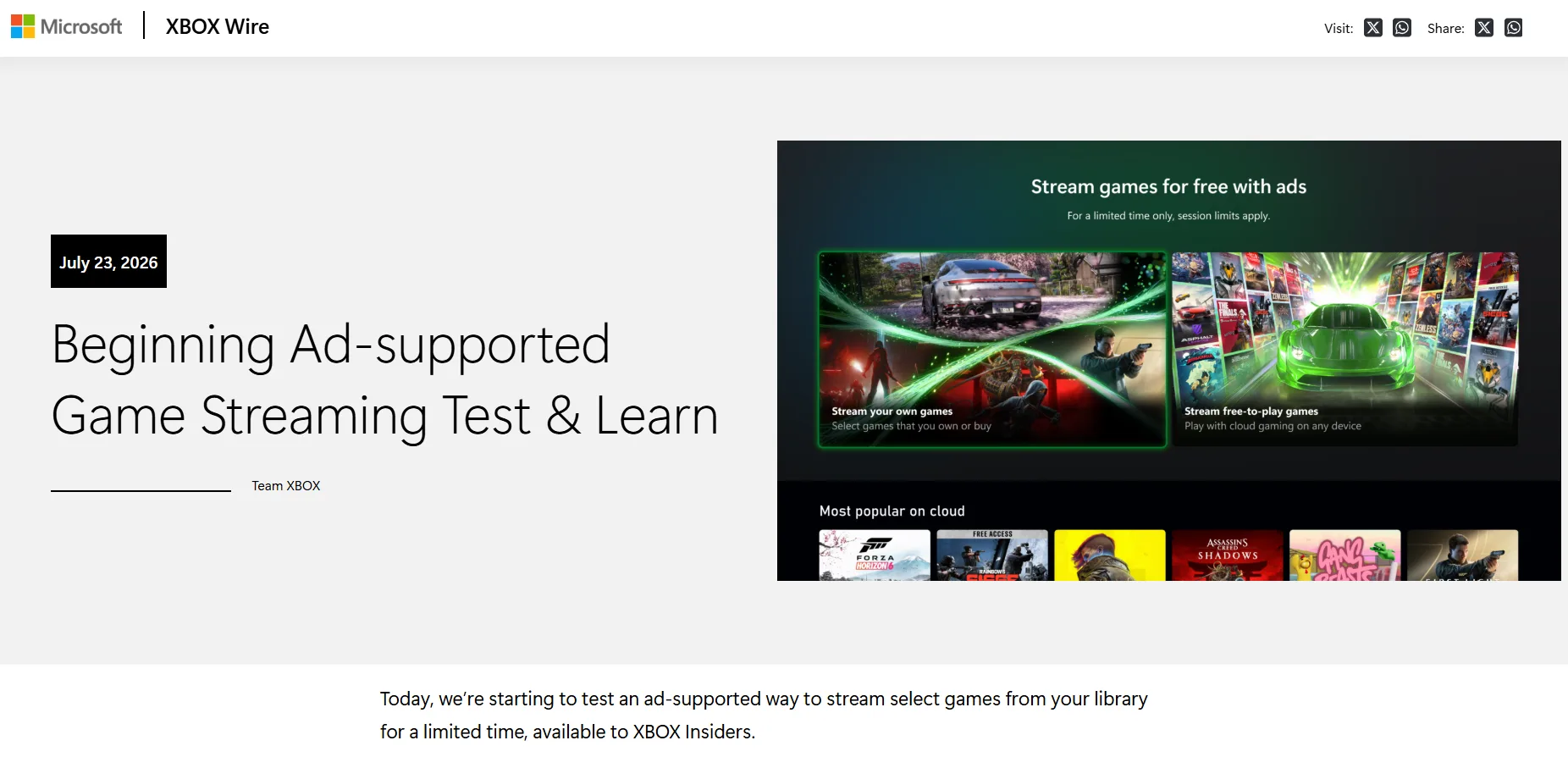
NVIDIA introduced a similar model earlier. Since March 2024, free GeForce NOW users have watched up to two minutes of advertising while waiting for a server. Free sessions are limited to one hour, but there is no fixed limit on the number of sessions. Users who want to avoid ads or receive longer sessions and shorter waiting times can choose a paid membership.
The conditions for Xbox and GeForce NOW are not identical. In particular, because Microsoft has not disclosed the length of Xbox ads, “two minutes of advertising for one hour of gaming” cannot be treated as a common price formula for both services. Even so, the two models are similar in that they exchange ad viewing for access to cloud gaming time.
Another Gateway to Wider Access
Microsoft’s first justification for ad-supported streaming was accessibility.
Cloud gaming allows users to run games on devices they already own without buying a console or high-performance PC. Microsoft explains that Xbox One owners can play games designed for Xbox Series X|S without immediately purchasing a new console, while users in regions where consoles are difficult to obtain or expensive can also gain access to games.
The placement of the ads reflects this explanation. Ads play before a session begins rather than during gameplay. Microsoft has also stated that advertising should not interrupt play and should be clearly identified as advertising. In other words, the ads are placed outside the game so that free access does not disrupt the gameplay experience itself.
This model genuinely lowers the initial cost of entering a game. A user who has already purchased a game but lacks the hardware needed to run it can reduce both streaming subscription costs and hardware expenses simply by watching an advertisement.
At the same time, free ad-supported access also serves as an entrance through which platforms can bring new users into their ecosystems. Users create accounts, connect purchased games, and experience the cloud service. If they later want longer sessions, shorter queues, or higher image quality, they may move to a paid plan. GeForce NOW similarly operates free membership alongside paid tiers offering longer sessions and priority access.
Mobile Games Have Long Traded in Time
What appears to be a new experiment for consoles and cloud platforms has long been familiar in mobile games, where advertisements are exchanged for in-game rewards.
When a player runs out of lives, watching an ad may allow them to revive. An ad may double a battle reward, open a chest immediately, or provide in-game currency. These are rewarded ads, in which users actively choose to watch advertising in exchange for a benefit within the game.
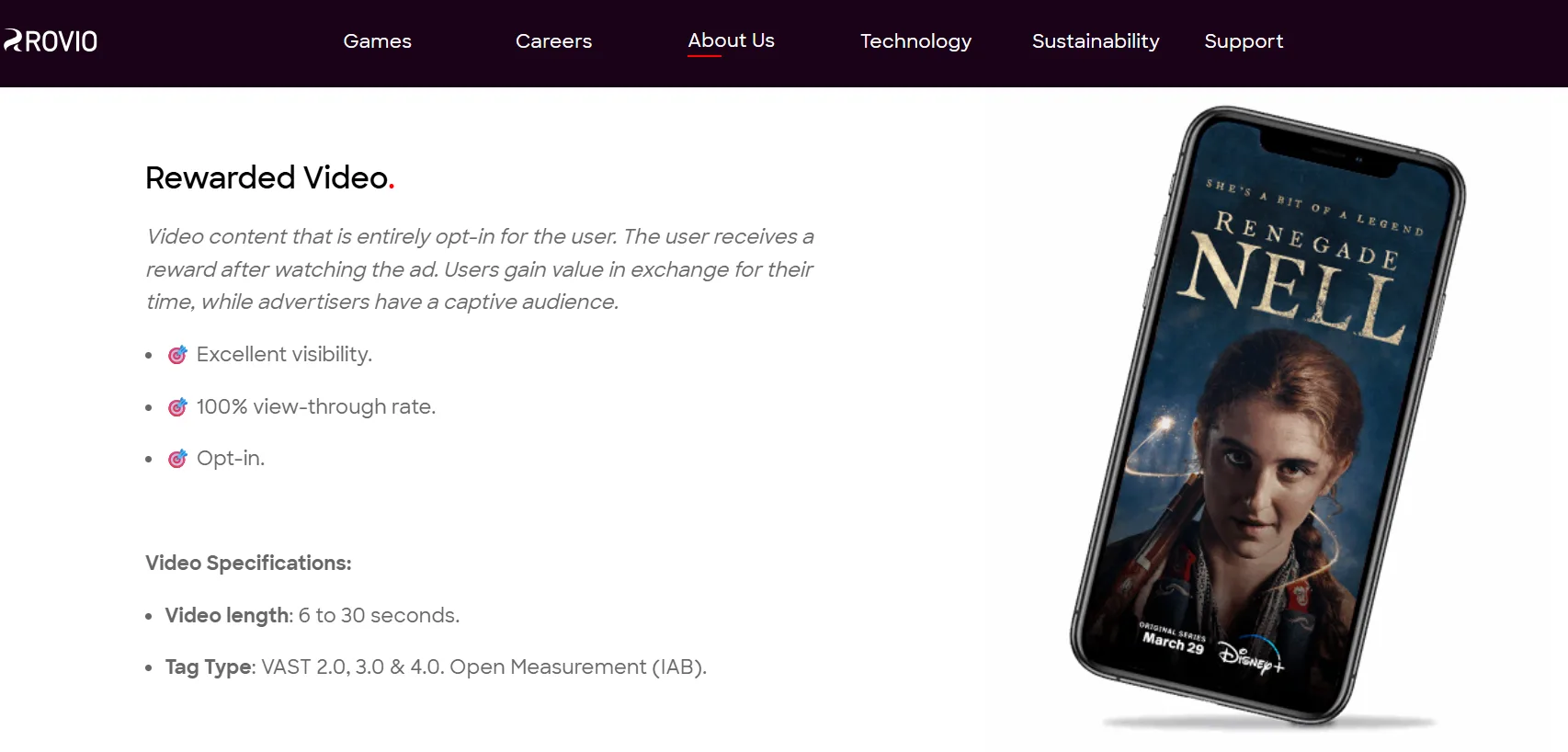
Rewarded ads give users a clearer choice than advertisements that appear automatically. Because users know in advance what they will receive, they are also more likely to watch until the video ends.
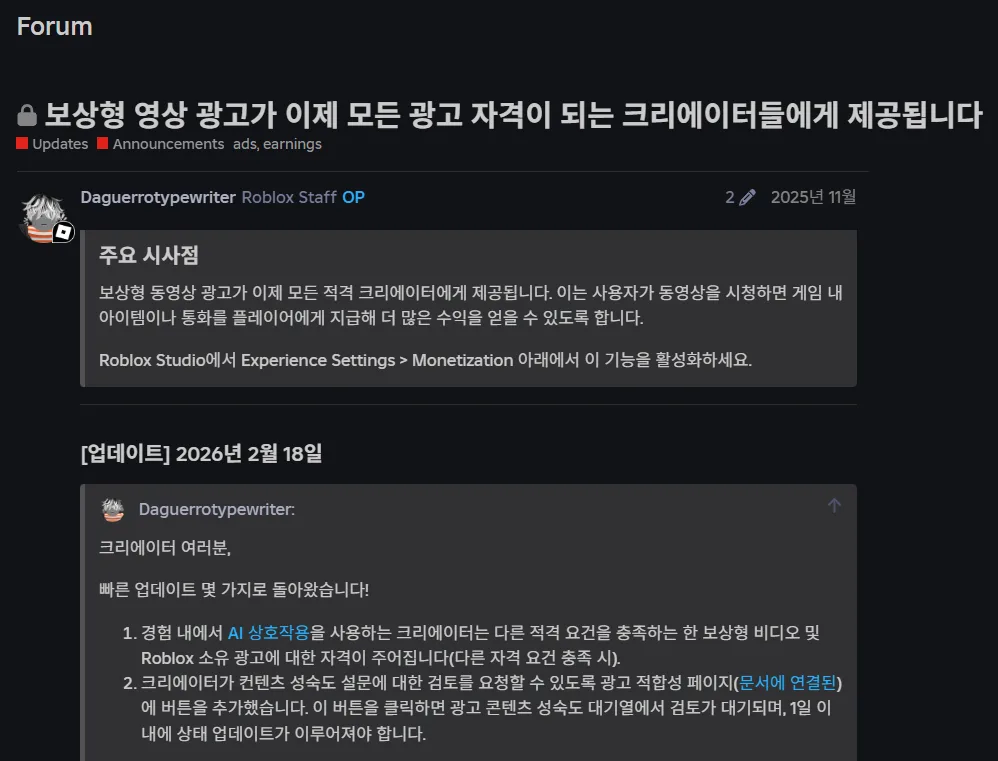
Roblox’s rewarded video ads, announced in April 2025, illustrate this structure directly. Users who voluntarily watch a full-screen advertisement of up to 30 seconds receive in-game currency or an enhancement selected by the creator. Roblox stated that average completion rates exceeded 80% in early testing and surpassed 90% in some experiences. The ads are sold through Google’s advertising system, either directly or programmatically.
Roblox later expanded the availability of rewarded ads. In November 2025, the feature was opened to all creators eligible for advertising, while the minimum age for viewers was lowered to 13.
Mobile rewarded advertising may appear to be a revenue model separate from payment, but it is often designed alongside in-app purchases. Advertising allows users to experience the usefulness of items and currency, while payment is offered when they can no longer watch more ads or want to progress faster. The model generates advertising revenue from users who do not pay, while selling paid products or ad-removal options to those who prefer not to watch ads.
As this model spreads, the resource game users increasingly feel they lack most is time.
According to the Korea Creative Content Agency’s ‘2025 Game User Survey’, the domestic game participation rate fell to 50.2%, down 9.7 percentage points from the previous year. A lack of time was identified as one of the main reasons people did not play games. The report also showed that the decline was not identical across every platform and that patterns of game use are changing.
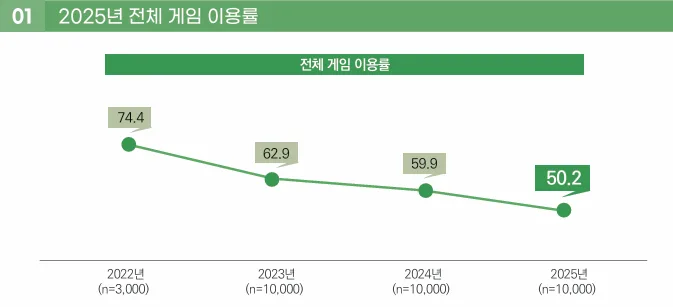
As more users leave games because they lack time, these advertising models turn the user’s time into a new medium of exchange. A 30-second advertisement may save several minutes of repetitive play, while a few minutes of advertising may substitute for the cost of a console or streaming subscription. In other words, users spend time watching advertisements in exchange for either saving time within a game or gaining time in which they can use the game.
The specific form of this exchange differs by platform. In mobile games, advertisements are tied to rules inside the game, including revivals, additional currency, and larger rewards. Players can often continue without watching, but their progress may be slower or their rewards smaller. By contrast, advertising on Xbox and GeForce NOW functions more like a condition for opening a session before the game begins. Once the ad has finished, it does not alter the rules or reward structure of the game.
Mobile advertising provides convenience and rewards within the game, while cloud advertising provides time in which the game can be accessed. The two differ in placement and reward, but both make advertising a condition of use in place of monetary payment.
What a Platform Gains from a Single Advertisement
The value a platform receives from an ad-supported game is difficult to calculate solely from the price of a single advertisement.
Advertising rates vary widely according to country, device, user characteristics, format, and season. Average prices for mobile rewarded ads also cannot be applied directly to cloud gaming. Xbox, in particular, has disclosed neither ad length nor the number of ads shown, leaving too little evidence to calculate the direct advertising revenue generated by one user during a session.
Yet the economics of a free service do not necessarily collapse simply because advertising revenue alone may not cover the full cost of cloud servers. What a platform receives extends beyond the income from one advertisement.
The first component is time. A one-hour session limit, a monthly cap, and a connection queue all divide time into units that can be treated as products. Users do not merely give up time; they also relinquish some control over when and how that time can be used.
The second is attention. Rewarded advertising is often described as a format with relatively high user satisfaction. That may be true. Yet that satisfaction is also one reason the format has commercial value. Low resistance can also mean that users’ usual defenses against advertising are less active. This is why an advertisement chosen voluntarily may be sold at a higher price than one viewed under compulsion.
The 30 seconds spent watching an advertisement do not come from unused time. They are taken from time already set aside for gaming. Thirty seconds for one revival and another 30 seconds for double rewards gradually accumulate, quietly converting part of the time reserved for playing into advertising inventory.
The third component is data. Of the three, it is the least transparent.
In January 2025, the hacking of location-data broker Gravy Analytics revealed part of the hidden structure of the advertising ecosystem. The leaked material reportedly included location coordinates from users of thousands of apps, including ‘Candy Crush’, ‘Call of Duty: Mobile’, Tinder, and MyFitnessPal. What drew particular concern was the route through which the data had been obtained. It did not come from code deliberately inserted by app developers, but from the advertising auction process described earlier. Auction requests can contain both a device-specific advertising identifier and precise location information. By entering auctions without any real intention of buying an advertisement and collecting these requests, a company can accumulate the location history of a particular device without either the developer or the user knowing. Venntel, a Gravy Analytics subsidiary, was also reported to have sold location data to agencies including US Immigration and Customs Enforcement and the Federal Bureau of Investigation.
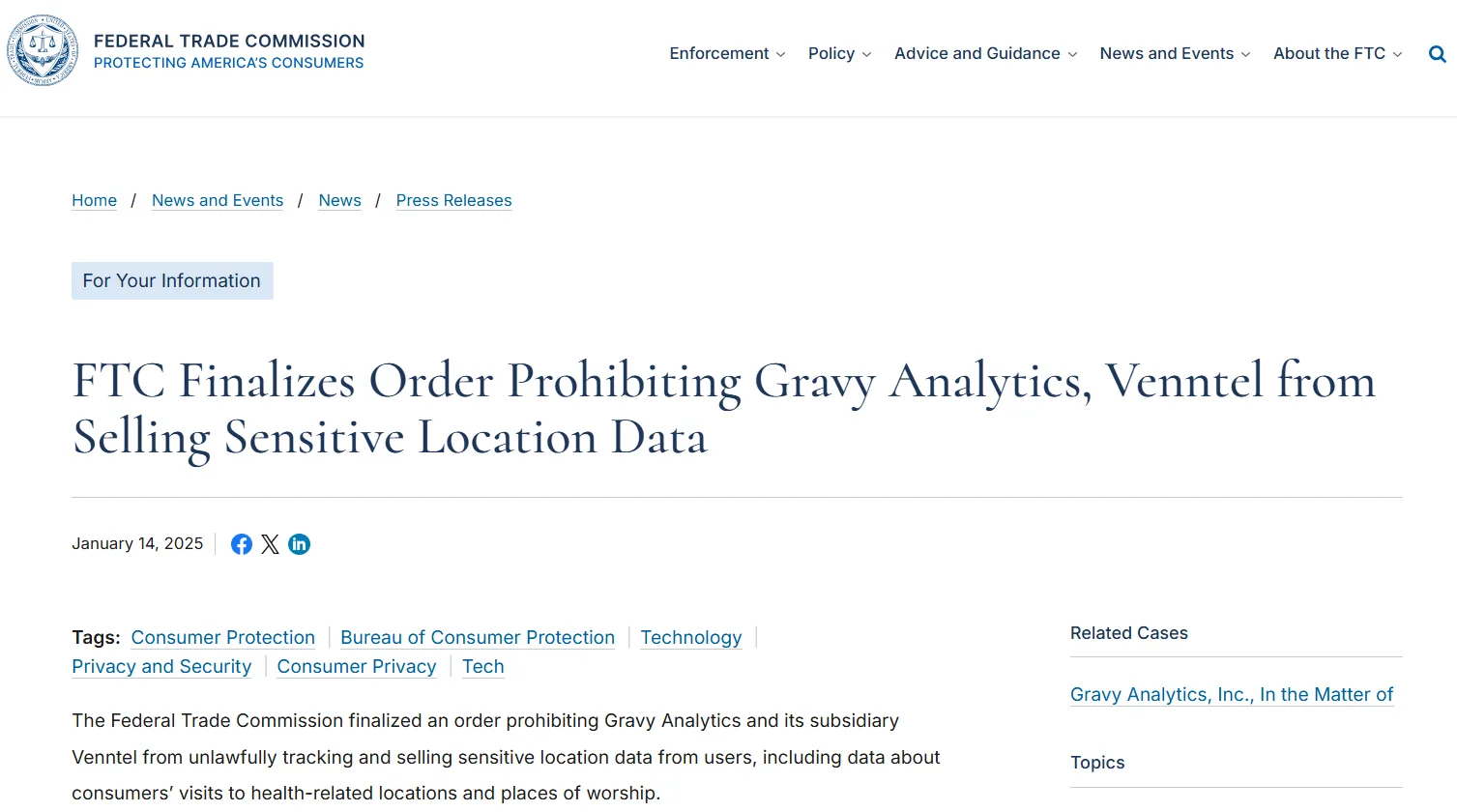
The US Federal Trade Commission ultimately concluded that Gravy Analytics and Venntel had collected, used, and sold sensitive location information without verifiable user consent. Its final order restricted the sale, disclosure, and use of sensitive location data, including information concerning visits to medical facilities and places of worship.
The case does not mean that every game advertisement improperly collects location data. It does, however, show how difficult it can be for users to determine how far their information travels through a market connecting apps, advertising platforms, and intermediaries.
A similar issue was identified in South Korea. In July 2026, the Personal Information Protection Commission stated that TikTok had collected behavioral information—including clicks, purchases, searches, and content views—through pixels and SDKs distributed across other websites and apps. TikTok connected this information to mobile advertising identifiers, cookies, and member accounts for use in personalized advertising. The commission found that consent had been obtained in a manner that made it difficult for users to exercise meaningful choice. The case involved information linked to approximately 9.45 million active users in South Korea, and TikTok was fined KRW 10.306 billion.
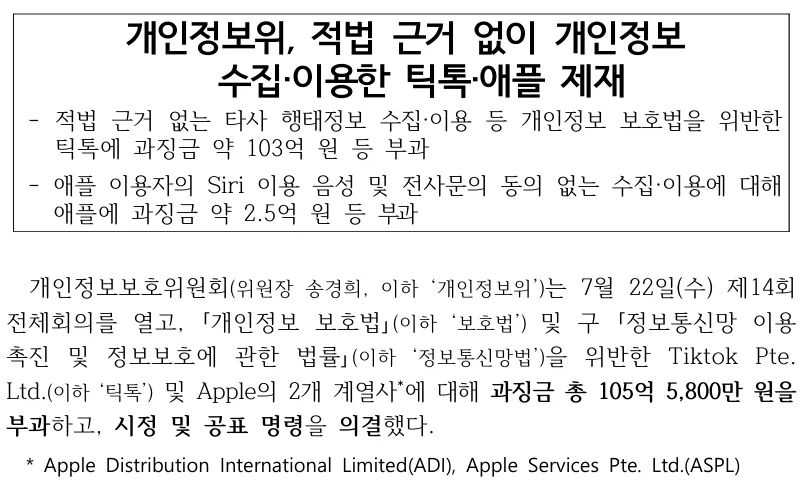
The TikTok sanction did not target a game company. Yet the methods at issue are not unrelated to the game industry. Tracking user behavior through website pixels and advertising SDKs, then combining device advertising identifiers with account information, is widely used across digital advertising. Mobile games operate within the same structure.
What users give up when they watch an advertisement to play a game, then, is not limited to two minutes of time. Records may also remain of what they played, how long they played it, and which advertisements they responded to. Earlier, the value of one hour was calculated at only a few dozen won, but that calculation entirely omitted the value of data. Advertising impressions have publicly discussed market rates; user activity records do not come with a price tag that users can inspect.
Probabilities Are Disclosed, but Advertising Is Not
Since March 22, 2024, South Korea has required the disclosure of probability information for randomized in-game items, commonly known as loot boxes. Game companies must display the types of probability-based items and the probability of each possible outcome in an easily understandable form within the game and on their websites. The purpose of the rule was to allow users to see what they might receive, and with what likelihood, before paying.
The regulation has not solved every problem. Products with multiple stages or overlapping probabilities can remain difficult to understand even after the numbers are disclosed. Even so, the rule established an important principle: the conditions of a paid transaction should be placed where users can see them.
Ad-supported games have no equivalent disclosure standard. Users are generally not told how many advertisements a game is likely to present each day, the maximum length of each advertisement, or how much additional time will be required to obtain the same reward without watching. It is also difficult to see, on a single screen, which companies participate in the advertising process, what information is collected, or whether an advertising identifier is linked to account information. Even when these details appear in a privacy policy, they are often scattered across several documents and settings pages.
Admittedly, not every game can provide all this information as an exact number. Ad length and frequency change according to demand, while the amount viewed also depends on how each user plays. That does not mean nothing can be disclosed. A game could summarize the maximum length of an advertisement, the expected range of impressions over a given period, the main advertising and measurement partners, the categories of information collected, and the method for opting out of personalized advertising.
Rewarded advertising is often treated as a voluntary choice because the user presses the button directly. Yet what the user will receive is displayed clearly, while what will be processed in exchange remains largely invisible.
The Personal Information Protection Commission has already recommended restrictions on personalized advertising that uses the behavioral information of children and adolescents, and related legislative discussions continued in 2026. Considering the speed at which rewarded advertising is becoming a standard revenue model on platforms with large numbers of young users, such as Roblox, the discussion is already late. For advertising-based console and cloud plans, there is not even a clear precedent to follow.
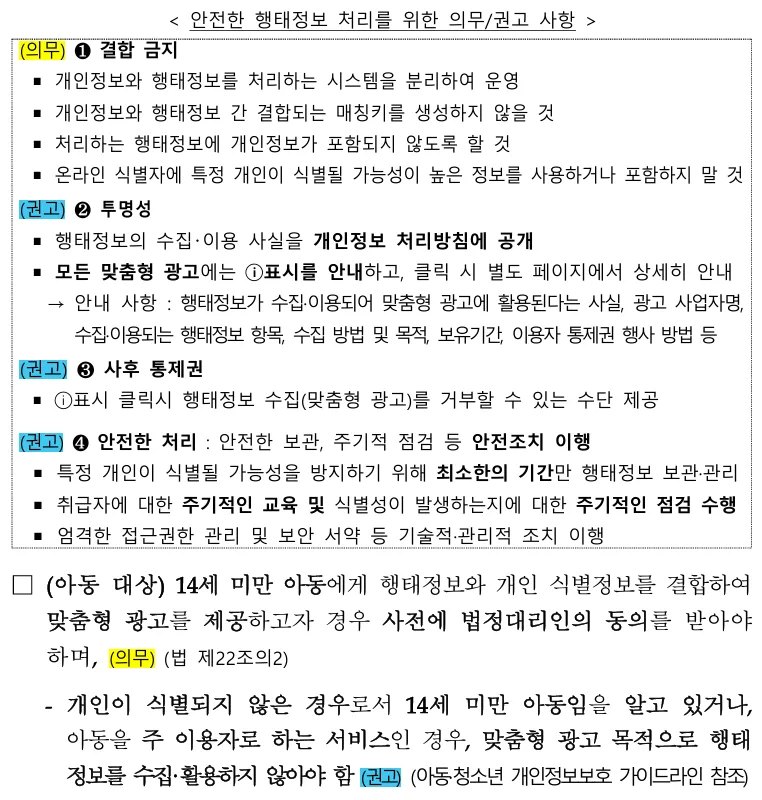
This is not an argument for banning advertising. It means that users must be able to place free and paid options side by side and compare their conditions before deciding which one suits them. The existence of a choice is not the same as the provision of the information needed to make that choice.
The Price of Free Is Written in Different Units
Ad-supported free games widen the range of available choices. People who cannot afford a console or high-performance PC can still play, while those who find a monthly subscription burdensome can access a service by watching advertisements. In mobile games, users can obtain currency or revival opportunities without spending money. It can be a transaction that benefits both users and platforms.
But “free” does not mean that no price is paid.
What the user receives is stated with relative precision: one hour of play, one revival, double rewards, or a certain amount of currency. What the user gives up is less clearly stated. The time spent watching an advertisement, the attention held until it ends, and the play records and advertising responses produced in the process can all be used by the service in different ways.
Some of these may be prices worth paying. If a few minutes of advertising can replace the cost of a console or subscription, it may be a cheap transaction. By contrast, it becomes expensive when advertisements repeat excessively, game progression is designed around continued ad viewing, and users cannot tell what data is going where. The judgment belongs to the user. But to make that judgment, the user must first be able to see what is being given up.
When considering the value of a game, it is not enough to look only at the amount shown on the payment screen. If a user plays without paying money, they should also be able to ask what else is being used to pay for it. Not paying money does not mean paying nothing.
The bill for a “free game” is not absent. It is simply not written in money.


