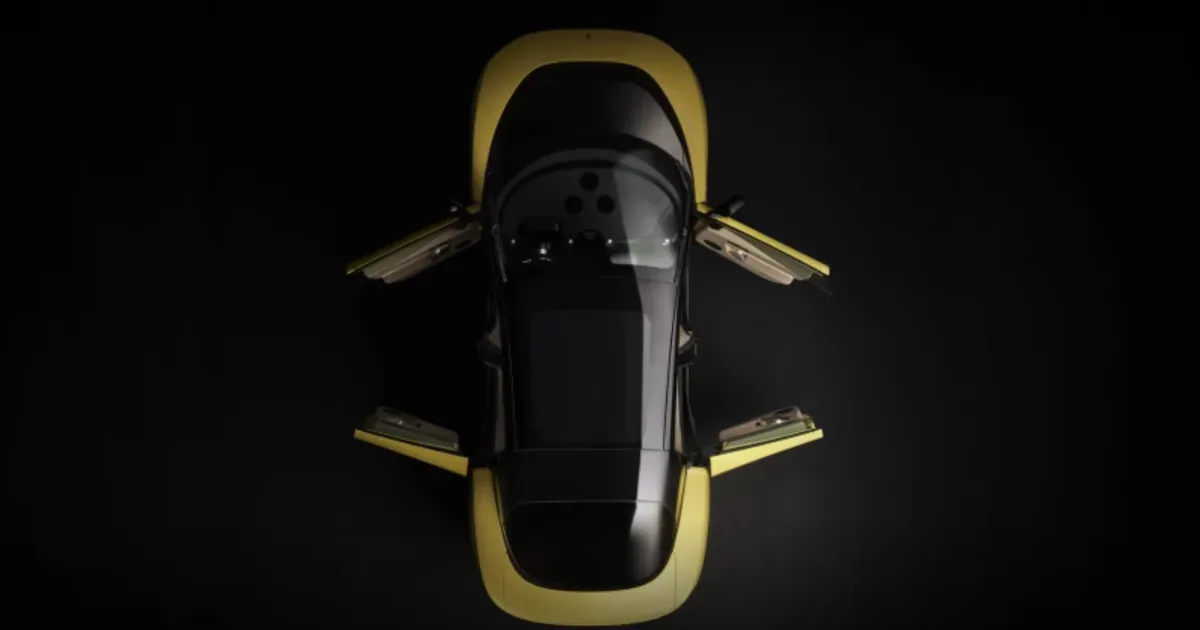
“It looks more like an Apple product on wheels than a Ferrari.”
When Ferrari unveiled the Luce, its first fully electric vehicle, in Rome, Italy, on May 25, 2026, the reaction was not what many had expected.
Instead of a futuristic supercar, Ferrari presented a rounded, minimalist four-door electric vehicle with seating for five.
It looked nothing like the Ferraris traditionally associated with low-slung bodies, aggressive styling, and powerful engines.
Online ridicule followed almost immediately.
Some users compared the Luce to the Fiat Multipla or certain Nissan models.
Others questioned whether a vehicle with such an unconventional appearance deserved to wear Ferrari's iconic Prancing Horse badge.
There were even jokes suggesting that someone had turned an Apple computer mouse into a car.
Ironically, Jony Ive, Apple's former chief design officer, had helped design the Luce.
The man whose design philosophy had shaped some of Apple's most recognizable products was now helping define Ferrari's future.
Yet Ferrari enthusiasts were mocking the result by comparing it to an Apple device.
The criticism was not confined to social media.
Longtime Ferrari enthusiasts and owners expressed dissatisfaction.
Even former Ferrari executives warned that the new design could undermine the brand's identity.
Financial markets responded negatively as well.
On May 26, the day after the unveiling, Ferrari shares fell by as much as approximately 8% during intraday trading in Milan.
Investors were not universally enthusiastic about one of the boldest technological transitions in the company's history.
Then, just over five months later, a very different story emerged.
During its third-quarter earnings announcement on November 3, Ferrari said the entire planned production allocation for the Luce in 2027 had already been assigned to customers.
CEO Benedetto Vigna explained that new customers seeking to place orders would face a wait of approximately one year.
The first customer test drives were scheduled for early 2027.
The car had been ridiculed online, yet the customers actually positioned to buy it had secured next year's allocation before even taking it for a test drive.
How could that happen?
The Luce story goes beyond a controversy over automotive design.
It reveals how public opinion and actual purchasing demand can behave very differently in the luxury market.
1. Ferrari Introduced the Most Unfamiliar Car in Its History
Since its origins under Enzo Ferrari in 1939, Ferrari has become synonymous with high-performance automobiles and motorsport.
Powerful engines, distinctive exhaust notes, and vehicles that respond directly to the driver's inputs have long defined the brand.
The V12 engine, in particular, has served as a symbol of Ferrari's engineering heritage and identity.
Buying a Ferrari has never been simply about owning a fast car.
It has also meant experiencing the sound and vibration of a high-revving engine, the sensation of acceleration and gear changes, and a connection to motorsport history.
But the Luce has no combustion engine.
It is a fully electric vehicle.
Its exterior also departs significantly from the traditional Ferrari sports car.
The Luce is Ferrari's first five-seat model and its second four-door vehicle.
Rather than adopting the proportions of a low, aggressive two-seat supercar, Ferrari chose a configuration closer to a high-performance electric grand tourer capable of carrying several passengers.
The company described the Luce not as an electric adaptation of an existing sports car, but as an entirely new product.
Some Ferrari enthusiasts, however, had expected something different.
They wanted a vehicle that preserved the appearance and emotional character of a conventional Ferrari while replacing its combustion engine with electric motors.
The gap between those expectations and the actual product helped trigger the backlash.
2. What Made the Luce Such a Target for Ridicule?
Initial criticism of the Luce was not simply opposition to electric vehicles.
The most intense controversy concerned its design.
Traditional Ferraris are often characterized by aggressive front ends, aerodynamic proportions, and lines that visually communicate speed.
The Luce instead features relatively soft surfaces and a restrained exterior.
Some observers thought it resembled a luxury sedan or futuristic electric vehicle more than a traditional supercar.
Following the unveiling, British automotive publication Electrifying reported social media reactions comparing the Luce's appearance to the Fiat Multipla and other unconventional vehicles.
The Fiat Multipla is frequently mentioned in discussions about polarizing automotive design because of its unusual proportions.
Some commenters even suggested that an electric SUV from China's Xiaomi looked more like a traditional Ferrari than the Luce did.
The criticism went beyond saying that the vehicle looked unfamiliar.
It questioned whether the design was compatible with the visual identity Ferrari had established over decades.
U.S. technology publication TechCrunch characterized the Luce as one of the most widely mocked new vehicles since the Cybertruck.
Jony Ive's involvement added another dimension to the debate.
Some observers argued that his distinctive minimalist design philosophy had been emphasized at the expense of Ferrari's automotive character.
Descriptions of the Luce as an Apple product on wheels emerged from this criticism.
Not every response was negative.
Some observers welcomed Ferrari's willingness to introduce a new design rather than repeatedly reproducing the appearance of its conventional supercars.
Nevertheless, reports from major publications confirmed that strong criticism dominated much of the early online discussion.
3. Even Longtime Ferrari Enthusiasts Were Shocked
More significant than casual online commentary were the reactions of established Ferrari enthusiasts and figures associated with the brand.
On May 30, The Guardian reported comments from representatives of Ferrari owners in Italy.
Fabio Barone, president of the Italian Ferrari owners' club Passione Rossa, indicated that while he did not reject the generational shift toward electric vehicles, he was shocked by the Luce's design.
His reaction illustrated the central issue.
The problem was not necessarily electric propulsion itself.
It was that the vehicle did not look like what many people believed a Ferrari should look like.
Luca Cordero di Montezemolo, Ferrari's former chairman and CEO, also expressed strong concerns.
He warned, in substance, that the mythology surrounding Ferrari could be damaged.
The controversy even attracted attention from Italian politicians.
Deputy Prime Minister and Transport Minister Matteo Salvini questioned what Ferrari founder Enzo Ferrari might have thought of the vehicle.
These responses matter because the debate was not merely an internet trend or a disagreement over aesthetic preferences.
It concerned how Ferrari should preserve its identity in the future.
Technological innovation does not necessarily reinforce a brand's heritage.
When a new product looks too different from everything associated with an established brand, consumers may perceive a break in identity rather than progress.
The Luce unveiling brought that tension into sharp focus.
4. Financial Markets Were Unimpressed: Ferrari Shares Fell as Much as 8% Intraday
As online criticism intensified, investors also reacted negatively.
On May 26, Ferrari shares declined by as much as approximately 8% during intraday trading in Milan.
Major news organizations, including The Guardian and Reuters, reported that uncertainty surrounding the design of Ferrari's first EV coincided with investor concerns.
The appearance of a single vehicle had become important enough to influence perceptions of a major publicly traded company.
However, the share-price decline cannot be attributed entirely to dissatisfaction with the Luce's design.
Equity markets are influenced by many factors, including expectations for future profitability, broader industry conditions, and investor sentiment.
What can be established is that negative design reactions and a sharp intraday share-price decline occurred immediately after the unveiling.
Ferrari's unusual business model helps explain why the controversy mattered.
The company's value is not determined by vehicle sales volume alone.
Scarcity, customer loyalty, premium pricing, and distinctive ownership experiences contribute to its profitability.
If the Luce failed to appeal to established Ferrari customers, it could place pressure on that model.
Investors may have struggled to determine whether Ferrari's first EV would become a new growth engine or weaken the brand equity accumulated over decades.
The Luce was therefore more than another new vehicle.
It represented a test of whether Ferrari could maintain its extraordinary profitability in the electric vehicle era.
5. Even Ferrari Underestimated the Scale of the Backlash
The negative response was apparently stronger than Ferrari itself had anticipated.
In July 2026, American automotive publication Edmunds published an interview with Emanuele Carando, Ferrari's global marketing chief.
Carando indicated that the company had expected the Luce to provoke strong and polarized reactions.
However, he acknowledged that the scale of the negative response had exceeded expectations.
The distinction is revealing.
Ferrari understood that its first EV might feel unfamiliar to existing customers.
Yet the criticism following the unveiling was greater than anticipated.
Why, then, had Ferrari accepted that risk?
One possible explanation is that the company believed establishing a new product identity was more important for the long term than repeating the appearance of its traditional sports cars.
Electric vehicles have different engineering requirements from combustion-engine automobiles.
The space previously occupied by engines and exhaust systems can be reduced or redesigned.
Battery packs and electric motors allow engineers to reconsider vehicle proportions and packaging.
Rather than forcing those changes into a conventional sports car silhouette, Ferrari appeared determined to express them through a new design language.
That does not invalidate criticism or guarantee commercial success.
But it suggests that the Luce's unfamiliar appearance was an intentional decision rather than an accidental departure from Ferrari's heritage.
6. Why Were Customers Willing to Pay €550,000?
The most interesting development occurred not immediately after the unveiling, but several months later.
In July 2026, Fortune reported that the Luce had achieved an initial sales target despite extensive online ridicule.
Reports at the time referred to a target of approximately 500 vehicles for 2026.
However, that figure came from external reporting and was not confirmed as an official production total in Ferrari's November earnings materials.
Then, on November 3, Ferrari announced that its planned Luce allocation for 2027 had already been assigned to customers.
CEO Benedetto Vigna explained that the vehicles scheduled for the following year had been allocated and that a new customer seeking to place an order would face a wait of around twelve months.
He also said customers were developing a deeper understanding of the Luce and that the vehicle's distinctive character became more apparent through direct experience.
These remarks reveal a possible difference between initial online reactions and responses from prospective buyers.
Online discussions focused heavily on photographs and videos of the vehicle.
Potential buyers, by contrast, could examine the car more closely, consult Ferrari representatives, and attend exclusive customer events.
Ferrari said it had organized more than fifty local unveiling events and private customer presentations around the world.
Such events give customers access to more information than online images alone.
They can examine interior materials, spatial design, vehicle proportions, controls, and the broader brand experience.
However, Ferrari did not disclose how much these events increased purchase conversion rates.
What is confirmed is that the company's planned 2027 allocation was fully assigned despite the highly critical online response.
7. Online Commentators and Actual Buyers Are Not the Same Group
Perhaps the most fascinating aspect of the Luce story is the difference between online opinion and actual purchasing demand.
Someone commenting on a car's design on social media is not necessarily a prospective buyer.
Anyone can look at photographs of the Luce and express an opinion.
But the number of people capable of purchasing a vehicle costing approximately €550,000 is considerably smaller.
The two groups may overlap.
They are not identical.
An ordinary consumer may assess a vehicle primarily through its appearance, functionality, and price.
Buyers of expensive luxury automobiles may also attach value to rarity, brand history, customization, and the experience of ownership.
For an existing Ferrari customer, the Luce may not be intended to replace an everyday car.
It could be an additional vehicle purchased by someone who already owns one or more sports cars.
Its status as Ferrari's first fully electric model could also become a reason to buy.
However, these explanations remain possibilities rather than confirmed motivations.
Ferrari has not disclosed detailed information about Luce buyers' existing vehicles, purchasing reasons, or the proportion of first-time Ferrari customers.
The important conclusion is therefore not that online opinion was wrong.
It is that broad public reactions online and purchasing decisions made by customers with the financial means to buy a product may develop in very different ways.
8. Does Being “Sold Out” Mean the Same Thing in the Luxury Market?
The fact that Ferrari's planned 2027 Luce production has been fully allocated is clearly a positive sign.
But it should not be interpreted in the same way as a mass-market vehicle achieving enormous sales volumes.
Ferrari has not disclosed the number of Luce vehicles planned for 2027.
It is therefore impossible to confirm whether the allocation involved 500 vehicles, 1,000 vehicles, or a larger number.
When supply is deliberately limited, a relatively small pool of customers may be enough to account for an entire production allocation.
That is consistent with Ferrari's business model.
Conventional automakers often seek to expand production, reach more customers, and increase market share.
Ferrari instead manages supply to preserve exclusivity and brand value.
In that context, the important question is not simply how many customers purchase a vehicle.
It is whether sufficient demand exists at the intended price and production volume.
The complete allocation of the Luce's planned 2027 output suggests that Ferrari has satisfied part of that requirement.
But it does not establish that all vehicles have been delivered or that customers will remain satisfied over the long term.
Future performance will depend on whether allocated orders become completed deliveries, whether demand remains strong if production expands, and whether Ferrari can earn attractive returns despite substantial development costs.
9. Why Did Jony Ive Make a Ferrari Look Like an Apple Product?
Understanding the Luce's design requires examining the role of LoveFrom, the creative collective led by Jony Ive and Marc Newson.
Ive played a major role in the design of Apple products including the iPhone and MacBook.
One of the defining characteristics of his design philosophy is removing unnecessary complexity while emphasizing the user experience.
Similar principles are evident in the Luce.
The exterior uses relatively simple surfaces and clearly defined proportions.
Inside, the designers chose not to rely exclusively on large touchscreens for vehicle controls.
Instead, physical buttons and dials play a prominent role.
That is an interesting decision.
As electric vehicles have adopted increasingly large digital displays, many manufacturers have reduced the number of physical controls.
The Luce, despite Ive's involvement, moves in a different direction.
It emphasizes tactile interaction.
Some functions are designed to be operated by touch without requiring the driver to look at a screen.
This can be understood not simply as a nostalgic design choice, but as an attempt to combine digital technology with physical experience.
For some Ferrari enthusiasts, however, the underlying design language remained the problem.
They expected the visually aggressive character of traditional Ferraris.
Instead, the Luce presented a smoother, more restrained appearance reminiscent of a consumer electronics product.
The controversy illustrates a challenge faced by luxury brands when collaborating with outside designers.
A fresh perspective can help reinvent a brand.
But it can also weaken the visual identity that existing customers consider essential.
The Luce contains both possibilities.
10. Can a Ferrari Without an Engine Still Be a Ferrari?
The most fundamental debate surrounding the Luce goes deeper than styling.
Can a Ferrari without a combustion engine still deliver the experience associated with the brand?
For decades, Ferrari has built its driving experience around the performance, sound, and responsiveness of combustion engines.
The sound of a high-revving engine has been more than exhaust noise.
It has been an important emotional component of the brand.
The Luce, however, is powered by batteries and electric motors.
Rather than artificially reproducing the sound of a conventional V12 engine, Ferrari chose an approach that captures and communicates sounds actually produced by the electric powertrain.
This differs from simply imitating combustion-engine noise.
The objective is to make the mechanical characteristics of electric propulsion part of the driving experience.
The vehicle also uses four electric motors to produce a maximum output of approximately 1,050 horsepower.
It can accelerate from 0 to 100 kilometers per hour in 2.5 seconds.
Its top speed exceeds 310 kilometers per hour.
The Luce is equipped with a 122-kWh battery and offers more than 530 kilometers of range under the European WLTP testing standard.
These are formidable performance figures.
But Ferrari's competitive advantage has never depended solely on horsepower or acceleration.
The responsiveness felt through vehicle controls, sound, vibration, and the emotional character of driving also matter.
The Luce does not merely need to demonstrate that an electric vehicle can be fast.
It needs to demonstrate that an electric vehicle can still deliver a distinctive Ferrari driving experience.
That question will require actual test drives and longer-term customer evaluations.
11. Ferrari's Financial Results Already Demonstrate Its “Sell Less, Earn More” Strategy
To understand the Luce's price and exclusivity, it is necessary to examine Ferrari's existing business model.
In the third quarter of 2026, Ferrari delivered 3,368 vehicles.
That was 33 fewer than the same period a year earlier.
Yet revenue increased 7% to €1.896 billion.
Operating profit rose 12% to €563 million.
The operating margin reached 29.7%.
Ferrari delivered fewer cars but generated more profit.
The company attributed the improvement largely to increased deliveries of high-value models such as the F80 and stronger customer personalization.
This reflects the defining characteristic of Ferrari's growth strategy.
Rather than pursuing unlimited increases in vehicle volume, the company seeks to generate more revenue per customer through high-value products and customized ownership experiences.
The Luce enters the market within that same structure.
With a starting price of approximately €550,000, it is not designed for the mainstream electric vehicle market.
It targets customers willing to pay for the distinctive experience and exclusivity associated with Ferrari.
The Luce's success may therefore depend less on its share of the overall EV market and more on whether customers continue accepting its premium price and placing orders.
However, Ferrari has not disclosed the manufacturing cost or operating profit per Luce.
A high selling price does not automatically guarantee profitability comparable to the company's established models.
12. Why Did Ferrari Reduce Its Electric Vehicle Target?
The Luce is also significant because Ferrari is not pursuing electrification without limits.
The company previously outlined an ambition for fully electric vehicles to represent approximately 40% of its product lineup by 2030.
At its 2025 Capital Markets Day, Ferrari revised that target to approximately 20%.
It presented a planned product mix consisting of 40% combustion-engine models, 40% hybrids, and 20% fully electric vehicles.
Importantly, the 20% figure refers to the share of the product lineup, not the proportion of total vehicle sales.
Ferrari intends to maintain combustion-engine, hybrid, and electric models simultaneously.
This can be understood as recognition that customers value different powertrains and driving experiences.
The arrival of the Luce does not mean conventional combustion-engine Ferraris will disappear.
Instead, the electric vehicle adds another option.
The strategy appears designed to preserve Ferrari's heritage while introducing new technology.
However, the reduction in the EV target should not be attributed to the controversy surrounding the Luce's public unveiling.
Ferrari announced that adjustment in 2025, before the vehicle was fully revealed.
The backlash that followed the unveiling therefore cannot have caused the earlier decision.
13. Can Direct Customer Experience Change Perceptions Formed Online?
The Luce may be difficult to evaluate through a photograph alone.
Ferrari's premium vehicles combine exterior design with materials, interior finishes, tactile controls, driving characteristics, and brand services.
Many of those qualities cannot be fully experienced through online images.
Potential buyers who attend private presentations or consult directly with Ferrari representatives can obtain a more detailed understanding of the vehicle.
Vigna suggested that such experiences played an important role in helping customers appreciate the Luce's distinctive character.
The allocation of the entire planned 2027 production volume suggests that early interest translated into meaningful purchase commitments.
But that does not mean the online criticism has disappeared.
People may continue to dislike the vehicle's appearance.
Nor does the existence of paying customers prove that aesthetic criticism was incorrect.
Design judgments are inherently subjective.
The important observation is that sufficient purchasing demand can emerge even when criticism remains strong.
In the luxury market, intense preference among a relatively small customer group can create commercially significant demand.
A product strongly desired by a particular group of customers may be more valuable than one that is mildly liked by everyone.
14. Can the Luce Bring New Customers to Ferrari?
The Luce presents two potential commercial opportunities for Ferrari.
One is additional purchases by existing customers.
The other is attracting people who have never owned a Ferrari.
Existing owners might purchase a more practical electric vehicle alongside their traditional sports cars.
Its four-door, five-seat configuration provides different uses from those of a conventional two-seat Ferrari.
The quieter driving characteristics of electric propulsion and new digital experiences may also appeal to certain customers.
For them, the Luce could offer a new entry point into the Ferrari brand.
However, the actual effect on new customer acquisition has not yet been established.
Ferrari has not disclosed how many Luce customers already own Ferraris or how many are first-time buyers.
It has also not disclosed whether customers canceled orders for combustion-engine models in favor of the Luce.
Such substitution effects could influence the vehicle's net contribution to the business.
Consequently, both new customer acquisition and additional purchases by existing owners remain potential explanations rather than confirmed outcomes.
More detailed customer information would allow the Luce's strategic performance to be evaluated more accurately.
15. When Can a Ridiculed Product Be Considered a Success?
The Luce's early market response is certainly intriguing.
The unveiling triggered widespread online ridicule.
Established Ferrari enthusiasts expressed strong reservations.
The company's share price also declined.
Yet just over five months later, Ferrari announced that its entire planned production allocation for 2027 had been assigned to customers.
That reversal is striking.
But it does not yet constitute definitive commercial success.
First, the actual planned production volume has not been disclosed.
Second, full-scale deliveries and long-term customer experience have not yet been sufficiently evaluated.
Third, the Luce's individual profitability and repeat-purchase demand remain unknown.
Fourth, it is unclear whether interest among early buyers will extend to future electric Ferrari models.
Securing the initial order allocation is an important starting point.
Sustained business success, however, must be assessed through product quality, customer satisfaction, and actual profitability.
For a company such as Ferrari, where brand identity is central to value creation, the durability of customer relationships may matter more than short-term sales figures.
It is therefore more accurate to say that the Luce has shown positive early purchasing demand despite negative online reactions than to declare that it has already achieved complete commercial success.
16. Did Ferrari Trust Its Customers More Than Public Opinion?
The Luce story highlights an important difference between luxury markets and conventional consumer markets.
Mainstream automakers generally need to attract broad consumer demand.
Their businesses depend on operating large production facilities and selling substantial numbers of vehicles.
Ferrari operates differently.
Its model relies on limited production volumes and premium pricing.
It does not need to sell its products to everyone.
Instead, it must preserve exclusivity and brand identity while creating extraordinary perceived value for a specific group of customers.
The Luce was developed within that framework.
To an ordinary automobile buyer, its appearance may seem unfamiliar and its price difficult to justify.
But to a customer with the means and desire to purchase a Ferrari, the significance of the brand's first fully electric vehicle, its distinctive design, and the ownership experience may be compelling.
This difference offers one possible explanation for the gap between online opinion and actual orders.
It does not mean Ferrari ignores public sentiment.
The company itself acknowledged that the early negative response had been stronger than expected.
Nevertheless, Ferrari maintained the direction of the product and sought to communicate its value through customer experiences.
The Luce illustrates why attracting universal public approval and securing purchasing commitments from actual target customers can be different business challenges.
The Question Raised by Ferrari's Much-Mocked Luce
In May 2026, Ferrari's first electric vehicle arrived amid ridicule and controversy.
Some observers said it did not look like a Ferrari.
Others compared it to unconventional vehicles and mocked its resemblance to an Apple product.
Former Ferrari executives and owners' club representatives expressed concerns.
Ferrari shares fell by as much as approximately 8% during intraday trading.
Judging by those initial reactions, the Luce appeared destined to become one of the riskiest experiments in Ferrari's history.
But the announcement on November 3 revealed a different reality.
The company's entire planned 2027 production allocation had been assigned to customers.
New buyers faced an estimated wait of around one year.
Actual production volumes and model-specific profitability have not yet been disclosed.
Nevertheless, the existence of early purchasing demand has been demonstrated.
That does not mean the critics were wrong.
Nor does it prove that the product is perfect.
Instead, it illustrates an important characteristic of the luxury market.
Winning approval in public opinion and persuading actual customers to pay a premium price are not the same thing.
For companies such as Ferrari, where exclusivity and brand experience are central, strong purchasing interest from a limited group of customers can produce commercially meaningful results.
Ultimately, the Luce's true success will depend less on whether public opinion about its design changes and more on whether Ferrari can preserve its distinctive value through a new technology and an unfamiliar vehicle format.
The combustion engine is gone.
So is the familiar appearance of a traditional supercar.
Yet if customers remain willing to pay extraordinary prices and wait for the opportunity to own the vehicle, perhaps Ferrari's identity exists somewhere deeper than a particular engine or design.
The Luce has not become a Ferrari that everyone loves. But whether Ferrari needs to be loved by everyone is an entirely different question.
What has been established so far is that a vehicle widely ridiculed online has produced a different response among actual customers.
The Luce still has one important challenge ahead.
Can an electric vehicle that initially seemed so unfamiliar—even absurd—to many observers remain a special Ferrari that customers continue wanting to own over time?
The real evaluation of Ferrari's first electric vehicle is only beginning.