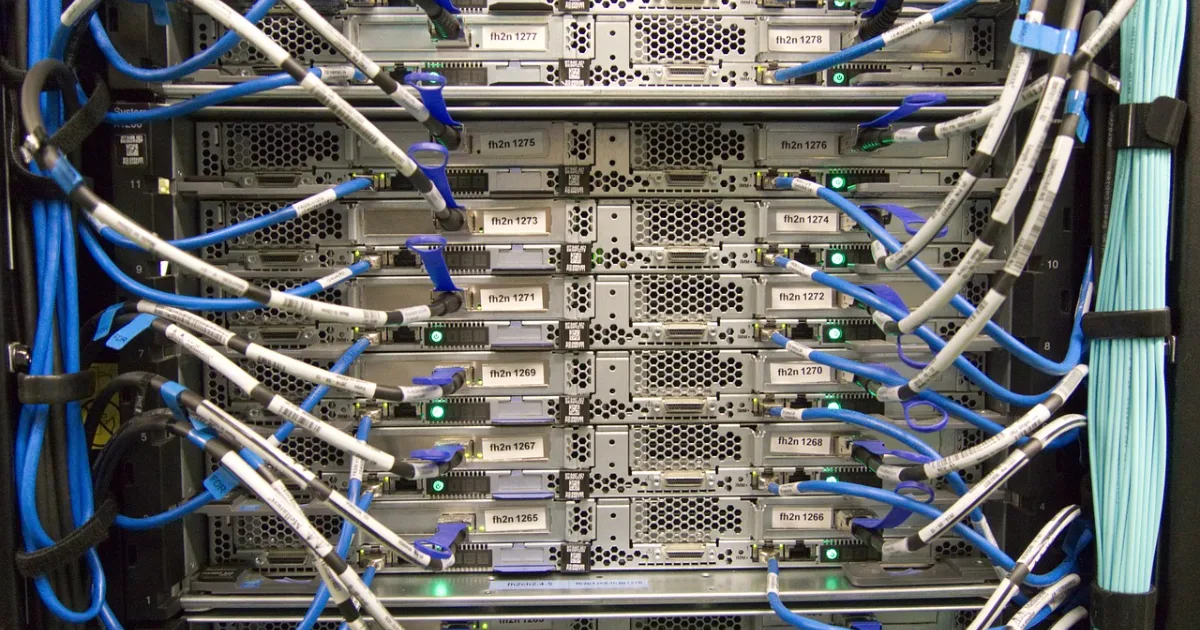
Artificial intelligence consumes enormous amounts of electricity.
Developing more powerful models requires greater computing capacity. Operating thousands of GPUs simultaneously requires large data centers, and keeping those facilities running around the clock depends on reliable electricity supplies.
That is why competition in the AI industry is expanding beyond model development into a race to secure power.
But what happens when the technical solutions companies adopt to obtain electricity faster come into conflict with environmental regulations?
Elon Musk's AI company, xAI, is confronting precisely that question in the United States.
On October 30, 2026, the U.S. District Court for the Northern District of Mississippi denied a motion to dismiss an air pollution lawsuit filed against xAI and its subsidiary, MZX Tech.
At the center of the dispute is a gas-turbine power generation facility supplying electricity to xAI's massive AI data center, Colossus 2.
The National Association for the Advancement of Colored People (NAACP) and its Mississippi State Conference sued the companies, alleging that they constructed and operated the power facility without obtaining the required air pollution permits.
xAI, however, argued that the gas turbines qualified as mobile equipment and were therefore exempt from the relevant permitting requirements.
The company also maintained that it had received guidance consistent with this interpretation from the Mississippi Department of Environmental Quality (MDEQ).
The court rejected that argument.
It determined that installing gas turbines on equipment capable of being moved does not automatically make them mobile sources under air pollution regulations.
The court also concluded that prior guidance from the state environmental agency did not bind the judiciary's interpretation of the applicable law.
The ruling allows the NAACP's lawsuit to proceed.
However, it is important to distinguish this decision from a final judgment that xAI violated the Clean Air Act.
The court considered whether there were sufficient legal grounds to dismiss the complaint at this stage. It determined that the plaintiffs' allegations and legal claims were sufficient for the litigation to continue.
Nevertheless, the case raises an important question for the AI industry.
Can the methods used to accelerate power development for AI data centers change the boundaries of existing environmental regulations?
Twenty-Seven Gas Turbines Supplying Electricity to Colossus 2
The dispute is connected to xAI's Colossus 2 data center in Memphis, Tennessee.
Colossus is part of xAI's large-scale AI computing infrastructure, designed to train and operate advanced AI models. Such infrastructure requires a substantial and reliable supply of electricity.
The power generation facility at issue is not located in Tennessee, where the data center operates.
It is located across the state border in Southaven, DeSoto County, Mississippi.
In July 2025, xAI subsidiary MZX Tech acquired a site near Stanton Road South.
The facility built there became known as the Colossus Gas Plant.
According to the complaint, xAI and MZX Tech installed gas-fired turbines between August and December 2025.
As of April 7, 2026, investigators had identified at least 27 gas turbines at the site.
The alleged configuration included fourteen SMT-130 turbines, one M35 turbine, four sixth-generation TM2500 turbines, five seventh-generation TM2500 turbines, and three eighth-generation TM2500 turbines.
The plaintiffs estimated the facility's total generating capacity at no less than 495 megawatts.
This was not merely a collection of emergency generators.
It was a substantial power generation facility intended to support the electricity demands of a major AI data center.
The site also contained more than gas turbines.
According to the complaint, the installation included concrete foundations, transformers, electrical lines, natural gas supply pipelines, water supply systems, emissions-control equipment, and electrical equipment buildings.
Some turbines were connected to water-injection equipment and associated piping and pumps.
The existence of these interconnected components formed an important part of the factual background for determining the facility's legal classification.
However, the specific installation details and emissions figures described in the court's decision were based on allegations in the plaintiffs' complaint.
They remain subject to further evidentiary examination as the litigation proceeds.
Does a Movable Gas Turbine Qualify as a Mobile Pollution Source?
The central dispute concerns the meaning of the word "mobile."
The turbines used by xAI were mounted on equipment, including flatbed trailers, that could be transported between locations.
xAI argued that these installations qualified as mobile sources under Mississippi's air quality regulations.
Certain mobile sources are excluded from permitting requirements applicable to the construction and operation of stationary facilities.
xAI maintained that its turbines fell within this exception.
Before installing the equipment, the company had consulted the Mississippi Department of Environmental Quality.
On July 29, 2025, the agency provided guidance indicating that the turbines could qualify for an exemption, based on two conditions: that they were attached to movable equipment and that they were expected to remain at the site for less than twelve months.
xAI relied on this guidance in arguing that the turbines did not require the disputed permits.
The court, however, distinguished between equipment that is physically movable and equipment legally classified as a mobile pollution source.
It examined both Mississippi's regulations and the federal environmental provisions incorporated by reference.
Under the relevant federal framework, mobile sources encompass categories such as motor vehicles, nonroad engines, and nonroad vehicles.
Rules governing stationary gas turbines, by contrast, can apply to turbines that are not designed to move or propel themselves while operating.
The decisive question is not simply whether the turbine can be transported elsewhere.
It is how the equipment is installed and operates while generating electricity.
The court determined that the turbines at the power plant were stationary combustion turbines under the applicable regulatory framework.
It therefore concluded that xAI could not rely on the mobile-source exception to avoid the permitting requirements at issue.
This reasoning has important implications for the AI data center industry.
Even when a company uses transportable power generation equipment to secure electricity, that equipment does not automatically escape ordinary environmental regulation if it functions as a stationary power facility at a fixed location.
Why Did the Court Disagree with the State Environmental Agency?
The case presents a complication beyond an ordinary dispute over compliance with environmental regulations.
xAI did not simply argue that the law had been misapplied.
It also pointed to the state environmental agency's advance guidance suggesting that the turbines could qualify for a permit exemption.
This became a central part of the company's defense.
The underlying argument was that a business should be able to rely on guidance received after explaining its plans to the responsible regulatory authority.
The court, however, distinguished an agency's administrative interpretation from the legal meaning of the regulation itself.
Mississippi's federally approved State Implementation Plan, or SIP, carries legal force under the federal Clean Air Act.
If an agency's interpretation conflicts with the governing regulations, a court is not required to adopt that interpretation.
The court independently interpreted the definition of a mobile source using the relevant statutes and regulations.
It concluded that the state's guidance was inconsistent with those rules.
This does not mean administrative guidance is legally meaningless.
The court acknowledged that fair-notice concerns could arise in a different situation if an agency changed its interpretation and subsequently sought to penalize a company that had relied on earlier guidance.
But that was not the procedural situation before the court.
The Mississippi environmental agency was not initiating a new enforcement proceeding against xAI.
Instead, a private civil rights organization had filed an independent citizen suit under the Clean Air Act.
The court concluded that the agency's earlier guidance could not, by itself, prevent that lawsuit from proceeding.
Ultimately, the case demonstrates that regulatory guidance and judicial interpretation may differ.
For fast-moving AI infrastructure businesses, this kind of legal uncertainty can become a material operational risk.
How Serious Are the Potential Emissions from a 495 MW Power Facility?
The NAACP's concerns extend beyond the permitting process itself.
The lawsuit addresses potential air pollution from the power facility and its effects on nearby residents.
The plaintiffs estimated the annual potential emissions of the 27 turbines at approximately 1,700 tons of nitrogen oxides, 580 tons of carbon monoxide, 180 tons of particulate matter, and 19 tons of formaldehyde.
A crucial distinction concerns the term "potential emissions."
These figures represent estimated emission capacity under specified operating assumptions.
They are not measurements establishing that the facility actually released those quantities of pollutants.
Actual emissions can vary depending on operating hours, fuel, equipment performance, and pollution-control technology.
Nevertheless, the plaintiffs' estimates help explain why environmental permitting matters.
Nitrogen oxides contribute to the formation of ozone and particulate pollution through reactions in the atmosphere.
Carbon monoxide can harm human health at sufficiently high concentrations.
Formaldehyde is also regulated as a hazardous air pollutant.
The NAACP alleged that residents who live, work, or spend time near the facility had changed their daily activities, including reducing time outdoors, because of concerns about pollution.
The plaintiffs contended that the power plant was constructed and operated without the required permits and without fulfilling applicable pollution-control obligations, including requirements involving Best Available Control Technology, or BACT.
BACT is a pollution-control standard applicable to certain major new emissions facilities.
The plaintiffs requested judicial findings of violations, appropriate emissions-control measures, operational restrictions, and corrective actions addressing environmental and health impacts.
They also sought civil penalties of up to $124,426 per day for each violation.
However, the court's October 30 decision did not impose those penalties.
It allowed the case to continue without making final determinations regarding specific violations, actual emissions, financial penalties, or the scope of any corrective action.
Why Can a Civil Rights Organization Sue a Power Plant Directly?
A second important question in the litigation concerns who is legally entitled to bring the lawsuit.
xAI argued that the NAACP could not sue under the Clean Air Act on behalf of its members' interests.
The Clean Air Act's citizen-suit provisions allow qualifying individuals and organizations to bring legal claims alleging violations of certain environmental requirements.
xAI emphasized statutory language concerning claims brought in a plaintiff's own name.
Its position was that the NAACP could not rely on injuries allegedly experienced by individual members to pursue the action.
The court rejected that interpretation.
It noted that the Clean Air Act includes associations and organizations among the entities permitted to sue.
It also recognized that an organization's efforts to protect the environmental interests of its members can be consistent with the organization's own purposes and interests.
The NAACP has long addressed the effects of environmental pollution on communities and public health as issues involving civil rights and environmental justice.
Those activities are connected to the organization's mission.
The court therefore concluded that the NAACP had the legal standing necessary to pursue the case.
The significance extends beyond the litigation prospects of one civil rights organization.
The ruling confirms a legal avenue through which organizations representing affected communities can challenge potential environmental violations associated with AI data centers and power generation facilities, even without direct enforcement action by government regulators.
xAI Also Challenged the Constitutionality of Citizen Suits
xAI's defense did not stop at the classification of gas turbines.
The company also challenged the constitutionality of the Clean Air Act's citizen-suit provisions.
The central question was who has the authority to enforce federal law.
Article II of the U.S. Constitution vests executive power in the president.
xAI argued that allowing private organizations to pursue alleged violations and seek civil penalties amounted to permitting private parties to exercise governmental enforcement authority.
In its view, this represented an improper delegation of executive power.
The court distinguished private civil litigation from governmental criminal and administrative enforcement.
It reasoned that an organization seeking civil relief for injuries affecting itself or its members does not necessarily exercise executive authority on behalf of the government.
The court also explained that Congress may create statutory rights and establish who is authorized to enforce them and through which legal procedures.
The fact that civil penalties are paid to the government did not, in the court's view, automatically transform the citizen suit into an exercise of executive enforcement power.
On those grounds, the court rejected xAI's argument that the citizen-suit provisions violated Article II or constitutional principles limiting the delegation of governmental authority to private parties.
This aspect of the decision is significant because it preserves a mechanism through which environmental organizations can challenge corporate compliance with environmental law in federal court.
The Justice Department Entered the Case, Broadening the AI Infrastructure Debate
The litigation did not involve only xAI and the NAACP.
The U.S. Department of Justice also became involved.
The federal government sought to intervene in connection with the Environmental Protection Agency's position and attempted to bring the citizen suit to an end.
On October 19, 2026, the federal court allowed the government to intervene but rejected the proposition that the government could unilaterally terminate the private organizations' lawsuit.
Eleven days later, on October 30, the court also denied the separate motion to dismiss filed by xAI and its subsidiary.
The two decisions addressed different legal questions.
The first concerned whether the federal government could stop the citizen suit.
The second concerned whether the claims against xAI and MZX Tech should be dismissed based on the companies' legal arguments.
In both instances, the court allowed the litigation to continue.
That does not mean the government and xAI have received final adverse judgments on every issue in the underlying case.
What has been established at this stage is that the litigation has a sufficient legal basis to proceed.
The dispute has attracted broader political attention because it reflects competing interests surrounding AI infrastructure development in the United States.
On one side is the argument that rapid expansion of data centers and electricity infrastructure is necessary to maintain competitiveness in AI.
On the other is the argument that the environmental effects of large-scale power facilities on surrounding communities must be properly assessed.
The xAI power plant has brought those competing priorities into a courtroom.
Why Can't AI Data Centers Simply Depend on Existing Power Grids?
Understanding this dispute requires examining the electricity requirements of AI data centers.
AI facilities can require far greater power density than conventional office buildings.
Large GPU clusters consume substantial electricity.
Cooling systems needed to remove heat from high-performance computing equipment consume additional power.
AI model training can also continue for extended periods.
Without reliable electricity, expensive computing equipment cannot be utilized effectively.
For these reasons, AI companies treat power availability and electrical grid connectivity as essential criteria when selecting data center locations.
The challenge is that existing power grids may not be able to immediately supply the electricity required by major new data centers.
Regional networks may lack sufficient spare capacity.
Expanding transmission infrastructure can take considerable time.
In other words, the pace at which AI companies construct data centers may not match the pace at which electrical infrastructure can expand.
Even if a data center is physically completed, it cannot operate at its intended capacity without enough electricity.
Under these conditions, dedicated power generation facilities can become an alternative for securing electricity sooner.
xAI's use of gas turbines to supply power to Colossus 2 can be understood within this broader industrial context.
However, the court's decision does not explain every business consideration behind xAI's particular power strategy.
It would therefore be speculative to conclude definitively that the company chose on-site or dedicated generation because of grid connection delays or a specific cost-saving strategy.
What is established is that xAI built and operated a substantial gas-turbine power facility to support its AI data center.
The legal classification of that facility became the central issue in the dispute.
AI Infrastructure Moves Faster Than the Regulatory Process
AI companies are competing to expand data center capacity.
They need additional computing infrastructure to develop more advanced models and provide services to growing numbers of users.
In this industry, the speed of infrastructure deployment is an important competitive factor.
But power generation facilities, transmission networks, and environmental permits operate according to different timelines.
Emissions must be evaluated.
Potential impacts on surrounding communities must be examined.
Pollution-control technologies may be required.
Public participation and consultation procedures may also apply.
These processes do not necessarily move at the speed desired by businesses.
The xAI dispute can be understood as a collision between these two timelines.
The company installed transportable gas turbines as part of its electricity infrastructure.
The court, however, concluded that equipment operating as a stationary power generation facility must be evaluated under the regulations applicable to such facilities.
The key issue is not merely the equipment's physical form.
It is the function the equipment performs.
Even when AI companies introduce new equipment configurations to secure electricity more quickly, those configurations do not automatically fall outside existing environmental laws.
That principle could have important implications for other AI data center developers.
As AI Infrastructure Expands, Conflicts with Local Communities May Also Increase
Data centers are essential infrastructure for the digital economy.
Users benefit from AI services, search engines, video platforms, and cloud computing without necessarily seeing the physical facilities that support them.
But the communities hosting those facilities experience a different set of considerations.
Electricity demand, water consumption, cooling systems, transmission infrastructure, noise, emergency generators, and air pollution can all have local consequences.
When dedicated fossil-fuel power generation is involved, environmental impacts require particular attention.
In the xAI case, the plaintiffs alleged that nearby residents had changed aspects of their daily lives because of concerns about pollution.
Those allegations remain subject to examination through the legal process.
But the structure of the conflict is important regardless of the eventual outcome.
The benefits of AI services are distributed across large populations of users.
The environmental burdens of operating the required computing infrastructure, however, may be concentrated in specific communities.
This creates questions of environmental justice.
If particular regions or socioeconomically vulnerable communities bear a disproportionate share of industrial pollution, policymakers and businesses must consider whether the resulting burdens are distributed fairly.
The NAACP's participation in the lawsuit is relevant to this context.
The organization has connected concerns about environmental pollution with community health, living conditions, and civil rights.
As the AI industry grows, the relationship between data centers and their host communities may become an increasingly important condition of successful infrastructure development.
AI Companies Need Technology That Meets Environmental Rules, Not Technology Designed Around Avoiding Them
The most important industrial lesson from the case concerns AI infrastructure strategy.
AI companies need electricity to expand data centers quickly.
But changing how power generation equipment is installed does not necessarily eliminate environmental permitting obligations.
Regulation can depend on which pollutants a facility emits, where it operates, and what functions it performs.
As a result, AI infrastructure companies need capabilities that extend beyond improving computational efficiency.
They must also address electricity supply and environmental compliance together.
Power development plans should consider environmental permits, pollution-control equipment, and community impacts from the outset.
Companies relying on a particular regulatory exemption must also evaluate whether that exemption can withstand legal scrutiny.
Receiving guidance from an administrative agency does not necessarily eliminate every legal uncertainty.
The xAI case illustrates that distinction.
The company relied on advance guidance from Mississippi's environmental agency in arguing that the turbines were exempt from permitting requirements.
The court independently interpreted the relevant statutes and regulations and reached a different conclusion.
That discrepancy can create regulatory risk for businesses.
If the legal classification of equipment changes after installation, companies could face additional permitting procedures, facility modifications, operating restrictions, or litigation costs.
However, no such final obligations or costs were established by the October 30 ruling.
The ultimate consequences will depend on subsequent proceedings and any relevant administrative action.
The Real Bottleneck in AI May Be Power and Permits, Not GPUs
Discussion of AI competition has long focused on model performance and access to GPUs.
Companies have been judged partly by how many advanced chips they can secure to train increasingly powerful models.
But expanding physical AI infrastructure introduces other competitive constraints.
How reliably can electricity be supplied?
How long will grid connections and power generation installations take?
How much can cooling and electrical efficiency be improved?
How will environmental requirements and community acceptance be addressed?
Without satisfactory answers to these questions, even organizations possessing substantial numbers of high-performance GPUs may struggle to obtain usable computing capacity.
The xAI case exposes the physical reality of AI infrastructure.
AI models are software.
But the data centers that run them are physical facilities.
Those facilities consume electricity, require cooling, occupy land, and interact with their surrounding environments.
Sustained AI industry growth therefore depends not only on digital technology but also on electrical engineering, environmental engineering, energy policy, permitting systems, and cooperation with local communities.
The bottleneck is not necessarily limited to semiconductor shortages.
The ability to secure electricity and infrastructure legally and sustainably may become an equally important constraint.
The xAI Lawsuit Is Only Beginning
The court's October 30 decision was not a final ruling that xAI had violated environmental law.
The court determined that the NAACP's claims could be heard and rejected xAI's argument that the turbines qualified for dismissal based on the mobile-source exemption.
It also rejected the company's challenges concerning the NAACP's standing and the constitutionality of the Clean Air Act's citizen-suit provisions.
The case will therefore continue.
Future proceedings may address which permits the power facility was legally required to obtain, whether those requirements were violated, and what corrective measures, if any, are appropriate.
The plaintiffs' allegations concerning emissions and harm to nearby residents will also require further evidentiary examination.
xAI may continue maintaining that it relied on guidance from Mississippi's environmental agency when installing the equipment.
The NAACP, meanwhile, is expected to continue arguing that the facility should comply with the permitting and emissions-control requirements applicable to stationary power generation.
The eventual outcome could carry important implications for power plant operations and environmental compliance.
But at this stage, the case's broader significance lies in the structural questions it raises for AI infrastructure.
AI companies want to build infrastructure faster.
Local communities want protection for their health and environment.
Regulators must apply existing laws while responding to the demands of a rapidly developing industry.
Courts must classify facilities according to the law rather than relying solely on the technical labels or business purposes assigned to them.
These competing interests may come into conflict more frequently as AI data center development accelerates.
The Future of AI Will Not Be Determined by Algorithms Alone
Elon Musk and xAI are building enormous computing infrastructure to pursue increasingly advanced AI capabilities.
But the case demonstrates that another set of factors matters alongside the speed of technological development.
Electricity, the environment, local communities, and the law.
Companies developing AI models want larger data centers.
Those data centers need more electricity.
The facilities supplying that electricity can affect the environment.
And facilities that affect the environment must operate within applicable legal frameworks.
The relationship is straightforward, yet it is easily overlooked.
AI is commonly understood as a digital industry.
Its expansion, however, depends on physical resources: electricity, land, cooling water, transmission networks, and power generation facilities.
Sustained growth therefore requires more than obtaining additional computing capacity.
It requires developing the infrastructure behind that capacity in ways that are legally compliant and socially acceptable.
The court's ruling was not a final policy declaration that AI companies should receive no special treatment.
Nor was it a final determination that xAI had committed every environmental violation alleged in the complaint.
But it established important legal boundaries at this stage of the litigation.
Equipment does not necessarily qualify for exemption from stationary-source regulations simply because it can be moved.
And prior guidance from an environmental agency does not automatically prevent private litigation or independent judicial interpretation of the law.
For AI infrastructure developers, the lesson is that technological design cannot be separated from legal and environmental responsibility.
The future of AI will not be determined solely by who develops the most powerful model first. It will also depend on who can secure the enormous quantities of electricity required to run those models most reliably, legally, and sustainably.
The litigation surrounding xAI's Colossus 2 power supply illustrates that reality.
The AI race is no longer being fought only inside data centers.
It is also unfolding at power plants, across electrical grids, within local communities, and in courtrooms.